Bench Boost: One Setup, Total-Body Results
Building strength and improving muscle definition does not require a crowded gym or complicated equipment. With one sturdy bench and a pair of dumbbells, you can create an efficient full-body workout that challenges your muscles, raises your heart rate, and fits easily into a busy schedule.
Why Simple Training Works
A limited setup allows you to focus on what matters most: controlled movement, proper form, and consistent effort. Combining bench exercises with dumbbell movements can target your chest, back, shoulders, arms, legs, glutes, and core in a single session.
Choose six to eight exercises to keep the workout varied without making it overly complex.
Build Your Exercise Circuit
Create a balanced routine by selecting movements from the following list:
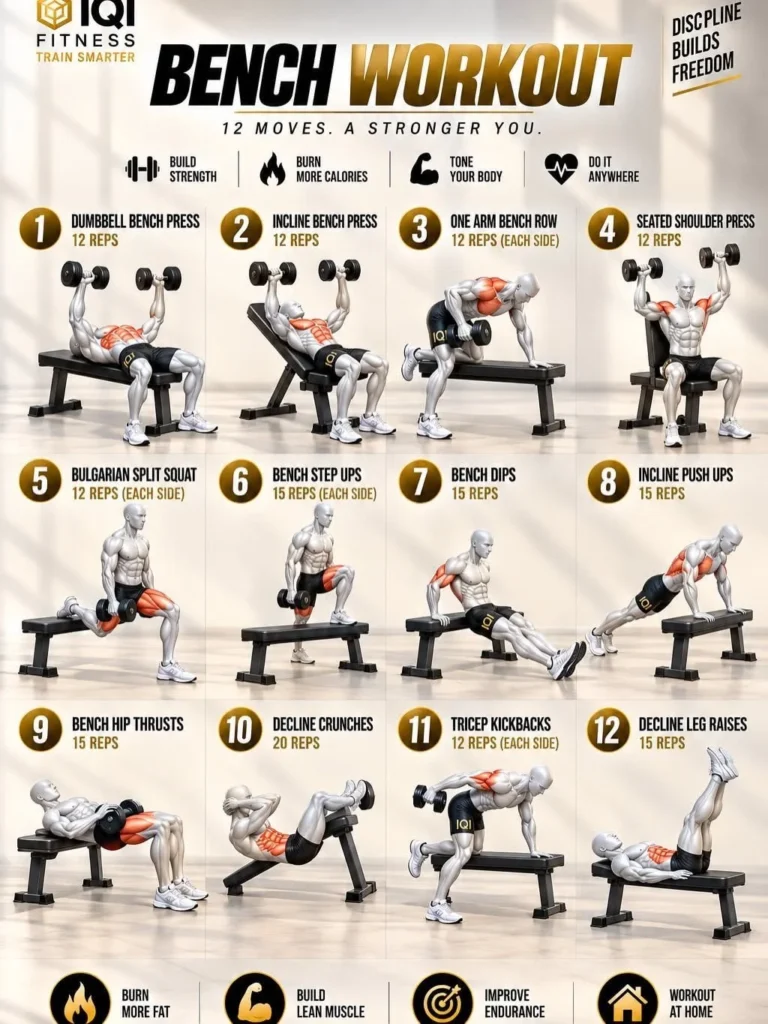
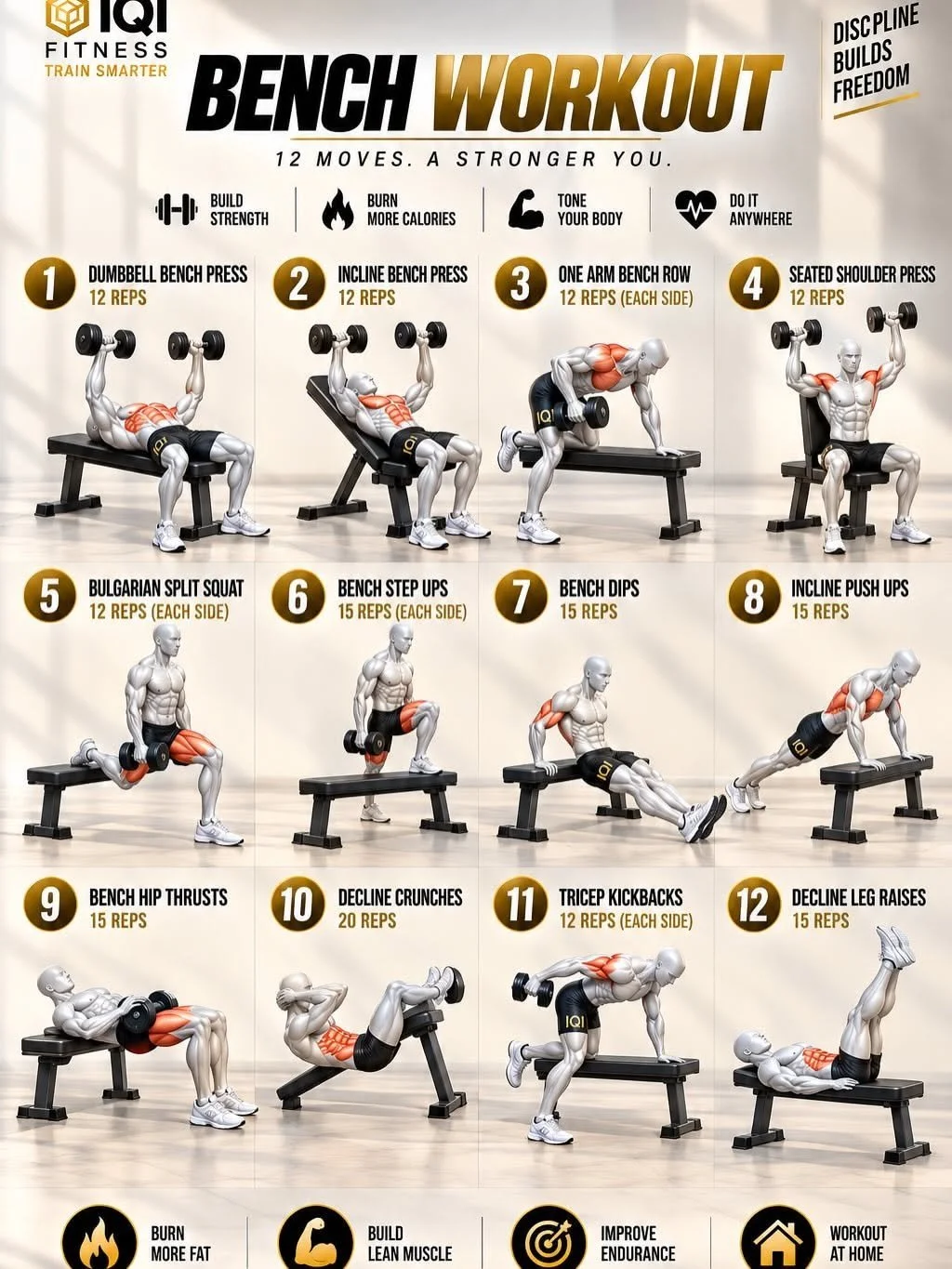
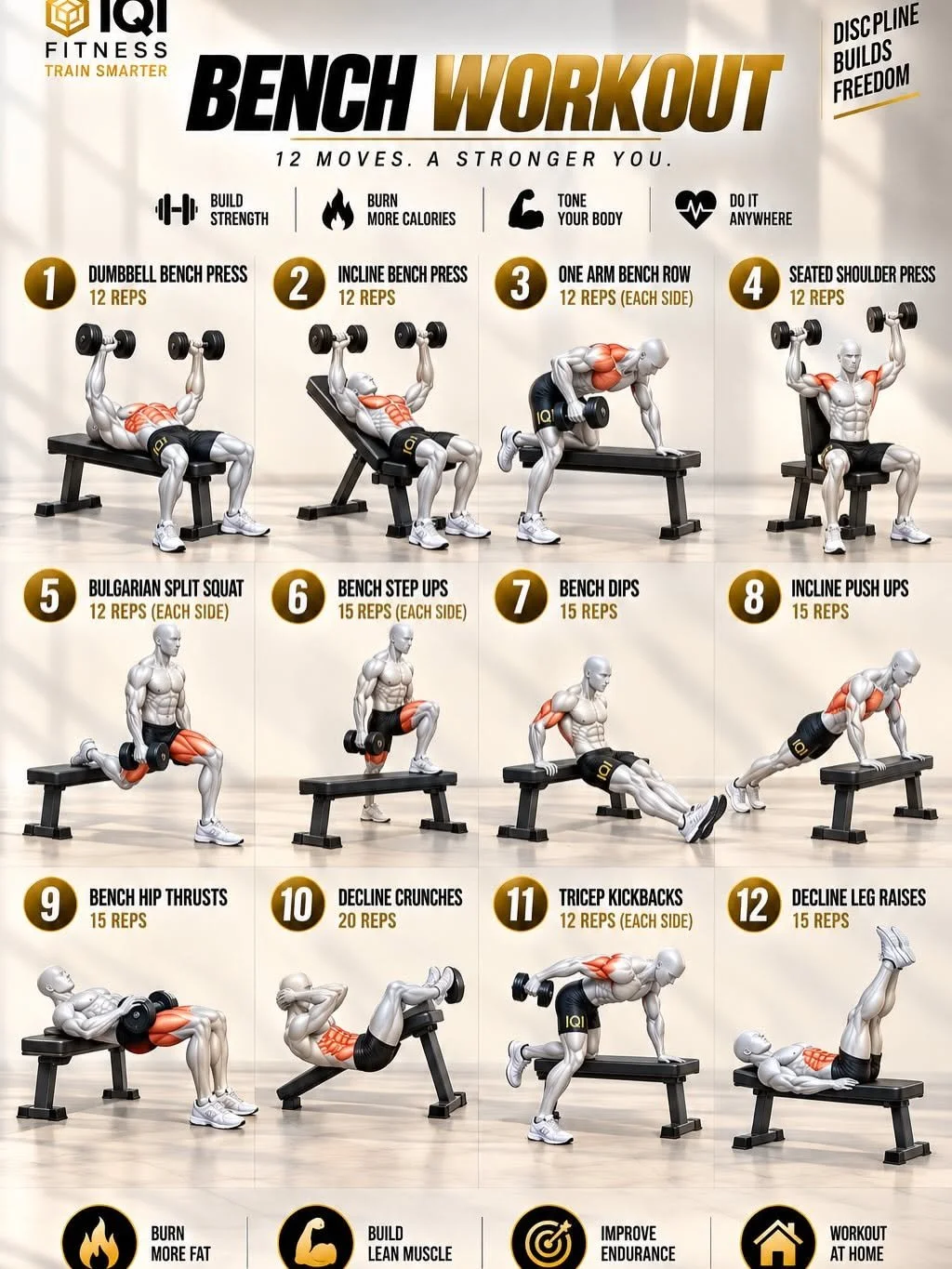
- Dumbbell bench press for the chest, shoulders, and triceps
- Bent-over dumbbell rows for the back and biceps
- Bench step-ups for the legs and glutes
- Dumbbell flyes for the chest
- Bench tricep dips for the arms
- Bulgarian split squats for lower-body strength and balance
- Seated dumbbell shoulder press for the shoulders
- Plank rows for the back, arms, and core
Structure Your Workout
Complete three rounds of your chosen exercises. Aim for 8 to 12 controlled repetitions per movement, or work for 30 to 45 seconds when using a timed circuit.
Rest for approximately 20 to 45 seconds between exercises and up to 90 seconds between rounds. Adjust these periods according to your fitness level while maintaining safe, steady form.
Progress at Your Own Pace
Once the routine becomes comfortable, increase the challenge gradually. You can:
- Use heavier dumbbells
- Add repetitions
- Complete an additional round
- Reduce rest periods slightly
- Slow down each repetition to increase time under tension
Change only one or two variables at a time so that your technique remains strong. Consistent progression is more effective than attempting too much too quickly.
Train Safely
Use a stable bench and select weights you can control throughout the entire range of motion. Keep your core engaged, avoid rushing repetitions, and stop if you experience sharp pain. Beginners should practice each exercise individually before combining the movements into a circuit.
Conclusion
One bench and a pair of dumbbells can provide everything needed for an effective total-body workout. By choosing balanced exercises, prioritizing proper form, and increasing the difficulty gradually, you can build strength, improve lean muscle definition, and move closer to your fitness goals—without relying on excessive equipment.
#IQIFitness #BenchWorkout #FullBodyWorkout #DumbbellWorkout #BuildStrength