
Train Smarter with the Perfect Workout Split
Reaching your fitness goals requires more than effort—it also takes a well-structured training plan. A workout split organizes your weekly sessions so you can train each muscle group effectively while leaving enough time for recovery.
What Is a Workout Split?
A workout split divides your training routine by muscle group, movement pattern, or body region. Instead of exercising every muscle during every session, you distribute the workload across the week.
The right structure can help you:
- Build strength and muscle
- Improve workout quality
- Manage fatigue
- Allow adequate recovery
- Maintain a consistent routine
Popular Workout Splits
Full-Body Split
A full-body routine trains all major muscle groups in each session. It is especially suitable for beginners, busy individuals, or anyone exercising two or three times per week.
Because each muscle is trained frequently, this split can support balanced strength development without requiring daily gym visits.
Upper/Lower Split
This approach alternates between upper-body and lower-body sessions. For example, you might train your chest, back, shoulders, and arms one day, followed by your legs and glutes the next.
An upper/lower split provides focused workouts while allowing each area sufficient time to recover. It works particularly well for people who can train four days per week.
Push/Pull/Legs Split
The push/pull/legs structure groups exercises according to movement patterns:
- Push: Chest, shoulders, and triceps
- Pull: Back and biceps
- Legs: Quadriceps, hamstrings, glutes, and calves
This balanced format reduces overlap between consecutive sessions and can be adjusted for three to six weekly workouts.
Body-Part Split
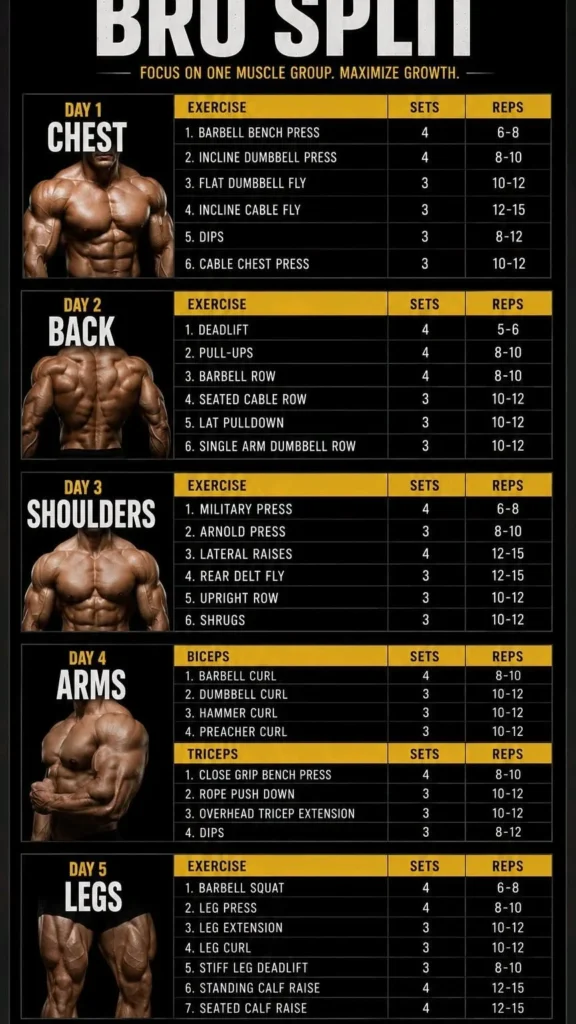
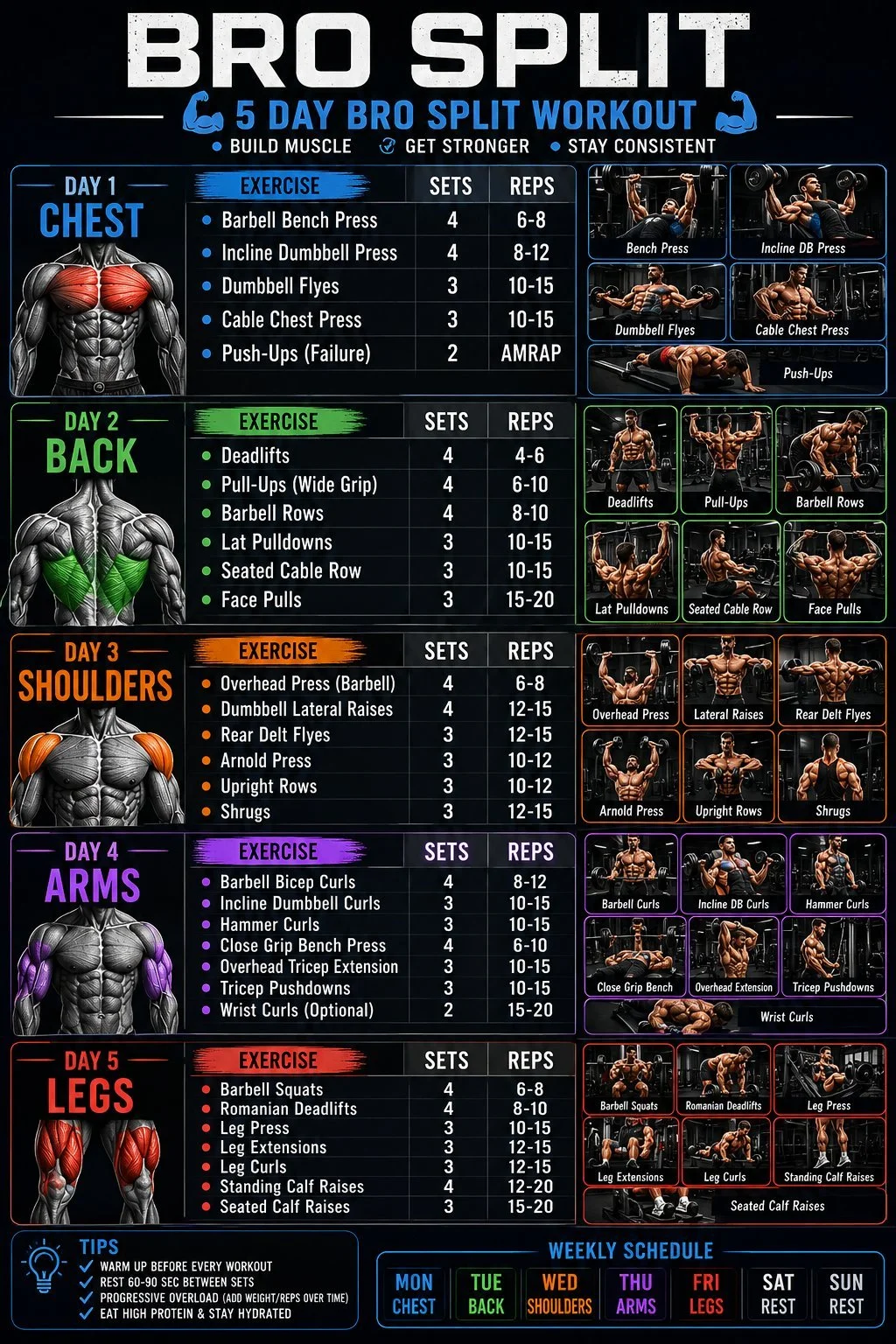
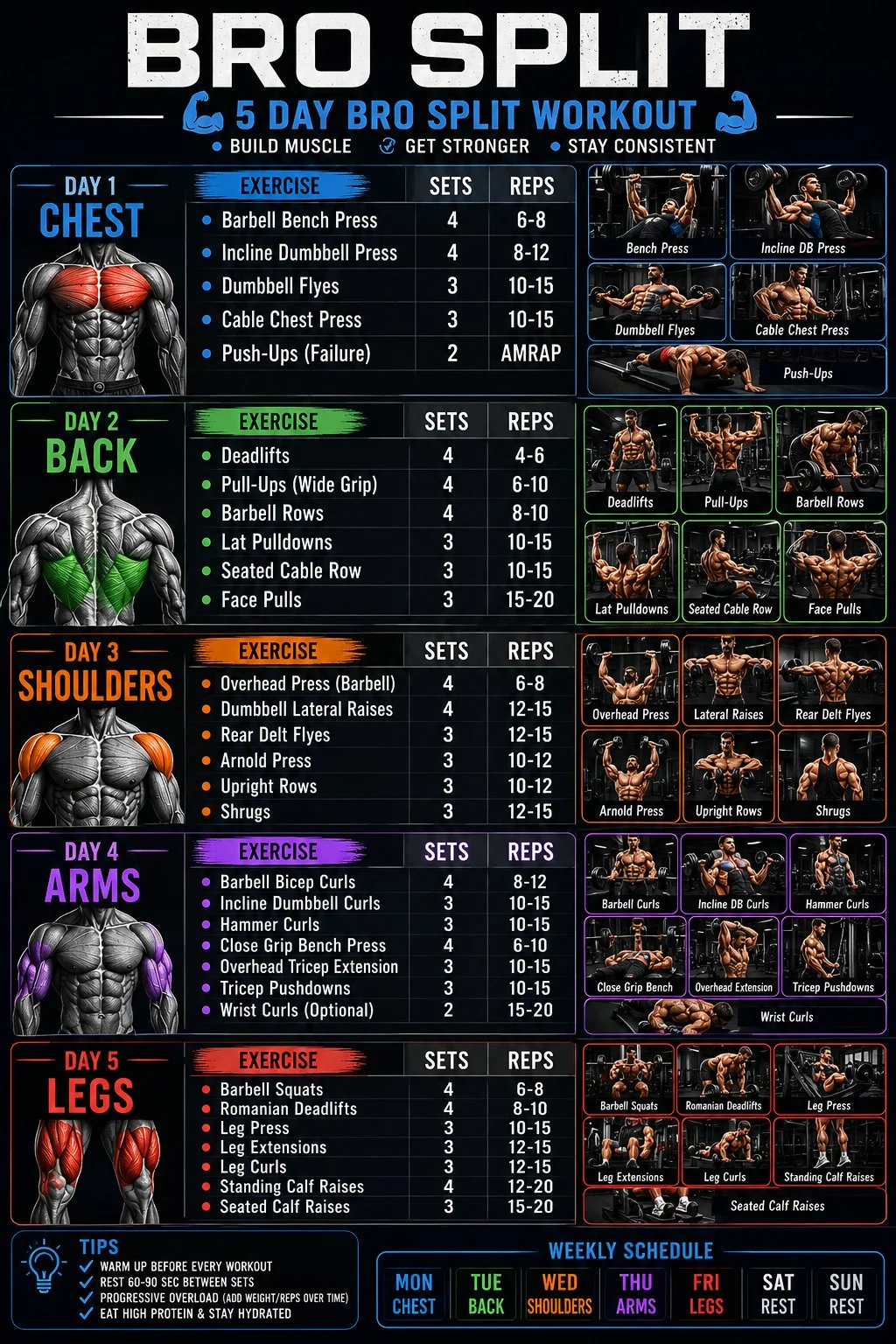
A body-part split concentrates on one or two muscle groups during each workout. A typical week might include separate days for the chest, back, shoulders, arms, and legs.
This method allows for greater training volume per muscle and is often used by experienced lifters focused on hypertrophy. However, it generally requires more weekly sessions.
How to Choose the Right Split
Your ideal routine should reflect your goals, experience, schedule, and ability to recover.
Define Your Primary Goal
For overall fitness and strength, consider a full-body or upper/lower plan. If maximizing muscle growth is your priority, a push/pull/legs or body-part split may offer the volume you need.
Be Realistic About Your Schedule
Choose a routine you can follow consistently:
- Two or three days per week: Full-body split
- Four days per week: Upper/lower split
- Three to six days per week: Push/pull/legs
- Five or more days per week: Body-part split
Prioritize Recovery
Progress happens when training and recovery work together. Avoid repeatedly exercising sore muscles, and support your routine with quality sleep, proper nutrition, hydration, and rest days.
Adjust as You Progress
No workout split needs to be permanent. Track your strength, energy, soreness, and motivation. If progress stalls or fatigue increases, reduce training volume, add recovery time, or switch to a structure that better fits your needs.
Conclusion
An effective workout split gives every training session a clear purpose. Whether you choose full-body workouts, an upper/lower plan, push/pull/legs, or a body-part routine, consistency and recovery are essential. Select a structure that matches your goals and schedule, then refine it as your fitness improves.