Grow Strong with the Push–Pull–Legs Blueprint
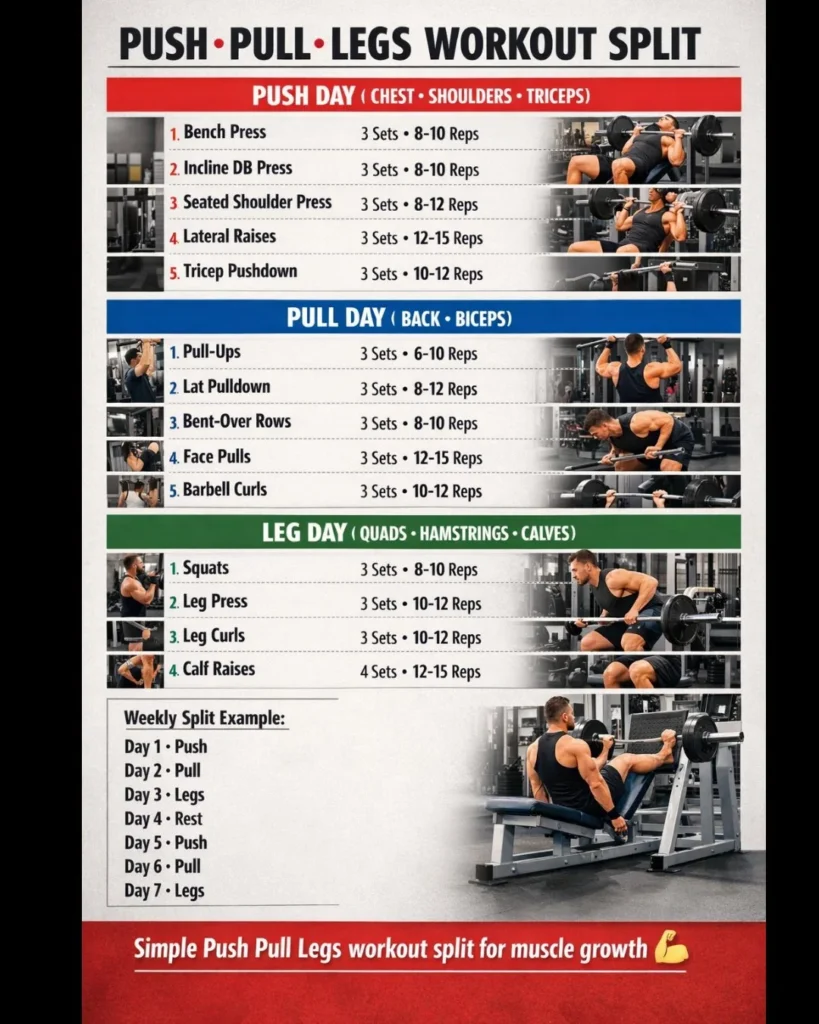
Building muscle does not require a complicated training plan. The push–pull–legs (PPL) split organizes exercises by movement pattern, making workouts focused, flexible, and easy to track.
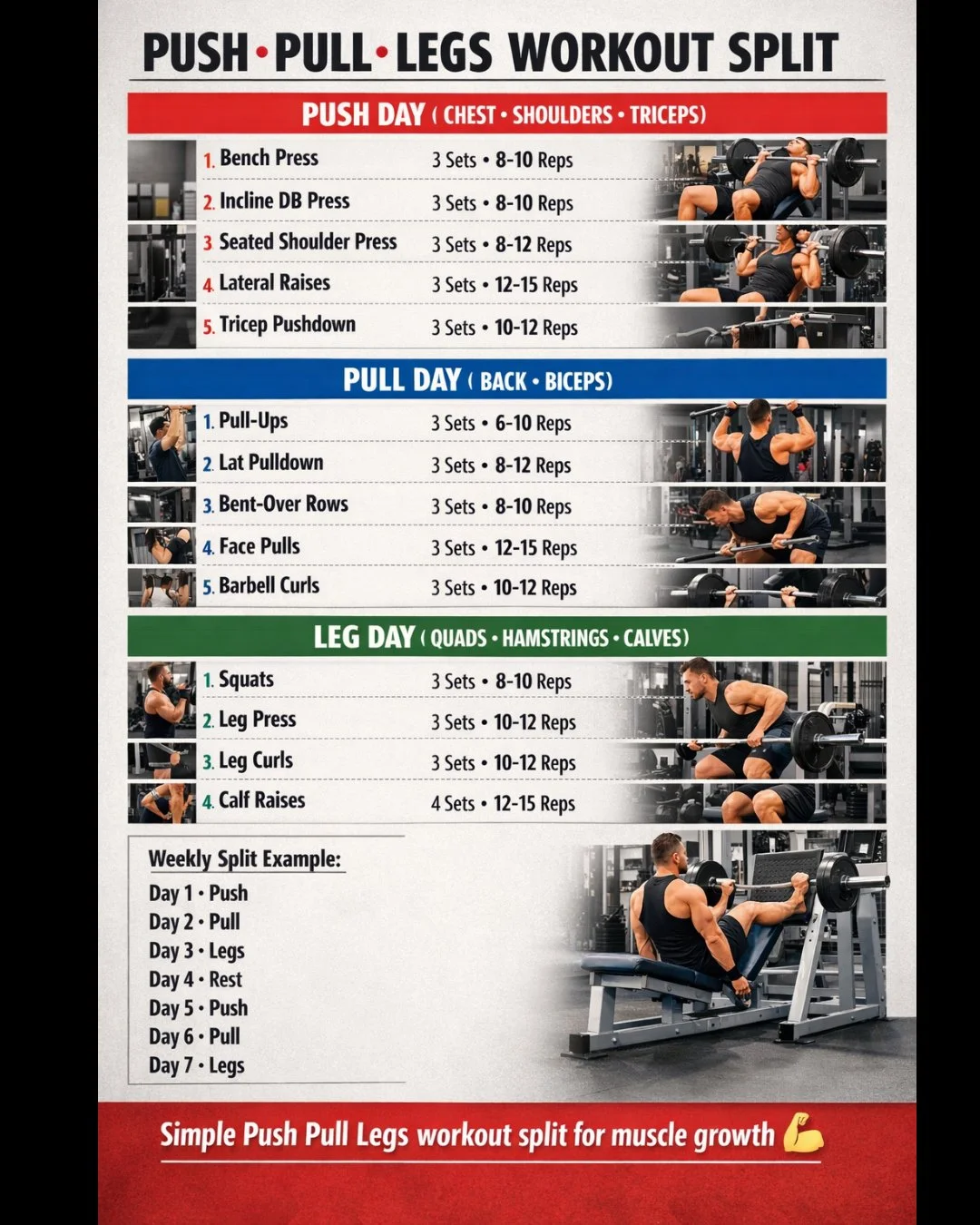
How the PPL Split Works
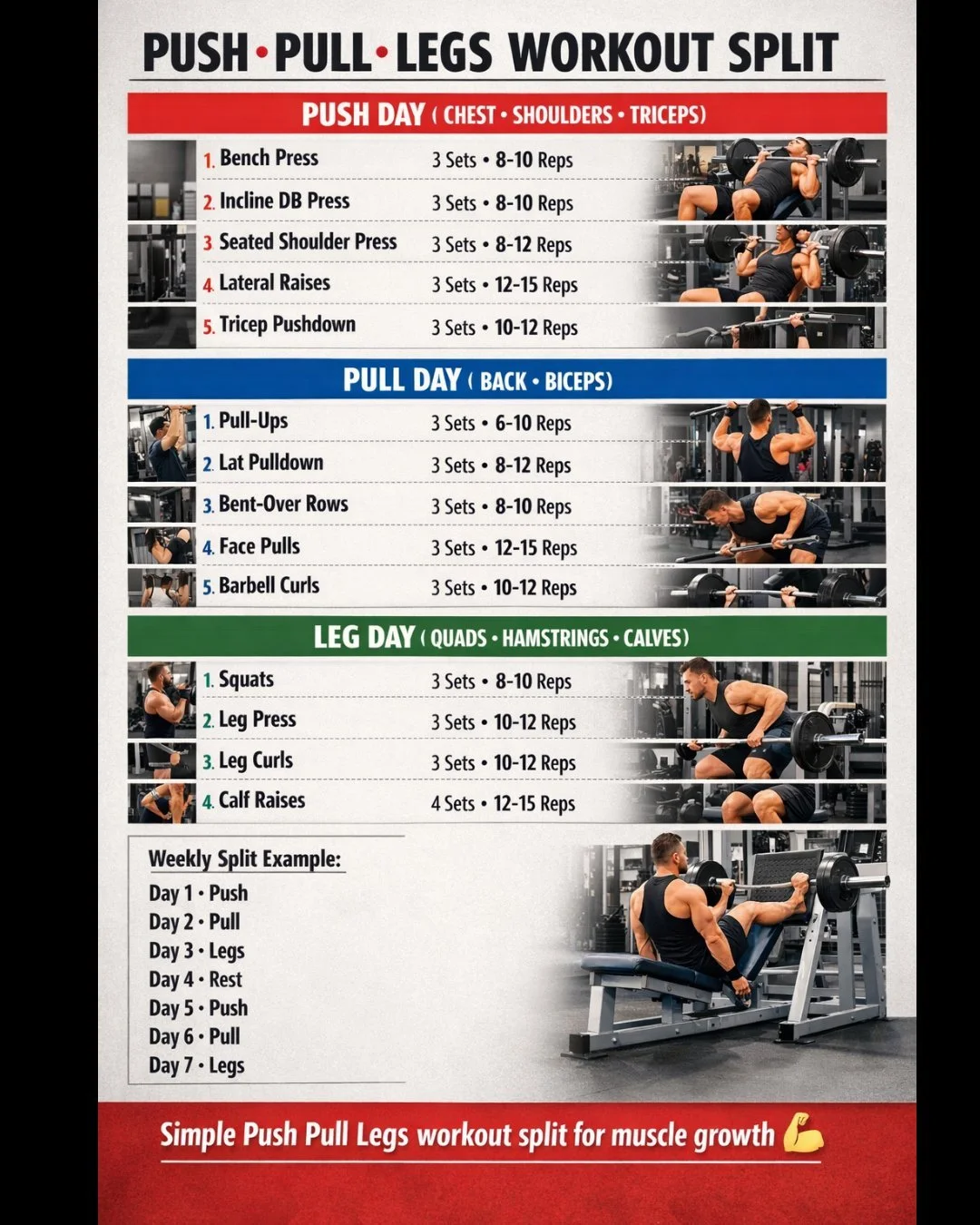
The routine divides training into three sessions:
- Push: Trains the chest, shoulders, and triceps through pressing movements.
- Pull: Targets the back and biceps with rowing and pulling exercises.
- Legs: Develops the quadriceps, hamstrings, glutes, and calves.
This structure gives each muscle group time to recover while keeping your training balanced.
Simple PPL Workout Plan
Day 1: Push
- Bench press: 3 sets of 8–10 reps
- Overhead press: 3 sets of 8–10 reps
- Dumbbell triceps extensions: 3 sets of 10–12 reps
Day 2: Pull
- Pull-ups: 3 sets of 6–8 reps
- Bent-over rows: 3 sets of 8–10 reps
- Biceps curls: 3 sets of 10–12 reps
Day 3: Legs
- Squats: 3 sets of 8–10 reps
- Romanian deadlifts: 3 sets of 8–10 reps
- Lunges: 3 sets of 10–12 reps per leg
Day 4: Rest
Use this day for complete rest or gentle activities such as walking and mobility work. You can then repeat the cycle or add more recovery days based on your schedule and experience level.
Why Choose Push–Pull–Legs?
- Simple organization: Each session has a clear purpose.
- Balanced development: All major muscle groups receive attention.
- Flexible scheduling: Train three days weekly or repeat the cycle for greater frequency.
- Better recovery: Muscles rest while other movement groups are trained.
- Easy progression: Exercises, repetitions, and weights are straightforward to monitor.
Tips for Better Results
Prioritize Technique
Use controlled movements and a comfortable range of motion. Proper form is more valuable than lifting a weight you cannot manage safely.
Apply Progressive Overload
Gradually challenge your muscles by increasing weight, adding repetitions, improving technique, or performing an additional set. Small improvements over time produce meaningful results.
Support Training with Nutrition
Eat enough protein to support muscle repair, along with carbohydrates for training energy and healthy fats for overall wellness. Hydration and consistent meal habits also matter.
Recover Properly
Muscle growth occurs between workouts. Aim for sufficient sleep, schedule rest when needed, and reduce training intensity if soreness or fatigue begins affecting performance.
Warm Up Before Lifting
Begin with several minutes of light movement, followed by dynamic mobility exercises and lighter practice sets of your first lift.
Conclusion
The push–pull–legs split offers a practical route to stronger, more muscular development without unnecessary complexity. Train consistently, focus on proper form, progress gradually, and give your body enough fuel and recovery to adapt.