Wall Pilates: The Wall-to-You Workout
Wall Pilates is the quick, space-smart routine fitness fans across the US, UK and Canada are saving and sharing right now. It’s low-impact, highly adaptable, and perfect for small apartments or for adding resistance and alignment cues to classic Pilates moves—ideal if you’re also exploring a longer movement habit like a 30-day beginner calisthenics morning routine.
Why Wall Pilates Is Trending
Wall Pilates uses the wall as a guide for posture, balance and support, making it accessible for beginners while still challenging for experienced practitioners. The wall helps you find neutral spine, core engagement, and efficient leg alignment — all without bulky equipment. It’s also easy to scale: add tempo, reps, or hold times to increase intensity.
Benefits at a Glance
- Improves postural awareness and alignment.
- Boosts core stability with safer progressions.
- Requires minimal space and no equipment.
- Easily combined with other practices as cross-training.
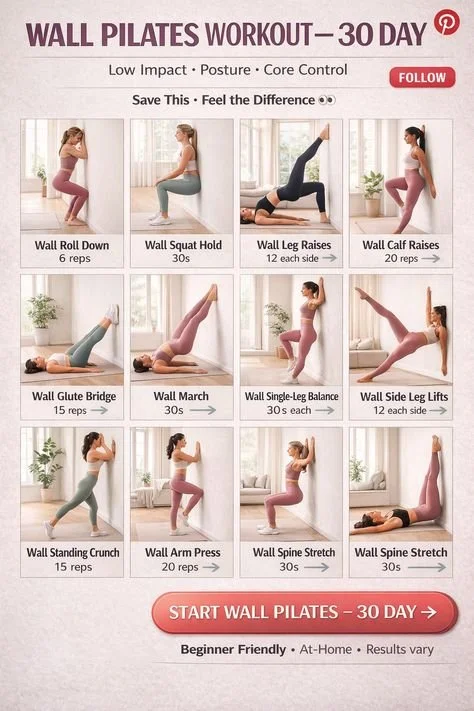
A Simple 20-Minute Wall Pilates Routine
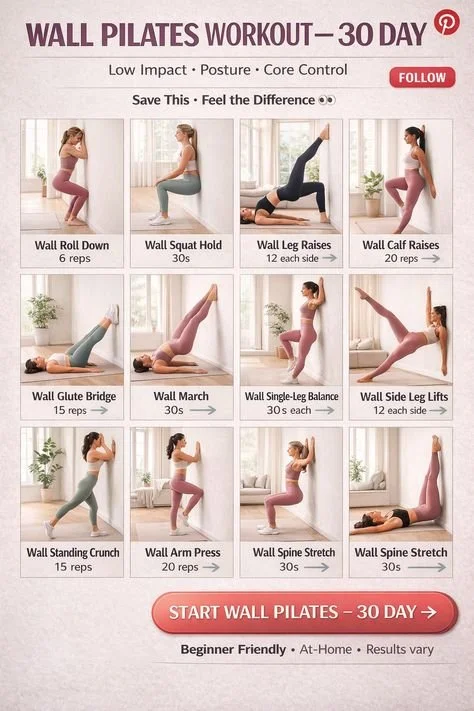
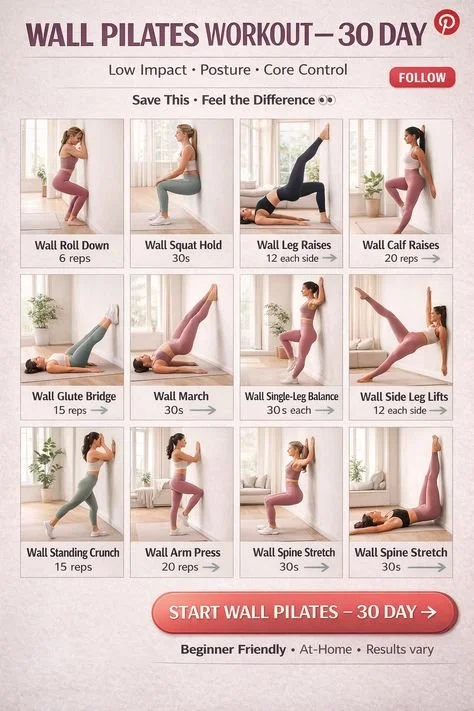
- Wall Breathing & Alignment (2–3 minutes): Stand with your back against the wall, feet hip-width, 6–12 inches away. Take deep diaphragmatic breaths while feeling the ribs and lower spine gently touch the wall.
- Wall Roll-Downs (2 sets of 6): Hinge slowly from the hips, articulating the spine down and up, using the wall to track alignment.
- Single-Leg Wall Press (3 sets of 8 per side): Press the sole of one foot into the wall while extending the other leg; focus on pelvic stability.
- Wall Bridge Holds (3 sets of 30 seconds): With shoulders near the wall and feet flat, lift hips into a bridge and press the feet into the wall to engage glutes and hamstrings.
- Standing Side-Lifts (2 sets of 10 per side): Use the wall for light balance while performing lateral leg lifts to target glute medius.
- Wall Plank Variations (3 rounds, 20–40 seconds): Place hands on the wall for an inclined plank, or feet on the wall for a more advanced vertical challenge.
Progressions and Modifications
To make exercises easier, shorten hold times, reduce range of motion, or perform seated wall-supported versions. To progress, slow down the eccentric phase, add pulses, or hold isometric positions longer. If you enjoy mixing outdoor and indoor activity, integrating low-impact wall Pilates with retreats and active weekends can refresh motivation and mobility — many people find that combining practices like these complements the mental reset offered by hiking retreats.
Programming Tips
- Frequency: 3–5 short sessions per week for steady improvement.
- Pair it: Use wall Pilates as a warm-up, cool-down, or core-focused mini-session.
- Track progress: Note hold times, reps, and how posture feels rather than chasing only aesthetic changes.
Conclusion
If you want an affordable, judgment-free gym option to practice Wall Pilates or expand into other classes, consider exploring local membership options at Planet Fitness.