
weightlifting

Building muscle without creatine - effective strategies for muscle growth.

No Creatine, No Gains? The Brutal Truth About Building Muscle Without a Secret Weapon

Gains Without Creatine

First thing’s first: no, creatine isn’t a miracle drug you absolutely must take to build muscle — but it is a powerful, convenient aid. If you choose to train without it, the road is still very much open; it just requires smarter programming, sharper nutrition, and realistic expectations about timelines. This article lays out how to get meaningful hypertrophy without relying on that "secret weapon."

No Creatine, No Gains? The Brutal Truth About Building Muscle Without a Secret Weapon

Why creatine helps (and what you lose when you skip it)

  • Creatine increases available phosphocreatine in muscles, boosting short, intense efforts and helping you squeeze out extra reps or a heavier set.
  • Without it you may see slightly slower strength gains early on and less ability to hit those last grind-reps that stimulate extra growth.
  • The trade-off: no supplementation means you avoid the small risks, costs, and habit of daily dosing — and many lifters still build impressive muscle naturally.

Introduction: set expectations and a plan
If your goal is visible muscle and strength but you’re opting out of creatine, be clear on timeframes: gains may be marginally slower and recovery from maximal efforts might feel different. That said, with disciplined training and nutrition you can still progress steadily. For programming ideas focused on unilateral strength and stability that pair well with no-supplement approaches, check out Bulgarian split squat alternatives to build robust lower-body work without overloading the central nervous system every session.

How muscle grows without a supplement

  • Mechanical tension: Lift heavy (relative to you) and prioritize progressive overload. Track reps, weight, and tempo.
  • Metabolic stress: Use higher-rep sets, dropsets, and short rest periods to create cellular signaling for growth.
  • Muscle damage and repair: Controlled eccentric loading (slow negatives) stimulates remodeling. Balance this with adequate recovery.
  • Volume matters most: Total weekly volume per muscle group is a primary driver of hypertrophy. If you can’t push intensity as high each session, increase sets across the week.

Diet tweaks to compensate

  • Aim for a slight caloric surplus (200–350 kcal/day) if your goal is hypertrophy. Prioritize protein at ~1.6–2.2 g/kg bodyweight.
  • Time your carbs around workouts to fuel effort and replenish glycogen; this helps maintain training quality without creatine’s burst-capacity boost.
  • Creatine can increase cell water and muscle fullness; without it, emphasize sodium and carbohydrate timing to maintain training performance on heavy days.
  • For guidance on how food choices affect performance and recovery across broader eating styles, see how organic and non-organic choices play into food quality — it’s not creatine, but food quality matters.

Training strategies that work well without creatine

  • Prioritize barbell compound lifts 2–3x/week (e.g., squat, bench, deadlift, row, press) to build overall strength.
  • Use autoregulation (RPE or leaving 1–2 reps in reserve) to avoid chronic overreaching when you can’t rely on extra short-term power.
  • Add hypertrophy-focused accessory work: 8–15 rep ranges, varied tempos, and controlled eccentrics.
  • Increase weekly volume gradually and deload every 4–8 weeks depending on fatigue signs.

Recovery and non-training factors

  • Sleep 7–9 hours where possible — recovery drives protein synthesis.
  • Manage stress and maintain consistent meal timing.
  • Consider caffeine for acute performance (pre-workout) but don’t equate it to creatine’s effects.
  • Stay hydrated and monitor electrolyte balance, particularly if you noticed added muscle fullness when previously using creatine.

Common pitfalls when skipping creatine

  • Expecting the same week-to-week jumps in strength — they’ll be smaller.
  • Training too hard too often because you’re compensating mentally for “missing” the supplement.
  • Underestimating the need for consistent progressive overload and volume.
  • Neglecting nutrition timing and total calories; supplements don’t replace fundamentals.

A simple 8-week approach (sample)
Weeks 1–4

  • 3 weight sessions/week: full-body template (squat/press/row + 2 accessory movements).
  • Rep ranges: 4–6 heavy sets; 8–12 accessory sets; total weekly volume per muscle: moderate.
  • Focus: technique, build consistency.
    Weeks 5–8
  • Increase weekly sets by ~10–20% for each major muscle group.
  • Add slow eccentrics and a weekly higher-rep finisher per muscle.
  • Evaluate progress: if strength and size stalling, add another set or adjust calories.

Small wins to track

  • Increased working sets at a given weight.
  • More accurate execution of tempo and eccentrics.
  • Clothing fit and measurements rather than scale weight alone.
  • Consistent increases in weekly volume or training load.

No Creatine, No Gains? The Brutal Truth About Building Muscle Without a Secret Weapon

Conclusion

You can absolutely build meaningful muscle without creatine by dialing in progressive overload, weekly volume, recovery, and nutrition — but expect slightly slower short-term gains and be methodical. If you’re curious about dietary pitfalls that commonly affect older adults who may be altering their nutrition for performance or body composition, read this resource: 7 Mistakes People Over Age 50 Make With The Keto Diet.

No Creatine, No Gains? The Brutal Truth About Building Muscle Without a Secret Weapon Read More »

, , , ,
Individual lifting 200KG weight for 25 reps showcasing strength.

25 reps using 200KG Weight 💪 This is the most reps I’ve ever seen.

25 Reps with 200 kg: Breaking Down an Incredible Strength-Endurance Feat

Intro
Watching someone blast out 25 reps with 200 kg on the bar is the kind of moment that stops a gym in its tracks. Whether it was a back squat, hack squat, or a loaded machine set, the feat signals an unusual mix of strength, conditioning, and technique. Cross-training activities that build stamina and mental grit — even things as different as long hikes — can contribute to that capacity; I’ve seen similar endurance improvements from athletes who embraced outdoor conditioning like hiking retreats as part of their plan.

Why 25 reps at 200 kg is remarkable

  • Strength vs. strength-endurance: Lifting a heavy load for one to five reps is primarily maximal strength. Doing 25 reps flips the emphasis to muscular endurance and repeated force production. For most lifters, 200 kg for a set of 25 is far beyond routine programming.
  • Energy systems: A long, taxing set uses a blend of anaerobic glycolysis and aerobic recovery between reps. The athlete must tolerate rising acidity and maintain motor control as fatigue accumulates.
  • Technical efficiency: To hold form across dozens of reps, the lifter must be economical with bar path, breathing, and joint positioning. Small technical escapes (shortened range of motion, slight tempo changes) often appear as reps pile up.
  • Equipment and load interpretation: Check whether the weight was raw, on a machine, or assisted by a belt/suit. Machine-based lifts or partial ranges can allow much higher rep counts at heavy nominal loads.

How to interpret that performance realistically

  • Don’t assume absolute maximal strength: Twenty-five reps at a heavy weight indicates impressive work capacity. But it isn’t the same as maximizing a one-rep max (1RM) in a single explosive attempt. Different adaptations are prioritized in each context.
  • Range and tempo matter: Were these full-depth reps? Slower eccentric tempos or brief pauses drastically change the stimulus. Always look beyond the number on the plates.
  • Bodyweight and leverages: A taller lifter with longer limbs may move the same load differently than a compact lifter. Bodyweight and anthropometry change how impressive a number truly is.

Training lessons and practical takeaways

  • Build a foundation of volume before chasing one-off feats. Progressive overload with sets in the 6–15 rep range builds both strength and hypertrophy that can later support higher-rep, heavy sets.
  • Incorporate density work and tempo sets. Training blocks of challenging rep-endurance (for example, 3–5 sets of 12–20 at submaximal loads, or AMRAPs with purposeful tempo) will improve tolerance for long sets.
  • Use accessory work that reinforces stability and pressing/squatting mechanics. For those focused on chest or pressing strength, specific dumbbell work can improve balance and muscle activation — consider program variations like the twist incline fly and dumbbell chest routines to shore up weak points.
  • Recovery and nutrition: High-rep heavy work is metabolically taxing. Prioritize carbs around training, quality sleep, and active recovery to sustain frequent intense sessions.
  • Safety first: If you’re attempting high-rep sets with very heavy loads, use spotters or machines, and scale range and load conservatively to avoid injury from fatigue-induced technical breakdown.

How to test and replicate it safely

  • Start with conservative rep ranges at a percentage of a known 10RM or 5RM and slowly increase reps over weeks.
  • Use cluster sets and short rests to accumulate volume without gross technical failure.
  • Track tempo and range methodically so you’re comparing apples to apples when attempting similar feats.
  • Consider alternating high-load endurance blocks with traditional strength blocks to allow nervous system recovery.

A final perspective
A single display of 25 reps with 200 kg is a memorable performance, but it’s also a springboard for questions: what was the lift, what equipment was used, and what was the athlete’s training history? Behind every headline number is a context that matters — and useful lessons for any lifter who wants to expand both their raw strength and their capacity to sustain it.

Conclusion

If you want a practical way to translate heavy dumbbell performance into expectations for barbell bench numbers, check this discussion on How much weight can I lift in bench press if I can do dumbbell bench … for examples and community estimates.

25 reps using 200KG Weight 💪 This is the most reps I’ve ever seen. Read More »

, , , ,
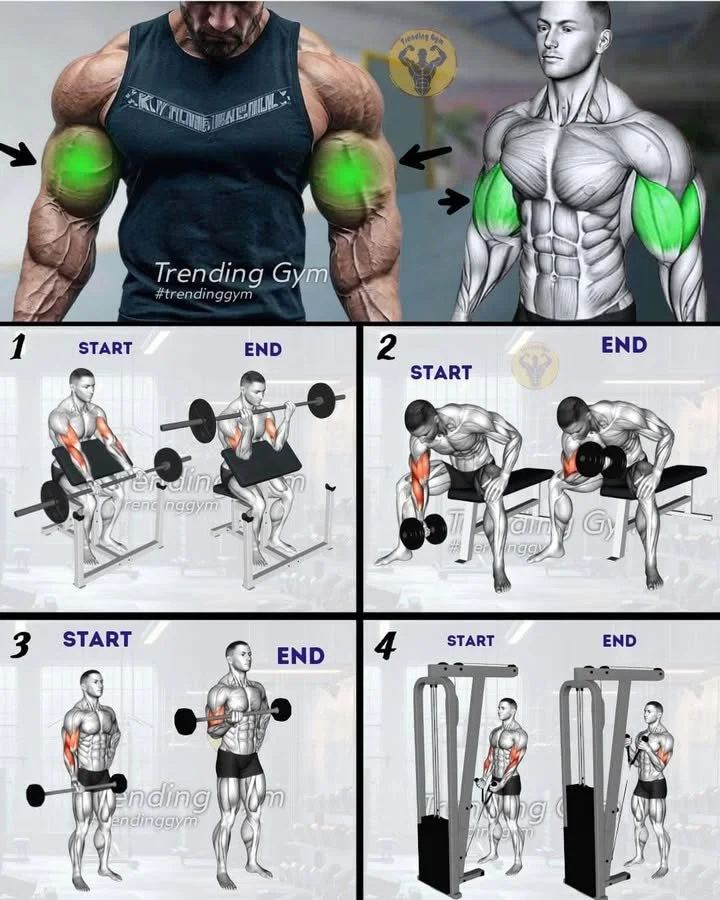
4 effective biceps exercises routine for arm workouts

✅ 4 Effective Biceps Exercises Routine – ARMS Workouts Routine !” 1 Barbell Preacher Curl 2 Concentration Curl 3 Standing Barbell Curl 4 Standing Cable Curls 3 sets 10-12 reps #fblifestyle

4 Effective Biceps Exercises Routine – ARMS Workouts Routine!

Building well-defined biceps doesn’t just enhance the appearance of your arms; it also plays a critical role in various daily activities and sports. If you’re aiming to boost your bicep strength and size, incorporating a focused workout routine is essential. Below is an effective biceps exercise routine that will help you achieve those coveted arms.

Workout Overview

This biceps routine includes four exercises designed to target the muscle from different angles. Each exercise emphasizes proper form and technique to maximize gains while minimizing the risk of injury. Here’s how to structure your workout:

Guidelines

  • Sets: 3
  • Repetitions: 10-12

Exercises

  1. Barbell Preacher Curl

    • Target Muscles: Biceps brachii
    • Instructions: Sit on a preacher bench and hold a barbell with an underhand grip, arms fully extended. Curl the barbell towards your shoulders while keeping your upper arms stationary, then lower it back down for a full stretch.
  2. Concentration Curl

    • Target Muscles: Biceps brachii
    • Instructions: Sit on a bench and lean slightly forward. Hold a dumbbell in one hand, resting your elbow against the inside of your thigh. Curl the weight toward your shoulder and slowly lower it back down. Switch arms after completing a set.
  3. Standing Barbell Curl

    • Target Muscles: Biceps brachii and brachialis
    • Instructions: Stand with your feet shoulder-width apart and hold a barbell with an underhand grip. Keep your elbows close to your body and curl the barbell up to your chest, then lower it back down with control.
  4. Standing Cable Curls

    • Target Muscles: Biceps brachii
    • Instructions: Stand facing a cable machine with the pulley set at the lowest position. Grasp the handle with an underhand grip and pull it toward your shoulders. Keep your elbows locked at your sides and return to the starting position.

Tips for Success

  • Warm-Up: Before starting any exercise routine, make sure to warm up adequately to prevent injuries. Dynamic stretches and light cardio can help prepare your muscles for the workout ahead.
  • Focus on Form: Quality over quantity is key. Maintain proper form throughout each exercise to fully engage your biceps and avoid straining other muscle groups.
  • Mind-Muscle Connection: Concentrate on the biceps during each repetition. This connection can help improve muscle activation and effectiveness of the workout.
  • Hydration and Rest: Stay hydrated throughout your workout and ensure you take enough rest between sets. Proper nutrition and sleep also play significant roles in muscle recovery and growth.

Conclusion

Integrating these four effective exercises into your biceps workout routine can lead to impressive results. Consistency, paired with a focus on proper technique, will help you achieve well-defined and strong biceps. Remember to challenge yourself progressively, whether by increasing weights or varying your routine.

Happy lifting! 💪


#fblifestyle

✅ 4 Effective Biceps Exercises Routine – ARMS Workouts Routine !” 1 Barbell Preacher Curl 2 Concentration Curl 3 Standing Barbell Curl 4 Standing Cable Curls 3 sets 10-12 reps #fblifestyle Read More »

, , , ,
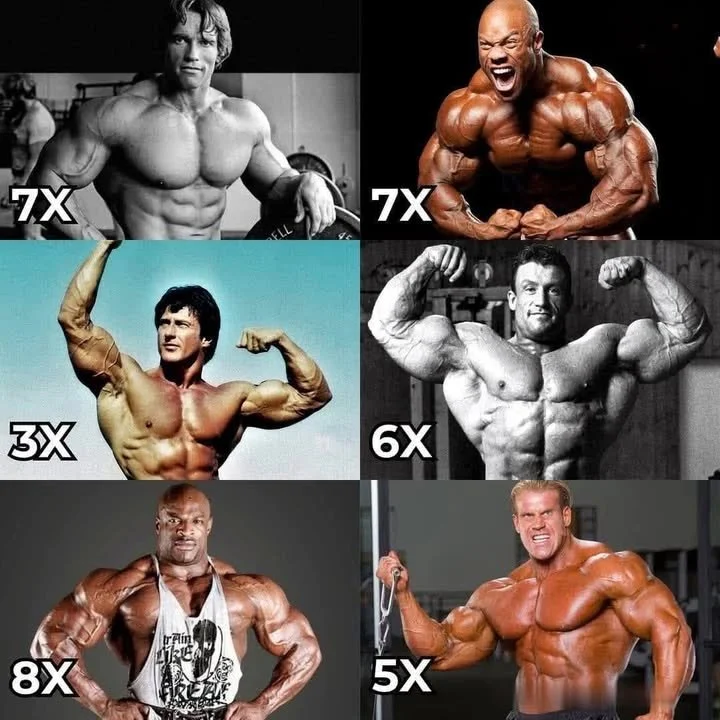
Inspiring legendary bodybuilders showcasing strength and dedication

Legendary 🏆 Bodybuilders 💪🏻🥵 #fblifestyle

The Legendary Bodybuilders: Icons of Strength and Dedication 🏆💪🏻

In the world of fitness and bodybuilding, certain individuals have etched their names into the annals of history, becoming legends in their own right. These bodybuilders have not only sculpted incredible physiques but have also inspired countless individuals to pursue their own fitness journeys. In this article, we will explore the lives and legacies of some of the most iconic bodybuilders, highlighting their contributions to the sport and the lifestyle that surrounds it.

1. Arnold Schwarzenegger: The Austrian Oak

Arnold Schwarzenegger

No discussion of legendary bodybuilders would be complete without mentioning Arnold Schwarzenegger. Born in Austria, Arnold rose to fame as a seven-time Mr. Olympia champion. His incredible physique and charismatic personality helped popularize bodybuilding as a sport. Beyond competitions, he became a Hollywood superstar, starring in iconic films like The Terminator and Predator. Arnold’s influence goes far beyond the stage; he is an advocate for fitness, health, and various philanthropic causes.

2. Ronnie Coleman: The King of Bodybuilding

Ronnie Coleman

Ronnie Coleman, another giant in the realm of bodybuilding, is known for his unmatched achievements, having won the Mr. Olympia title an astonishing eight times. His incredible work ethic and dedication to his training regimen set the standard for aspiring bodybuilders. Ronnie’s catchphrase, "Yeah Buddy!" has become synonymous with his motivational style. Despite facing numerous health challenges in recent years, his spirit and positive outlook continue to inspire both fans and fellow athletes alike.

3. Lee Haney: The Pioneer of Muscle

Lee Haney

Lee Haney is renowned for being one of the first to emphasize the importance of balanced training and a holistic approach to bodybuilding. He won the Mr. Olympia title eight times in the 1980s and is credited with helping to shift the sport toward a more athletic and aesthetic ideal. Lee’s philosophy on fitness includes a strong focus on health and longevity, proving that true bodybuilding is about more than just size; it’s about overall well-being.

4. Dorian Yates: The Shadow

Dorian Yates

Dorian Yates, known as "The Shadow," revolutionized bodybuilding with his intense training methods and incredible conditioning. He secured the Mr. Olympia title six times in the 1990s, setting a new standard for muscle size and symmetry. Dorian’s high-intensity training approach has influenced countless athletes, and he remains a respected figure in the fitness community. His dedication and groundbreaking techniques continue to shape the way bodybuilders train today.

5. Franco Columbu: The Multifaceted Champion

Franco Columbu

Franco Columbu, a two-time Mr. Olympia champion, is celebrated not just for his incredible strength and physique but also for his versatility. A skilled powerlifter and an accomplished actor, Franco played a significant role in the popularization of bodybuilding alongside Arnold. His entrepreneurial endeavors in fitness and nutrition showcase his dedication to promoting a healthy lifestyle. Franco’s legacy as an athlete and his contributions to the sport continue to inspire future generations.

Conclusion: A Legacy of Inspiration

The legendary bodybuilders of our time have transcended the world of fitness, becoming icons of strength, perseverance, and ambition. Their stories are not just about lifting weights but represent the culmination of hard work, discipline, and a dedication to the lifestyle of bodybuilding. Whether you are an aspiring bodybuilder or simply someone seeking inspiration, the legacies of these legends will continue to motivate individuals to pursue their best selves for years to come.

Get Inspired and Build Your Own Legacy

As you embark on your fitness journey, remember the stories of these legendary figures. Strength, both physical and mental, is a path filled with challenges and triumphs. Embrace the grind, stay dedicated, and who knows? You might just become the next legend in the world of bodybuilding. 🏆💪🏻🔥

Legendary 🏆 Bodybuilders 💪🏻🥵 #fblifestyle Read More »

, , , ,
Scroll to Top