Strength training

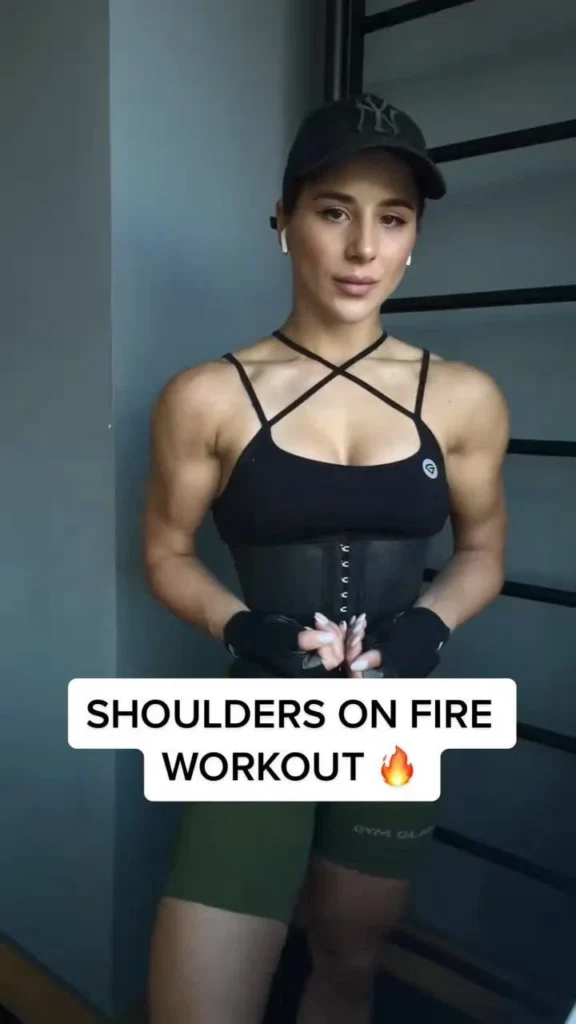
Intense Shoulders ON FIRE workout routine for strength and muscle definition.

Shoulders ON FIRE Workout Routine

Shoulders ON FIRE Workout Routine

Ignite your delts and build rounded, powerful shoulders with this focused Shoulders ON FIRE routine. It blends compound pressing strength, targeted lateral and rear delt isolation, and metabolic finishers to maximize growth and definition. Before you start, make sure your shoulder mobility and rotator cuff strength are primed — if you want an idea for pairing arm work after shoulders, check this barbell biceps routine that complements heavy pressing days.

What you’ll need:

  • Dumbbells (light, medium, heavy)
  • Barbell or Smith machine (optional)
  • Cable machine or resistance band
  • Bench (flat or incline)
  • Light kettlebell (optional)

Principles behind the routine:

  • Start each session with movement prep and progressive loading.
  • Prioritize posterior (rear) delts to avoid imbalance from heavy pressing.
  • Use supersets and tri-sets to increase time under tension and metabolic demand.
  • Finish with high-rep burnouts for capillary density and definition.

Warm-up (8–12 minutes)

  • 5 minutes light cardio (rower, bike, or jump rope)
  • Band pull-aparts: 2 x 15
  • Scapular wall slides: 2 x 12
  • Empty-can raises (light): 2 x 12 each arm
  • 2 sets of 10 reps with a light dumbbell overhead press to groove movement pattern

Shoulders ON FIRE Routine (perform 1–2 times per week)

Do this routine after compound chest/back work or as a dedicated shoulder day. Rest 60–90 seconds between sets unless otherwise noted.

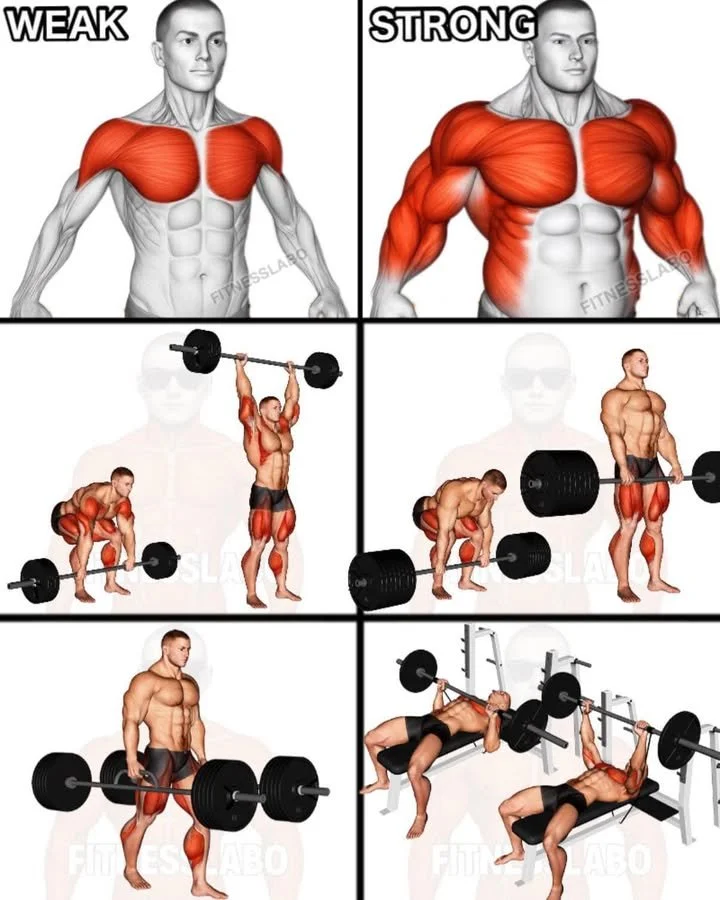
  1. Heavy Compound Press
  • Standing barbell or dumbbell overhead press — 4 sets: 6–8, 6, 8, 10 (drop weight each set)
    Purpose: Build strength and long-term mass on the anterior and lateral heads.
  1. Superset A — Lateral Emphasis
  • Dumbbell lateral raises — 4 sets x 12–15
  • Leaning cable lateral raise or single-arm band lateral raise — 4 sets x 12 each side
    Notes: Control the eccentric. Pause for a 1-second hold at peak on the last rep.
  1. Superset B — Rear Delt & Upper Back
  • Incline bench rear delt flyes (or bent-over DB reverse fly) — 4 sets x 12–15
  • Face pulls (rope) — 4 sets x 15–20
    Purpose: Balance the shoulder capsule and improve posture.
  1. Tri-set C — Volume & Burn
  • Arnold press (light–moderate) — 3 sets x 10–12
  • Upright rows (wide grip to hit lateral delts, or cable high pull) — 3 sets x 10–12
  • Seated dumbbell press (strict) — 3 sets x 8–10
    Notes: Move quickly between exercises. Use the tri-set to create metabolic stress.
  1. Finisher — High-Rep Burnout
  • Plate raises or kettlebell halos — 2 sets x AMRAP (aim 25–50)
  • Alternatively: 2 rounds of 30/30s lateral raises on each side with a 15–20 second rest

Technique & Progression Tips

  • Focus on scapular stability during presses; the motion should come from the shoulder joint, not excessive back arching.
  • When doing lateral raises, lead with the elbow and keep a slight bend to reduce joint stress.
  • Progressive overload: increase reps first, then weight. Track weekly volume (sets x reps x load).
  • Deload every 4–8 weeks depending on recovery. On deload weeks reduce volume by ~40–50%.

Accessory Pairing & Recovery

Pair this shoulder routine with a pulling-heavy back day or lighter arm work to avoid overtaxing pressing patterns. If you like pairing arms on shoulder day, try integrating targeted biceps work for balance — here’s an example of effective biceps exercises that won’t overly fatigue your pressing muscles when done after shoulders.

Recovery:

  • Prioritize sleep and protein intake (0.7–1.0 g/lb bodyweight).
  • Use soft tissue work and mobility drills for the thoracic spine and rotator cuff.
  • Ice only for acute pain; otherwise emphasize movement and gentle heat to promote blood flow.

Sample 6-Week Progression Plan

Week 1–2: Establish form, moderate weights, high control (8–12 rep ranges)
Week 3–4: Increase load on compound presses, add one extra set on lateral work
Week 5: Peak volume — include an extra tri-set and extended finisher
Week 6: Deload — reduce sets and intensity by ~40%

Safety Notes

  • If you experience sharp pain (not typical muscle burn), stop and consult a professional.
  • Avoid excessive behind-the-neck pressing if you have limited shoulder mobility.
  • Scale weights conservatively for unilateral exercises to avoid asymmetry.

Conclusion

Ready to set your shoulders ablaze? For a printable, structured plan to follow alongside this routine, check out the Fire Workout document for a compact template you can bring to the gym.

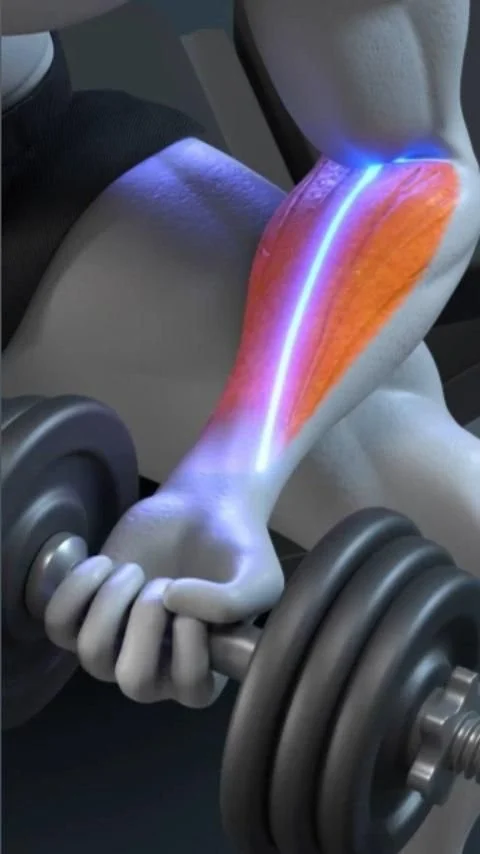
Shoulders ON FIRE Workout Routine Read More »

, , , ,
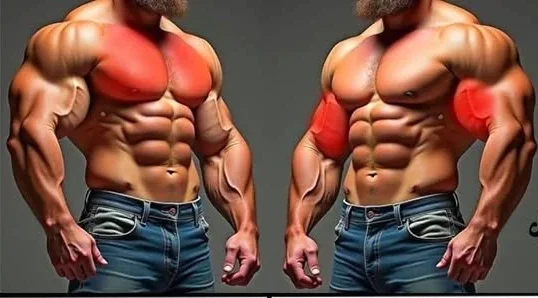
Illustration of effective exercises for building 3D shoulders for strength and definition

Get 3D Shoulders: Build Strength and Definition Fast

Get 3D Shoulders: Build Strength and Definition Fast

Strong, rounded shoulders—what many call "3D shoulders"—come from targeted training that develops all three heads of the deltoid, reinforces supporting muscles, and optimizes recovery. This guide gives you the principles, exercises, and a compact program to add width and definition quickly without getting lost in complicated routines.

Why 3D Shoulders Matter

Well-developed shoulders improve aesthetics and functional strength for pressing, pulling, and overhead work. They also help stabilize the scapula and protect the rotator cuff during heavy lifts. To get balanced, three-dimensional shoulders you must train:

  • Anterior (front) deltoid
  • Lateral (side) deltoid
  • Posterior (rear) deltoid
    …and the traps, rotator cuff, and upper back that support them.

Good shoulder development is supported by a strong torso and stable core, so layering in rotational and anti-rotation work can accelerate progress. For example, exercises like the band twist are great for building that foundational core strength that transfers to more stable overhead work: band twist: how to build core strength.

Training Principles for Fast Results

Follow these key principles to maximize gains:

  • Progressive overload: Gradually increase weight, reps, or volume every 1–3 weeks.
  • Head-specific selection: Include at least one heavy, compound movement and one isolation for each deltoid head.
  • Frequency: Train shoulders 2–3 times per week with varied intensity.
  • Range of motion and control: Prioritize clean movement and full ROM to stimulate fibers across each head.
  • Recovery: Sleep, nutrition, and spacing heavy sessions are critical to avoid overuse injuries.

Best Exercises (and How to Use Them)

Compound lifts build mass and strength; isolation moves carve shape.

  • Overhead Press (barbell or dumbbell) — primary mass builder for anterior and lateral delts. Use heavy sets of 4–6 reps and moderate sets of 8–12.
  • Dumbbell Lateral Raise — isolates the lateral deltoid for width. Aim for controlled reps (10–15).
  • Rear Delt Row / Face Pull — targets posterior delts and upper back. High-rep sets (12–20) maintain health and posture.
  • Arnold Press / Incline Front Raise — variations to emphasize anterior delts and add fullness.
  • Trap Work (shrugs) — builds the upper frame and complements shoulder width.

Use a mix of heavy compound lifts (low reps) and lighter isolation work (higher reps) in each training block.

Sample Workout Split (2–3x Week Focus)

Example 2-day-per-week focused approach that pairs well with other training:

Day A — Strength Focus

  • Barbell Overhead Press: 4 sets × 4–6 reps
  • Weighted Chin-ups or Bent-over Rows: 3 × 6–8
  • Dumbbell Lateral Raises: 4 × 10–12
  • Face Pulls: 3 × 15–20
  • Shrugs: 3 × 8–10

Day B — Hypertrophy & Balance

  • Seated Dumbbell Press: 3 × 8–10
  • Cable Lateral Raises (drop set last set): 3 × 12–15
  • Rear Delt Flyes (on incline or machine): 4 × 12–15
  • Upright Rows (light/moderate): 3 × 10–12
  • Rotator Cuff External Rotations: 3 × 15–20

If you prefer integrating full-body sessions, sprinkle shoulder-focused sets into upper-body days. For athletes looking to boost overall strength quickly, pairing this with heavy posterior chain sessions—like an EMOM deadlift workout—can improve total-body force production and shoulder transfer: the 15-minute heavy deadlift EMOM workout to build strength fast.

Technique & Injury Prevention

  • Keep the shoulder blades stable and slightly retracted during pressing.
  • Avoid excessive forward lean or flaring of the elbows on overhead presses.
  • Use controlled negatives on lateral and rear delt work to maximize time under tension.
  • Warm up the rotator cuff and scapular stabilizers with band work and light sets before heavy pressing.

Nutrition & Recovery

  • Aim for a small caloric surplus (200–400 kcal) if your primary goal is hypertrophy.
  • Protein: 1.6–2.2 g/kg bodyweight per day to support muscle repair and growth.
  • Prioritize sleep (7–9 hours) and manage session density—don’t train shoulders heavy on consecutive days without deloading.

Quick 6-Week Progression Plan

Weeks 1–2: Establish technique. Moderate weight, higher reps (8–12) for most accessory moves.
Weeks 3–4: Increase intensity. Add a heavy day (4–6 reps) and a volume day (10–15 reps).
Weeks 5–6: Peak week with a slight increase in load and a deload in the final week to consolidate gains.

Track at least one metric (press weight, lateral raise reps, or tape measurements) every week to ensure progress.

Conclusion

For a concise, science-backed take on widening and defining your shoulders, check out this practical guide: How I Grew Wider Shoulders FAST (5 Science-Based Tips).

Get 3D Shoulders: Build Strength and Definition Fast Read More »

, , , ,
Arm workout video showcasing effective exercises for arm muscles with dumbbells

[Видео] «💙💙 Give them a try 🔥 💞 “If you started today, you are better than yesterday.” To lea…» в 2025 г | Упражнения для мышц рук, Тренировка с гантелями, Тренировки для мужчин

Arm-Focused Dumbbell Workout for Men — 2025 Edition

"If you started today, you are better than yesterday."
A short, powerful reminder that progress begins the moment you decide to act. Whether you’re restarting training this year or refining your routine, this arm-focused dumbbell workout is designed for strength, size, and functional performance — with clear progressions you can follow through 2025 and beyond. Before jumping in, it helps to assess your nutrient needs so your training returns are maximized and recovery is on track.

Why prioritize arm training?

  • Arms (biceps, triceps, forearms) are involved in most upper-body movements; stronger arms improve pressing, pulling, and carry capacity.
  • Dumbbells offer unilateral correction, greater ROM, and joint-friendly angles compared with machines.
  • Short, targeted sessions can be added to full-body plans or used as focused finishers after larger lifts.

Quick warm-up (5–8 minutes)

  • Light cardio: 2–3 minutes (jump rope, brisk walk).
  • Dynamic mobility: arm circles, band pull-aparts (2 sets x 12).
  • Activation: light dumbbell curls and triceps kickbacks (1–2 sets x 10–15) to prime muscles and nervous system.

Six core dumbbell exercises for arm development

  1. Dumbbell Hammer Curls

    • Targets: brachialis and forearm; helps overall curl size.
    • Tips: keep elbows tucked, drive weight with upper arm, control descent.
  2. Alternating Incline Dumbbell Curls

    • Targets: long head of the biceps for peak and stretch.
    • Tips: set bench at 40–50°, let arms hang behind the body slightly for a deeper stretch.
  3. Seated Overhead Dumbbell Triceps Extension

    • Targets: long head of the triceps.
    • Tips: use both hands to control a single heavy dumbbell or perform single-arm reps to address imbalances.
  4. Kneeling One-Arm Dumbbell Row (for arm & lats)

    • Targets: brachialis support, rear arm balance, and pulling strength.
    • Tips: think of driving your elbow high and back to engage the arm and upper back.
  5. Dumbbell Skull Crushers (lying)

    • Targets: medial and lateral heads of the triceps.
    • Tips: keep upper arms stable; lower dumbbells just behind the forehead or skull for safe extension.
  6. Zottman Curls (curl up supinated, lower pronated)

    • Targets: biceps and forearms with eccentric wrist focus.
    • Tips: rotate at the top smoothly; control the pronated descent to build forearm strength.

Sample workout structure (30–40 minutes)

  • Warm-up as above.
  • Circuit A (3 rounds): Alternating Incline Dumbbell Curls 8–10 reps per arm, Seated Overhead Extension 8–10 reps, rest 60–90 sec between rounds.
  • Circuit B (3 rounds): Hammer Curls 10–12 reps, Skull Crushers 10–12 reps, Zottman Curls 8–10 reps, rest 60–90 sec.
  • Finish with a 60–90 second farmer carry or light static hold to build grip endurance.

Nutrition & recovery

Muscle growth and strength gains require both progressive overload and proper fueling. Prioritize protein distribution across the day and pair workouts with a slight caloric surplus if your goal is size. For practical ways to boost protein in every meal and snack, check out this guide on increasing your protein intake. Also aim for:

  • 7–9 hours of quality sleep nightly.
  • Hydration: 3–4 liters daily (adjust for bodyweight and sweat).
  • Post-workout: 20–40 g high-quality protein and carbohydrates within 1–2 hours if you trained intensely.

Progression and programming tips

  • Progressive overload: increase reps, sets, weight, or density (less rest) over weeks.
  • Frequency: train arms directly 1–3x per week depending on recovery and overall program.
  • Deload: every 4–8 weeks reduce volume/intensity for recovery.
  • Variation: swap in cable or bodyweight moves periodically to avoid plateaus.

Common mistakes to avoid

  • Using momentum instead of muscle tension — slow eccentric phases matter.
  • Neglecting compound lifts — bench presses, rows, and chin-ups build arm strength more efficiently when paired with isolation work.
  • Ignoring forearm and grip training — weak grip limits heavier curls and carries.

Conclusion
Start small, be consistent, and let incremental progress compound. Use the exercises and sample session above as a blueprint, adapt the load and volume to your level, and remember the quote: if you started today, you are already better than yesterday.

[Видео] «💙💙 Give them a try 🔥 💞 “If you started today, you are better than yesterday.” To lea…» в 2025 г | Упражнения для мышц рук, Тренировка с гантелями, Тренировки для мужчин Read More »

, , , ,
Strong arm emoji representing fitness and strength training.

💪🏻

Sure! Here’s a unique article based on the given text, formatted in Markdown.

# Embracing Strength: The Power of Resilience

In an increasingly challenging world, the concept of strength has evolved beyond mere physical prowess. The symbol of 💪🏻 is a testament to this changing paradigm, representing not only muscular strength but also resilience, determination, and the unwavering spirit to overcome obstacles.

## The Multi-Dimensional Nature of Strength

### Physical Strength
Traditionally, strength has been associated with physical abilities—lifting weights, running long distances, and performing strenuous activities. However, developing physical strength is just the tip of the iceberg. It serves as a foundation for a more balanced approach to overall well-being.

### Mental and Emotional Resilience
In recent years, the importance of mental and emotional resilience has gained recognition. The ability to bounce back from setbacks, manage stress, and maintain a positive outlook is critical in today's fast-paced environment. Cultivating mental strength can be likened to training a muscle; it requires practice, patience, and consistent effort.

### Community and Support
No one can achieve strength in isolation. Building a supportive community is essential for fostering resilience. Surrounding yourself with positive influences can provide motivation and encouragement, helping individuals navigate through life's challenges with greater ease. By sharing burdens and celebrating victories, we bolster our collective strength.

## Building Your Strength

### Set Realistic Goals
Establishing achievable goals is the first step in cultivating strength—be it physical, mental, or emotional. Breaking larger ambitions into smaller, more manageable tasks can prevent feelings of overwhelm and foster a sense of accomplishment.

### Practice Mindfulness
Incorporating mindfulness practices, such as meditation or yoga, can enhance resilience. These techniques promote self-awareness, helping individuals process emotions and stress effectively. Mindfulness allows for a more centered approach to challenges, enabling a clearer path to solutions.

### Engage in Regular Physical Activity
Physical exercise is a powerful tool for building strength across all dimensions. Whether it's hitting the gym, going for a run, or practicing a sport, regular activity helps boost mood and fosters mental clarity. The release of endorphins during exercise can significantly enhance resilience.

## The Journey of Transformation

Ultimately, strength is a journey, not a destination. Embracing and acknowledging the various facets of strength allows individuals to grow holistically. Each step taken towards resilience—be it a physical breakthrough, a mental triumph, or a moment of emotional clarity—builds a well-rounded sense of strength.

In a world where resilience is often tested, embodying the spirit of 💪🏻 can serve as a reminder of our capacity to overcome hardships. By focusing on continuous growth and support, we can cultivate a robust strength that prepares us for whatever challenges lie ahead.

Feel free to modify any part of it to better suit your needs!

💪🏻 Read More »

, , , ,
Man performing barbell biceps curls in an arms workout routine.

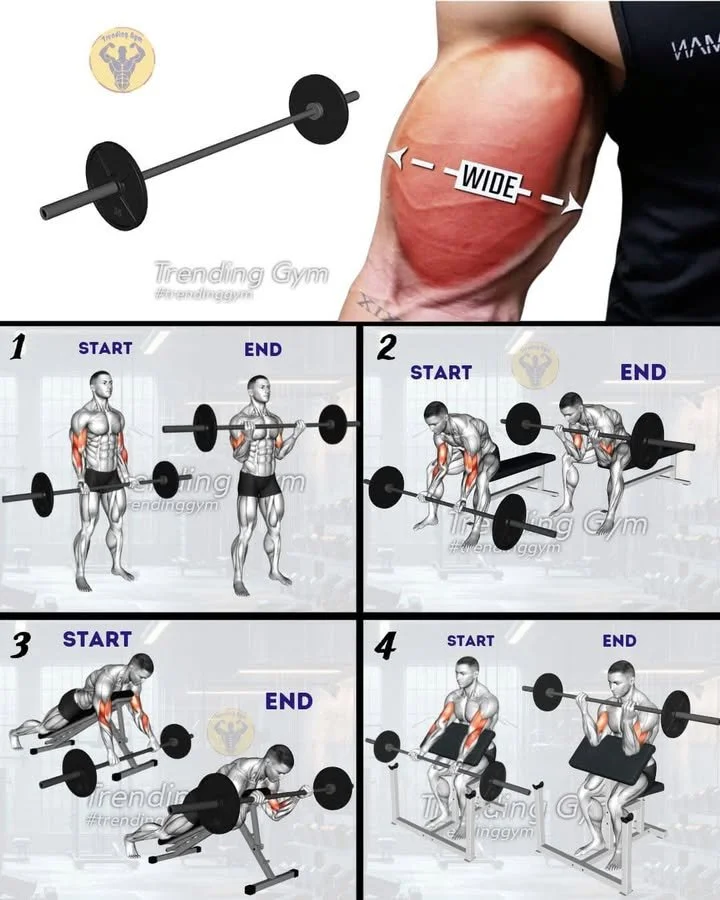
✅ 4 Biceps Exercises Routine (Barbell Only) – ARMS Workouts Routine !” 💪 1 Standing Barbell Curl 2 Seated Barbell Concentration Curls 3 Inclined Bench Reverse Grips Curl 4 Barbell Preacher Curls…

4 Biceps Exercises Routine (Barbell Only)

If you’re looking to build size and strength in your biceps, you’re in the right place! This article outlines a focused routine featuring four effective barbell exercises that can help you sculpt your arms. Grab a barbell and let’s get started with this arms workout routine.

1. Standing Barbell Curl

The standing barbell curl is a classic biceps exercise that targets the biceps brachii muscle.

How to Perform:

  • Stand with your feet shoulder-width apart, gripping a barbell with palms facing forward (supine grip).
  • Keep your elbows close to your torso and your upper arms stationary as you curl the barbell toward your shoulders.
  • Squeeze at the top of the movement and then slowly lower the barbell back to the starting position.

Tips:

  • Avoid swinging the weights; focus on a controlled movement to maximize tension on your biceps.
  • Consider different grips (wide vs. narrow) to target the muscle differently.

2. Seated Barbell Concentration Curls

This variation allows for greater muscle isolation by minimizing the use of other muscles during the lift.

How to Perform:

  • Sit on a bench with your feet firmly planted on the ground.
  • Hold a barbell with both hands, resting one arm on your knee for support.
  • Curl the barbell towards your shoulder while keeping your elbow stationary.
  • Lower back down to the starting position and repeat with the other arm.

Tips:

  • Focus on squeezing the bicep at the top and controlling the descent for maximum muscle engagement.
  • You can adjust your grip for variation; an underhand grip typically provides more bicep activation.

3. Inclined Bench Reverse Grip Curl

The inclined bench reverse grip curl targets the biceps while also engaging the forearms, offering a unique angle of attack.

How to Perform:

  • Set an incline bench to a comfortable angle and sit back against it.
  • With an underhand grip on the barbell, let your arms hang straight down.
  • Curl the barbell toward your shoulders while squeezing your biceps.
  • Return to the starting position in a controlled manner.

Tips:

  • Maintain tension throughout the movement and avoid letting your elbows drift forward.
  • This exercise can help develop the brachialis, adding overall size to your arms.

4. Barbell Preacher Curls

The preacher curl is excellent for isolating the biceps and preventing any cheating during the exercise.

How to Perform:

  • Position yourself on a preacher curl bench, ensuring your chest is against the pad.
  • Hold the barbell with an underhand grip, placing it at the top of the movement.
  • Curl the barbell upward toward your shoulders while keeping your upper arms against the pad.
  • Slowly lower back down to complete the repetition.

Tips:

  • Make sure to keep your elbows fixed against the pad for full isolation.
  • Utilize a weight that allows you to complete each rep with proper form—avoid going too heavy.

Conclusion

These four barbell exercises are a fantastic way to build strength and mass in your biceps. Incorporate them into your regular workout routine for balanced arm development. Remember to warm up properly, focus on form, and progressively increase the weights as your strength improves. Happy lifting! 💪

✅ 4 Biceps Exercises Routine (Barbell Only) – ARMS Workouts Routine !” 💪 1 Standing Barbell Curl 2 Seated Barbell Concentration Curls 3 Inclined Bench Reverse Grips Curl 4 Barbell Preacher Curls… Read More »

, , , ,
4 effective biceps exercises routine for arm workouts

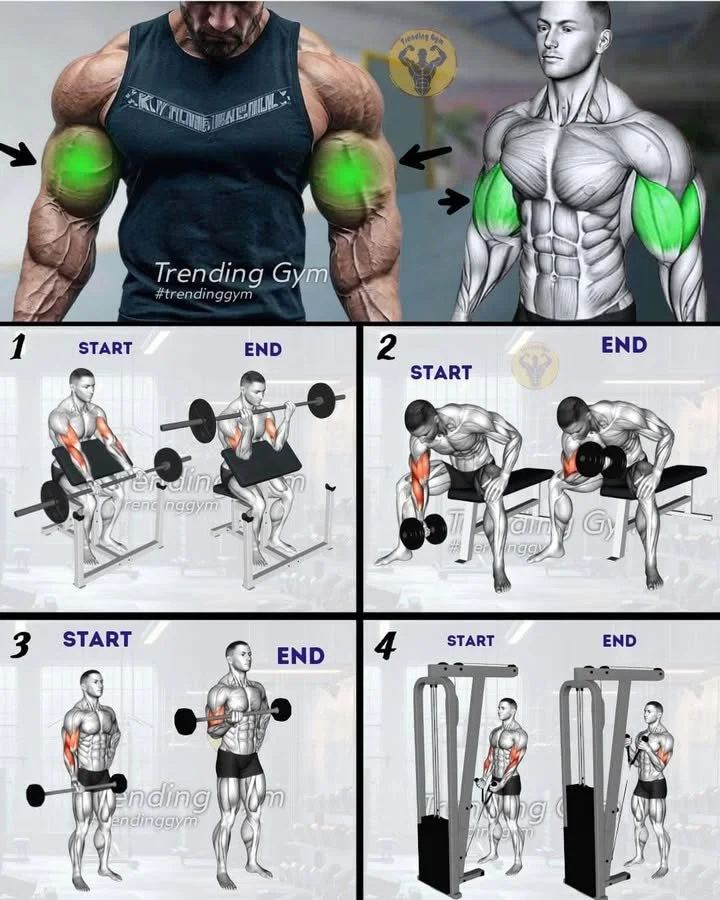
✅ 4 Effective Biceps Exercises Routine – ARMS Workouts Routine !” 1 Barbell Preacher Curl 2 Concentration Curl 3 Standing Barbell Curl 4 Standing Cable Curls 3 sets 10-12 reps #fblifestyle

4 Effective Biceps Exercises Routine – ARMS Workouts Routine!

Building well-defined biceps doesn’t just enhance the appearance of your arms; it also plays a critical role in various daily activities and sports. If you’re aiming to boost your bicep strength and size, incorporating a focused workout routine is essential. Below is an effective biceps exercise routine that will help you achieve those coveted arms.

Workout Overview

This biceps routine includes four exercises designed to target the muscle from different angles. Each exercise emphasizes proper form and technique to maximize gains while minimizing the risk of injury. Here’s how to structure your workout:

Guidelines

  • Sets: 3
  • Repetitions: 10-12

Exercises

  1. Barbell Preacher Curl

    • Target Muscles: Biceps brachii
    • Instructions: Sit on a preacher bench and hold a barbell with an underhand grip, arms fully extended. Curl the barbell towards your shoulders while keeping your upper arms stationary, then lower it back down for a full stretch.
  2. Concentration Curl

    • Target Muscles: Biceps brachii
    • Instructions: Sit on a bench and lean slightly forward. Hold a dumbbell in one hand, resting your elbow against the inside of your thigh. Curl the weight toward your shoulder and slowly lower it back down. Switch arms after completing a set.
  3. Standing Barbell Curl

    • Target Muscles: Biceps brachii and brachialis
    • Instructions: Stand with your feet shoulder-width apart and hold a barbell with an underhand grip. Keep your elbows close to your body and curl the barbell up to your chest, then lower it back down with control.
  4. Standing Cable Curls

    • Target Muscles: Biceps brachii
    • Instructions: Stand facing a cable machine with the pulley set at the lowest position. Grasp the handle with an underhand grip and pull it toward your shoulders. Keep your elbows locked at your sides and return to the starting position.

Tips for Success

  • Warm-Up: Before starting any exercise routine, make sure to warm up adequately to prevent injuries. Dynamic stretches and light cardio can help prepare your muscles for the workout ahead.
  • Focus on Form: Quality over quantity is key. Maintain proper form throughout each exercise to fully engage your biceps and avoid straining other muscle groups.
  • Mind-Muscle Connection: Concentrate on the biceps during each repetition. This connection can help improve muscle activation and effectiveness of the workout.
  • Hydration and Rest: Stay hydrated throughout your workout and ensure you take enough rest between sets. Proper nutrition and sleep also play significant roles in muscle recovery and growth.

Conclusion

Integrating these four effective exercises into your biceps workout routine can lead to impressive results. Consistency, paired with a focus on proper technique, will help you achieve well-defined and strong biceps. Remember to challenge yourself progressively, whether by increasing weights or varying your routine.

Happy lifting! 💪


#fblifestyle

✅ 4 Effective Biceps Exercises Routine – ARMS Workouts Routine !” 1 Barbell Preacher Curl 2 Concentration Curl 3 Standing Barbell Curl 4 Standing Cable Curls 3 sets 10-12 reps #fblifestyle Read More »

, , , ,
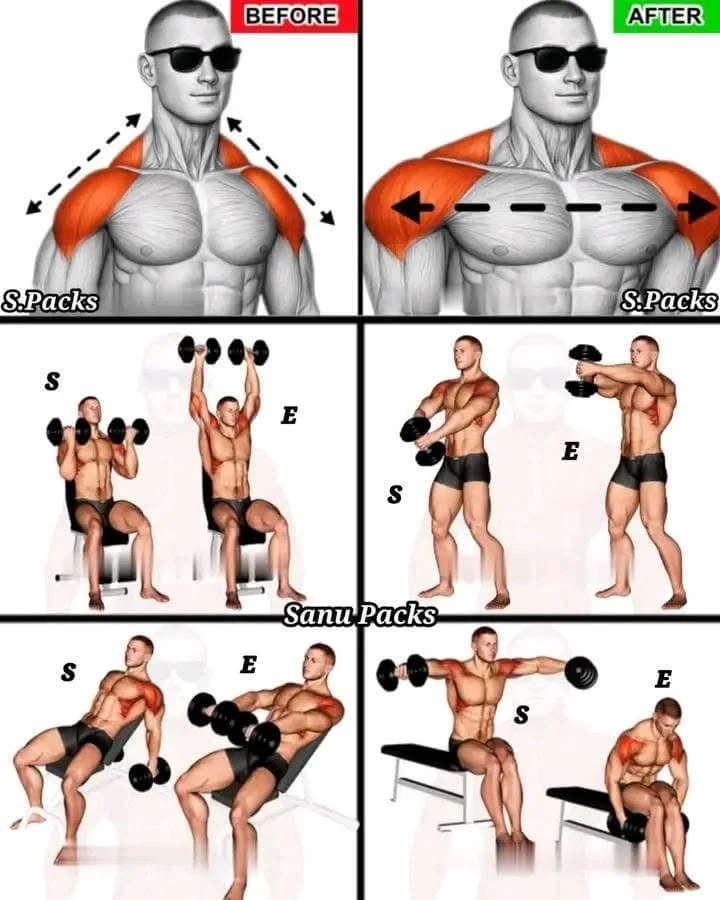
Dumbbell 3D Shoulder Workout including shoulder press, front raise, and more.

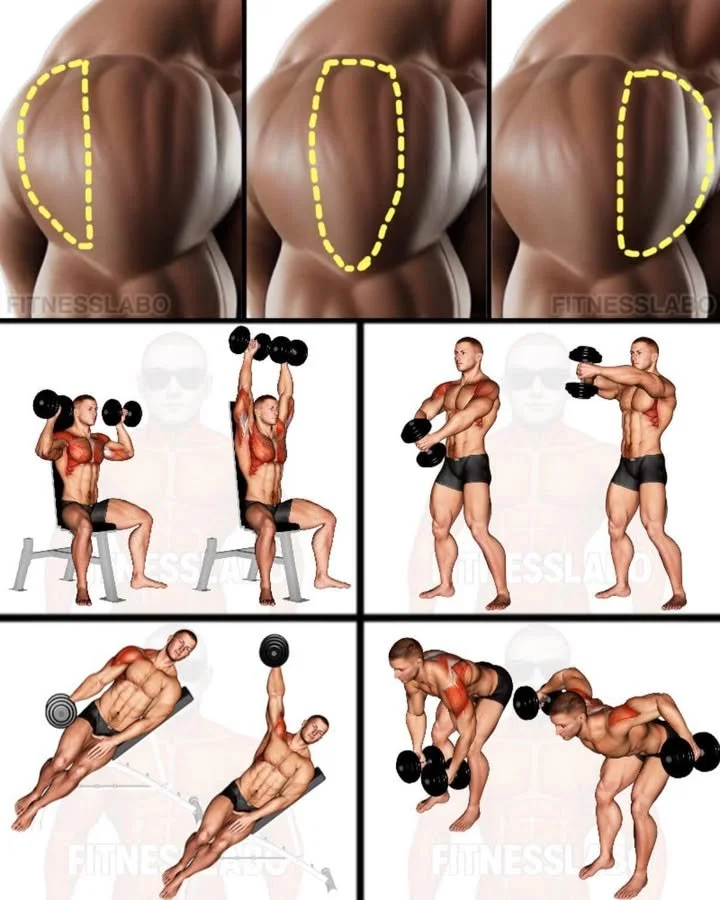
✅ Dumbbell 3D Shoulder Workout 1 Shoulder Press 2 Front Raise 3 Incline One Arm Lateral Raise 4 Reverse Fly 3 sets 12-15 reps

3D Dumbbell Shoulder Workout: A Comprehensive Guide

Building strong, well-defined shoulders is essential for a balanced upper body and improved athletic performance. A well-rounded shoulder workout not only enhances the appearance of your physique but also helps in achieving better strength in various physical activities. This unique 3D Dumbbell Shoulder Workout targets all three heads of the deltoids—anterior, lateral, and posterior—ensuring a comprehensive shoulder development routine.

Workout Overview

This shoulder workout consists of four effective exercises, each designed to challenge your muscles from different angles. The following exercises will ensure that you achieve a balanced workout, while also promoting muscle growth. It’s recommended to perform 3 sets of 12-15 repetitions for each exercise.

1. Dumbbell Shoulder Press

The Dumbbell Shoulder Press is a foundational exercise that emphasizes the anterior (front) deltoid while engaging the triceps and upper chest.

Instructions:

  • Sit or stand with a dumbbell in each hand at shoulder height, palms facing forward.
  • Press the weights overhead until your arms are fully extended.
  • Slowly lower the dumbbells back to the starting position.
  • Keep your core engaged and avoid arching your back.

2. Dumbbell Front Raise

This exercise isolates the front deltoids, helping to build strength and definition.

Instructions:

  • Stand with your feet shoulder-width apart, holding a dumbbell in each hand at your thighs, palms facing your thighs.
  • Raise the dumbbells directly in front of you to shoulder height, keeping your arms straight.
  • Slowly lower the weights back to the starting position.
  • Ensure you use controlled movements to avoid momentum.

3. Incline One Arm Lateral Raise

This unique variation targets the lateral deltoids while also focusing on stability and control.

Instructions:

  • Set an incline bench to about 30-45 degrees.
  • Lie on your side on the bench, holding a dumbbell in your top hand.
  • With a slight bend in your elbow, raise the dumbbell away from your body until it reaches shoulder height.
  • Lower it back down and repeat for the desired number of reps before switching sides.

4. Reverse Fly

The Reverse Fly is key for targeting the posterior deltoids, helping to create a well-rounded shoulder appearance.

Instructions:

  • Stand with your feet shoulder-width apart, holding dumbbells in each hand.
  • Bend at your hips and keep your back straight, allowing the dumbbells to hang down.
  • With a slight bend in your elbows, raise the dumbbells out to the sides until they are level with your shoulders.
  • Squeeze your shoulder blades together at the top of the movement before lowering back down.

Tips for Success

  • Warm Up: Prior to starting your workout, make sure to warm up your shoulder joints and muscles to prevent injury.
  • Progressive Overload: Gradually increase the weights you are lifting to promote muscle growth.
  • Focus on Form: Prioritize proper form over lifting heavier weights to ensure effectiveness and safety.
  • Rest: Allow 30-60 seconds of rest between sets to maximize performance without overtraining.

Conclusion

This 3D Dumbbell Shoulder Workout provides a thorough approach to building comprehensive shoulder strength and endurance. By incorporating these exercises into your routine 2-3 times per week, you’ll develop strong, well-defined shoulders that not only look great but support your overall fitness goals. Remember to listen to your body and adjust weights or repetitions as necessary to maintain quality and effectiveness throughout your workouts!

✅ Dumbbell 3D Shoulder Workout 1 Shoulder Press 2 Front Raise 3 Incline One Arm Lateral Raise 4 Reverse Fly 3 sets 12-15 reps Read More »

, , , ,
Dumbbell glutes workout featuring deadlifts, sumo squats, and hip thrusts

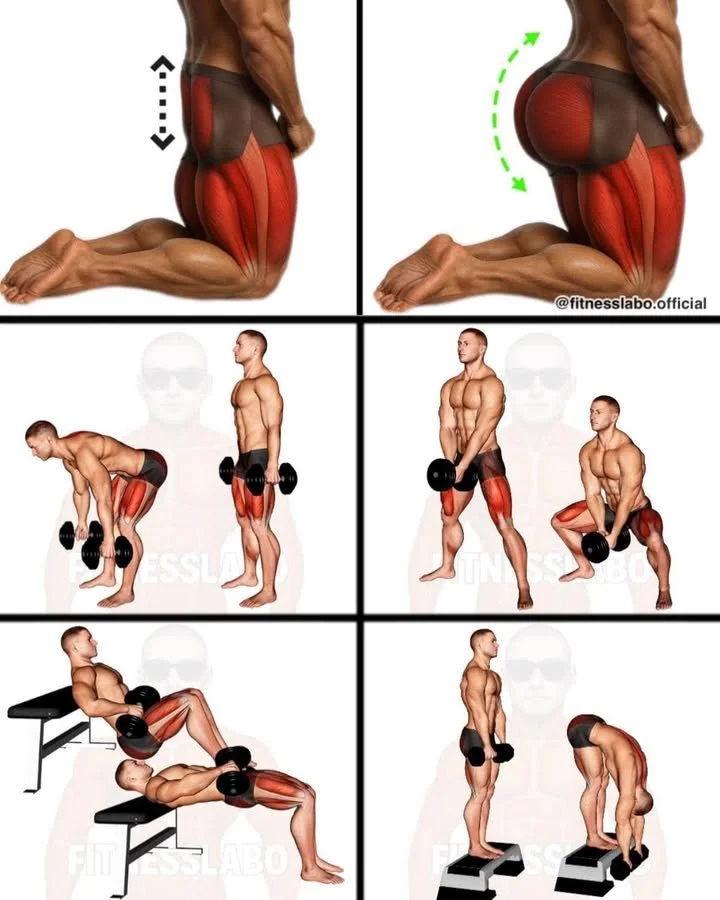
✅ Dumbbell Glutes Workout 1 Deadlift 2 Sumo Squat 3 Hip Thrust 4 Stiff Leg Deadlift

Dumbbell Glutes Workout: Sculpting Stronger Glutes

Building strong and toned glutes doesn’t have to require fancy gym equipment; a simple pair of dumbbells can do the trick! This effective dumbbell glutes workout focuses on four key exercises that target the glute muscles while also engaging the surrounding muscle groups. Whether you’re a beginner or an experienced fitness enthusiast, this workout can be tailored to your individual fitness level.

The Workout Breakdown

1. Dumbbell Deadlift

The dumbbell deadlift is a fundamental exercise that effectively targets your glutes, hamstrings, and lower back.

  • How to Perform:

    • Stand with your feet hip-width apart, holding a dumbbell in each hand.
    • With a slight bend in the knees, hinge forward at the hips, lowering the dumbbells along the front of your legs.
    • Keep your back straight and core engaged.
    • Return to the standing position by pushing through your heels and squeezing your glutes at the top.
  • Sets & Repetitions: 3 sets of 10-12 reps


2. Dumbbell Sumo Squat

The sumo squat variation not only hones in on your glutes but also emphasizes the inner thighs.

  • How to Perform:

    • Stand with your feet wider than shoulder-width apart, toes pointing out at a 45-degree angle, holding a dumbbell in both hands at the center.
    • Lower into a squat position, ensuring your knees track over your toes.
    • Push through your heels to return to the starting position, squeezing your glutes at the top.
  • Sets & Repetitions: 3 sets of 10-15 reps


3. Dumbbell Hip Thrust

Hip thrusts are an outstanding way to isolate the glutes for serious muscle activation.

  • How to Perform:

    • Sit on the ground with your upper back resting against a bench or flat surface, knees bent, and feet flat on the floor.
    • Place a dumbbell across your hips for added resistance.
    • Drive through your heels, lifting your hips until your body forms a straight line from your shoulders to your knees.
    • Hold for a brief moment at the top, then lower back to the starting position.
  • Sets & Repetitions: 3 sets of 10-15 reps


4. Dumbbell Stiff Leg Deadlift

This exercise particularly emphasizes the hamstrings while still providing fantastic engagement for the glutes.

  • How to Perform:

    • Stand with your feet hip-width apart and hold a dumbbell in each hand, arms hanging in front of you.
    • Keep your legs straight (with a slight bend in your knees) as you hinge at the hips, lowering the dumbbells toward the ground while maintaining a flat back.
    • Engage your glutes as you return to standing, driving through your heels.
  • Sets & Repetitions: 3 sets of 10-12 reps


Conclusion

Incorporating this dumbbell glutes workout into your weekly fitness regimen can help you achieve firmer, stronger glute muscles, boost your overall lower body strength, and improve your athletic performance. Always remember to focus on proper form to maximize benefits and prevent injury.

Final Tips:

  • Start with a weight that feels comfortable, and gradually increase it as your strength improves.
  • Incorporate a proper warm-up and cooldown to enhance your workout experience and recovery.
  • Consistency is key! Aim to perform this workout 2-3 times per week for optimal results.

Get ready to feel the burn and enjoy the journey to sculpting those glutes!

✅ Dumbbell Glutes Workout 1 Deadlift 2 Sumo Squat 3 Hip Thrust 4 Stiff Leg Deadlift Read More »

, , , ,
Barbells only cobra back workout for strengthening the back

Barbells only cobra back workout 💪

The Ultimate Barbells-Only Cobra Back Workout 💪

When it comes to building a strong and defined back, incorporating a variety of exercises is key. While many people often rely on machines or bodyweight exercises, the barbells-only approach can be incredibly effective for sculpting your lats, traps, and entire posterior chain. One particular routine that stands out is the Cobra Back Workout. Designed to enhance strength, stability, and overall muscle definition, this workout emphasizes using barbells to achieve maximum results. Let’s dive into how to conduct a barbells-only cobra back workout.

Why Choose Barbells?

Barbells offer a unique advantage when it comes to strength training. They allow for progressive overload, meaning you can increase the weight over time to continue challenging your muscles. Additionally, barbell movements engage multiple muscle groups, improving functional strength and coordination.

Benefits of the Cobra Back Workout

  • Strengthens the Entire Back: This workout primarily targets the upper and lower back, helping to create a balanced and strong physique.
  • Improves Posture: By focusing on back muscles, the cobra workout helps counteract poor posture caused by long hours of sitting.
  • Enhances Athletic Performance: A strong back is essential for most athletic activities. This workout can improve performance in various sports and exercises.
  • Increases Muscle Definition: The combination of compound movements in this routine promotes hypertrophy, leading to a more defined back.

The Cobra Back Workout Routine

Here’s a detailed routine highlighting a variety of barbell exercises to help you achieve your fitness goals:

1. Barbell Deadlifts

Sets: 3
Reps: 8-10
Rest: 60-90 seconds

Deadlifts are a quintessential compound movement that engage your entire back along with your hamstrings and glutes. Start with your feet hip-width apart, grip the barbell with both hands, and lift while keeping your back straight.

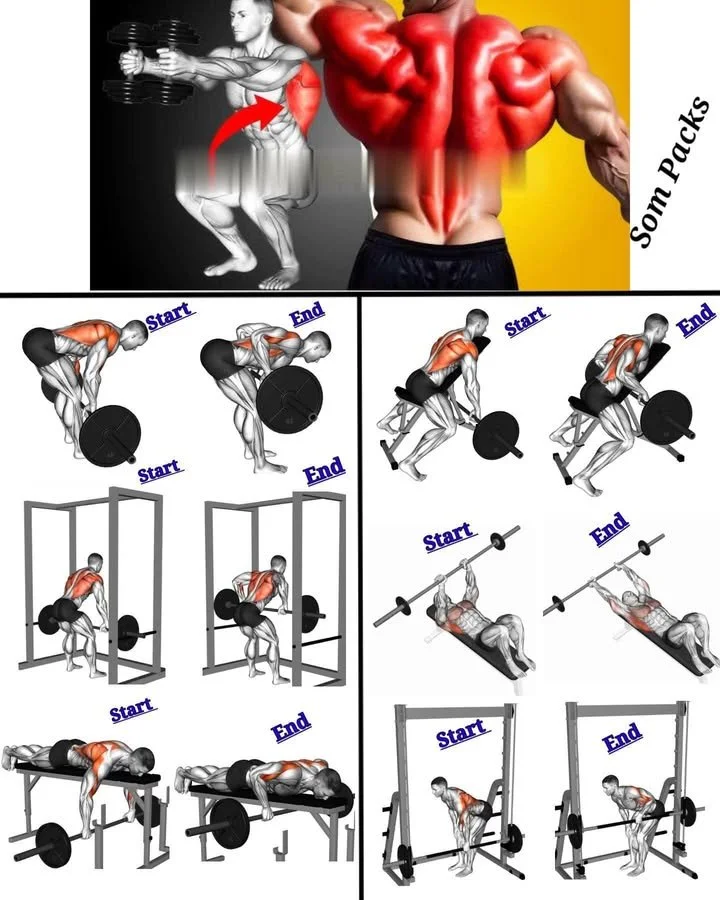
2. Bent-Over Barbell Rows

Sets: 3
Reps: 8-12
Rest: 60-90 seconds

With your feet shoulder-width apart, bend your knees slightly and hinge at the hips to lower your torso. Pull the barbell towards your lower ribs, squeezing your shoulder blades together at the top of the movement.

3. Barbell Shrugs

Sets: 3
Reps: 10-15
Rest: 60 seconds

Stand straight holding the barbell in front of you. Elevate your shoulders towards your ears as high as possible before lowering back down. This exercise focuses on the trapezius muscles.

4. Barbell Overhead Press

Sets: 3
Reps: 8-10
Rest: 90 seconds

While primarily a shoulder exercise, the overhead press also engages your upper back. Stand with your feet shoulder-width apart, and press the barbell overhead while keeping your core tight.

5. Barbell Reverse Grip Bent-Over Rows

Sets: 3
Reps: 8-12
Rest: 60-90 seconds

Using an underhand grip on the barbell, perform the bent-over row. This variation targets the biceps as well as the back, ensuring an effective total body workout.

Tips for an Effective Workout

  • Warm-up: Always start with a warm-up to prepare your muscles and prevent injuries.
  • Focus on Form: Proper form is crucial when lifting heavy weights. Prioritize technique over the amount of weight lifted.
  • Controlled Movements: Use controlled, smooth movements to maximize effectiveness and avoid injury.
  • Cooldown: Don’t forget to stretch your back after the workout to promote flexibility and recovery.

Conclusion

The barbells-only cobra back workout is an excellent way to strengthen your back, improve your posture, and achieve that muscular definition you desire. By incorporating these barbell exercises into your routine, you’ll develop a strong, functional back that supports your overall fitness goals. Whether you’re a seasoned lifter or just starting out, this workout can be adjusted to suit your needs. So grab your barbell, focus on your form, and let’s get to work! 💪

Barbells only cobra back workout 💪 Read More »

, , , ,
How to Build Bigger Glutes

How to Build Bigger Glutes: A Comprehensive Guide

let’s fined out is it bigger Glutes

Achieving well-defined and bigger glutes is a common fitness goal for many individuals. A structured workout routine that focuses on the right exercises can help in strengthening and enlarging this muscle group effectively. Below, we will explore some key exercises you can incorporate into your fitness regime for massive glute gains.

How to Build Bigger Glutes

1. Reverse Hyper Extensions

Reverse hyperextensions are an excellent exercise for targeting the gluteus maximus while also engaging the lower back and hamstrings. This movement mimics the natural hip extension pattern, which is crucial for glute growth.

How to Perform:

  • Position yourself on the reverse hyperextension machine with your hips at the edge.
  • Grab the handles securely.
  • Allow your legs to hang off the edge, keeping your feet pointed and slightly together.
  • Engage your core and lift your legs in a controlled motion until they are parallel to the ground.
  • Slowly lower your legs back to the starting position.

Sets and Reps: Perform 3 sets of 12-15 reps.

2. Romanian Deadlift

The Romanian deadlift is a fantastic compound movement focusing on the posterior chain, particularly the glutes and hamstrings. This exercise not only builds strength but also improves flexibility in the hips.

How to Perform:

  • Stand with feet shoulder-width apart, holding a barbell with both hands in front of your thighs.
  • Keeping your knees slightly bent, hinge at the hips and lower the barbell along your legs, maintaining a straight back.
  • Go as low as your flexibility allows, ideally stopping when you feel a stretch in your hamstrings.
  • Engage your glutes to return to the starting position while keeping your back straight.

Sets and Reps: Complete 3 sets of 12-15 reps.

3. Back Extensions

How to Build Bigger Glutes

Back extensions, often performed on a hyperextension bench, are excellent for strengthening the lower back while also engaging the glutes. This exercise emphasizes hip extension and can contribute to building stronger glute muscles.

How to Perform:

  • Position yourself on the back extension machine, ensuring your hips are snug against the pad.
  • Cross your arms over your chest or place your hands behind your head.
  • Lower your upper body towards the ground while maintaining a straight spine.
  • Engage your glutes and lift your torso back to a neutral position.

Sets and Reps: Aim for 3 sets of 12-15 reps.

4. Wall Squats

Wall squats are a low-impact exercise that can help promote proper squat form while effectively targeting the glute muscles. This is an excellent movement for building endurance and strength in the glutes.

How to Perform:

  • Stand with your back against a wall, feet shoulder-width apart, and about 2 feet away from the wall.
  • Slide your back down the wall until your thighs are parallel to the ground, ensuring your knees do not go past your toes.
  • Hold this position while engaging your core and glutes.
  • Slowly push through your heels to stand back up against the wall.

Sets and Reps: Perform 3 sets of 12-15 reps.

Conclusion

Building bigger glutes requires a combination of effective exercises, proper form, and consistency. By incorporating reverse hyperextensions, Romanian deadlifts, back extensions, and wall squats into your routine, you will start seeing improvements in your strength and glute development. Always remember to warm up before your workout and listen to your body to prevent injuries. Happy lifting!

How to Build Bigger Glutes: A Comprehensive Guide Read More »

, , , ,
Dumbbell shoulder workout demonstration for fitness enthusiasts.

✅ Dumbbell Shoulder Workout #gymmotivation #gym #fitness Mateo Jeff Adan

Ultimate Dumbbell Shoulder Workout for Maximum Gains

If you’re looking to build strength, definition, and overall muscle mass in your shoulders, a dumbbell shoulder workout is a fantastic way to achieve those goals. Dumbbells are incredibly versatile tools that allow for a full range of motion while also engaging stabilizing muscles that may be overlooked with other equipment. So grab your dumbbells, and let’s dive into a workout that will challenge you and push you to new heights!

Why Dumbbells for Shoulder Workouts?

Dumbbells offer several benefits when it comes to shoulder exercises:

  • Increased Range of Motion: With dumbbells, you can move freely, working your muscles through a wider range of motion.
  • Improved Stability: Holding a dumbbell in each hand engages your stabilizing muscles, leading to better all-around strength and coordination.
  • Unilateral Training: Dumbbells help correct muscle imbalances by allowing you to train each side of your body independently.

The Ultimate Dumbbell Shoulder Workout Routine

Warm-Up (5-10 Minutes)

Before diving into the workout, it’s crucial to warm up your shoulders to prevent injury:

  1. Arm Circles – 2 minutes (1 minute forward, 1 minute backward)
  2. Dynamic Shoulder Stretch – 2 minutes (hold each stretch for 15-20 seconds)
  3. Scapular Push-Ups – 2 sets of 10-15 reps

The Workout

  1. Dumbbell Shoulder Press

    • Reps: 3 sets of 8-12
    • Tip: Ensure your elbows don’t flare out to the sides; keep them slightly in front of your body.
  2. Dumbbell Lateral Raise

    • Reps: 3 sets of 10-15
    • Tip: Keep a slight bend in your elbows and raise the dumbbells to shoulder height, pausing briefly at the top.
  3. Dumbbell Front Raise

    • Reps: 3 sets of 10-12
    • Tip: Lift the dumbbells slowly and control the descent to maximize tension on the deltoids.
  4. Dumbbell Bent-Over Reverse Fly

    • Reps: 3 sets of 10-15
    • Tip: Keep your back straight and hinge at your hips; focus on squeezing your shoulder blades together at the top of the movement.
  5. Dumbbell Arnold Press

    • Reps: 3 sets of 8-12
    • Tip: Start with the dumbbells in front of your face and rotate your wrists as you press them upwards.

Cool Down (5-10 Minutes)

Finish your workout with some stretches to help recover and improve flexibility:

  • Shoulder Stretch: Hold each arm across your body for 20-30 seconds.
  • Triceps Stretch: Raise one arm overhead, bending at the elbow, and gently pull with the other hand for 20-30 seconds.
  • Chest Opener: Stand or sit with your hands behind your back and gently pull your shoulder blades together while lifting your chest.

Conclusion

Incorporating a dumbbell shoulder workout into your routine is an excellent way to build strong, defined shoulders while improving overall strength and stability. Remember to listen to your body, maintain proper form, and increase weights gradually as you gain strength.

Stay motivated, track your progress, and share your journey using the hashtags: #gymmotivation #gym #fitness. Let’s crush those fitness goals together!


Feel free to mix and match these exercises as you see fit and make this routine your own. Happy lifting, and may your shoulders be as strong as your determination!

✅ Dumbbell Shoulder Workout #gymmotivation #gym #fitness Mateo Jeff Adan Read More »

, , , ,
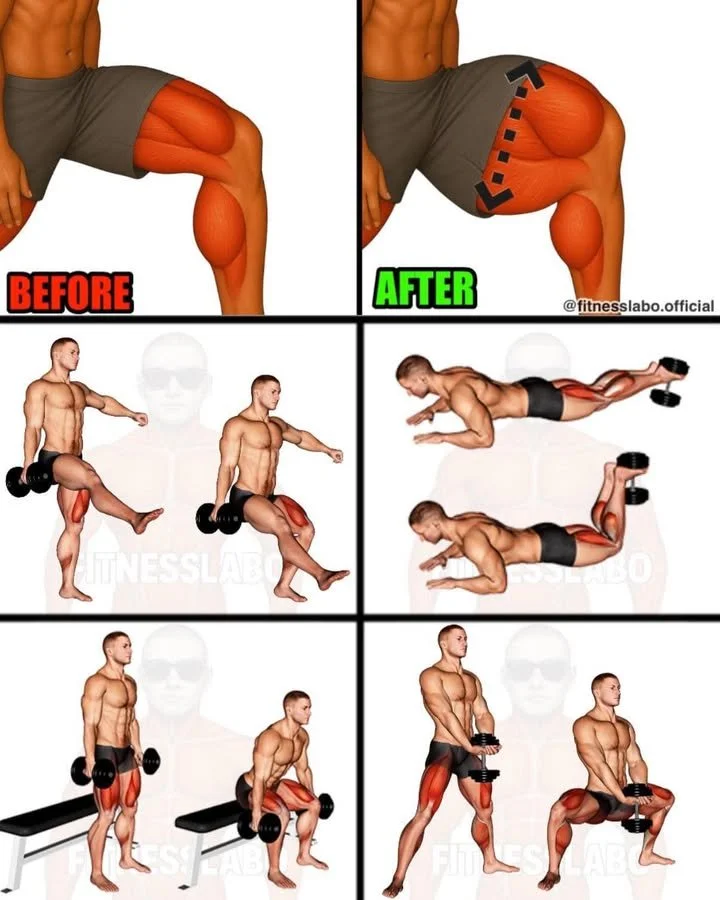
A workout session featuring exercises for building bigger legs: pistol squats and leg curls.

✅ How To Build Bigger Legs 1 Pistol Squat 2 Laying Leg Curl 3 Bench Squat 4 Plyo Squat 3 sets 12-15 reps

How to Build Bigger Legs: A Comprehensive Guide

Building stronger, more muscular legs is a goal for many fitness enthusiasts and athletes alike. Not only do well-developed legs contribute to a balanced physique, but they also enhance athletic performance and improve functional strength. Here, we will explore some effective exercises tailored to help you achieve bigger legs. Let’s dive into the specifics!

1. Pistol Squat

The pistol squat is a challenging unilateral exercise that targets multiple muscle groups, including the quadriceps, hamstrings, and glutes. This exercise also improves balance, flexibility, and core strength.

How to Perform:

  • Stand on one leg with the other extended straight in front of you.
  • Lower your body into a squat position while keeping your extended leg off the ground.
  • Go down as low as you can, ideally reaching a full squat position.
  • Push through your heel to return to the starting position.

Sets and Reps:

Aim for 3 sets of 12-15 reps on each leg. If you’re a beginner, you can use support to help maintain balance.

2. Laying Leg Curl

The laying leg curl is a fantastic isolation exercise that specifically targets the hamstrings. Building strong hamstrings is crucial for overall leg development and injury prevention.

How to Perform:

  • Lie face down on a leg curl machine and position your ankles under the padded lever.
  • Curl your legs upwards towards your glutes while keeping your hips down against the bench.
  • Slowly lower the weight back to the starting position.

Sets and Reps:

Perform 3 sets of 12-15 reps. Focus on controlling the movement and squeezing your hamstrings at the peak contraction.

3. Bench Squat

The bench squat is great for developing proper squat mechanics and building strength in the quads and glutes. It’s an excellent option for those who may struggle with traditional squats.

How to Perform:

  • Stand in front of a bench or box with your feet shoulder-width apart.
  • Push your hips back and lower your body as if you are going to sit on the bench.
  • Make sure your knees don’t extend past your toes, and your back remains straight.
  • Lightly touch the bench with your glutes before pushing back up to standing.

Sets and Reps:

Complete 3 sets of 12-15 reps. Use body weight or add a barbell or dumbbells for added resistance as you gain strength.

4. Plyo Squat

Plyometric exercises are excellent for building explosive strength and power in the legs. The plyo squat incorporates speed and stability, making it a dynamic addition to your leg workout.

How to Perform:

  • Start in a squat position with your feet shoulder-width apart.
  • Jump as high as you can, extending your arms upwards.
  • Land softly back into the squat position, absorbing the impact with your legs.

Sets and Reps:

Aim for 3 sets of 12-15 reps. Ensure you maintain proper form to avoid injury and enhance effectiveness.

Conclusion

Incorporating these exercises into your leg workout routine can help you build bigger, stronger legs over time. As always, focus on maintaining proper form, gradually increasing resistance, and listening to your body to prevent injuries. Happy training, and enjoy your journey to achieving impressive leg gains!

✅ How To Build Bigger Legs 1 Pistol Squat 2 Laying Leg Curl 3 Bench Squat 4 Plyo Squat 3 sets 12-15 reps Read More »

, , , ,
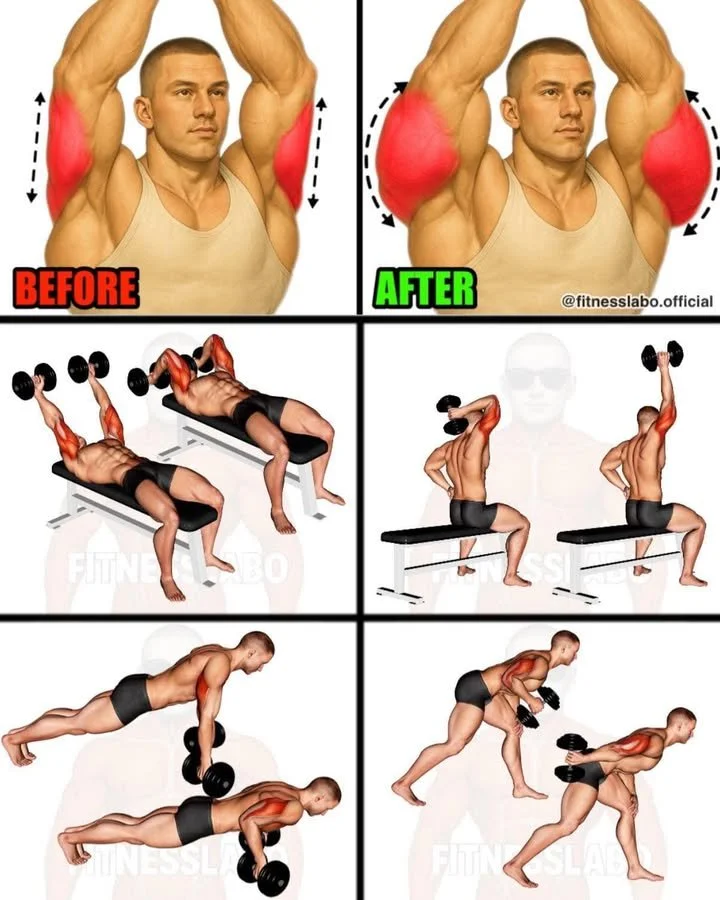
Dumbbell triceps workout with exercises like laying extension and kickback.

✅ Triceps Workout Using Dumbbells 1 Laying Extension 2 One Arm Overhead Extension 3 Reverse Push-up 4 Kickback 3 sets 12 reps

Dumbbell Triceps Workout: Sculpting Strong Arms

Building strong triceps is crucial for achieving well-defined arms and enhancing overall upper body strength. Utilizing dumbbells in your workout routine allows for greater flexibility and enables you to target your triceps effectively. This article will guide you through an efficient triceps workout that can be done at home or in the gym.

Overview of the Workout

This triceps workout consists of four fundamental exercises that focus on engaging and isolating the triceps. Each exercise can be performed in three sets of 12 repetitions. Remember to adjust the weight of the dumbbells based on your fitness level, ensuring you maintain proper form throughout each movement.

1. Laying Extension

Instructions:

  • Lie flat on your back on a bench or mat.
  • Hold a dumbbell in each hand, arms extended above your chest.
  • Slowly lower the dumbbells toward your forehead by bending your elbows.
  • Extend your arms back to the starting position, squeezing your triceps at the top.

Tips:

  • Avoid letting your elbows flare out; keep them tucked in.
  • Use a lighter weight to maintain control throughout the movement.

2. One Arm Overhead Extension

Instructions:

  • Stand or sit with a dumbbell in one hand.
  • Raise the dumbbell overhead, extending your arm fully.
  • Keeping your upper arm stationary, lower the dumbbell behind your head by bending your elbow.
  • Return to the starting position, focusing on using your triceps to lift the weight.

Tips:

  • Engage your core to prevent arching your back.
  • Perform all reps on one side before switching to the other.

3. Reverse Push-up

Instructions:

  • Position yourself in a push-up stance but with your palms facing towards you, gripping the dumbbells.
  • Lower your body towards the ground by bending your elbows, keeping them close to your sides.
  • Push back up through your triceps to return to the starting position.

Tips:

  • Keep your body in a straight line from head to heels.
  • If this is too challenging, you can modify by performing the exercise on your knees.

4. Kickback

Instructions:

  • Bend over at a 45-degree angle with a dumbbell in each hand, arms bent at the elbows.
  • Extend your arms backward, squeezing your triceps at the top of the movement.
  • Return to the starting position by bringing the dumbbells back to the bent position.

Tips:

  • Make sure to maintain a flat back throughout the exercise.
  • Execute the movements with control to maximize the workout’s effectiveness.

Workout Structure

  • Sets: 3
  • Reps: 12 for each exercise

Conclusion

Incorporating this dumbbell triceps workout into your routine can help you build stronger, more defined arms. Remember to focus on your form and gradually increase the dumbbell weight as you become more comfortable with each exercise. Consistency is key; with dedication and the right approach, you’ll notice significant improvements in your triceps strength and endurance. Happy lifting!

✅ Triceps Workout Using Dumbbells 1 Laying Extension 2 One Arm Overhead Extension 3 Reverse Push-up 4 Kickback 3 sets 12 reps Read More »

, , , ,
Dumbbell Chest Workout including Twist Press, Incline Press, and Dumbbell Fly exercises.

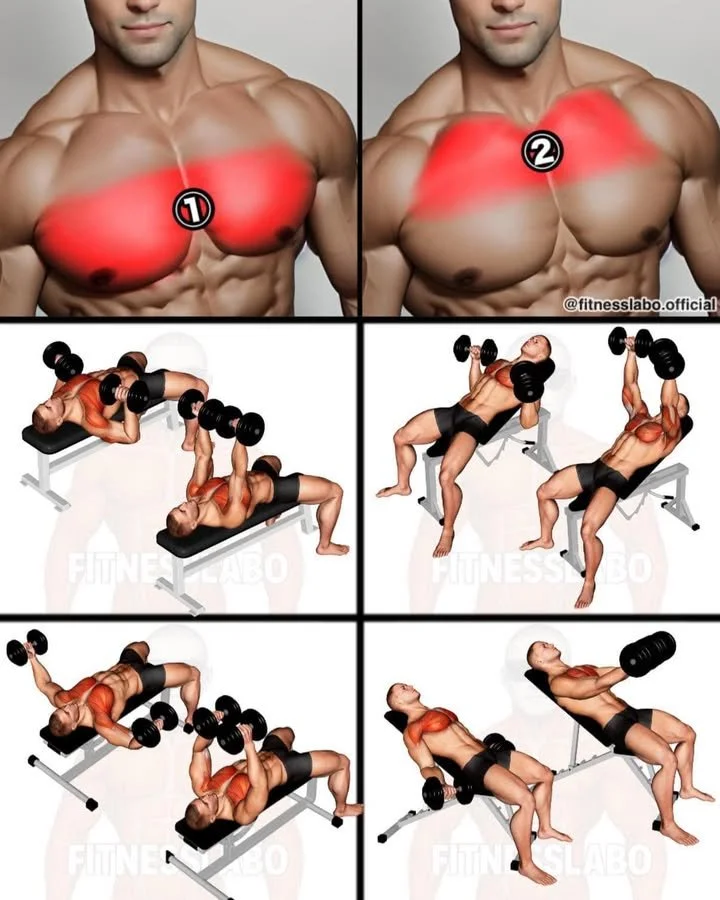
✅ Dumbbell Chest Workout 1 Twist Dumbbell Press 2 Incline Dumbbell Press 3 Dumbbell Fly 4 Incline Low Fly 3 sets 12-15 reps

Effective Dumbbell Chest Workout for Strength and Definition

In the realm of strength training, a well-rounded chest workout is essential for building upper body strength, improving posture, and enhancing athletic performance. Utilizing dumbbells allows for a greater range of motion and engages stabilizing muscles, leading to more effective workouts. Below is a unique dumbbell chest workout designed to challenge your muscles and promote growth.

Dumbbell Chest Workout Routine

1. Twist Dumbbell Press

  • Sets: 3
  • Reps: 12-15

The Twist Dumbbell Press not only targets your pectorals but also engages your triceps and shoulders. Begin by lying on a flat bench with a dumbbell in each hand, palms facing your feet before twisting them outward as you press the weights upward, creating a fluid motion that enhances muscle activation.

2. Incline Dumbbell Press

  • Sets: 3
  • Reps: 12-15

Moving on to the Incline Dumbbell Press, this variation emphasizes the upper chest muscles and shoulders. Set your bench to an incline of about 30-45 degrees. Press the dumbbells from shoulder height to above your chest while maintaining a stable core and controlled movement. Remember to exhale as you lift the weights and inhale as you lower them.

3. Dumbbell Fly

  • Sets: 3
  • Reps: 12-15

The Dumbbell Fly is a classic exercise that focuses on chest stretching and contraction, improving muscle development and definition. Lying flat on a bench, hold the dumbbells above your chest with a slight bend in your elbows. Gradually lower the weights out to your sides, feeling the stretch in your chest before bringing them back to the starting position. Keep your movements slow and controlled to maximize effectiveness.

4. Incline Low Fly

  • Sets: 3
  • Reps: 12-15

For a twist on the standard fly, the Incline Low Fly targets the upper chest from a different angle. Set your bench to an incline and perform the fly motion, keeping the dumbbells lower than your chest. This variation helps to isolate and define the upper pectoral muscles while adding diversity to your workout routine.

Workout Tips

  • Warm-Up: Always start with a proper warm-up to prepare your muscles and joints, reducing the risk of injury.
  • Rest: Ensure you take 60-90 seconds of rest between sets.
  • Form over Weight: Prioritize proper form over lifting heavier weights to minimize injury risk and maximize effectiveness.
  • Cool Down: After your workout, take some time to stretch and cool down, which will help with recovery and flexibility.

Conclusion

Integrating this dumbbell chest workout into your fitness routine can effectively enhance your upper body strength and muscle definition. By focusing on form, controlling your movements, and pushing your limits, you’ll be well on your way to achieving a stronger, more defined chest. Remember, consistency is key, so be sure to incorporate this workout regularly for the best results!

Stay committed, and enjoy the journey to a sculpted chest!

✅ Dumbbell Chest Workout 1 Twist Dumbbell Press 2 Incline Dumbbell Press 3 Dumbbell Fly 4 Incline Low Fly 3 sets 12-15 reps Read More »

, , , ,
Dumbbell workout focusing on chest and biceps for strength training.

how to train Chest & biceps only dumbbell workout

Chest & Biceps Dumbbell Workout

When it comes to building a powerful upper body, nothing quite compares to a focused workout targeting the chest and biceps. Using just dumbbells, you can effectively sculpt and define these muscle groups, enhancing strength and aesthetic appeal. In this article, we’ll explore a specialized routine that highlights the synergy between chest and bicep exercises, providing you with a guide to maximize your gains.

Why Focus on Chest & Biceps?

Dumbbell workout focusing on chest and biceps for strength training.

The chest and biceps are two of the most visually striking muscle groups in fitness. A well-developed chest adds breadth to your physique, while strong biceps create a striking definition of the arms. Moreover, these muscle groups often work in unison during compound lifts, making a combined workout efficient for hypertrophy (muscle growth).

Benefits of Dumbbell Workouts

Dumbbells offer a range of advantages:

  • Versatile Resistance: They allow for various exercises targeting different angles and muscle fibers.
  • Improved Stabilization: Using dumbbells engages stabilizing muscles, leading to better overall strength.
  • Range of Motion: Dumbbells can enhance the range of motion, leading to better muscle engagement.

The Ultimate Dumbbell Workout

Warm-Up (10 Minutes)

Start with a quick warm-up to prepare your muscles:

  • Arm Circles: 2 minutes (1 minute forward, 1 minute backward)
  • Push-Ups: 3 sets of 10 reps
  • Dynamic Chest Stretch: 30 seconds

Workout Routine

  1. Dumbbell Bench Press

    • Sets: 3
    • Reps: 8-12
    • Description: Lie flat on a bench with a dumbbell in each hand, elbows at 90 degrees. Press upward until your arms are fully extended, then lower back down slowly.
  2. Dumbbell Flyes

    • Sets: 3
    • Reps: 10-15
    • Description: Lying on a bench, hold the dumbbells above your chest with a slight bend in your elbows. Open your arms wide, lowering the dumbbells until you feel a stretch in your chest, then bring them back together.
  3. Incline Dumbbell Press

    • Sets: 3
    • Reps: 8-12
    • Description: Set a bench to an incline. Similar to the flat bench press, press the dumbbells from the chest upward, focusing on the upper chest area.
  4. Dumbbell Bicep Curls

    • Sets: 3
    • Reps: 10-15
    • Description: Stand with a dumbbell in each hand, arms fully extended. Curl the weights up towards your shoulders, squeezing at the top before lowering.
  5. Hammer Curls

    • Sets: 3
    • Reps: 10-12
    • Description: Similar to the bicep curl, but with your palms facing each other. This focuses more on the brachialis and can help increase arm thickness.
  6. Dumbbell Pullover

    • Sets: 3
    • Reps: 12-15
    • Description: Lie perpendicular on a bench with only your shoulders resting on it. Hold one dumbbell with both hands above your chest, then lower it back behind your head before bringing it back to the starting position.

Cool Down (5-10 Minutes)

End your workout with stretches to aid recovery:

  • Chest Stretch: 30 seconds
  • Bicep Stretch: 30 seconds
  • Shoulder Stretch: 30 seconds

Final Thoughts

Focusing on your chest and biceps with a structured dumbbell routine can be both rewarding and effective. This targeted workout will not only build strength and muscle mass but also enhance your overall fitness journey. Remember to listen to your body, maintain proper form, and gradually increase your weights as you progress. Now, grab those dumbbells and let’s get to work! 💪🔥


how to train Chest & biceps only dumbbell workout Read More »

, , , ,
Muscular full legs exercise routine for strength and toning

Muscular full legs exercise 💪🔥

Unlocking the Power of Muscular Full Legs: Your Ultimate Exercise Guide 💪🔥

When it comes to building a well-rounded physique, having strong and muscular legs is essential. Not only do powerful legs enhance your athletic performance and support your daily activities, but they also contribute to a balanced and proportionate body. This article explores effective exercises and strategies to help you achieve those muscular legs that command attention and power.

Why Strong Legs Matter

Leg strength is vital for numerous reasons:

  • Performance: Whether you’re a runner, cyclist, or engage in sports like basketball and soccer, strong legs improve your overall performance.
  • Injury Prevention: Muscular legs provide stability and support to the knee and ankle joints, helping to prevent injuries.
  • Metabolism Boost: Bigger muscles burn more calories, even at rest. Building leg muscles can help elevate your metabolic rate.
  • Functional Movement: Everyday activities like walking, climbing stairs, or lifting heavy objects become easier with strong legs.

Key Muscular Leg Exercises

Here’s a list of powerhouse exercises you can incorporate into your leg workouts to build muscle and strength:

1. Squats

Muscles Targeted: Quadriceps, hamstrings, glutes, calves

  • How to Do It: Stand with your feet shoulder-width apart. Bend your knees and lower your body as if sitting back into a chair, keeping your chest up and knees in line with your toes. Return to the starting position.

2. Deadlifts

Muscles Targeted: Hamstrings, glutes, lower back

  • How to Do It: Stand with your feet hip-width apart and a barbell in front of you. Bend at the hips and knees to lower your body, grip the barbell, and lift it by extending your hips and knees until you are standing straight.

3. Lunges

Muscles Targeted: Quadriceps, hamstrings, glutes

  • How to Do It: Step forward with one leg and lower your hips until both knees are bent at a 90-degree angle. The back knee should hover above the ground. Push through the front heel to return to standing and switch legs.

4. Leg Press

Muscles Targeted: Quadriceps, hamstrings, glutes

  • How to Do It: Sit on the leg press machine and place your feet shoulder-width apart on the platform. Press the platform away while extending your legs, then slowly return to the starting position.

5. Calf Raises

Muscles Targeted: Calves

  • How to Do It: Stand on the edge of a step with your heels hanging off. Push through the balls of your feet to raise your body, then slowly lower back down.

Structuring Your Workout

To maximize your muscular leg development, aim for 2-3 leg workouts per week. Here’s an example of a structured workout plan:

Sample Leg Day Workout

  1. Warm-up: 5-10 minutes of light cardio
  2. Squats: 4 sets of 8-12 reps
  3. Deadlifts: 3 sets of 6-10 reps
  4. Lunges: 3 sets of 10-12 reps per leg
  5. Leg Press: 3 sets of 8-12 reps
  6. Calf Raises: 4 sets of 12-15 reps
  7. Cool down: Stretching focusing on your legs

Tips for Success

  • Focus on Form: Prioritize correct technique over heavy weights. Proper form minimizes injury risk and maximizes effectiveness.
  • Progressive Overload: Gradually increase the weight or resistance as you become stronger.
  • Rest and Recover: Allow adequate recovery between workouts to enable muscle repair and growth.
  • Nutrition: Consume a balanced diet rich in protein to support muscle development.

Conclusion

Building muscular legs not only enhances your physique but also provides functional strength for various activities. By incorporating these effective exercises and following the provided workout structure, you’ll be well on your way to achieving powerful, strong legs that will not go unnoticed. Embrace the journey, stay consistent, and feel the burn! 💪🔥


Now that you have the tools to build muscular legs, it’s time to hit the gym and make your goals a reality! Remember, the road to leg greatness is paved with hard work and dedication. Let’s get started!

Muscular full legs exercise 💪🔥 Read More »

, , , ,
Scroll to Top