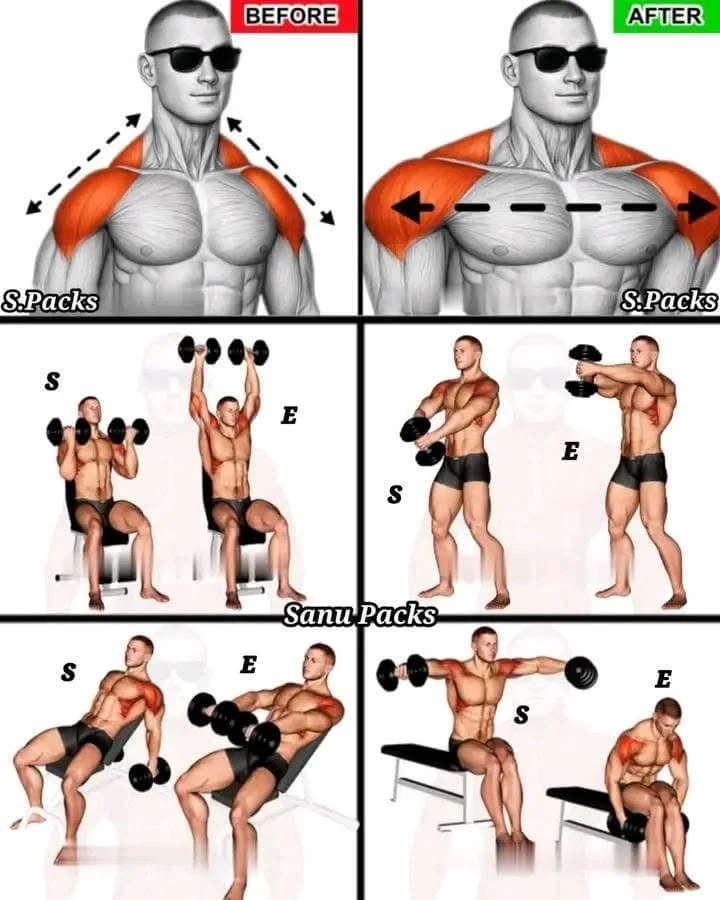
shoulder workout

Person performing calisthenics and dumbbell exercises for 3D shoulders

Build 3D Shoulders — 2 Proven Methods: Calisthenics vs Dumbbells

Title: Sculpted Shoulders: Calisthenics vs Dumbbells

Build 3D shoulders that turn heads by focusing on width, thickness, and roundness — not just size. Whether you prefer bodyweight mastery or weighted precision, each approach offers unique tools to develop deltoid caps, rear delts, and stabilizers for true three-dimensional shape. For an actionable plan to get started, check this guide on how to build 3D shoulders quickly and safely: Get 3D Shoulders — Build Strength & Definition Fast.

Build 3D Shoulders — 2 Proven Methods: Calisthenics vs Dumbbells

Why 3D Shoulders Matter

  • Aesthetics: Round, full shoulders create the V-taper that makes the upper body look broader and more athletic.
  • Function: Strong deltoids improve pressing strength, shoulder stability, and injury resilience.
  • Balance: Proper shoulder development reduces posture issues and complements chest and back work.

Calisthenics: Build Shape with Bodyweight Mastery
Calisthenics builds shoulder density and control by training movement patterns, scapular stability, and unilateral balance. Key moves:

  • Pike Push-Ups / Elevated Pike Push-Ups — great for vertical pressing mechanics and progressive overload.
  • Handstand Push-Ups (HSPU) — the gold standard for bodyweight vertical pressing once you’ve built strength.
  • Archer/Typewriter Push-Ups — emphasize unilateral loading and outer deltoid stretch.
  • Spider Push-Ups and Planche Progressions — increase shoulder tension and front delt activation.
    Programming tips:
  • Progress gradually: increase elevation, add internal tempo, or use weighted vests to advance.
  • Frequency: 2–3 shoulder-focused sessions/week with 3–5 total sets per exercise.
  • Rep ranges: 6–12 for strength-focused moves (HSPU), 8–20 for hypertrophy-style variations (pike, archer).
    Calisthenics also forces you to improve stability and scapular control, which transfers to better pressing forms with weights.

Dumbbells: Targeted Shape and Isolation
Dumbbells let you isolate heads, adjust load precisely, and attack weak spots.
Key moves:

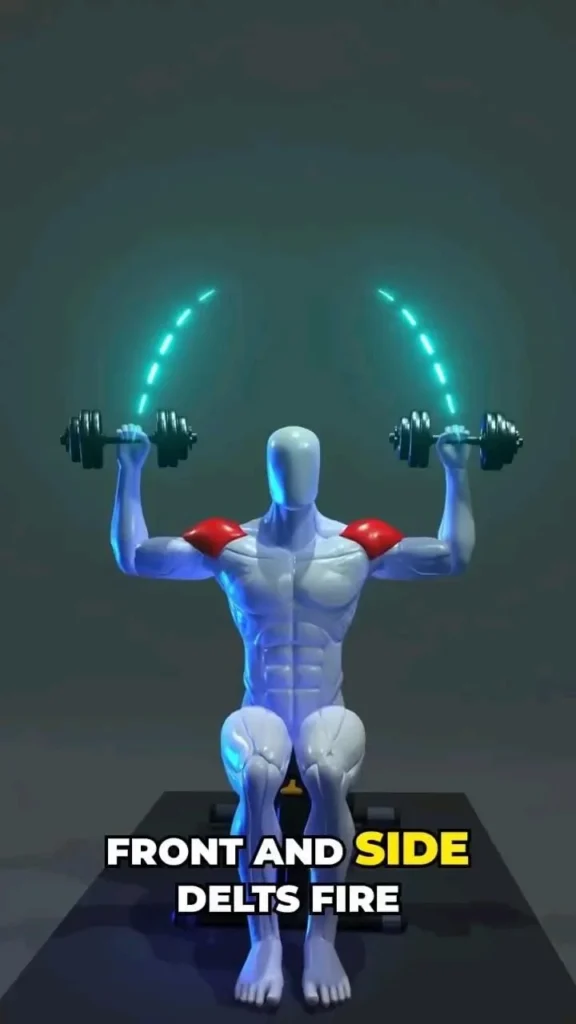
  • Seated/Standing Dumbbell Overhead Press — builds thick delts and improves unilateral balance.
  • Lateral Raises (strict and partials) — add width by targeting the middle deltoid.
  • Rear Delt Flyes / Reverse Pec Deck — carve the posterior shoulder for true roundness.
  • Incline Front Raises / Arnold Press — emphasize front delts and rotational stability.
    Programming tips:
  • Use a mix of heavy compound pressing (4–6 reps) and higher-rep isolation (10–20 reps).
  • Incorporate unilateral work (single-arm presses) to fix left/right imbalances.
  • Tempo: slow negatives (2–4s) on raises increase time under tension for hypertrophy.
    Pair dumbbell training with compound barbell movements occasionally for maximal overload.

Balancing Both Worlds
You don’t have to choose one exclusively. Many lifters get the best results by combining calisthenics for control and stability with dumbbells for targeted hypertrophy.

  • Example split: Calisthenics vertical pressing + core on Day A; Dumbbell press + raises on Day B.
  • Keep recovery in mind: shoulders are used in many upper-body movements, so avoid overtraining.
    Also remember to train legs and posterior chain — strong foundations reduce injury risk and improve overall symmetry. Complement shoulder work with lower-body strength routines like those in this practical thigh development guide: Thigh Muscles — 10 Proven Steps to Build Rock-Solid Legs.

Sample Routines
Calisthenics-Focused (3x/week)

  • Warm-up: banded shoulder circles, scapular push-ups
  • Elevated Pike Push-Ups: 4 x 6–12
  • L-Sit to HSPU progressions (or negatives): 3 x 5–8
  • Archer Push-Ups: 3 x 6–10 each side
  • Face Pulls with band: 3 x 12–15

Dumbbell-Focused (3x/week)

  • Warm-up: light dumbbell presses, shoulder dislocations
  • Dumbbell Overhead Press: 4 x 5–8
  • Lateral Raises (strict): 4 x 10–15
  • Single-Arm Rear Delt Fly: 3 x 12–15
  • Farmer Carry or Suitcase Carry for stability: 3 x 30–60s

Nutrition & Recovery

  • Aim for a slight calorie surplus (+200–300 kcal) with 0.7–1.0 g protein per lb of bodyweight for growth.
  • Prioritize sleep, mobility work, and deload weeks every 6–8 weeks.
  • Track progress with photos and strength markers (e.g., increased reps on HSPU or more load on overhead presses).

Build 3D Shoulders — 2 Proven Methods: Calisthenics vs Dumbbells

Conclusion

Both calisthenics and dumbbells are proven methods to build 3D shoulders; choosing one—or combining them—depends on your goals, equipment, and training preferences. For an in-depth primer on bodyweight progression and how calisthenics can transform your shoulder development, read this complete guide to calisthenics: Calisthenics: Everything You Need To Know.

Build 3D Shoulders — 2 Proven Methods: Calisthenics vs Dumbbells Read More »

, , , ,
Man demonstrating exercises to build wide shoulders with dumbbells.

How to Build Wide Shoulders: Front, Side, and Rear Delts Complete! 🛡️ Build Capped, 3D Shoulders with this C… [Video] in 2025 | Shoulder workout, Dumbbell workout, Workout videos

How to Build Wide Shoulders: Front, Side, and Rear Delts — Complete Guide for 2025

Broad, capped shoulders give you a powerful V-taper and three-dimensional presence onstage or in everyday life. This guide walks you through the anatomy, the best compound and isolation movements for front (anterior), side (lateral), and rear (posterior) delts, programming tips for hypertrophy and strength, and recovery and nutrition fundamentals so your shoulders actually grow.

How to Build Wide Shoulders: Front, Side, and Rear Delts Complete!🛡️ Build Capped, 3D Shoulders with this C… [Video] in 2025 | Shoulder workout, Dumbbell workout, Workout videos

Why train all three heads?
Training all three deltoid heads produces balanced development, reduces injury risk, and creates that rounded “capped” look. Neglect the rear delts and your shoulders will look pancake-flat from the side; overemphasize presses without lateral work and you’ll lose width. For a targeted program that speeds visible gains while maintaining joint health, many lifters combine heavy compound presses with targeted isolation sets and technique-focused volume. You can also check a focused plan on this 3D-shoulders resource for extra structure and exercise variations.

Shoulder anatomy in brief

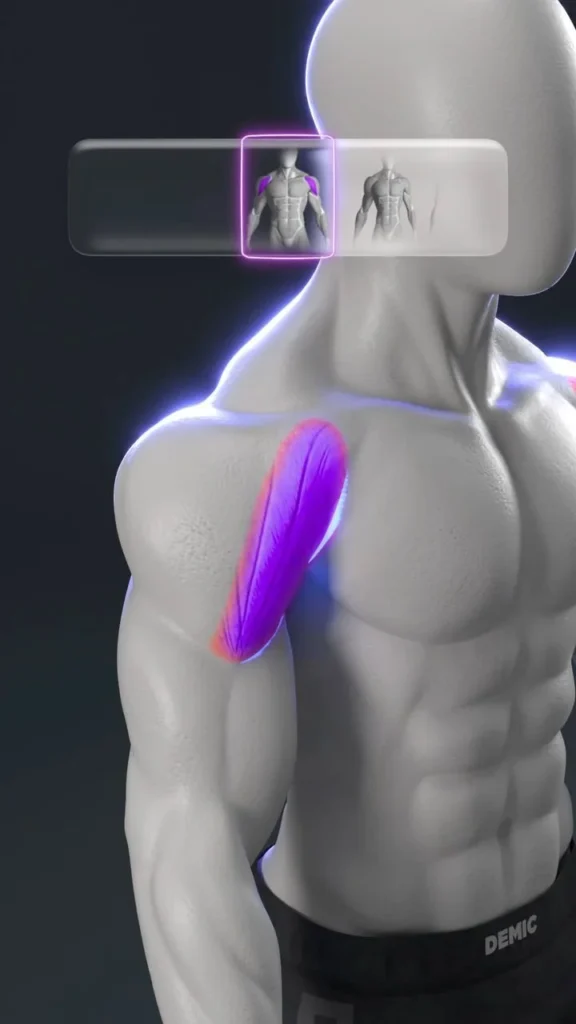
  • Anterior deltoid (front): drives shoulder flexion and internal rotation — heavily recruited on bench presses and front raises.
  • Lateral deltoid (side): creates width; primary mover in lateral raises and upright rows (variation-dependent).
  • Posterior deltoid (rear): responsible for horizontal abduction and posture; hit this with reverse flyes and face pulls.

Training principles for wide, capped shoulders

  • Prioritize range of motion and mind-muscle connection. A strict, controlled rep recruits the target head better than sloppy momentum.
  • Balance load and volume. Use heavy compound presses (3–6 reps) for strength and progressive overload, then moderate-weight isolation work (8–20 reps) for hypertrophy.
  • Frequency matters. Hitting shoulders 2–3 times per week with varied stimuli (strength day + hypertrophy day) yields faster growth than once-a-week bombardment.
  • Protect the joint. Include rotator cuff warm-ups and mobility drills before heavy sessions.

Essential exercises and how to use them

  1. Overhead Press (barbell or dumbbell) — overall mass and strength

    • Use as your primary heavy movement. Keep torso tight and press with a full but comfortable range. 3–6 sets of 3–6 reps on strength-focused days.
  2. Seated Dumbbell Press — isolates delts from lower-body drive

    • Slightly better isolation than standing; choose when fatigue management or focus is needed. 3–4 sets of 6–10 reps.
  3. Dumbbell Lateral Raises — builds width (lateral delts)

    • Use strict form, small lean for better stretch, and full control on the negative. Try 3–5 sets of 10–15 reps. Consider drop sets or partials at the last set for extra stimulus.
  4. Front Raises (dumbbell or plate) — targets anterior delts

    • Alternate between presses-heavy weeks and front-raise emphasis to avoid overworking the front delts twice when bench pressing. 3 sets of 8–15 reps.
  5. Rear Delt Flyes / Face Pulls — rear delts and shoulder health

    • Face pulls also improve posture and external rotation strength. Perform 3–4 sets of 12–20 reps. Emphasize scapular movement and avoid letting traps take over.
  6. Upright Rows (wide grip or cable) — lateral delts when done smartly

    • Use a high-elbow, limited-range variation to bias lateral delts and reduce impingement risk. 3 sets of 8–12 reps.

Programming example (two-session-per-week shoulder focus)

  • Day A (Strength/Heavy)

    • Barbell Overhead Press: 4 sets x 4–6 reps
    • Weighted Pull-Ups / Rows: 3 sets x 6–8 reps (for shoulder balance)
    • Dumbbell Lateral Raises: 4 sets x 10–12 reps
    • Face Pulls: 3 sets x 15 reps
  • Day B (Hypertrophy/Isolation)

    • Seated Dumbbell Press: 3 sets x 8–10 reps
    • Single-Arm Cable Lateral Raises: 3 sets x 12–15 reps
    • Rear Delt Dumbbell Flyes (inclined bench): 4 sets x 12–15 reps
    • Front Raises (plate or dumbbell): 3 sets x 10–12 reps

Progression tips

  • Track total weekly volume for each head (sets × reps × load). Aim to increase volume or intensity every 2–3 weeks.
  • Use techniques like tempo manipulation (3–1–1 tempo), rest-pause, or slow eccentrics for stubborn areas.
  • Deload when performance stalls: a week of reduced volume or lighter loads helps consolidate gains.

Preventing and managing shoulder pain

  • Warm up the rotator cuff (band external/internal rotations), thoracic mobility drills, and light kettlebell swings for blood flow.
  • If you feel sharp pain, stop pressing heavy and prioritize mobility work and posterior chain balance (rear delts and traps). Consider a session with a qualified coach or physical therapist.

Nutrition and recovery for shoulder growth
Shoulder muscles are relatively small but respond to consistent progressive overload and adequate nutrition. Prioritize protein and calories to recover from frequent training days. If you need practical ways to increase protein across meals and snacks, see this guide on boosting protein intake for useful ideas and meal templates.

Sample week (integrated with full-body training)

  • Monday: Upper (shoulder-focused push + back)
  • Tuesday: Legs + mobility
  • Thursday: Shoulders (hypertrophy) + arms
  • Saturday: Full-body or accessory work emphasizing posture and rear delts

Accessory and mobility checklist

  • External rotation band work (2–3 sets of 12–15)
  • Thoracic rotations and foam rolling
  • Scapular pull-ups or Y/T/W raises for posture and scapular stability

How to Build Wide Shoulders: Front, Side, and Rear Delts Complete!🛡️ Build Capped, 3D Shoulders with this C… [Video] in 2025 | Shoulder workout, Dumbbell workout, Workout videos

Conclusion

Balanced training and consistent progression are the fastest routes to wide, capped shoulders — but don’t forget workplace ergonomics and recovery outside the gym also influence long-term joint health. For official guidance on ergonomics programs that complement healthy training habits, see the Ergonomics Program. | Occupational Safety and Health Administration.

How to Build Wide Shoulders: Front, Side, and Rear Delts Complete! 🛡️ Build Capped, 3D Shoulders with this C… [Video] in 2025 | Shoulder workout, Dumbbell workout, Workout videos Read More »

, , , ,
Man performing exercises to build bigger traps in the gym

The Top Tips to Build Bigger Traps

this is the Top Tips to Build Bigger Traps

The trapezius (traps) is the unsung hero of a powerful upper body; it stabilizes the neck and shoulders, contributes to powerful pulls, and gives your physique that thick, “hooded” look between the neck and shoulders. Whether you’re after more mass, greater thickness, or improved posture, targeted trap work plus smart programming gets you there. Before we dive into specific techniques, remember to consider how whole-body strength affects posture and lift performance; for balanced development check out this guide to strengthening legs and glutes: build bigger glutes and legs.

How the traps work (quick primer)

  • The trapezius has three functional regions: upper (elevates the scapula), middle (retracts the scapula), and lower (depresses and stabilizes the scapula).
  • “Building bigger traps” usually focuses on the upper and middle fibers for thickness and visible size, but balanced development across all regions improves posture and shoulder health.
  • Traps respond well to both heavy, low-rep loading (for density) and higher-rep work (for fullness and endurance).

Top training tips

  1. Prioritize progressive overload
    • Increase weight, reps, or time under tension over weeks. Even small consistent increases add significant trap mass over months.
  2. Use a mix of heavy and moderate sets
    • Heavy shrugs: 3–5 sets of 4–8 reps for maximal tension.
    • Moderate-volume trap work: 3–4 sets of 8–15 reps to build shape and endurance.
  3. Train traps from different angles
    • Barbell/dumbbell shrugs (vertical elevation) for upper traps.
    • Face pulls, seated rows with high elbow position, and Y/T/L raises for mid/trap stabilization and mid-trap thickness.
    • Farmer’s walks and rack pulls for traps and overall upper-back density.
  4. Focus on full range and deliberate contraction
    • Control the eccentric (lowering) phase for 2–3 seconds and pause at the top for a full contraction. Avoid using excessive momentum.
  5. Include heavy carries and compound pulls
    • Farmer’s walks, trap-bar carries, and heavy deadlifts transfer directly to trap development and improve functional strength.
  6. Use grip variations strategically
    • Thicker bars, straps, or mixed grips can let you handle heavier loads while still loading the traps effectively.
  7. Frequency and recovery
    • Train traps 2–3 times per week. They’re involved in many compound lifts, so keep volume moderate to avoid overuse. Emphasize sleep, protein intake, and adequate rest between heavy sessions.

Sample exercises and programming

  • Barbell Shrugs: 4 sets × 6–10 reps (heavy)
  • Dumbbell Shrugs: 3 sets × 10–12 reps (slow eccentrics)
  • Trap-Bar Deadlifts or Rack Pulls: 3 sets × 3–6 reps
  • Farmer’s Walks: 4 × 40–60 m (heavy)
  • Face Pulls: 3–4 sets × 12–20 reps (rear delt & mid-trap focus)
  • Y/T/L Raises: 3 sets × 10–15 total for scapular stability

Pair heavy, low-rep compound work early in sessions and finish with more precise, higher-rep isolation movements to flush and shape the traps.

Common mistakes to avoid

  • Overusing momentum during shrugs — jerking reduces time under tension and shifts stress away from the traps.
  • Ignoring mid and lower traps — this leads to imbalanced development and posture problems.
  • Training with poor neck or shoulder posture — always retract and stabilize the scapula when applicable.
  • Excessive volume without recovery — since traps assist many lifts, they can easily become overworked.

Accessory and mobility considerations

  • Strengthen the posterior chain: stronger upper back and glutes support heavier pulls that overload the traps. If you need alternative leg exercises that don’t demand a lot of balance, consider some targeted options like these Bulgarian split squat alternatives: Bulgarian split squat alternatives.
  • Incorporate thoracic mobility work and rear delt exercises to create the muscular scaffolding traps need to grow effectively.
  • Don’t neglect neck mobility and light cervical strengthening if you feel strain when increasing trap loads.

Progress measurement

  • Track barbell/dumbbell weight on shrugs, carries, and deadlifts.
  • Measure improvements in posture and how clothes/gym shirts fit across the shoulders.
  • Take periodic photos and keep a training log — visual and numerical progress together give the clearest picture.

Injury prevention

  • Warm up the shoulders and upper back before heavy sets (band pull-aparts, light face pulls).
  • Avoid excessive craning of the neck; instead, maintain a neutral cervical position with scapular control.
  • If you experience persistent pain, reduce direct trap volume and consult a medical professional.

Conclusion

For ongoing tips, programming examples, and short-form guidance to help you implement these techniques consistently, check out Fitonomy on Threads: Fitonomy on Threads.

The Top Tips to Build Bigger Traps Read More »

, , , ,
Effective shoulder workout using cable machines for strength training

Shoulder Workout on cables

Shoulder Workout on Cables

Cables are an underappreciated tool for building well-rounded shoulders. They provide constant tension through a movement’s range of motion, allow easy angle changes, and reduce momentum cheating — all of which help isolate the deltoid heads and improve muscle activation. If you typically train with free weights, consider alternating with cables for a few cycles to address weak ranges and stability (for a dumbbell comparison, see dumbbell shoulder workout).

Below is a practical guide you can use to structure an effective cable-based shoulder session, whether you’re in a commercial gym or a home setup with a functional trainer.

Shoulder anatomy refresher

  • Anterior deltoid — front lift and pressing motions.
  • Lateral (middle) deltoid — arm abduction and width.
  • Posterior deltoid — horizontal abduction and external rotation; key for posture and rear-chain balance.

Cables allow you to target each head with precise lines of pull, and to emphasize portions of a motion (e.g., top tension on lateral raises or end-range contraction on rear delt flyes).

Warm-up (5–10 minutes)

  • General warm-up: 3–5 minutes light cardio or dynamic arm circles.
  • Specific warm-up: 2–3 light sets on the cable for movement patterns you’ll use (e.g., 15–20 reps of face pulls and low-resistance lateral raises).

Core cable shoulder exercises (how to do them)

  1. Cable Face Pull (rear delts + external rotators)

    • Setup: Rope attachment at upper pulley.
    • Execution: Pull the rope towards your face with elbows high, external rotate so palms face your ears at the end. Squeeze shoulder blades together.
    • Sets/reps: 3 × 12–20.
  2. Single-Arm Cable Lateral Raise (middle delts)

    • Setup: Handle at the lowest setting, stand side-on to the machine.
    • Execution: With a slight elbow bend, raise the arm out to the side to just above parallel. Keep torso upright and avoid shrugging.
    • Sets/reps: 3–4 × 10–15 each side.
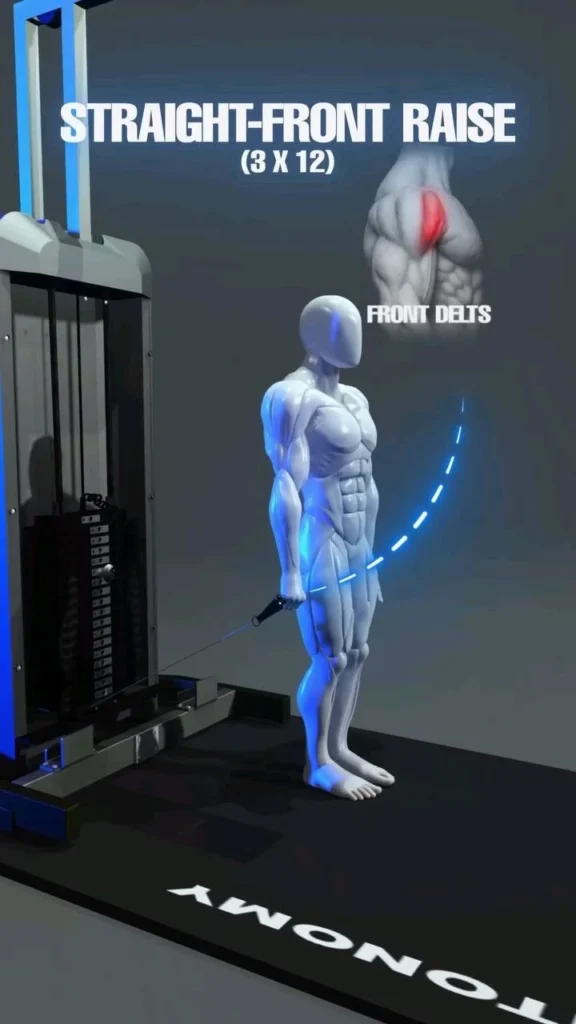
  3. Cable Front Raise (anterior delts)

    • Setup: Use a handle or rope from the lowest point; both arms or single arm.
    • Execution: Raise the handle to eye level or slightly higher, leading with the elbow. Slow eccentric control.
    • Sets/reps: 3 × 8–12.
  4. Cable Overhead Press (vertical pressing)

    • Setup: Handles set low, stand facing away and press overhead or use a single pulley with both hands.
    • Execution: Press up and slightly back to maintain a natural shoulder plane; don’t hyperextend the low back.
    • Sets/reps: 3–4 × 6–10.
  5. Cable Rear Delt Fly / High-Pulley Reverse Fly

    • Setup: Two high pulleys or a crossover; cross arms and pull across body with elbows slightly bent.
    • Execution: Focus on squeezing the rear delts at the end range; avoid using momentum.
    • Sets/reps: 3 × 12–15.
  6. Cable Upright Row (light, to emphasize traps/middle deltoid)

    • Setup: Straight bar on low pulley.
    • Execution: Pull to collarbone height with elbows leading; keep range comfortable to avoid impingement.
    • Sets/reps: 2–3 × 8–12 (use lighter loads, strict form).

Sample session templates

  • Hypertrophy-focused (45–60 minutes):

    • Warm-up.
    • Cable Overhead Press 4 × 8–10.
    • Single-Arm Cable Lateral Raise 4 × 12 each.
    • Cable Rear Delt Fly 3 × 15.
    • Cable Front Raise 3 × 12.
    • Face Pulls 3 × 15.
  • Strength / power (30–45 minutes):

    • Warm-up.
    • Cable Overhead Press 5 × 4–6 (heavier).
    • Superset: Single-Arm Lateral Raise 3 × 8 + Face Pull 3 × 12.
    • Light technical work on rear delts 3 × 15.

Progression and variation ideas

  • Tempo: Slow eccentrics (3–4 seconds) increase time under tension.
  • Partial reps: Top-half holds for lateral raises to overload the contraction.
  • Drop sets: End with a drop set on lateral raises or front raises for hypertrophy.
  • Unilateral focus: Work single-arm to remove bilateral compensation and build stability.

Pairing and programming tips

  • Frequency: Train shoulders 1–2 times per week directly; cables are easy to use for supplementary mid-week sessions.
  • Pairing: Cable shoulder work pairs well with chest or back sessions; you can finish a back day with face pulls and rear delt work.
  • Balance push/pull: For structural balance, include posterior chain and rotator cuff work. If you like finishing arms, consider a targeted arms routine afterwards — for a barbell-only arms finish, try this barbell biceps routine as a pairing option: 4 biceps exercises — barbell-only.

Common mistakes to avoid

  • Using too much weight: Cables can encourage momentum; prioritize form and full ROM.
  • Shrugging on lateral raises: Trap dominance reduces lateral delt stimulus.
  • Neglecting rear delts: Posterior delts are essential for shoulder health and posture.
  • Poor pulley alignment: Adjust cable height to match the plane of motion you want to target.

Safety cues

  • Maintain scapular stability; don’t let shoulders roll forward.
  • Keep core braced during standing cable presses.
  • Warm rotator cuff before heavy work with light external rotations on the cable or band.

Conclusion

Cables are a versatile, joint-friendly tool for building shoulder size, strength, and resilience. For a ready set of cable-focused movements and sample variations to plug into your routine, check out 6 Shoulder Cable Workouts For Stronger Shoulders | SQUATWOLF.

Shoulder Workout on cables Read More »

, , , ,
Dumbbell shoulder workout for strength training and muscle building

Shoulder Workout on dumbbells

Shoulder Workout Using Dumbbells: Build Strong, Defined Shoulders at Home or in the Gym

Strong, well-developed shoulders improve posture, athletic performance, and the overall look of your upper body. Dumbbells are one of the most versatile tools for training the deltoids, allowing unilateral work, natural joint pathways, and a wide variety of angles. If you want a focused plan, start here — and if you need a ready routine to follow, check out this guided dumbbell shoulder workout to get inspired.

Shoulder anatomy primer

  • Anterior deltoid: front of the shoulder, primary mover for pressing and front-raise movements.
  • Lateral (middle) deltoid: gives width to your shoulders; targeted by lateral raises and upright rows.
  • Posterior deltoid: rear of the shoulder; activated with reverse flies and face pulls.
    Balanced development means training all three heads with pressing, lateral, and rear-delt movements.

Warm-up (5–10 minutes)

  • Light cardio: 3–5 minutes to raise body temperature (jump rope, bike, brisk walk).
  • Shoulder-specific mobility: arm circles, band pull-aparts, shoulder dislocations with a band or PVC.
  • Warm-up sets: 1–2 light sets of overhead presses or lateral raises (50% load) for 8–12 reps.

Core dumbbell shoulder exercises (technique + programming)

These are the foundational moves to include in most workouts. Aim for the rep ranges listed depending on your goal.

  1. Standing/Seated Dumbbell Overhead Press

    • Targets: anterior and lateral deltoids, triceps, upper chest.
    • Sets/Reps: 3–5 sets of 4–8 (strength) or 8–12 (hypertrophy).
    • Tip: Keep a neutral spine, brace your core, press in a slightly diagonal path for comfort.
  2. Arnold Press

    • Targets: all three deltoid heads with extra anterior focus.
    • Sets/Reps: 3 sets of 8–12.
    • Tip: Rotate palms during the press to drive balanced activation and full ROM.
  3. Dumbbell Lateral Raise

    • Targets: lateral deltoids for width.
    • Sets/Reps: 3–4 sets of 10–15.
    • Tip: Slight elbow bend, lead with the elbows, avoid shrugging. Use moderate weight and strict tempo.
  4. Dumbbell Front Raise

    • Targets: anterior deltoid.
    • Sets/Reps: 2–3 sets of 10–15.
    • Tip: Can be done one arm at a time to reduce momentum; control the descent.
  5. Bent-Over Reverse Fly (or Rear-Delt Fly)

    • Targets: posterior deltoid and upper back.
    • Sets/Reps: 3 sets of 10–15.
    • Tip: Hinge at the hips, keep a neutral neck, and squeeze shoulder blades at the top.
  6. Upright Row (wide grip, dumbbells)

    • Targets: lateral deltoids and traps.
    • Sets/Reps: 2–3 sets of 8–12.
    • Tip: Pull elbows high and wide; if you have shoulder impingement, substitute with lateral raises.
  7. Cuban Press (rotator cuff-friendly)

    • Targets: rotator cuff, rear delts, and overall shoulder health.
    • Sets/Reps: 2–3 sets of 8–12.
    • Tip: Use light weight and strict control to protect the shoulder joint.

Programming and progression

A simple approach: train shoulders directly 1–2x per week, or include a focused shoulder day plus indirect work on push days. Alternate heavier low-rep phases (4–6 reps) with hypertrophy phases (8–15 reps) every 4–8 weeks. For more exercise variety and single-equipment options, review this collection of dumbbells-only shoulder exercises that fit different experience levels.

Progression tips:

  • Increase load gradually (2.5–5% increments) once you can complete the top of your rep range with solid form.
  • Track volume (sets × reps × load) and aim to increase it weekly or biweekly.
  • Use tempo manipulation (slow negatives) or drop sets for added intensity without much heavier weights.

Common mistakes and how to avoid them

  • Using momentum on lateral/front raises: reduce weight and focus on control.
  • Over-emphasizing pressing at the expense of rear delts: include at least one rear-delt movement per session.
  • Neglecting rotator cuff work: include external-rotation exercises or Cuban presses to maintain shoulder health.
  • Poor posture: strengthen upper back and perform mobility work to improve scapular positioning.

Sample workouts

Beginner (2× per week)

  • Warm-up
  • Seated Dumbbell Press: 3×8–10
  • Lateral Raises: 3×12–15
  • Bent-Over Reverse Fly: 3×12
  • Light Cuban Press: 2×15

Intermediate (1–2× per week)

  • Warm-up
  • Standing Dumbbell Press: 4×6–8
  • Arnold Press: 3×8–10
  • Lateral Raises (superset with) Front Raises: 3×10–12 each
  • Upright Rows (wide): 3×8–10
  • Bent-Over Reverse Fly: 3×12–15

Advanced (power + hypertrophy)

  • Warm-up
  • Heavy Single-Arm Seated Press: 5×4–6 (each arm)
  • Drop-Set Arnold Press: 3×8 → drop weight ×6 → drop ×6
  • Pause Lateral Raises (2s top): 4×10–12
  • Bent-Over Reverse Fly (4s negative): 4×12
  • Finisher: Farmer carries or shrugs for trap balance

Recovery and supporting factors

  • Sleep: aim for 7–9 hours for optimal muscle recovery.
  • Nutrition: prioritize protein (0.7–1.0 g/lb bodyweight) and sufficient calories to support growth.
  • Mobility: daily thoracic and scapular mobility reduces injury risk.
  • Frequency: more frequent, moderate-volume sessions often trump one infrequent high-volume session.

Conclusion

For a curated list of movements to expand your dumbbell shoulder library, see the 13 Best Dumbbell Shoulder Exercises which pairs well with the routines above and provides variations to keep your workouts fresh.

Shoulder Workout on dumbbells Read More »

, , , ,
Person performing a 3D shoulders workout for strength and definition.

3D Shoulders Workout

3D Shoulders Workout: Build Width, Roundness, and Definition

Developing truly three-dimensional shoulders means training every plane of movement so your deltoids look full from every angle — not just big when viewed from the front. This article breaks down the principles behind a 3D shoulders workout, offers a practical routine you can use, and gives programming and recovery tips so your shoulders get stronger, rounder, and more resilient.

If you prefer equipment-specific routines, try this dumbbell 3D shoulder workout for a focused, at-home approach that emphasizes symmetry and control.

What “3D Shoulders” Means

3D shoulders target three key attributes:

  • Width (lateral deltoid development) to create a broad silhouette.
  • Roundness (balanced anterior, medial, and posterior delts) so the shoulder caps look full from all directions.
  • Depth (rear delts and scapular muscles) for a finished, athletic look and better shoulder health.

Training must include vertical pushes, horizontal variations, and transverse/rotational movements. A mix of compound lifts and precise isolation exercises plus smart tempo and progressive overload creates that 3D effect.

Core Principles

  • Balance anterior, medial, and posterior deltoid work. Overemphasizing pressing can produce forward-heavy shoulders and poor posture.
  • Use multiple planes: press (vertical), raise (lateral/abduction), and pull/fly (horizontal/transverse).
  • Vary load, tempo, and angles. Heavy sets build strength, moderate sets build size, and slower eccentrics carve detail.
  • Prioritize rotator cuff and scapular stability to keep shoulders healthy under load.

Warm-up and Mobility (5–10 minutes)

  • Scapular retractions x 10–15
  • Band pull-aparts x 2 sets of 20
  • Arm circles and internal/external rotation with light band x 10–12 each side
  • A light set of overhead presses or lateral raises to prime the delts

Sample 3D Shoulders Workout (Intermediate)

Perform this routine once or twice weekly, leaving 48–72 hours between heavy shoulder sessions.

  1. Barbell or Dumbbell Overhead Press — 4 sets x 4–6 reps (strength focus)
  2. Seated Arnold Press — 3 sets x 8–10 reps (anterior + medial emphasis with rotation)
  3. Strict Lateral Raises (Dumbbells) — 4 sets x 10–15 reps (use a controlled 2-0-2 tempo)
  4. Bent-Over Reverse Fly or Rear Delt Machine — 3 sets x 12–15 reps (posterior development)
  5. Face Pulls — 3 sets x 15–20 reps (rear delts + external rotators)
  6. Cable or Dumbbell Upright Row (high-pull variation) — 2 sets x 10–12 reps (upper traps + medial delts)
  7. Farmer Carry or Overhead Hold (optional finisher) — 2 rounds x 30–60 seconds

If you’re training full-body or alternating push/pull splits, this shoulder-focused day pairs well with compound lower-body work earlier in the week. For ideas on integrating shoulder days into a broader plan, see this full-body workouts resource that helps distribute volume across the week.

Exercise Notes and Variations

  • Overhead Press: Keep ribs down and drive through the legs slightly when using heavier loads to stabilize the spine.
  • Arnold Press: Adds rotation to engage all heads — control the negative to prevent shoulder impingement.
  • Lateral Raises: Lead with the elbow and pause at the top for peak contraction. Slight forward lean shifts tension to the medial head.
  • Rear Delt Work: Use light to moderate weight and slow eccentrics; many people undertrain the rear delts so volume matters.
  • Face Pulls: Use a rope and pull to the forehead, externally rotating at the end to train rotator cuff function.

Programming Tips

  • Frequency: 1–2 shoulder-focused sessions per week with 12–20 weekly sets per muscle group for hypertrophy, adjusted by experience level.
  • Progression: Increase load first, then reps, then time under tension. When all three are maxed, increase sets.
  • Rotation: Change angles and exercise selection every 4–8 weeks to avoid plateaus.
  • Recovery: Delts are involved in many upper-body moves; manage cumulative fatigue by monitoring shoulder soreness and reducing accessory volume when necessary.

Nutrition and Recovery

  • Protein intake: Aim for ~1.6–2.2 g/kg body weight for muscle repair.
  • Sleep and stress: Prioritize 7–9 hours of sleep and mobility work to aid recovery.
  • Deloads: Implement a lighter week every 4–8 weeks if progress stalls or soreness accumulates.

When to See a Coach or Physical Therapist

If you experience sharp pain, persistent instability, or unusual weakness, consult a professional. Deltoid imbalances and rotator cuff issues respond well to early intervention and corrective programming.

Conclusion

A well-rounded 3D shoulders workout blends strength, hypertrophy, and mobility work to produce shoulders that look strong from every angle. For an in-depth guide that complements the principles above, check out this detailed resource on 3D Shoulders: Develop Your Deltoids’ Strength & Shape | Flex AI.

3D Shoulders Workout Read More »

, , , ,
Illustration of effective exercises for building 3D shoulders for strength and definition

Get 3D Shoulders: Build Strength and Definition Fast

Get 3D Shoulders: Build Strength and Definition Fast

Strong, rounded shoulders—what many call "3D shoulders"—come from targeted training that develops all three heads of the deltoid, reinforces supporting muscles, and optimizes recovery. This guide gives you the principles, exercises, and a compact program to add width and definition quickly without getting lost in complicated routines.

Why 3D Shoulders Matter

Well-developed shoulders improve aesthetics and functional strength for pressing, pulling, and overhead work. They also help stabilize the scapula and protect the rotator cuff during heavy lifts. To get balanced, three-dimensional shoulders you must train:

  • Anterior (front) deltoid
  • Lateral (side) deltoid
  • Posterior (rear) deltoid
    …and the traps, rotator cuff, and upper back that support them.

Good shoulder development is supported by a strong torso and stable core, so layering in rotational and anti-rotation work can accelerate progress. For example, exercises like the band twist are great for building that foundational core strength that transfers to more stable overhead work: band twist: how to build core strength.

Training Principles for Fast Results

Follow these key principles to maximize gains:

  • Progressive overload: Gradually increase weight, reps, or volume every 1–3 weeks.
  • Head-specific selection: Include at least one heavy, compound movement and one isolation for each deltoid head.
  • Frequency: Train shoulders 2–3 times per week with varied intensity.
  • Range of motion and control: Prioritize clean movement and full ROM to stimulate fibers across each head.
  • Recovery: Sleep, nutrition, and spacing heavy sessions are critical to avoid overuse injuries.

Best Exercises (and How to Use Them)

Compound lifts build mass and strength; isolation moves carve shape.

  • Overhead Press (barbell or dumbbell) — primary mass builder for anterior and lateral delts. Use heavy sets of 4–6 reps and moderate sets of 8–12.
  • Dumbbell Lateral Raise — isolates the lateral deltoid for width. Aim for controlled reps (10–15).
  • Rear Delt Row / Face Pull — targets posterior delts and upper back. High-rep sets (12–20) maintain health and posture.
  • Arnold Press / Incline Front Raise — variations to emphasize anterior delts and add fullness.
  • Trap Work (shrugs) — builds the upper frame and complements shoulder width.

Use a mix of heavy compound lifts (low reps) and lighter isolation work (higher reps) in each training block.

Sample Workout Split (2–3x Week Focus)

Example 2-day-per-week focused approach that pairs well with other training:

Day A — Strength Focus

  • Barbell Overhead Press: 4 sets × 4–6 reps
  • Weighted Chin-ups or Bent-over Rows: 3 × 6–8
  • Dumbbell Lateral Raises: 4 × 10–12
  • Face Pulls: 3 × 15–20
  • Shrugs: 3 × 8–10

Day B — Hypertrophy & Balance

  • Seated Dumbbell Press: 3 × 8–10
  • Cable Lateral Raises (drop set last set): 3 × 12–15
  • Rear Delt Flyes (on incline or machine): 4 × 12–15
  • Upright Rows (light/moderate): 3 × 10–12
  • Rotator Cuff External Rotations: 3 × 15–20

If you prefer integrating full-body sessions, sprinkle shoulder-focused sets into upper-body days. For athletes looking to boost overall strength quickly, pairing this with heavy posterior chain sessions—like an EMOM deadlift workout—can improve total-body force production and shoulder transfer: the 15-minute heavy deadlift EMOM workout to build strength fast.

Technique & Injury Prevention

  • Keep the shoulder blades stable and slightly retracted during pressing.
  • Avoid excessive forward lean or flaring of the elbows on overhead presses.
  • Use controlled negatives on lateral and rear delt work to maximize time under tension.
  • Warm up the rotator cuff and scapular stabilizers with band work and light sets before heavy pressing.

Nutrition & Recovery

  • Aim for a small caloric surplus (200–400 kcal) if your primary goal is hypertrophy.
  • Protein: 1.6–2.2 g/kg bodyweight per day to support muscle repair and growth.
  • Prioritize sleep (7–9 hours) and manage session density—don’t train shoulders heavy on consecutive days without deloading.

Quick 6-Week Progression Plan

Weeks 1–2: Establish technique. Moderate weight, higher reps (8–12) for most accessory moves.
Weeks 3–4: Increase intensity. Add a heavy day (4–6 reps) and a volume day (10–15 reps).
Weeks 5–6: Peak week with a slight increase in load and a deload in the final week to consolidate gains.

Track at least one metric (press weight, lateral raise reps, or tape measurements) every week to ensure progress.

Conclusion

For a concise, science-backed take on widening and defining your shoulders, check out this practical guide: How I Grew Wider Shoulders FAST (5 Science-Based Tips).

Get 3D Shoulders: Build Strength and Definition Fast Read More »

, , , ,
Dumbbell 3D Shoulder Workout including shoulder press, front raise, and more.

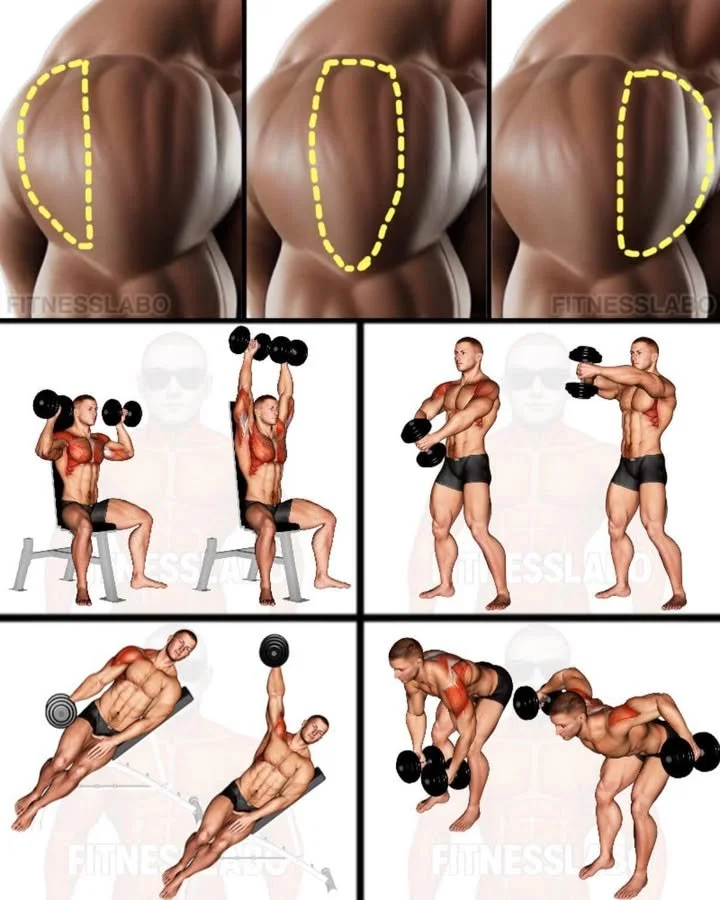
✅ Dumbbell 3D Shoulder Workout 1 Shoulder Press 2 Front Raise 3 Incline One Arm Lateral Raise 4 Reverse Fly 3 sets 12-15 reps

3D Dumbbell Shoulder Workout: A Comprehensive Guide

Building strong, well-defined shoulders is essential for a balanced upper body and improved athletic performance. A well-rounded shoulder workout not only enhances the appearance of your physique but also helps in achieving better strength in various physical activities. This unique 3D Dumbbell Shoulder Workout targets all three heads of the deltoids—anterior, lateral, and posterior—ensuring a comprehensive shoulder development routine.

Workout Overview

This shoulder workout consists of four effective exercises, each designed to challenge your muscles from different angles. The following exercises will ensure that you achieve a balanced workout, while also promoting muscle growth. It’s recommended to perform 3 sets of 12-15 repetitions for each exercise.

1. Dumbbell Shoulder Press

The Dumbbell Shoulder Press is a foundational exercise that emphasizes the anterior (front) deltoid while engaging the triceps and upper chest.

Instructions:

  • Sit or stand with a dumbbell in each hand at shoulder height, palms facing forward.
  • Press the weights overhead until your arms are fully extended.
  • Slowly lower the dumbbells back to the starting position.
  • Keep your core engaged and avoid arching your back.

2. Dumbbell Front Raise

This exercise isolates the front deltoids, helping to build strength and definition.

Instructions:

  • Stand with your feet shoulder-width apart, holding a dumbbell in each hand at your thighs, palms facing your thighs.
  • Raise the dumbbells directly in front of you to shoulder height, keeping your arms straight.
  • Slowly lower the weights back to the starting position.
  • Ensure you use controlled movements to avoid momentum.

3. Incline One Arm Lateral Raise

This unique variation targets the lateral deltoids while also focusing on stability and control.

Instructions:

  • Set an incline bench to about 30-45 degrees.
  • Lie on your side on the bench, holding a dumbbell in your top hand.
  • With a slight bend in your elbow, raise the dumbbell away from your body until it reaches shoulder height.
  • Lower it back down and repeat for the desired number of reps before switching sides.

4. Reverse Fly

The Reverse Fly is key for targeting the posterior deltoids, helping to create a well-rounded shoulder appearance.

Instructions:

  • Stand with your feet shoulder-width apart, holding dumbbells in each hand.
  • Bend at your hips and keep your back straight, allowing the dumbbells to hang down.
  • With a slight bend in your elbows, raise the dumbbells out to the sides until they are level with your shoulders.
  • Squeeze your shoulder blades together at the top of the movement before lowering back down.

Tips for Success

  • Warm Up: Prior to starting your workout, make sure to warm up your shoulder joints and muscles to prevent injury.
  • Progressive Overload: Gradually increase the weights you are lifting to promote muscle growth.
  • Focus on Form: Prioritize proper form over lifting heavier weights to ensure effectiveness and safety.
  • Rest: Allow 30-60 seconds of rest between sets to maximize performance without overtraining.

Conclusion

This 3D Dumbbell Shoulder Workout provides a thorough approach to building comprehensive shoulder strength and endurance. By incorporating these exercises into your routine 2-3 times per week, you’ll develop strong, well-defined shoulders that not only look great but support your overall fitness goals. Remember to listen to your body and adjust weights or repetitions as necessary to maintain quality and effectiveness throughout your workouts!

✅ Dumbbell 3D Shoulder Workout 1 Shoulder Press 2 Front Raise 3 Incline One Arm Lateral Raise 4 Reverse Fly 3 sets 12-15 reps Read More »

, , , ,
Dumbbell shoulder workout demonstration for fitness enthusiasts.

✅ Dumbbell Shoulder Workout #gymmotivation #gym #fitness Mateo Jeff Adan

Ultimate Dumbbell Shoulder Workout for Maximum Gains

If you’re looking to build strength, definition, and overall muscle mass in your shoulders, a dumbbell shoulder workout is a fantastic way to achieve those goals. Dumbbells are incredibly versatile tools that allow for a full range of motion while also engaging stabilizing muscles that may be overlooked with other equipment. So grab your dumbbells, and let’s dive into a workout that will challenge you and push you to new heights!

Why Dumbbells for Shoulder Workouts?

Dumbbells offer several benefits when it comes to shoulder exercises:

  • Increased Range of Motion: With dumbbells, you can move freely, working your muscles through a wider range of motion.
  • Improved Stability: Holding a dumbbell in each hand engages your stabilizing muscles, leading to better all-around strength and coordination.
  • Unilateral Training: Dumbbells help correct muscle imbalances by allowing you to train each side of your body independently.

The Ultimate Dumbbell Shoulder Workout Routine

Warm-Up (5-10 Minutes)

Before diving into the workout, it’s crucial to warm up your shoulders to prevent injury:

  1. Arm Circles – 2 minutes (1 minute forward, 1 minute backward)
  2. Dynamic Shoulder Stretch – 2 minutes (hold each stretch for 15-20 seconds)
  3. Scapular Push-Ups – 2 sets of 10-15 reps

The Workout

  1. Dumbbell Shoulder Press

    • Reps: 3 sets of 8-12
    • Tip: Ensure your elbows don’t flare out to the sides; keep them slightly in front of your body.
  2. Dumbbell Lateral Raise

    • Reps: 3 sets of 10-15
    • Tip: Keep a slight bend in your elbows and raise the dumbbells to shoulder height, pausing briefly at the top.
  3. Dumbbell Front Raise

    • Reps: 3 sets of 10-12
    • Tip: Lift the dumbbells slowly and control the descent to maximize tension on the deltoids.
  4. Dumbbell Bent-Over Reverse Fly

    • Reps: 3 sets of 10-15
    • Tip: Keep your back straight and hinge at your hips; focus on squeezing your shoulder blades together at the top of the movement.
  5. Dumbbell Arnold Press

    • Reps: 3 sets of 8-12
    • Tip: Start with the dumbbells in front of your face and rotate your wrists as you press them upwards.

Cool Down (5-10 Minutes)

Finish your workout with some stretches to help recover and improve flexibility:

  • Shoulder Stretch: Hold each arm across your body for 20-30 seconds.
  • Triceps Stretch: Raise one arm overhead, bending at the elbow, and gently pull with the other hand for 20-30 seconds.
  • Chest Opener: Stand or sit with your hands behind your back and gently pull your shoulder blades together while lifting your chest.

Conclusion

Incorporating a dumbbell shoulder workout into your routine is an excellent way to build strong, defined shoulders while improving overall strength and stability. Remember to listen to your body, maintain proper form, and increase weights gradually as you gain strength.

Stay motivated, track your progress, and share your journey using the hashtags: #gymmotivation #gym #fitness. Let’s crush those fitness goals together!


Feel free to mix and match these exercises as you see fit and make this routine your own. Happy lifting, and may your shoulders be as strong as your determination!

✅ Dumbbell Shoulder Workout #gymmotivation #gym #fitness Mateo Jeff Adan Read More »

, , , ,
Scroll to Top