
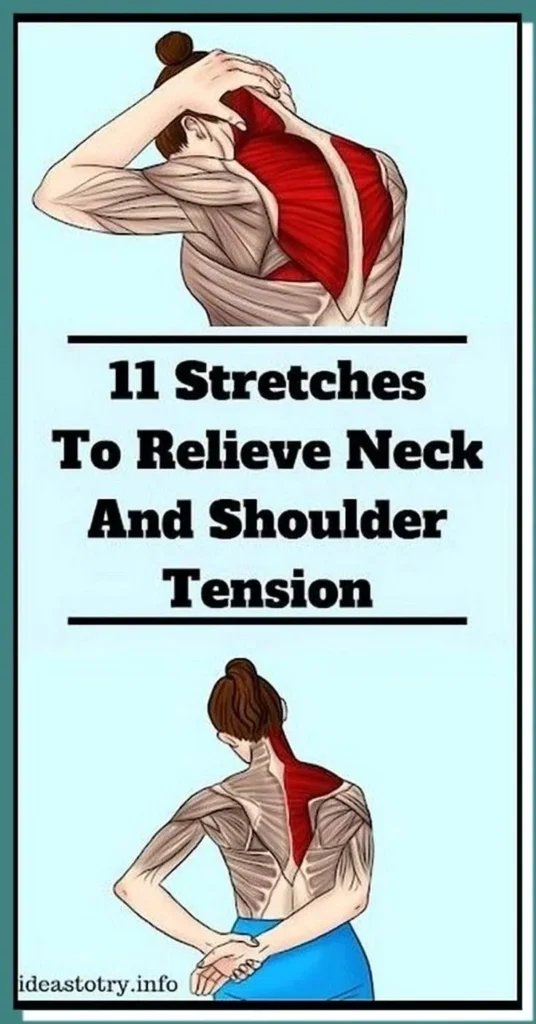
11 Exercises to Ease Tension in Your Neck and Shoulders
Title: 11 Simple Exercises to Ease Tension in Your Neck and Shoulders
Introduction
Tension in the neck and shoulders is common whether you spend long hours at a desk, carry stress in your upper body, or exercise without adequate warm-up. The right set of gentle mobilizations and stretches can reduce pain, improve range of motion, and prevent future stiffness. Before you begin, set aside 10–15 minutes, breathe slowly, and move within a pain-free range. If you have a medical condition or recent injury, check with a healthcare professional first. For tips on supporting recovery through nutrition, see this guide on improving protein intake for every meal and snack: 10 Easy Ways to Increase Your Protein Intake With Every Meal and Snack.
How to use these exercises
- Do 1–3 sets of each exercise, holding static stretches for 15–30 seconds.
- Move slowly and breathe evenly; avoid forcing any position.
- Aim to perform the sequence daily or after long periods of sitting.
- If a movement increases sharp pain, stop and try a lighter variation.
The 11 Exercises
- Neck Nods (Chin Tucks)
- Sit or stand tall. Gently tuck your chin toward your chest, feeling a stretch along the back of the neck.
- Hold 3–5 seconds, release. Repeat 8–12 times.
- Tip: Keep your shoulders relaxed and avoid jutting the chin forward.
- Side-to-Side Neck Stretch
- Sit tall. Drop your right ear toward your right shoulder without lifting the shoulder.
- For a deeper stretch, place your right hand on the left side of your head and apply light pressure.
- Hold 20–30 seconds each side. Repeat 2–3 times.
- Levator Scapulae Stretch
- Turn your head 45 degrees to the left, then tilt your chin down toward your chest (as if looking into your pocket).
- Use your left hand to gently increase the stretch at the base of the skull.
- Hold 20–30 seconds each side.
- Cross-Body Shoulder Stretch
- Bring one arm across your chest, at about shoulder height. Use the opposite hand to press the arm closer to your chest.
- Hold 20–30 seconds per side. Repeat 2 times.
- Doorway Pec Stretch
- Stand in a doorway, place forearms on the frame with elbows at about 90 degrees, and step one foot forward until you feel a stretch across the front of the chest.
- Hold 20–30 seconds. This helps counteract rounded shoulders that amplify neck strain.
- Shoulder Rolls
- Sit or stand tall. Slowly roll your shoulders up toward your ears, back, down, and forward in a smooth circle.
- Do 10 rolls in each direction. This increases mobility and reduces trapping of the upper trapezius.
- Seated Thoracic Rotation
- Sit with feet flat. Cross your arms over your chest and rotate your upper body to the right as far as comfortable, keeping hips stable.
- Hold 2–3 seconds, return to center, then rotate left. Repeat 8–12 times per side.
- This improves mid-back mobility, reducing compensatory neck tension.
- Scapular Squeezes (Shoulder Blade Retraction)
- Sit or stand tall and squeeze your shoulder blades together as if pinching a pencil between them. Keep shoulders down away from ears.
- Hold 3–5 seconds, repeat 10–15 times.
- Great for posture and reducing forward-rolled shoulders.
- Wall Angels
- Stand with your back against a wall, arms in a “W” position. Slide your arms up into a “Y” and back down, keeping contact with the wall when possible.
- Do 8–12 slow repetitions. This promotes scapular control and opens the chest.
- Upper Trapezius Massage (Self-Release)
- Use your fingertips or a massage ball to gently press into the muscle at the top of your shoulder (upper trapezius). Apply slow pressure, then release.
- Spend 30–60 seconds per side. Move the ball slowly to cover tight spots.
- Pectoral Foam Roll or Soft Tissue Release
- Lie on a foam roller lengthwise under your spine (optional) or place a small ball under the front of your shoulder/chest area and roll gently to release tightness.
- Work for 30–60 seconds each side. This can reduce pull on the shoulders and neck.
Modifications and Safety
- If standing is uncomfortable, perform seated variations.
- Keep movements pain-free — mild stretching discomfort is okay, sharp pain is not.
- For chronic or severe pain, see a physical therapist or physician.
Integrating into Your Day
- Do a 5-minute mini-series every few hours if you sit a lot.
- Add a more thorough 10–15 minute routine in the morning or evening.
- If you plan to exercise, consider a light snack for energy beforehand; for ideas on fueling a morning routine try: Best Pre-Workout Snacks to Power Your Morning Routine.
When to Seek Help
- If pain is worsening, accompanied by numbness, tingling, radiating arm pain, or weakness, contact a healthcare professional promptly.
Conclusion
Regularly doing these gentle exercises can help reduce neck and shoulder tension, improve posture, and lower your risk of recurring tightness. For a concise, medically reviewed set of stretches and prevention strategies, see this resource: Tight Shoulders: 11 Stretches for Fast Relief and Tips for Prevention.
11 Exercises to Ease Tension in Your Neck and Shoulders Read More »