
resilience

Arnold Schwarzenegger motivational quote on strength through adversity.

How True Strength Is Forged by Overcoming the Impossible

“Strength does not come from what you can do. It comes from pushing through what you once thought you couldn’t.”; Arnold Schwarzenegger

Strength isn’t a static measurement of current capacity; it’s a record of battles fought and limits expanded. The experience of confronting what once seemed impossible ; and surviving, learning, and growing from it; is what differentiates a capable person from a genuinely strong one. For a deeper look at how the struggle itself shapes strength, consider how confronting failure and persistence form the backbone of progress through the lens of the struggle where strength is built.

Redefining strength: beyond reps and numbers

Most people equate strength with numbers on a barbell, a set of PRs, or a list of accomplishments. That view is incomplete. Strength also means:

  • Tolerating discomfort and staying steady when outcomes are uncertain.
  • Persisting through plateaus and setbacks with consistent effort.
  • Using adversity to sharpen focus, strategy, and resolve.

When you reframe setbacks as feedback rather than defeat, every challenge becomes an opportunity to widen your margin for what’s possible.

Mindset: embracing discomfort as a tool

“Strength does not come from what you can do.It comes from pushing through what you once thought you couldn’t

Pushing through perceived limits is mostly mental work. Techniques that cultivate this mindset include:

  • Gradual exposure: deliberately adding small, progressive challenges so discomfort becomes familiar, not terrifying.
  • Tactical journaling: record not only results but emotions and thought patterns around difficult sessions; this reveals growth over time.
  • Purpose recall: repeatedly connecting daily grind to long-term goals keeps motivation rooted in meaning, not momentary ease.

This mental resilience carries into training, work, and relationships: the muscle built in perseverance translates across life.

Training practicalities: push safely and smartly

Pushing past what you thought you couldn’t doesn’t mean reckless overload. Smart approaches:

  • Progressive overload with reasonable increments, ensuring technique stays sound.
  • Deliberate rest cycles and peaking strategies to allow adaptation.
  • Variable stimuli (tempo, volume, exercise selection) to prevent stagnation while preserving recovery.

Small, consistent increases compound into significant capability expansions; and the confidence that comes with them is a force multiplier.

Nutrition and recovery: fueling the journey

Strength gains depend on recovery and nourishment as much as they do on effort. Whether you’re experimenting with different dietary patterns or optimizing macro timing, the right nutrition supports the capacity to keep pushing. For those exploring alternatives, research even supports effective hypertrophy on alternative diets; see findings about plant-based muscle building to understand how diet need not limit your progress when planned properly.

Sleep, stress management, and active recovery complete the foundation. Missing these undermines the ability to push through hard days and turns temporary obstacles into chronic setbacks.

Real-world examples: trial, error, and transformation

Look at athletes, entrepreneurs, or everyday people who’ve transformed: their stories usually contain repeated failures, course corrections, and an eventual breakthrough. What unites them is less brilliance and more stubborn, focused repetition; the willingness to continue when success felt unlikely. Those are the chapters where strength is written.

Conclusion

True strength is less about a current tally of capabilities and more about the distance traveled from yesterday’s limits. By embracing discomfort, training smart, and supporting recovery, you push the frontier of what you thought you couldn’t do; and in that push, strength is born.

How True Strength Is Forged by Overcoming the Impossible Read More »

, , , ,
Arnold Schwarzenegger exemplifies strengths through struggle in bodybuilding.

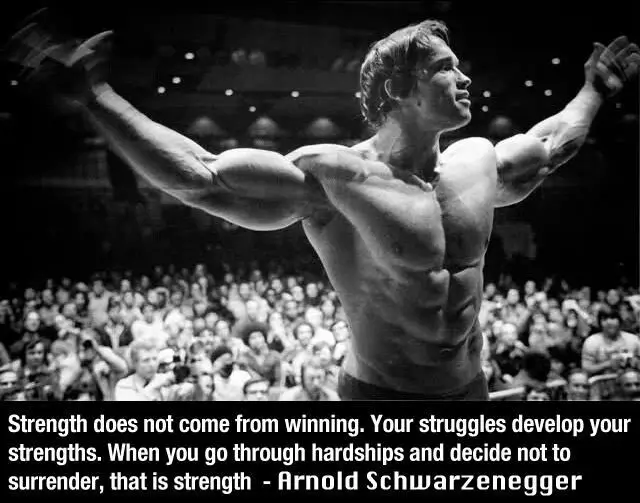
Strengths does not come from winning. It comes from the struggle.

“Strengths does not come from winning. It comes from the struggle. When you go through hardship and decide not to surrender, that is strengths.” ;This idea, popularized by icons like Arnold Schwarzenegger, captures a universal truth: resilience is forged in pressure, not in easy victories.

In daily life, the choices we make; what we eat, how we rest, and how we respond, shape our capacity to endure. If you’re curious about how everyday decisions influence long-term resilience, consider how simple lifestyle choices like diet quality affect recovery and performance; for a practical look at the differences between food systems, see this piece on organic vs. non-organic choices and their journey from farm to fork.

The Nature of Strengths

Strengths isn’t only physical. It’s mental, emotional, and behavioral. When someone wins a competition, observers often see only the final score. What they don’t see are the sleepless nights, repeated failures, and course corrections that came before. That accumulation of small, difficult experiences; setbacks, pain, humility; creates a deeper durability than any single triumph ever could.

Key elements that define strengths:

  • Repeated exposure to challenge (progressive overload for the mind as well as the body)
  • Conscious choices to persist rather than retreat
  • Learning and adapting after each setback

This process mirrors how muscles grow: stress causes microdamage, and rest plus nutrition rebuilds tissue stronger than before.

How Struggle Builds Strengths

Strengths does not come from winning. It comes from the struggle.

Struggle teaches useful habits. When confronted with difficulty, you develop problem-solving routines, grit, and a tolerance for discomfort. These habits then compound over time: each tough episode becomes evidence you can handle the next one. Practically:

  • Break large obstacles into smaller, solvable steps.
  • Treat failures as data, not identity.
  • Celebrate small wins to keep motivation steady.

Importantly, choosing to face hardship doesn’t mean seeking unnecessary suffering—it means committing to growth when pain is a likely byproduct. This perspective shifts the narrative from “avoiding pain” to “optimizing the path to resilience.”

Nutrition, Recovery, and Practical Support

Building strengths requires fuel. Recovery and adaptation rely on proper nutrition and rest, which makes dietary strategy a practical pillar of resilience. If you consistently push your limits—physically or mentally—you need to support repair processes. One straightforward way to do that is by making protein a reliable part of every meal and snack. For easy, actionable tips on how to boost protein throughout your day, check out this guide on how to increase your protein intake.

Other recovery basics:

  • Prioritize sleep quality and duration
  • Include anti-inflammatory foods and adequate hydration
  • Use progressive rest days—active recovery rather than complete inactivity

When these foundations are in place, the body and mind can translate struggle into durable strengths rather than chronic wear and tear.

Applying the Lesson: Small Steps That Lead to Big Gains

You don’t need dramatic overhauls to build resilience. Aim for consistent, modest improvements:

  • Pick one uncomfortable habit—cold showers, early starts, or a difficult conversation—and practice it regularly.
  • Track setbacks and identify a single lesson from each one.
  • Support your body with simple nutrition and recovery habits so setbacks become learning opportunities, not breakdowns.

Over months and years, these micro-choices accumulate into a level of stamina and composure that feels effortless from the inside but is grounded in deliberate struggle.

Conclusion

True strengths is earned in the trenches of everyday challenge. By reframing struggle as growth, supporting your body with smart recovery and nutrition, and treating setbacks as steps rather than stops, you cultivate a resilient life—one in which not surrendering becomes your default response.

Strengths does not come from winning. It comes from the struggle. Read More »

, , , ,
We Are Stronger Than We Know

We Are Stronger Than We Know

“What we face may look insurmountable. But I learned something from all those years of training and competing. I learned that we are always stronger than we know.”; Arnold Schwarzenegger

Arnold’s words cut straight to the heart of resilience: when a challenge appears impossible, the work we’ve done — often behind the scenes — gives us more capacity than we think. Strength isn’t only raw power; it’s the compound result of consistent choices. Small, steady actions stack up into a force that can turn what seems insurmountable into something manageable. Embracing the role of repetition and habit is how we unlock that deeper reserve, and exploring the influence of small daily habits shows how incremental progress becomes transformational.

The Anatomy of Inner Strength

Strength comes in layers:

  • Physical endurance built from routine training and recovery.
  • Mental toughness formed by facing discomfort repeatedly.
  • Emotional resilience shaped by confronting setbacks and learning from them.

When you peel back each layer, you see that the common element is consistency. Repetition trains the nervous system to respond differently in crisis, making efficient decisions under pressure. This is why athletes, entrepreneurs, and leaders attribute breakthroughs to the accumulation of marginal gains rather than a single dramatic event.

Training the Mind and Body Together to be stronger

Physical training and mental conditioning are not separate tracks — they inform and reinforce each other. Proper nutrition, sleep, and targeted exercise provide the physiological foundation for clear thinking and emotional steadiness. If your body is depleted, your capacity to cope diminishes. That’s why paying attention to whether you’re meeting your nutrient needs for optimal wellness matters as much as the time you spend practicing a skill.

Mental training techniques — visualization, deliberate stress exposure, goal decomposition; shape how you respond when the stakes are high. Rehearse success in small, controlled ways so that when real obstacles appear, your reaction is not panic but practiced competence.

Practical Steps to Build Lasting Strength

  1. Break big goals into daily actions. A seemingly impossible summit becomes reachable when you map it into consistent, bite-sized tasks.
  2. Keep a feedback loop. Track small wins and failures, reflect, and adjust. Progress compounds when you learn from each iteration.
  3. Prioritize recovery. Strength grows in the rest between efforts — sleep, nutrition, and mental downtime are part of training.
  4. Expose yourself to controlled stressors. Cold showers, timed practice, or public speaking rehearsals build tolerance that generalizes to larger challenges.
  5. Surround yourself with a support system. Coaches, peers, and mentors accelerate growth by holding you accountable and broadening your perspective.

Stories of Quiet Strength

Arnold Schwarzenegger shares insights on strength and resilience in training.

Consider the athlete who trains alone before dawn, the parent balancing work and family, or the entrepreneur who persists after dozens of rejections. Each of these people demonstrates Arnold’s point: consistent effort and an unshakeable belief in incremental improvement create reserves of strength that reveal themselves when needed most.

Conclusion

What appears insurmountable is often simply a collection of manageable tasks seen from the wrong scale. By cultivating small, daily habits, attending to your physical needs, and training your responses to stress, you build a robustness that will surprise you. The strength Arnold describes isn’t reserved for a few — it’s within reach for anyone willing to put in steady work and trust the process.

We Are Stronger Than We Know Read More »

, , , ,
Scroll to Top