push-ups

Diagram showing calisthenics levels for mastering push-ups from beginner to advanced

5 Calisthenics Levels to Master Push-Ups — From Beginner to Pro

Push-Up Progression: 5 Levels to Go From Zero to One-Arm

Push-ups are more than a single exercise — they’re a scalable skill that builds strength, stability, and coordination. This guide breaks push-up mastery into five clear calisthenics levels with progressions, cues, and sample sets so you can train deliberately and avoid plateaus. If you’re just starting, check this new-to-bodyweight training guide for fundamentals on mobility and form before diving in.

5 Calisthenics Levels to Master Push-Ups — From Beginner to Pro

How to use this progression

  • Train the level you can perform with perfect form for the prescribed sets and reps.
  • Move up when you can complete every set with control and full range of motion for two consecutive workouts.
  • Include 1–2 push-up-focused sessions per week and accessory pulling work to maintain balance.

Level 1 — Foundation: Wall & Incline Push-Ups

Goal: Learn scapular control, hollow body tension, and full elbow extension.

  • Progressions: wall push-ups → knee incline on a counter → low table incline.
  • Cues: keep a straight line from head to hips, retract shoulder blades at the top, protract slightly at the bottom.
  • Sample workout: 3 sets of 10–15 wall or incline reps, tempo 2s down / 1s up.
  • Common mistakes: collapsing through the midline, flared elbows. Fix with core bracing and narrower hand placement.

Level 2 — Vertical Strength: Knee & Assisted Push-Ups

Goal: Add load while keeping strict form; start building full-range chest and triceps strength.

  • Progressions: knee push-ups → band-assisted full push-ups.
  • Cues: maintain a rigid plank, lead with chest (not shoulders), breathe out on the press.
  • Sample workout: 4 sets of 8–12 knee or band-assisted reps, focus on slow negatives.
  • Tip: Pair with posterior-chain work (planks, deadbugs) to preserve posture.

Level 3 — Standard Push-Up (Full Bodyweight)

Goal: Perform multiple strict full push-ups with solid technique.

  • Progressions: half reps → full reps → tempo variations (slow descent).
  • Cues: hands under chest, slight forward lean, tight lats to avoid shoulder collapse.
  • Sample workout: 5 sets of 6–12 strict push-ups or AMRAP sets for conditioning.
  • Nutrition note: recovery and muscle repair benefit from quality protein in the morning — try a protein-packed meal like this low-carb burrito bowl after training.
  • Troubleshooting: If your shoulders fatigue first, reduce range or add scapular pull-ups to strengthen retractors.

Level 4 — Uneven & Explosive Variations

Goal: Create unilateral strength and power transfer — archer push-ups, pseudo planche lean push-ups, clap push-ups.

  • Progressions: elevated feet push-ups → archer/uneven → explosive push-ups.
  • Cues: maintain torso stiffness during single-side loading; land softly on explosive moves.
  • Sample workout: 4 sets of 6–10 per side (archer or uneven), or 3–5 explosive sets of 4–6 reps.
  • Accessory work: triceps-dips, straight-arm planche leans, and core anti-rotation drills.

Level 5 — Advanced Mastery: One-Arm & Planche Push-Ups

Goal: Maximal unilateral strength and static control under extreme leverage.

  • Progressions: deep pseudo planche → assisted one-arm negatives → full one-arm push-ups/planche push-ups.
  • Cues: full body tension, hips aligned with shoulders, elbow tracking close to the body for one-arm.
  • Sample workout: Skill-focused sessions — e.g., 5–8 assisted negatives, 3–5 focused sets of high-quality one-arm practice, plus careful recovery.
  • Programming tip: Rotate intensity and volume across weeks. Advanced moves demand more recovery — use lower frequency with high quality.

Training Principles to Remember

  • Form over ego: volume and progressions only work if technique is perfect.
  • Small, consistent progressions beat giant leaps. Increase difficulty by adjusting angle, leverage, or adding resistance.
  • Balance push work with pulling and posterior chain exercises to prevent imbalances and shoulder pain.

5 Calisthenics Levels to Master Push-Ups — From Beginner to Pro

Conclusion

Ready to expand your entire calisthenics vocabulary beyond push-ups? Explore a comprehensive resource for progressions and skills with the Complete Calisthenics Skills List – 40+ Exercises from Beginner to Pro. This list gives ideas for accessory work, mobility drills, and next-level goals to pair with the push-up levels outlined above.

5 Calisthenics Levels to Master Push-Ups — From Beginner to Pro Read More »

, , , ,
Man performing push-ups to build chest muscles effectively

Push-Ups Aren’t Growing Your Chest? Do THIS

Push-Up Chest Fix

If your chest hasn’t grown despite doing countless push-ups, you’re not alone — push-ups can be an excellent exercise, but they won’t always produce hypertrophy without the right tweaks. Small changes to load, range of motion, tempo, and nutrition can make the difference between staying the same and seeing real chest growth. For context on how daily tracking can fool you about progress, see why your weight fluctuates daily.

Push-Ups Aren’t Growing Your Chest? Do THIS

Why push-ups sometimes fail to grow the chest

  • Lack of progressive overload: Muscles need increasing stimulus to grow. Bodyweight push-ups can plateau if you never add difficulty.
  • Poor range of motion or form: Shallow reps or flared elbows move stress away from the pecs.
  • Insufficient volume or frequency: Too few quality sets per week won’t trigger hypertrophy.
  • Missing nutritional support: Without enough protein and calories, growth stalls.

Simple fixes that actually work

  • Add progressive overload: Use a weighted vest, backpack, or single-arm progressions to increase resistance over time.
  • Change angles: Incline push-ups hit upper chest; decline emphasizes lower chest — rotate them through your program.
  • Slow the negative & pause: 3–4 second eccentrics and a short pause at the bottom increase time under tension.
  • Increase full range: Use push-up handles or do push-ups from a higher surface to allow deeper descent safely.
  • Use tempo and rep ranges: Mix heavier, lower-rep work (6–8) with moderate (8–12) and higher-rep endurance sets (15+).

Programming examples (beginner → intermediate)

  • Beginner: 3×8–12 classic push-ups, 2×8 incline push-ups, 2×10 slow negatives — 3 sessions/week.
  • Intermediate: 4×6 weighted push-ups, 3×8 single-arm assisted push-ups, 3×12 decline — 2–3 sessions/week, progressive load each week.

Nutrition & recovery that support chest gains

  • Prioritize protein and a small calorie surplus if you want size. For practical protein ideas to fit every meal, see 10 easy ways to increase your protein intake.
  • Sleep, hydration, and spacing workouts for recovery matter as much as the exercises themselves.

Quick checklist to implement today

  • Add 1–2 overloaded sets (weighted or single-arm) to your push-up routine.
  • Slow the eccentric on all sets and push for full range.
  • Track weekly progress by load or total reps, not daily weight or how you “feel.”
  • Ensure daily protein target (roughly 0.7–1.0 g/lb bodyweight depending on goals) and adequate calories.

Push-Ups Aren’t Growing Your Chest? Do THIS

Conclusion

If you want community perspectives on why push-ups alone sometimes don’t build the chest, check this Quora discussion: I do a lot of pushups but my chest isn’t growing. I don’t think it’s …

Push-Ups Aren’t Growing Your Chest? Do THIS Read More »

, , , ,
Person performing push-ups for muscle building

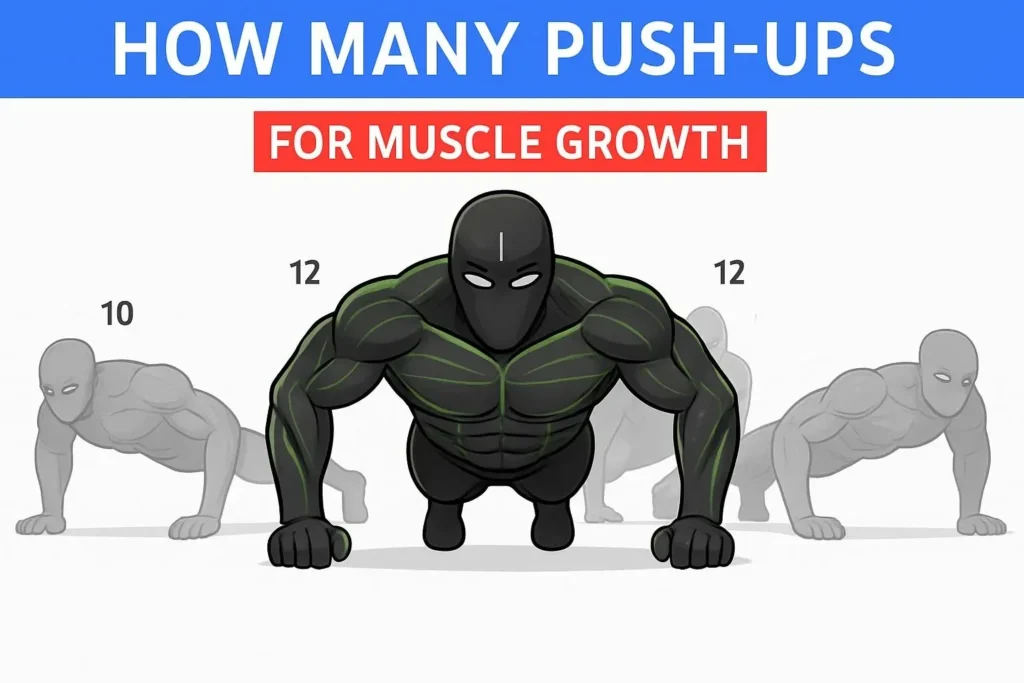
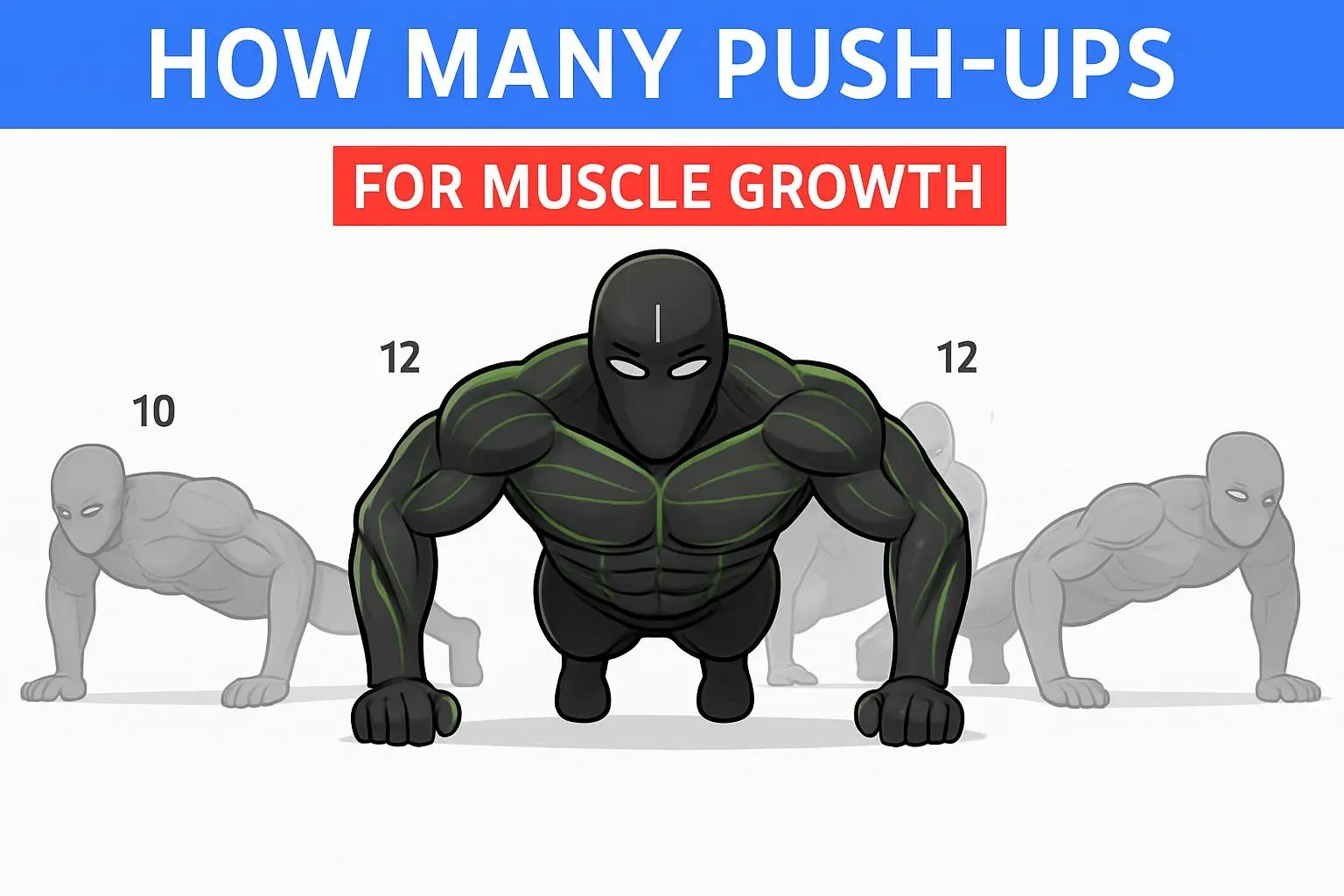
How Many Push-Ups Should You Do to Build Muscle (Science-Backed Answer)

Push-Up Counts for Muscle Gain

Push-ups are one of the simplest and most effective exercises for building upper-body muscle when done correctly. The number of push-ups you should do depends on your experience, how hard each set is, and whether you’re using progressions to increase resistance over time. If you pair push-ups with complementary movements like targeted back work you’ll build a more balanced upper body — try these back moves to build a massive back for balance and stronger pushing mechanics.

How Many Push-Ups Should You Do to Build Muscle (Science-Backed Answer)

How push-ups build muscle

  • Push-ups load the chest (pectoralis major), anterior deltoids, and triceps while recruiting stabilizers (core, serratus anterior).
  • Muscle growth (hypertrophy) requires sufficient mechanical tension, metabolic stress, and progressive overload — you can achieve this with bodyweight work by increasing reps, changing tempo, altering angle, or adding resistance.
  • Training close to failure is important. Whether you do low reps with added weight or high reps to near-failure, muscles respond when they’re challenged.

How many reps and sets to aim for

  • Beginners (new to push-ups or returning from a break): 3–4 sets of 8–15 reps, 2–3 times per week. Use knee push-ups, incline push-ups, or band assistance so the last 1–3 reps in each set feel challenging.
  • Intermediate (can do 20–30 standard push-ups in a row): 4–6 sets of 12–20 reps, or 3–5 sets of 6–12 with more difficult variations (decline, archer). Train 2–4 times per week.
  • Advanced (add external load or do single-arm/planche progressions): 3–6 sets of 6–12 reps with added weight or very challenging variations. You can also use 2–4 sets to technical failure for skill-heavy single-arm moves.

Weekly volume and intensity

  • Aim for total weekly chest/triceps volume of roughly 8–20 sets from push-ups and supplementary pressing. If push-ups are your main pressing tool, lean toward the higher end of that range.
  • Ensure most sets are near failure (1–3 reps short of failure) to stimulate hypertrophy. If you never reach that point, increase difficulty or add sets.
  • Vary rep ranges across the week: one session focused on heavier (lower reps/added load) work, another focused on higher reps and time under tension.

Progressions to keep gaining

  • Increase difficulty before simply adding reps: elevate feet (decline), change hand placement, slow tempo, add weighted vest, or move to unilateral variations.
  • Track reps × sets and push for small weekly improvements (even 1–2 extra reps per set matters).
  • Use tempo training (3–4s descent, 1s pause, explosive up) to increase time under tension without changing rep count.

Sample 8-week templates

  • Beginner block (weeks 1–4): 3×12 push-ups (or incline/knee), 3× per week; add 1–2 reps per set each week.
  • Intermediate block (weeks 5–8): 4×15 standard or 5×8 decline/weighted, 2–3× per week; alternate heavy and high-volume sessions.
  • Advanced block: 3–5×6–10 weighted or unilateral variations, 2–3× per week; include accessory triceps and shoulder work.

Form and recovery tips

  • Maintain a straight line from head to heels, full range of motion (chest near the floor), and controlled tempo.
  • Rest 48–72 hours between intense pushing sessions if you’re training the same muscle groups heavily.
  • Sleep, protein intake, and progressive overload are essential for hypertrophy.

Nutrition and supporting habits

  • Prioritize daily protein (roughly 0.7–1.0 g per pound of bodyweight for most trainees) and a slight calorie surplus if your main goal is gaining size.
  • Hydration and consistent sleep matter as much as training volume for recovery.
  • Want easy, muscle-building nutrition ideas? Try these high-protein smoothie recipes to build muscle that pair perfectly with a push-up-centered program.

How Many Push-Ups Should You Do to Build Muscle (Science-Backed Answer)

Conclusion

Push-ups can build significant muscle when you train with progressive overload, hit appropriate weekly volume, and push near failure. For an easy breakdown of the muscles activated and benefits of push-ups, see this resource on What Muscles Do Push-Ups Work? 7 Benefits of Push-Ups – GoodRx.

How Many Push-Ups Should You Do to Build Muscle (Science-Backed Answer) Read More »

, , , ,
Person doing push-ups to improve fitness and strength

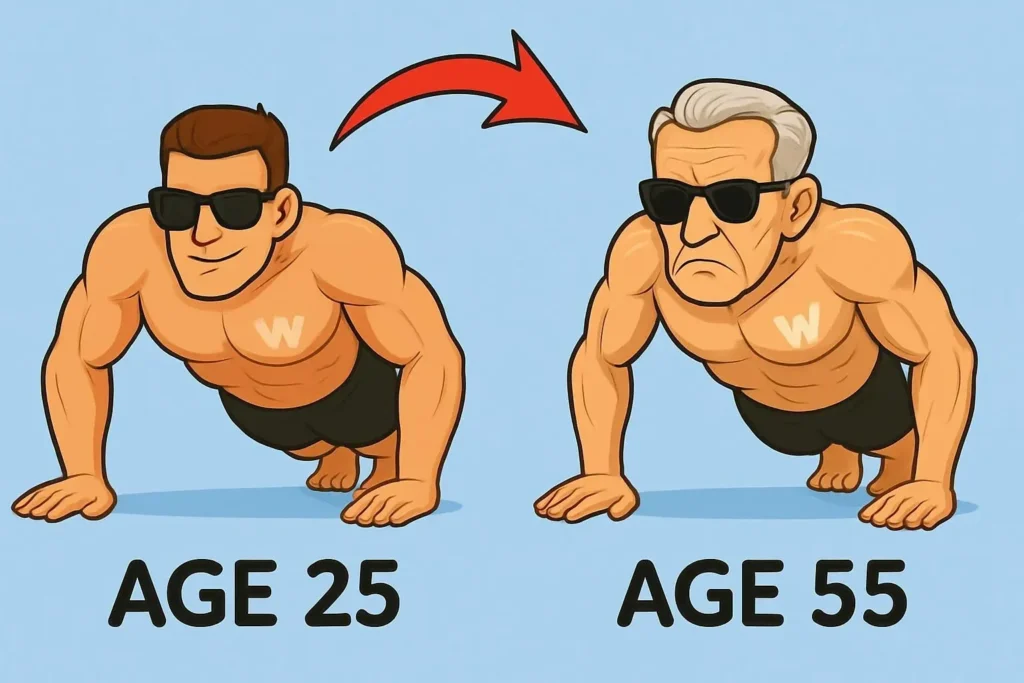
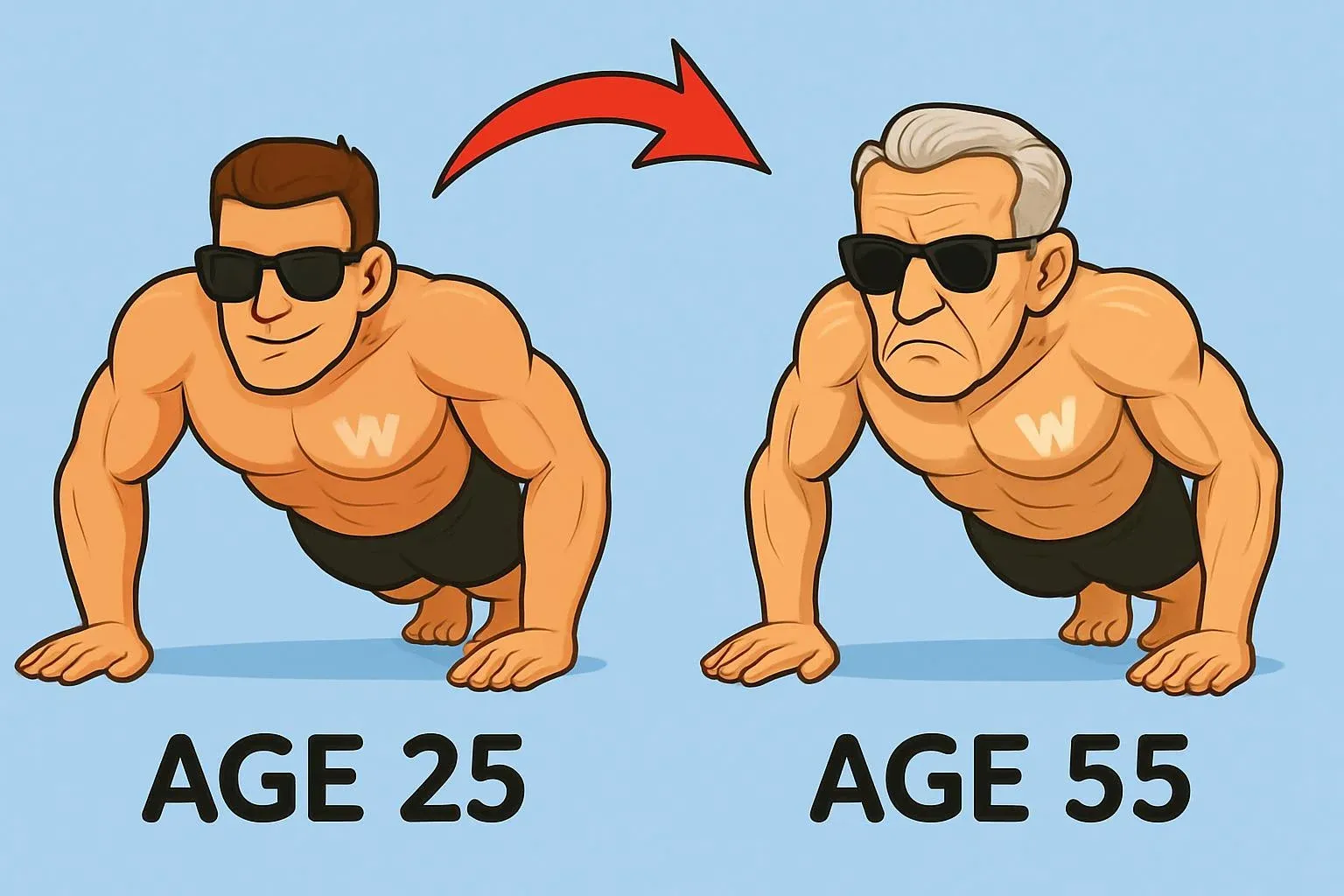
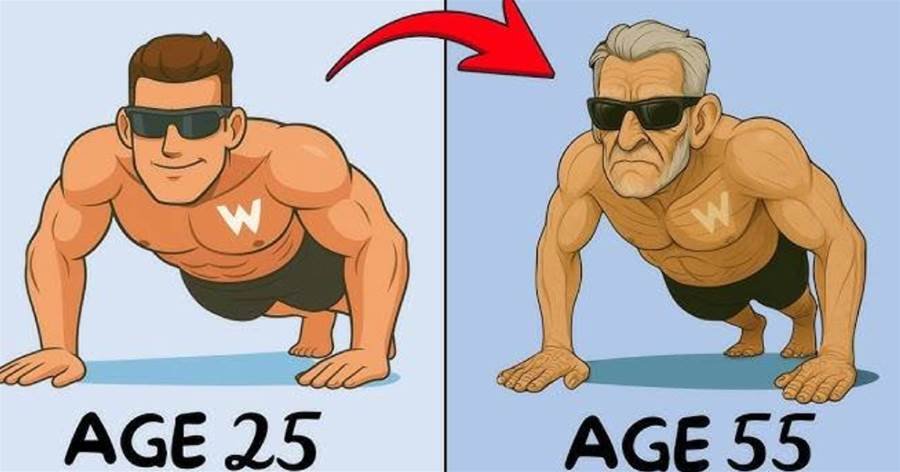
How Many Push-Ups Should You Be Able to Do at Your Age?

Push-Up Benchmarks by Age

Push-ups are a simple, effective way to gauge upper-body strength and overall fitness. Below you’ll find age-based benchmarks, testing tips, and progress strategies to help you know where you stand and how to improve. For targeted shoulder work that supports push-up performance, include specific shoulder-strengthening moves in your routine like those recommended in this guide: shoulder-strengthening moves.

How Many Push-Ups Should You Be Able to Do at Your Age?

What follows are practical, realistic push-up standards broken into age groups, plus form checks and training pointers you can use right away.

How to test a standard push-up

  • Start in a high plank with hands under shoulders, body in a straight line.
  • Lower until your chest is roughly an inch from the floor, then push back up.
  • Keep elbows at about a 45-degree angle to your body; avoid flaring.
  • Count only full-range reps with good form.

Age-based push-up benchmarks (average / good)

  • 18–24: Men 15 / 30+ | Women 10 / 20+
  • 25–34: Men 12 / 25+ | Women 8 / 18+
  • 35–44: Men 10 / 20+ | Women 7 / 15+
  • 45–54: Men 8 / 15+ | Women 5 / 12+
  • 55–64: Men 6 / 12+ | Women 4 / 10+
  • 65+: Men 4 / 10+ | Women 2 / 8+

Notes on the benchmarks

  • "Average" indicates a reasonable norm for generally healthy, active people. "Good" indicates above-average fitness.
  • Individual variation is large — body weight, training history, and technique matter.
  • If standard push-ups are too hard, start with knee push-ups, incline push-ups, or wall push-ups and progress from there.

Training strategies to increase reps

  • Progressive overload: add 1–3 reps per session or add an extra set each week.
  • Volume structure: try 3–5 sets of 8–12 reps at a challenging intensity, or timed sets (e.g., max reps in 60 seconds).
  • Variation: incorporate decline push-ups for extra challenge or close-grip/pike push-ups to target different muscles.
  • Recovery: rest 48 hours between intense push-up-focused sessions.
  • Nutrition and energy: small, carbohydrate-focused pre-workout snacks can help sustain performance during training.

Common form mistakes to avoid

  • Sagging hips or a rounded back — tighten your core and glutes.
  • Partial reps — only count full-range movement.
  • Hands too wide or too narrow — aim for shoulder-width to slightly wider depending on target muscles.
  • Holding breath — breathe out on the push phase.

Quick progress test protocol

  • Warm up 5–10 minutes (dynamic shoulder and chest mobility).
  • Do one set to failure with strict form; use this number as your baseline.
  • Repeat the test every 4–6 weeks to track progress.

How Many Push-Ups Should You Be Able to Do at Your Age?

Conclusion

If you want a professional reference to compare your results and learn more about overall fitness measures, see this resource from the Mayo Clinic: How fit are you? See how you measure up – Mayo Clinic.

How Many Push-Ups Should You Be Able to Do at Your Age? Read More »

, , , ,
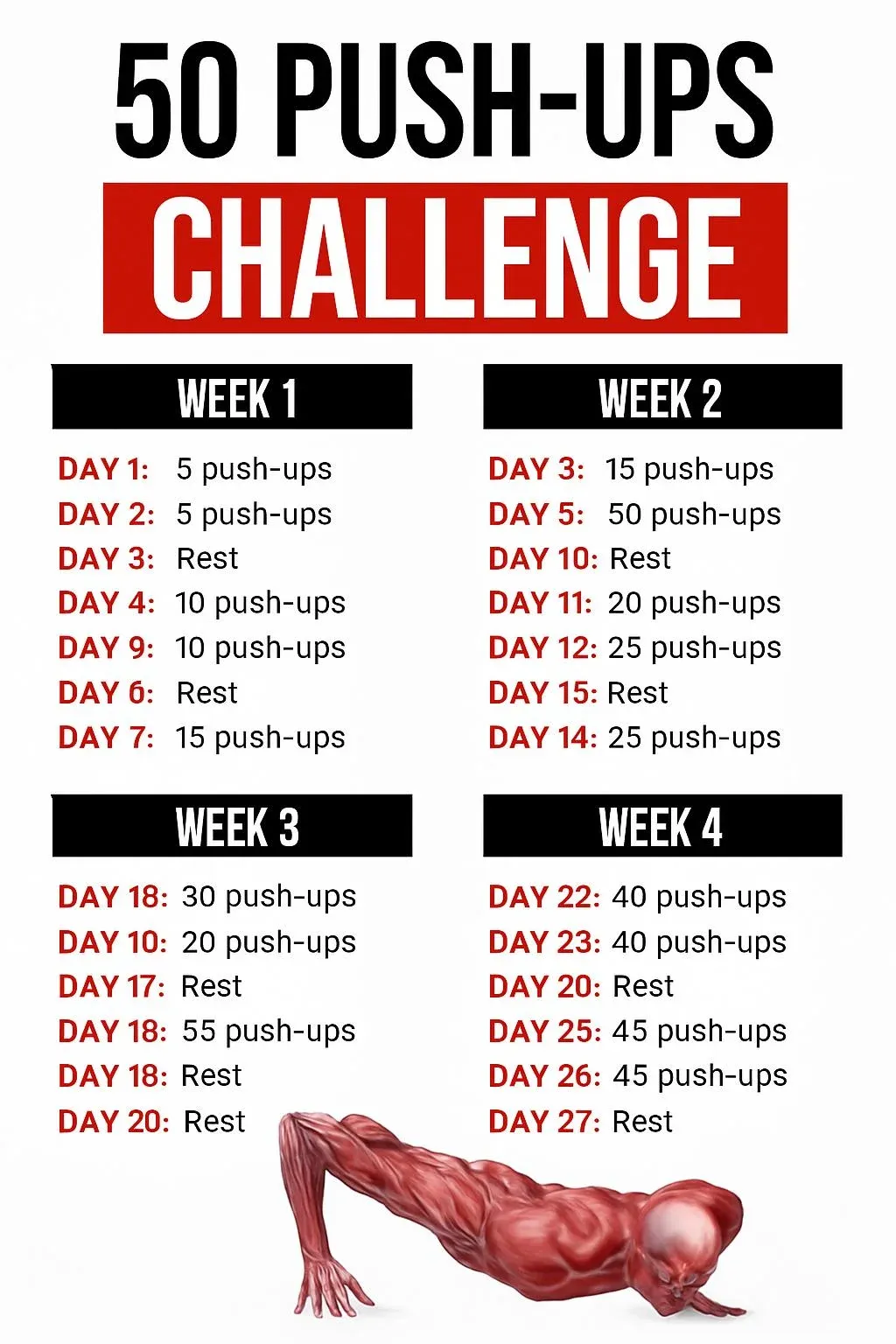
Person performing push-ups as part of a 4-week fitness challenge to reach 50 push-ups.

How to Do 50 Push-Ups: A 4-Week Challenge

How to Do 50 Push-Ups: A 4-Week Challenge

Push-ups are one of the most efficient, no-equipment exercises you can do to build upper-body strength, core stability, and muscular endurance. Whether you’re starting from a few reps or working up from zero, a structured 4-week plan can take you to 50 consecutive push-ups with consistent practice and smart recovery. Try pairing push-up training with targeted back work to keep your shoulders healthy and your posture strong.

How to Do 50 Push-Ups: A 4-Week Challenge

Why 50 push-ups?

  • It’s a measurable goal that tests muscular endurance across chest, shoulders, triceps, and core.
  • It builds confidence and creates a foundation for more advanced bodyweight moves.
  • It’s scalable: you can adapt the plan whether you can do 0, 10, or 30 reps today.

Fundamentals of good push-up form

  • Hands should be slightly wider than shoulder-width, fingers spread.
  • Body forms a straight line from head to heels — no sagging hips or pike.
  • Elbows track at a roughly 45-degree angle from your torso.
  • Lower until your chest is an inch or two from the floor, then press up fully.
  • Breathe in on the descent, out on the ascent.

Warm-ups and mobility (5–7 minutes)

  • Light jogging or jumping jacks (1–2 minutes).
  • Shoulder circles and band pull-aparts to activate rotator cuff and scapular stabilizers.
  • 10–15 scapular push-ups (protract/retract shoulder blades) to prime upper-back control.

The 4-week progression
This plan assumes you do the program 3–4 times per week (e.g., Monday, Wednesday, Friday, optional Sunday). On off days, do light mobility or a short walk.

Week 1 — Build volume and consistency

  • Test day (Day 1): Perform one maximal set of push-ups to find your starting point (don’t go to failure on training days).
  • Training days: 5 sets of 50% of your max reps with full rest between sets (2–3 min). If your max is 10, do 5 sets of 5.
  • Add one daily set later in the day of 60% of your max as a “grease the groove” mini-set to build neural efficiency.

Week 2 — Increase set density

  • Training days: 6 sets of 60% of your max. Reduce rest slightly (90–120 seconds).
  • Once per week, perform 2 “ramp” sets: start with light sets and finish with a near-max set to push endurance.
  • Introduce incline or knee push-ups for 1–2 sets if you need to keep total volume manageable.

Week 3 — Push closer to goal reps

  • Training days: 4 working sets designed as two heavier sets and two endurance sets.
    • Set 1 & 2: 75–85% of your current max (enough to fatigue without failing).
    • Set 3 & 4: As many reps as possible (AMRAP) but stop 1–2 reps shy of failure.
  • Add one day of tempo push-ups: slow 3-second descent and controlled 1-second up, 4 sets of moderate reps. Tempo work increases time under tension and control.

Week 4 — Peak and test

  • Reduce frequency slightly to allow fresh muscles: 3 solid sessions early in the week.
  • Early-week sessions: two heavy sets (near max) and one long set (aim for 70–90% of 50).
  • Test day (end of week): Attempt 50 consecutive push-ups. Warm thoroughly; attempt once when fresh.

Modifications and regression options

  • Incline push-ups (hands on bench/wall) reduce load for beginners.
  • Knee push-ups keep the pattern but lower resistive demands.
  • Eccentric-only (slow negatives) help if you can’t push up yet: step up (or have partner help) and lower slowly to the floor.

Accessory work to support push-up gains

  • Planks and hollow holds to strengthen core stability.
  • Dips or tricep-focused extensions for lockout strength.
  • Rows and posterior-chain work to balance the pushing volume — consider the primer on back development in the article 50 healthy snacks to fuel recovery when planning nutrition and recovery strategies.

Recovery, sleep, and nutrition

  • Aim for 7–9 hours of sleep nightly; muscle adaptations happen during rest.
  • Keep protein intake sufficient (rough guideline: 0.6–1.0 g per pound bodyweight for active trainees).
  • Hydrate and include anti-inflammatory foods (fruits, vegetables, omega-3s). Smart snacking between workouts can help meet calorie and protein needs while keeping energy stable.

Common mistakes and how to fix them

  • Rounding the back: focus on core bracing and reduce range of motion until you can keep a straight line.
  • Flared elbows: cue elbows to track closer to 45 degrees to protect shoulders.
  • Going to failure every set: preserve technique and avoid burnout — stop 1–2 reps shy of failure for most training sets.

Sample microcycle (for someone who can do ~15 push-ups now)

  • Monday: Test, then 5×8 (50% of max). Core work.
  • Tuesday: Mobility and light cardio.
  • Wednesday: 6×10 (60% of new working max). Shoulder stability.
  • Friday: Tempo work 4×8 + 2 sets AMRAP.
  • Sunday (optional): One easy set of 9–10 as active recovery.

Tracking progress

  • Keep a training log: reps, sets, perceived exertion.
  • Retest your max every 7–10 days to adjust training percentages.
  • Record short videos occasionally to check form and posture.

Motivation and consistency tips

  • Pair the push-up challenge with a habit trigger (e.g., after breakfast or before shower).
  • Use micro-goals: reaching 20, 30, 40 reps are motivating milestones.
  • Train with a friend or join an online community for accountability.

How to Do 50 Push-Ups: A 4-Week Challenge

Conclusion

If you want a concise, guided resource to complement this plan, consider reading this practical guide on How To Do 50 Push-Ups a Day: A 4-Week Challenge which outlines a similar progression and additional tips for making steady gains.

How to Do 50 Push-Ups: A 4-Week Challenge Read More »

, , , ,
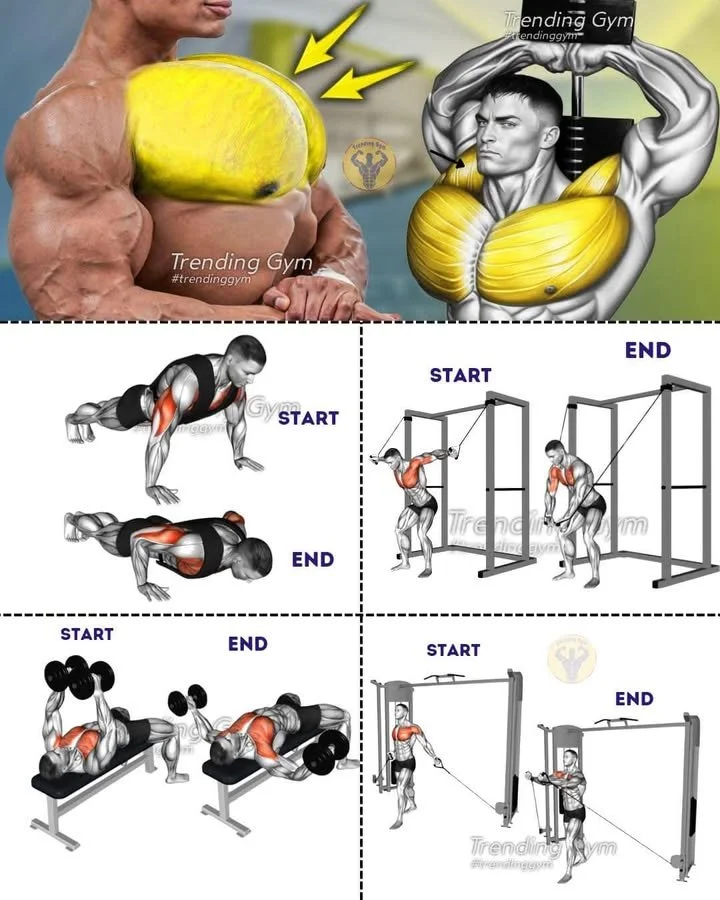
Chest workout routine with push-ups, dumbbell bench press, and cable low fly exercises.

✅ Best Chest Workout Routine – Chest Day 🔥 ✨ 1 Push-ups With Weight 2 Bend High Fly 3 Dumbbells Bench Press 4 Cable Low Fly 3 sets 10-12 reps #fitness #chestworkout #chestday #fblifestyle

Unleash the Power of Your Chest: The Ultimate Chest Workout Routine

If you’re on the journey to build a stronger and more defined chest, look no further! This workout routine is designed to challenge your muscles, promote growth, and enhance your overall upper body strength. Whether you’re a seasoned gym-goer or a fitness beginner, this chest day workout is perfect for you. Get ready to pump up your pecs with this killer routine!

Warm-Up: Preparing for the Burn

Before diving into your main workout, it’s crucial to warm up your body. A good warm-up can improve your flexibility, reduce the risk of injury, and enhance your performance. Spend 5-10 minutes stretching and performing light cardio, such as jumping jacks or arm circles, to get your blood flowing.

The Chest Workout Routine

1. Push-Ups With Weight

  • Sets: 3
  • Reps: 10-12

Start your workout with weighted push-ups. This classic exercise is fantastic for building overall chest strength. Add some weight to your back using a plate or a weighted vest to increase the intensity. Ensure your form is correct—keep your body straight and lower yourself until your chest almost touches the floor.

2. Bend High Fly

  • Sets: 3
  • Reps: 10-12

Next up is the bend high fly, which targets your chest muscles by emphasizing the stretch at the top of the movement. Use a pair of dumbbells and hinge at your hips while keeping a slight bend in your knees. Raise the weights out to the side at shoulder height, squeezing your pecs together at the top.

3. Dumbbells Bench Press

  • Sets: 3
  • Reps: 10-12

The dumbbell bench press is a staple for any chest workout and for good reason! Lie on a flat bench with a dumbbell in each hand, palms facing forward. Push the weights upwards until your arms are fully extended, and then lower them back down slowly. This exercise not only builds strength but also improves muscle symmetry.

4. Cable Low Fly

  • Sets: 3
  • Reps: 10-12

Finish your routine with the cable low fly. Adjust the cables to the lowest setting and stand in the middle. Grab the handles and with a slight bend in your elbows, bring your hands together in front of you. This move is excellent for targeting the inner chest and achieving that well-rounded look.

Cool Down: Stretch and Recover

After your workout, it’s essential to cool down and stretch your chest muscles to aid in recovery. Consider performing static stretches such as doorway stretches or chest openers to increase flexibility and reduce muscle tightness.

Conclusion

Incorporating this chest workout routine into your fitness regimen will not only help build a stronger chest but also improve your overall upper body strength. Remember to keep your form in check, stay hydrated, and listen to your body. Chest day is about pushing your limits—so get in there, work hard, and enjoy those gains!

Don’t forget to share your progress and tag us!

#fitness #chestworkout #chestday #fblifestyle

✅ Best Chest Workout Routine – Chest Day 🔥 ✨ 1 Push-ups With Weight 2 Bend High Fly 3 Dumbbells Bench Press 4 Cable Low Fly 3 sets 10-12 reps #fitness #chestworkout #chestday #fblifestyle Read More »

, , , ,
Scroll to Top