
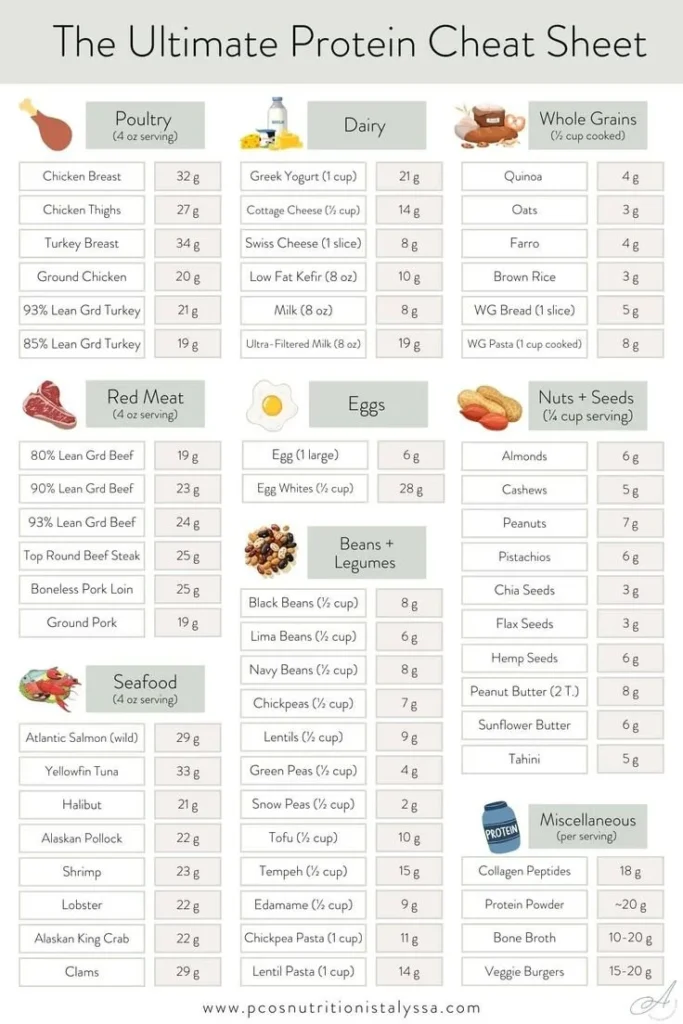
A Dietitian’s High Protein Cheat Sheet (Free PDF)
A Dietitian’s High Protein Cheat Sheet — Practical Tips You Can Use Today
Whether you want to build muscle, lose fat, manage hunger, or recover faster after workouts, protein is one of the most powerful tools in your nutrition toolbox. This article condenses a dietitian’s practical guidance into an easy-to-follow cheat sheet: how much protein you need, where to get it, timing and portion ideas, and simple swaps to make daily meals more protein-rich.
Introduction
Protein does more than support muscles — it helps regulate appetite, supports immune function, and stabilizes blood sugar. If you cook outdoors or like bold flavors, there are plenty of ways to boost protein while keeping meals exciting — from grilled salmon to marinated tofu. For inspiration on grilling high-protein choices, check out this list of high-protein foods that are great for grilling.
Why protein matters
- Satiety: Protein promotes feeling full longer, which can reduce overall calorie intake.
- Muscle maintenance and growth: Protein supplies amino acids needed for repair and growth, especially after strength training.
- Metabolic benefit: The thermic effect of protein (energy used to digest) is higher than carbs or fat.
- Wellness: Protein supports repair processes and various enzymes and hormones.
How much protein do you need?
- General guideline: 0.8–1.0 g/kg body weight for sedentary adults.
- Active people and those aiming to build or keep muscle: 1.4–2.0 g/kg.
- Older adults: aim toward the higher end (1.2–2.0 g/kg) to preserve muscle mass.
- For weight loss while preserving lean mass: 1.6–2.4 g/kg can be useful under supervision.
Protein quality and distribution
- Aim to distribute protein evenly across meals (20–40 g per meal depending on body size).
- Include a high-quality source at breakfast, lunch, and dinner to maximize daily muscle protein synthesis.
- Combining plant proteins (e.g., beans + rice) throughout the day improves overall amino acid balance.
Protein timing and post-workout strategy
- Having a balanced meal with 20–40 g protein within 2 hours of resistance exercise helps recovery.
- Quick post-workout options: Greek yogurt, a protein shake, cottage cheese, or lean poultry.
- When choosing meat for post-workout recovery, consider lean choices to support faster synthesis; research comparing cuts suggests advantages to choosing lighter-fat options — learn more about how lean meat beats high-fat meat for faster post-workout muscle protein synthesis.
High-protein swaps and portion ideas
- Breakfast: Swap low-protein cereal for Greek yogurt with nuts and fruit (20–30 g).
- Lunch: Replace plain sandwiches with a grain bowl centered on grilled chicken, tempeh, or salmon (30–45 g).
- Snacks: Hard-boiled eggs, roasted chickpeas, or a small tin of tuna (6–20 g depending on choice).
- Dinner swaps: Trade extra starchy sides for an additional palm-sized portion of lean protein.
- Plant-forward: Use lentils, edamame, and seitan to hit protein targets if you prefer vegetarian options.
Sample simple day (moderate active adult)
- Breakfast: Omelet with 2 eggs + 1/2 cup egg whites + spinach (30 g)
- Snack: Greek yogurt + 1 tbsp almond butter (15–20 g)
- Lunch: Quinoa salad with grilled chicken and beans (35 g)
- Snack: Cottage cheese + berries (12–15 g)
- Dinner: Grilled salmon + roasted vegetables + a small sweet potato (35–40 g)
- Total: ~130–140 g (adjust portions to match your needs)
Practical tips and common myths
- Myth: You need protein immediately after training or it’s useless. Reality: a 2-hour window with sufficient protein spread across the day works well.
- Tip: If you struggle to reach goals, add a protein-rich snack or increase portion sizes at meals by palm-sized servings.
- Tip: Use meal prep to keep high-protein choices ready — batch-cook lean meats, beans, and grain bowls.
- Safety: Most healthy adults tolerate higher protein intakes, but those with kidney disease should consult a clinician before increasing protein.
A quick printable cheat-sheet checklist
- Target grams per meal: aim for 20–40 g depending on body size and goals.
- Include a protein source at every main meal and choose a protein-rich snack.
- Favor lean cuts post-workout and distribute protein evenly through the day.
- Mix animal and plant sources for variety and micronutrient balance.
- Plan and prep: cook once, use for several meals.
Conclusion
For an easy, printable reference you can keep in the kitchen or on your phone, download the free resource titled A Dietitian’s High Protein Cheat Sheet (Free PDF). It consolidates portions, quick swaps, and sample meals into a single page that’s handy for meal planning and grocery shopping.
A Dietitian’s High Protein Cheat Sheet (Free PDF) Read More »