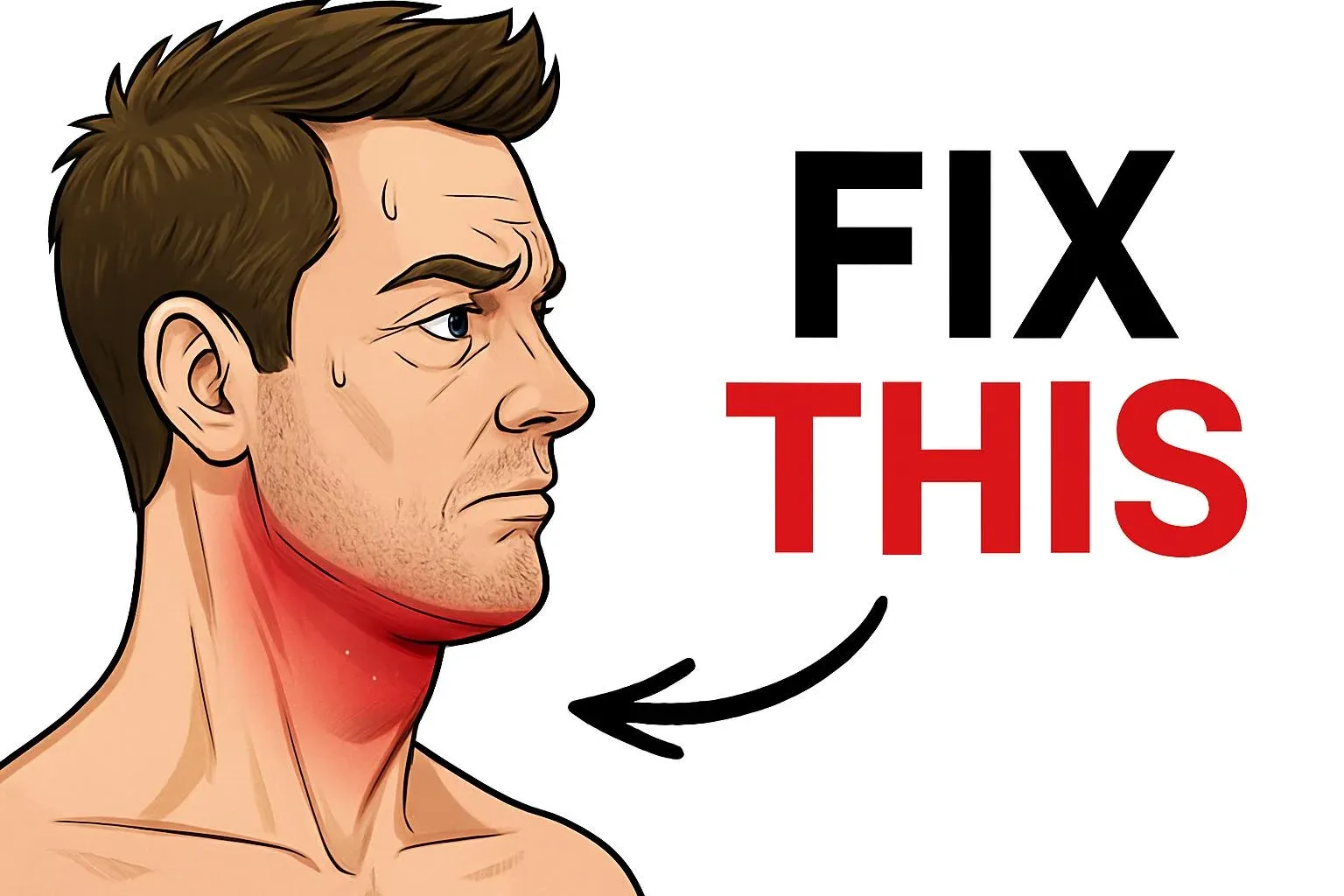

3 Exercises That Build SUPERHUMAN Neck (Stop Looking Weak)
Bulletproof Neck: 3 Moves to Stop Looking Weak
A strong, well-developed neck not only improves your look and presence — it protects the cervical spine, helps stabilize the head under load, and reduces injury risk in contact sports. Whether you’re a desk worker battling forward-head posture or an athlete wanting added resilience, these three focused exercises build a thick, powerful neck with safe progressions for every level. If tightness and posture are a concern, try this neck and shoulder tension routine alongside the work below for faster relief and better results.

Why train the neck?
- Improves posture and head control.
- Reduces concussion and whiplash risk in contact sports.
- Adds a confident, powerful aesthetic to your upper body.
- Enhances performance in lifts where head stability matters (e.g., carries, deadlifts).
How to program these three exercises
- Frequency: 2–3 times per week.
- Warm up: 5–10 minutes of light cervical mobility (slow neck circles, chin tucks).
- Progression: increase reps, time under tension, or add small loads before heavier variations.
- Safety: move slowly, breathe, don’t force end-range, and stop if you feel sharp pain or tingling.
Exercise 1 — Isometric Neck Holds (Beginner to Intermediate)
What it trains: All-plane neck stability (flexion, extension, lateral flexion).
How to do it:
- Sit upright with neutral spine.
- Place your palm on your forehead and apply gentle pressure while resisting with your neck; hold a 10–20 second contraction. Repeat for 3–5 sets.
- Repeat for the back of the head (hands behind head) and both sides (hand on temple), keeping chin tucked on flexion holds and neutral on extensions.
Progressions: - Increase hold time to 30–45 seconds.
- Use a resistance band anchored behind/above for added load.
Notes: Controlled breathing and a neutral spine are essential. This builds endurance and control before adding dynamic or loaded neck movements.
Exercise 2 — Weighted Neck Extensions (Intermediate)
What it trains: Posterior cervical extensors and upper traps.
How to do it (neck harness or lying variation):
- Lying face down on a bench with head hanging off the end, hold a light plate on your forehead (or use a neck harness).
- Slowly lift your head to align with your spine, pause 1–2 seconds at the top, then lower under control. 3 sets of 8–12 reps.
Progressions: - Gradually add 1–2 kg (2–5 lb) increments or switch to a neck harness for standing extensions.
- Increase tempo control (3-second negatives) to build eccentric strength.
Safety: Start very light — the neck is sensitive to load. If you feel radiating numbness, stop and reassess technique.
Exercise 3 — Bridge Progressions & Heavy Carries (Advanced & Indirect Strength)
What it trains: Whole-neck and upper-back integration, compressive strength, and functional stability.
How to do it:
- Wrestler bridge (advanced): From kneeling, place crown of head on mat and push hips up, driving through neck and upper traps. Hold static bridges for 10–30 seconds, 2–3 sets. Only for experienced lifters with prior neck conditioning.
- Safer alternatives: Weighted shrugs, farmer carries, and heavy trap work. These indirect movements strengthen the musculature that supports the neck and improve overall carry strength. For program ideas, consider the 3D shoulders program to build complementary upper-back and trap strength that helps protect the neck.
Progressions: - Work up from holds to dynamic repetitions, then to loaded bridges (only under supervision).
- Integrate heavy carries (60–120 seconds) to build durable postural control.
Tips, recovery, and common mistakes
- Don’t rush to heavy loads. Build endurance and control first with isometrics.
- Keep the chin slightly tucked to avoid excessive cervical extension during most exercises.
- Include upper-back mobility and thoracic extension work to reduce compensatory neck strain.
- Rest 48 hours between intense neck sessions. Use ice or gentle heat for soreness and soft-tissue work (foam ball) to relieve tight traps.
- If you have a preexisting cervical injury, consult a clinician before starting loaded neck work.
Sample 6-week progression (twice weekly)
Weeks 1–2: Isometric holds 3x20s, light mobility, no load.
Weeks 3–4: Isometrics 3x30s + 2 sets 8–10 neck extensions with light load.
Weeks 5–6: Add farmer carries 2x60s, neck extensions 3×8 with increased load, and controlled bridge holds (if ready) 2×15–30s.

Conclusion
A resilient neck takes consistent, attentive work: start with control (isometrics), add load gradually, and build supporting upper-back strength. If you notice unusual symptoms like excessive sweating or other systemic signs during exercise, consider medical evaluation — see this research on hyperhidrosis in heart failure patients for context on when sweating can indicate a broader health issue.
3 Exercises That Build SUPERHUMAN Neck (Stop Looking Weak) Read More »