home workout

Intense home abs workout tips for blocky abs and faster results

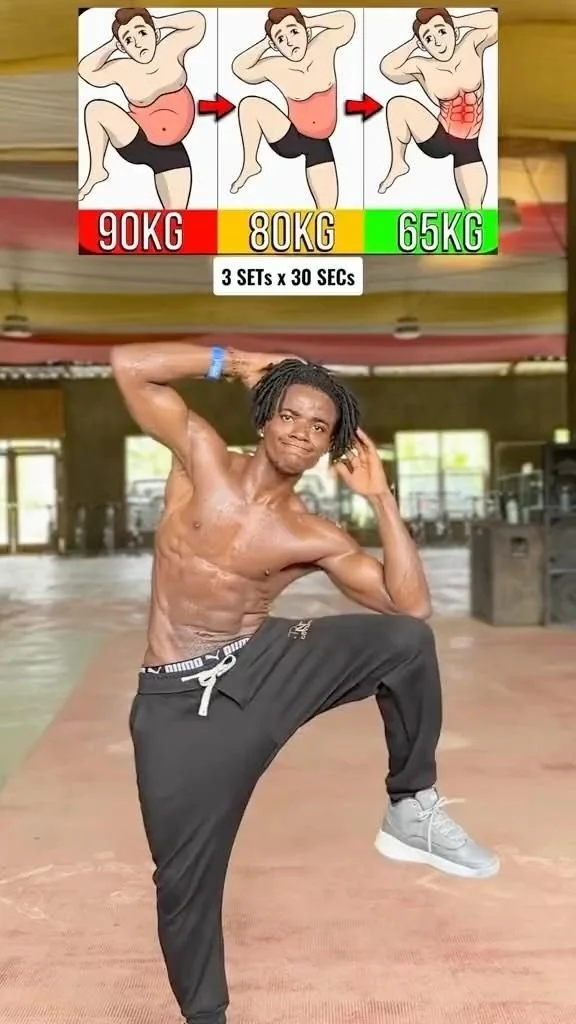
Abs Workout – Grow your Abs faster with these No Bullsh*t tips.Discover the Secret to Blocky Abs: Intense Home Workout Revealed! 💪🔥

Blocky Abs Blueprint

Get ready to stop spinning your wheels on endless crunches and confusing advice. This short, no-nonsense guide gives you the exact principles and a compact at-home routine to grow your abs faster — the efficient, real-world approach that actually produces results. For a quick home-focused routine reference, check this home abs workout guide to pair with the tips below.
Abs Workout - Grow your Abs faster with these No Bullsh*t tips.Discover the Secret to Blocky Abs: Intense Home Workout Revealed! 💪🔥

Why "blocky" abs happen: the short science

  • Abs grow when muscle fibers are overloaded and recover properly. That means progressive tension, not just high reps.
  • Visible abs are 2 things: well-developed abdominal muscles and low enough body fat to reveal them. You must attack both.
  • Focus on compound moves that engage the core under load — you’ll stimulate deeper muscle layers and functional strength.

Program — Intense Home Workout (20–30 minutes)
Do this circuit 3 times a week. Warm up 5 minutes (jog in place, dynamic stretches).

  • Hollow Hold to Pike (45 sec): build anti-extension strength.
  • Slow-Tempo V-Ups (10–12 reps): controlled, full-range contraction.
  • Weighted Russian Twists* (20 total): add a household weight for progressive overload.
  • Plank-to-Push-Up (10 reps): integrates anti-rotation and anterior chain work.
  • Hanging Knee Raises substitute: Lying Leg Raises (12–15 reps) if no bar.

Perform 3 rounds with 60–90 seconds rest between rounds. Increase difficulty by adding weight, slowing eccentrics, or reducing rest.

Progression and programming tips

  • Track sets, reps, and perceived difficulty. When you can do the top of the rep range easily, add load or raise difficulty.
  • Prioritize form over quantity: targeted ab actions are short; make each rep purposeful.
  • Consistency beats novelty: choose 2–4 focused ab sessions weekly and stick with them for 8–12 weeks.

Diet and body-fat strategy

  • Nutrition wins. You cannot out-train a poor diet if your goal is visible, blocky abs.
  • Aim for a moderate calorie deficit if you need to lower body fat, high protein to preserve muscle during the cut.
  • Use whole foods, minimize liquid calories, and time higher-carb meals around your workouts for energy.

For practical protein hacks across meals and snacks, see this easy protein-increase guide that pairs well with the training plan above.

Common mistakes to avoid

  • Doing endless high-rep sit-ups without progressive overload.
  • Neglecting posterior chain and overall strength work; a strong back and glutes improve core development and aesthetics.
  • Expecting visible abs without addressing body fat — both pillars must be managed.

Minimal equipment alternatives

  • Use a dumbbell, kettlebell, or even a heavy backpack to add load to twists and sit-up variations.
  • A pull-up bar enables hanging leg raises — the single best home-to-gym transfer for the lower abs.
  • If equipment is unavailable, slow eccentric bodyweight moves and isometric holds are very effective.

Recovery and lifestyle

  • Sleep, hydration, and stress management influence your hormonal environment for muscle growth and fat loss.
  • Deload every 4–6 weeks if progress stalls: reduce volume or intensity for a week, then come back stronger.
Abs Workout - Grow your Abs faster with these No Bullsh*t tips.Discover the Secret to Blocky Abs: Intense Home Workout Revealed! 💪🔥

Conclusion

Sculpting blocky abs is a two-front battle: targeted progressive training plus disciplined weight management. For an external resource on weight-management strategies that complements this approach, visit Motorcycle Safety Weight Management.
Abs Workout – Grow your Abs faster with these No Bullsh*t tips.Discover the Secret to Blocky Abs: Intense Home Workout Revealed! 💪🔥 Read More »

, , , ,
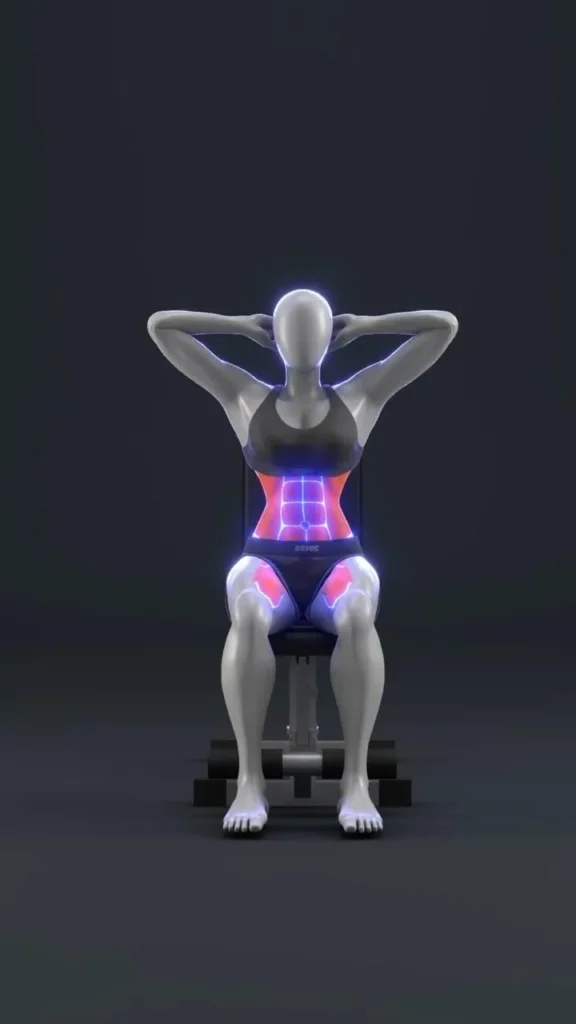
A person demonstrating a seated ab workout routine on a chair.

No More Floor! Do Your Entire Ab Routine Right Here ➡️ 🚀 Stop Doing Crunches! Try This 5-Minute SEATED Ab Workout! 🪑 Thi… [Video] in 2025 | Abs workout, Workout routine, Workout

No More Floor! Do Your Entire Ab Routine Right Here — A 5-Minute Seated Core Workout

Introduction
You don’t need a yoga mat, a gym floor, or a set of fancy machines to train your core. A quick, seated ab routine can deliver meaningful strength, stability, and endurance gains — especially if you’re pressed for time, recovering from injury, or working in a small space. If you’re curious how a few focused moves can replace traditional crunches, check out this short routine and how to make it progressive and safe. For background on core movement variety, see these top abs exercises.

Why seated core work?

  • It targets the same deep and superficial abdominal muscles as floor exercises (rectus abdominis, transverse abdominis, obliques) while minimizing neck/back strain.
  • It’s accessible for beginners, older adults, people with limited mobility, and office workers who want to train during breaks.
  • Seated exercises emphasize posture and anti-rotation control — important for daily movement and sports.

What you need

  • A stable chair without wheels (or a bench).
  • Optional: light dumbbell, medicine ball, or water bottle for added resistance.
  • 5 minutes and good posture.

5-minute Seated Ab Circuit (Repeat once)
Perform each move for 40 seconds, rest 20 seconds, then move to the next. Total time ≈ 5 minutes.

  1. Tall Seated Knee Tucks
  • Sit tall, hands on the sides of the chair for support.
  • Lean back slightly, engage the core, lift both knees toward your chest, then extend legs without touching the floor.
  • Focus on a controlled tempo and belly-button-to-spine bracing.
  1. Seated Russian Twist
  • Sit slightly back on the chair, feet on the floor.
  • Hold a weight or clasp hands; rotate torso left and right, keeping hips square.
  • Move with control; exhale on the twist.
  1. Seated Bicycle (Alternating Knee + Opposite Elbow Reach)
  • Sit tall, lift one knee while rotating torso to touch opposite elbow toward the knee.
  • Alternate sides, emphasizing the obliques and coordination.
  1. Seated Leg Extensions with Hollow Hold
  • Sit on edge, hands gripping sides.
  • Extend legs a few inches off the floor and hold a hollow-body tension for 20–30 seconds, relax briefly, repeat.
  • Great for lower-abs activation.
  1. Seated Side Crunch (each side)
  • Sit tall, place hand behind head, lift elbow toward same-side hip while bringing that knee up.
  • Repeat on the other side.
  1. Seated Pallof Press (anti-rotation; with band or light weight)
  • If you have a resistance band anchored to the side or a weight, press straight out from your chest, resist rotation, and return.
  • If no equipment, mimic the movement pressing palms together and resist turning your torso.

Modifications & Progressions

  • Easier: Keep one foot on the floor during knee-based moves; reduce range of motion.
  • Harder: Hold a weight, slow the tempo, add isometric holds at peak contraction.
  • Progress by increasing work intervals to 45–50 seconds, decreasing rest, or adding a second circuit.

Programming tips

  • Use this 5-minute seated circuit as a daily micro-workout, a warm-up for standing core work, or part of a circulation-break routine during long workdays.
  • Combine with standing anti-flexion/anti-rotation drills for a well-rounded core plan.

Fuel & timing
A light pre-workout snack 30–60 minutes before can help performance if you’re training in the morning or between meals. For ideas on quick, effective pre-workout options, see best pre-workout snacks to power your morning routine.

Safety & common mistakes

  • Don’t yank on your neck during repetitions — keep hands light behind the head.
  • Avoid rounding the lower back; maintain neutral spine and ribcage down.
  • If you experience pain (sharp or radiating), stop and consult a professional.

Quick sample weekly plan

  • Daily: 5-minute seated circuit as a break or warm-up.
  • 3× week: Add standing core work or a 10–15 minute full-body strength session.
  • Track progression by increasing reps, resistance, or circuit rounds every 2–3 weeks.

Conclusion

Seated ab work is an efficient, low-impact way to strengthen your core anytime, anywhere. If you want more chair-based ideas you can use at home, check out 8 Effective Chair Exercises You Can Do at Home.

No More Floor! Do Your Entire Ab Routine Right Here ➡️ 🚀 Stop Doing Crunches! Try This 5-Minute SEATED Ab Workout! 🪑 Thi… [Video] in 2025 | Abs workout, Workout routine, Workout Read More »

, , , ,
Beginner-friendly calisthenics workout demonstration by @maveripped featuring 7 foundational exercises.

New to bodyweight training? @maveripped demos 7 foundational exercises per… [Video] in 2025 | Calisthenics workout for beginners, Calesthenics workout, Calisthenics workout at home

Beginner’s Guide to 7 Foundational Calisthenics Moves — Inspired by @maveripped (2025)

If you’re new to bodyweight training and saw @maveripped demo “7 foundational exercises,” this article expands on those moves and gives a clear, beginner-friendly plan you can use at home. These seven exercises build strength, mobility, and coordination without needing a gym. If you want targeted chest variations to supplement your routine, check this chest workout at home resource for simple progressions like towel pushups and dips.

What follows is a breakdown of each foundational exercise, how to structure your first sessions, sensible progressions, common errors to avoid, and a short sample routine.

The 7 Foundational Calisthenics Exercises (What they train and how to do them)

  1. Push-up (Horizontal pressing)

    • What it trains: chest, shoulders, triceps, core stability.
    • Beginner cue: hands under shoulders, body in a straight line, lower until chest grazes the floor.
    • Regression: incline push-ups (hands on a bench or table). Progression: full push-up → diamond → archer → one-arm.
  2. Australian row / Inverted row (Horizontal pulling)

    • What it trains: mid-back, biceps, rear delts, scapular control.
    • Beginner cue: feet on floor, body plank under bar, pull chest to the bar while keeping hips up.
    • Regression: higher bar or use rings. Progression: lower bar, elevate feet, then muscle-up components.
  3. Squat (Knee-dominant leg work)

    • What it trains: quads, glutes, hamstrings, balance.
    • Beginner cue: feet shoulder-width, hips back and down, drive through heels.
    • Regression: assisted box squat. Progression: pause squat → pistol practice.
  4. Glute bridge / Hip thrust (Hip hinge emphasis)

    • What it trains: glutes, hamstrings, posterior chain — important to balance squats.
    • Beginner cue: press hips up until body forms a line from knees to shoulders.
    • Regression: double-leg bridge. Progression: single-leg glute bridge.
  5. Plank (Core stability)

    • What it trains: deep core, shoulder stabilizers, posterior chain.
    • Beginner cue: elbows under shoulders, neutral spine, avoid sagging hips.
    • Regression: plank on knees. Progression: weighted plank, plank to push-up.
  6. Hanging knee tucks / dead hang (Grip and core)

    • What it trains: grip strength, hip flexors, core coordination.
    • Beginner cue: hang from bar, gently tuck knees toward chest while maintaining scapular stability.
    • Regression: active dead hang (scapular pull) only. Progression: hanging leg raises.
  7. Lunge or split squat (Single-leg strength)

    • What it trains: unilateral leg strength, balance, hip mobility.
    • Beginner cue: step forward and lower until both knees are ~90°. Keep torso upright.
    • Regression: stationary split squat. Progression: walking lunges → pistol negatives.

How to structure your first 6–8 weeks

  • Frequency: 3 full-body sessions per week (e.g., Monday, Wednesday, Friday).
  • Warm-up (5–10 minutes): light cardio, dynamic mobility for shoulders and hips, and 2 sets of movement-specific warm-ups (e.g., scapular pulls, bodyweight squats).
  • Main sets: 3 rounds of 4–6 exercises per session. Start with 3 sets of 6–10 reps for strength-focused moves (or 20–40 sec holds for planks).
  • Rest: 60–90 seconds between sets for compound movements; 30–60 seconds for accessory/core work.
  • Progression strategy: add reps, reduce assistance, increase range of motion, or add an extra set every 1–2 weeks.

Sample beginner workout (Full-body, 3 rounds):

  • Incline push-ups — 8–12 reps
  • Australian rows — 8–12 reps
  • Bodyweight squats — 12–15 reps
  • Glute bridges — 12–15 reps
  • Plank — 30–45 seconds
  • Hanging knee tucks or dead hang — 8–10 reps or 20–30 seconds

Cool down with static stretching for the chest, hamstrings, hip flexors, and shoulders for 5–8 minutes.

Progressions, accessory work, and balancing your program

Once the basic pattern feels easy (2–3 weeks), start layering harder variations or additional accessory work to address weak points. For example, if you want to add more focused back development and wing expansion, consider incorporating rowing variations and vertical pulling progressions; a dedicated resource on building a stronger, wider back can guide structured back sessions for more advanced calisthenics athletes: back workout for stronger, wider wings.

Other accessory suggestions:

  • Face pulls or band pull-aparts for rear delts and scapular health.
  • Nordic hamstring lowers or Romanian deadlift patterning for hamstring strength.
  • Single-leg balance drills and ankle mobility for safer lunges and pistols.

Common mistakes and how to fix them

  • Trying advanced variations too soon: stay on regressions until movement quality is perfect.
  • Neglecting posterior chain: balance push with pull and squats with hip-hinge work.
  • Rushing progressions: increase load by small steps (reps → sets → reduced assistance → complexity).
  • Poor scapular control on hangs/rows: practice scapular retractions and depressions before full repetitions.

Minimal equipment and space needed

  • Pull-up bar or a sturdy tree branch / door-mounted bar.
  • A pair of gymnastic rings (optional, but they increase variability).
  • A sturdy chair or bench for dips and incline work.
  • A towel for added chest variations (sliding or towel pushups can be done on smooth floor).
  • No special shoes required—train barefoot or in flat shoes for balance.

Conclusion

Calisthenics is an accessible and effective way to build strength, mobility, and body control. Start with these seven foundational moves, prioritize consistent practice and clean technique, and progress gradually. Within a few weeks you’ll notice improved strength and confidence — and you’ll be ready to add more challenging calisthenics skills to your routine.

New to bodyweight training? @maveripped demos 7 foundational exercises per… [Video] in 2025 | Calisthenics workout for beginners, Calesthenics workout, Calisthenics workout at home Read More »

, , , ,
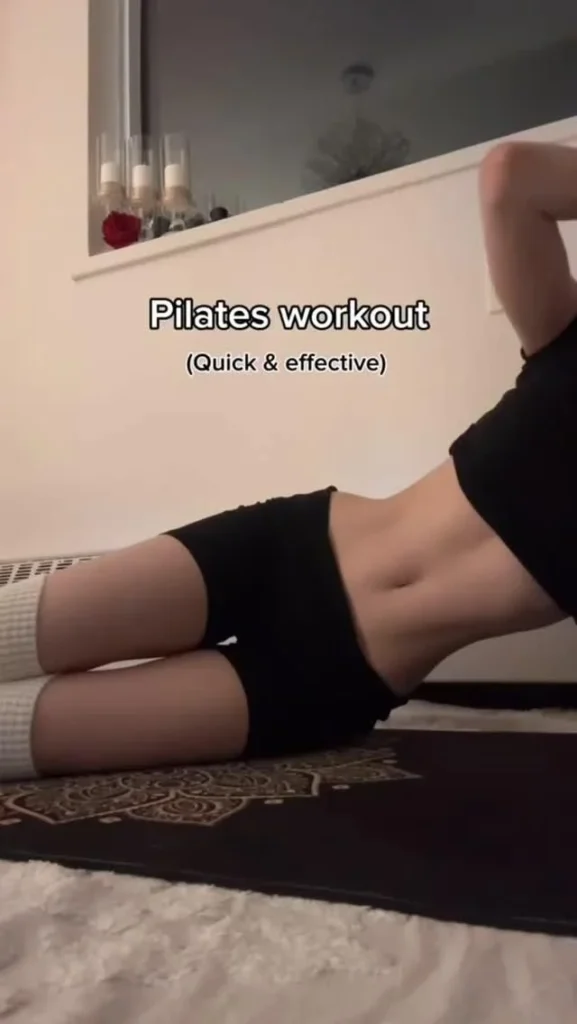
Leila demonstrating an abs workout at home with coaching tips on Instagram.

[Видео] «[Видео] «Leila on Instagram: “Try this at home, 3-5x a week 1:1 coaching in my bio 🤎 #absworkout #pilates #homeworkout Cc:Melanie (on tiktok)”»» в 2025 г | Тренировка для пресса, Тренировки, Ежедневные физические упражнения

Try This At Home: A Simple 3–5x/Week Pilates Abs Workout

Short, focused home workouts are trending — and for good reason. Leila’s recent clip encouraging viewers to “Try this at home, 3–5x a week” captures the modern approach: consistent, short sessions that build control and tone without needing a gym. Keep in mind that while targeted ab work strengthens and sculpts the core, spot reduction is a myth, so combine core training with overall conditioning and nutrition to see the best results.

This article breaks down an effective, pilates-inspired abs routine you can do at home, how often to do it, progressions, and quick nutrition tips to support your efforts.

Why 3–5x per week works

  • Frequency builds skill and endurance. Short, frequent sessions reinforce movement patterns and muscle recruitment.
  • Recovery matters. If you do this routine 5 times a week, keep intensity moderate and listen to soreness; 3–4 sessions is ideal for most people balancing other workouts.
  • Consistency beats intensity. Ten to 25 minutes of focused core work most days is better than sporadic, exhaustive sessions.

Pilates principles for better abs

Pilates emphasizes control, breath, and precision — all of which translate to safer, more effective core training:

  • Neutral spine and pelvic awareness keep pressure off the lower back.
  • Slow, controlled movements increase time under tension without needing heavy weights.
  • Breathing patterns (exhale on exertion) help engage the deep transverse abdominis and pelvic floor.

20-minute Home Pilates Abs Routine (Beginner → Advanced)

Warm-up (2–3 minutes)

  • Cat–cow 30 sec
  • Standing roll-downs with slow breaths 1 minute

Main set (repeat circuit 2–3 rounds)

  1. Hundreds (modified): 30–60 seconds — pump arms with small inhales/exhales, keeping ribs in.
  2. Single-leg stretch: 8–12 reps per side — focus on pelvic stability.
  3. Double leg lower (controlled): 8–10 reps — stop if your back arches.
  4. Criss-cross (slow): 10–16 total reps — rotate with control, not momentum.
  5. Plank to knee tap: 30–45 seconds — maintain a straight line, draw belly button to spine.
  6. Pilates leg circles (small): 6–8 each direction per leg — keep hips stable.

Cool-down (2–4 minutes)

  • Child’s pose with diaphragmatic breathing 1 minute
  • Supine knees-to-chest and gentle twist 1–2 minutes

Progressions: increase reps, add a third round, or extend hold times. Add a weighted or resistance-element only after mastering form.

Nutrition and recovery (short guide)

Ab-focused training benefits greatly from proper fueling and recovery. Prioritize lean protein and whole foods after workouts to support muscle repair. For easy meal ideas that pair well with grilling season and post-workout recovery, consider including high-protein foods that are great for grilling like chicken breasts, salmon, or firm tofu to make quick, nutritious dinners after training.

Hydration, sleep, and stress management also play major roles in visible progress and energy levels.

Common form mistakes to avoid

  • Over-cranking the neck during crunches — support the head with the hands and lead with the chest.
  • Holding breath — exhale on effort to maximize core engagement.
  • Letting the lower back arch on leg lowers — reduce range of motion if needed.
  • Relying on momentum — slower, controlled reps are more effective.

When to seek coaching

If you have persistent lower back pain, diastasis recti, or previous abdominal surgery, consider 1:1 coaching to tailor movements and progressions safely. A coach can correct subtle compensations and create a plan that fits your schedule and goals.

Conclusion
A compact, pilates-based abs routine done 3–5 times a week can improve core strength, posture, and movement quality. Combine consistent practice with whole-body conditioning and mindful nutrition for the best results. Start slow, prioritize form, and gradually challenge yourself — your core will thank you.

[Видео] «[Видео] «Leila on Instagram: “Try this at home, 3-5x a week 1:1 coaching in my bio 🤎 #absworkout #pilates #homeworkout Cc:Melanie (on tiktok)”»» в 2025 г | Тренировка для пресса, Тренировки, Ежедневные физические упражнения Read More »

, , , ,
Home ab workout video. No equipment needed for this core-strengthening routine.

PhrzeApparel on Instagram: “Here an ab workout that you can do in your home. No equipment needed to do this ab routine. Try it and let me know how your core fee… [Video] [Video] | Abs workout, Bodyweight back workout, Abs workout video

At-Home Ab Workout — No Equipment Needed

Want a quick, effective core routine you can do in your living room? This no-equipment ab workout targets the rectus abdominis, obliques, and deep core stabilizers using only bodyweight moves. Before you begin, make sure you’re fueled appropriately — if you exercise in the morning, check out some best pre-workout snacks to power your morning routine to avoid feeling lightheaded mid-set.

The Routine (20–25 minutes)

Perform a short warm-up (2–3 minutes) of light marching, hip circles, and torso twists. Then complete the circuit below. Rest 30–45 seconds between exercises and 60–90 seconds between rounds. Aim for 2–4 rounds depending on fitness level.

  • Bicycle Crunches — 40 seconds work / 20 seconds rest
    Focus on controlled rotation and full extension of the leg.
  • Plank Shoulder Taps — 30 seconds
    Keep hips steady; minimize rocking.
  • Reverse Crunches — 12–15 reps
    Use a slow tempo and lift with your core, not momentum.
  • Side Plank (each side) — 30 seconds per side
    Stack hips and line body from head to heels.
  • Hollow Body Hold — 20–30 seconds
    Keep lower back pressed into the floor; modify by bending knees.
  • Mountain Climbers — 30 seconds fast intervals for cardio & core stability

Repeat the circuit for your chosen number of rounds. Finish with a 2–3 minute cool-down of child’s pose and gentle spinal twists.

Form, Breathing & Recovery

Quality over quantity: prioritize controlled movement and steady breathing. Inhale to prepare, exhale during the exertion phase (for example, exhale as you curl up during a crunch). If you’re pairing this routine with strength training or trying to see visible changes, nutrition matters — consider these 10 easy ways to increase your protein intake to support muscle recovery and growth.

Modifications:

  • Beginner: Reduce work intervals by 10–15 seconds, or perform fewer rounds.
  • Intermediate: Follow prescribed times/reps.
  • Advanced: Add an extra round, increase hollow hold time, or slow negatives on reverse crunches.

Progressions & Programming Tips

  • Frequency: 2–4 core sessions per week integrated with full-body workouts. Core training more often is okay if intensity is moderate.
  • To progress, increase rounds first, then extend hold times or add slow eccentric counts on each rep.
  • Avoid doing heavy, high-volume core work right before maximal lifts (like heavy squats) to preserve lifting performance.

Conclusion
This simple, equipment-free routine is effective for building a stronger, more stable core when performed consistently and with good form. Track your reps, increase progressively, and listen to your body — and let me know how your core feels after trying it.

PhrzeApparel on Instagram: “Here an ab workout that you can do in your home. No equipment needed to do this ab routine. Try it and let me know how your core fee… [Video] [Video] | Abs workout, Bodyweight back workout, Abs workout video Read More »

, , , ,
Effective chest workout at home featuring towel flies and push-ups.

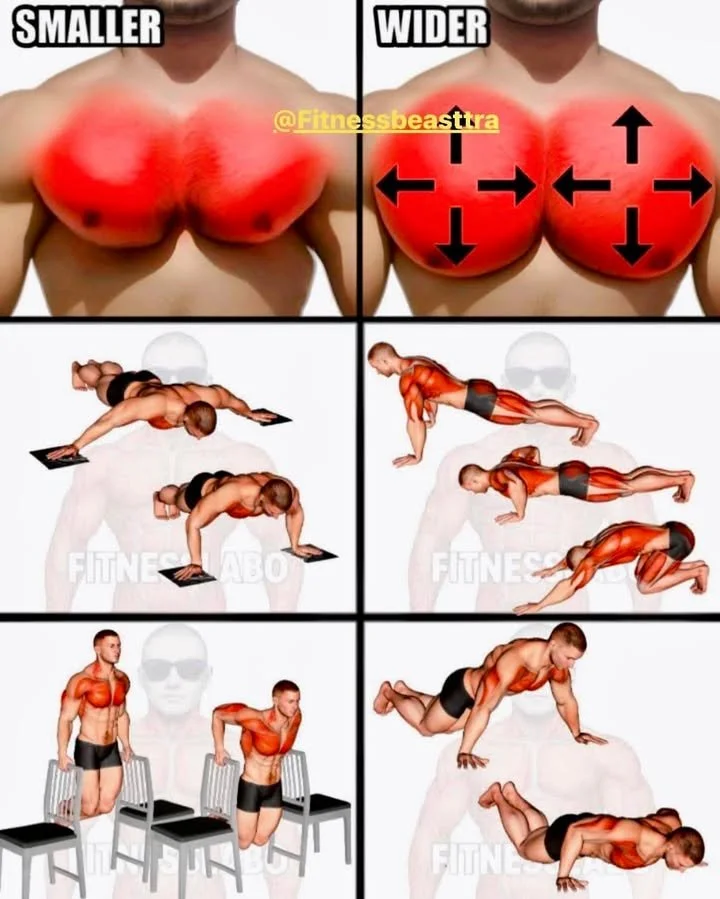
✅ Chest Workout At Home 🔥 1 Towel Chest Fly✅ 2 Push-up Pull✅ 3 Dips Between Chairs ✅ 4 Kneeling Push-up ✅ 3 sets 15 reps✅ #fblifestyle

Effective Chest Workout at Home

Looking to build strength and muscle in your chest without the need for any fancy equipment? Look no further! Here’s a simple yet effective chest workout routine that you can perform at home, using just a few basic items. This program includes exercises that target the chest muscles while also enhancing overall upper body strength.

Exercise Routine

1. Towel Chest Fly

Description: This exercise mimics the traditional chest fly movement using a towel to create resistance.

How to Do It:

  • Stand with your feet shoulder-width apart and hold a towel in both hands, stretching it at shoulder height.
  • With a slight bend in your elbows, open your arms wide, stretching the towel as you do.
  • Bring your arms back to the starting position.

Benefits: This move effectively targets the pectoral muscles and improves flexibility.

2. Push-up Pull

Description: A variation of the regular push-up that adds a pull component, utilizing momentum and balance.

How to Do It:

  • Start in a normal push-up position.
  • As you lower your body, pull one hand toward your body (as if pulling something towards you).
  • Return to the starting position and repeat on the other side.

Benefits: This exercise works the chest and engages other muscle groups such as the shoulders and arms.

3. Dips Between Chairs

Description: A fantastic bodyweight exercise that focuses on your chest, triceps, and shoulders.

How to Do It:

  • Place two sturdy chairs a few feet apart.
  • Support your body weight with your hands on the edges of the chairs and your legs extended between them.
  • Lower your body until your elbows are at about 90 degrees and then push back up to the starting position.

Benefits: Dips effectively target the lower part of the chest and build upper body strength.

4. Kneeling Push-up

Description: An excellent modification of the standard push-up, perfect for those building strength.

How to Do It:

  • Start on your knees with hands placed shoulder-width apart on the floor.
  • Lower your body to the ground by bending your elbows, then push back up to the starting position.

Benefits: This version reduces the intensity of a regular push-up, allowing you to focus on form and muscle engagement.

Workout Plan

Sets and Reps

Perform the following workout three times, completing 15 repetitions for each exercise:

  • Towel Chest Fly: 3 sets of 15 reps
  • Push-up Pull: 3 sets of 15 reps
  • Dips Between Chairs: 3 sets of 15 reps
  • Kneeling Push-up: 3 sets of 15 reps

Final Thoughts

This home chest workout is perfect for anyone looking to sculpt and strengthen the chest area without traditional gym equipment. Incorporate it into your routine three times a week for optimal results, and don’t forget to listen to your body and rest as needed.

Get ready to unleash the power of your chest with this effective at-home workout routine! 💪🔥

#fblifestyle

✅ Chest Workout At Home 🔥 1 Towel Chest Fly✅ 2 Push-up Pull✅ 3 Dips Between Chairs ✅ 4 Kneeling Push-up ✅ 3 sets 15 reps✅ #fblifestyle Read More »

, , , ,
Person performing a dumbbell back workout to build strength and muscle

#DumbbellBackWorkout #BackDay #BuildYourBack #StrongBack #DumbbellTraining #HomeWorkout #MuscleBuilding #FitnessMotivation

Build Your Back: The Ultimate Dumbbell Back Workout

Are you ready to transform your back and build a strong, muscular physique right from the comfort of your home? With just a pair of dumbbells, you can engage in an effective workout designed to activate your back muscles, enhance your strength, and elevate your fitness game. Let’s dive into the benefits of a dumbbell back workout and explore some effective exercises to incorporate into your routine.

Why Focus on Your Back?

A well-developed back is essential not only for aesthetic purposes but also for functional fitness. Strong back muscles play a critical role in improving posture, enhancing athletic performance, and preventing injuries. By focusing on your back day, you create a solid foundation that supports your entire body.

Benefits of Dumbbell Training

  1. Versatility: Dumbbells can be used for a wide variety of exercises, allowing for flexibility in your workouts.
  2. Balance: Unlike machines, dumbbells require stabilization from your core, which means you’re building overall strength.
  3. Home-Friendly: Perfect for home workouts, dumbbells take up minimal space and can be easily stored.

Essential Dumbbell Exercises for Back Day

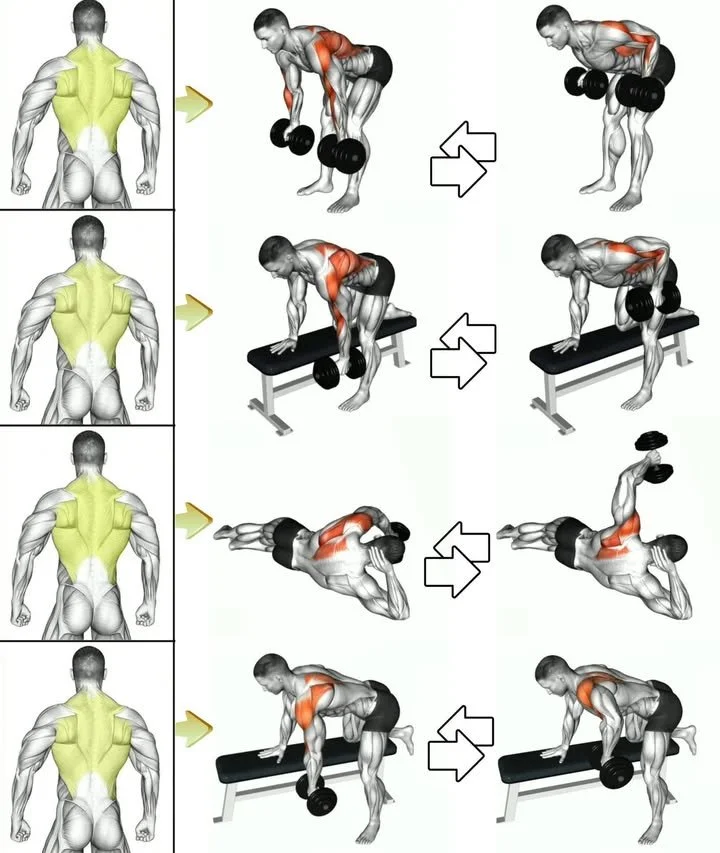
1. Dumbbell Bent-Over Row

How to Do It:

  • Stand with feet shoulder-width apart, holding a dumbbell in each hand.
  • Bend your knees slightly and hinge at the hips, keeping your back flat.
  • Pull the dumbbells towards your hips, squeezing your shoulder blades together at the top.
  • Lower back to the starting position.

Reps: 8-12

2. One-Arm Dumbbell Row

How to Do It:

  • Place one knee on a bench, with the other foot on the floor.
  • Hold a dumbbell in the opposite hand, letting it hang straight down.
  • Pull the dumbbell towards your hip while keeping your elbow close to your body.
  • Lower it back down for a full stretch.

Reps: 8-12 (each side)

3. Dumbbell Renegade Row

How to Do It:

  • Get into a plank position with a dumbbell in each hand.
  • Engage your core and row one dumbbell towards your hip while balancing on the other arm.
  • Alternate sides for each rep.

Reps: 6-10 (each side)

4. Dumbbell Deadlift

How to Do It:

  • Stand with your feet hip-width apart and hold a dumbbell in each hand, letting them hang in front of your thighs.
  • With a slight bend in your knees, hinge at the hips and lower the dumbbells along your legs.
  • Keep your back flat and chest up as you return to standing.

Reps: 10-15

5. Dumbbell Pullover

How to Do It:

  • Lie on a bench with your upper back supported and your feet flat on the ground.
  • Hold one dumbbell with both hands above your chest.
  • Lower the dumbbell back behind your head in a controlled manner and return to starting position.

Reps: 10-15

Tips for a Successful Back Workout

  • Start Light: If you’re new to strength training, start with lighter weights to focus on form before gradually increasing the load.
  • Warm-Up: Prioritize warming up your muscles with dynamic stretches to prevent injury.
  • Consistency: Aim to keep a regular schedule for your back workouts to see continuous improvement.

Fitness Motivation

Remember, building a strong back requires dedication and effort. Celebrate small victories along the way and keep pushing yourself. Surround yourself with motivational quotes, friends, or fitness communities online to stay enthusiastic about your fitness journey.

Conclusion

Incorporating a dumbbell back workout into your routine not only helps you build muscle but also improves your overall strength and posture. Whether you’re hitting back day with serious intent or looking for a quick home workout, these exercises are designed for everyone. Grab your dumbbells and get ready to activate those back muscles!


Feel free to mix and match these exercises to create a back workout that suits your fitness level and preferences. Happy lifting! 💪 #DumbbellBackWorkout #BackDay #BuildYourBack #StrongBack #DumbbellTraining #HomeWorkout #MuscleBuilding #FitnessMotivation

#DumbbellBackWorkout #BackDay #BuildYourBack #StrongBack #DumbbellTraining #HomeWorkout #MuscleBuilding #FitnessMotivation Read More »

, , , ,
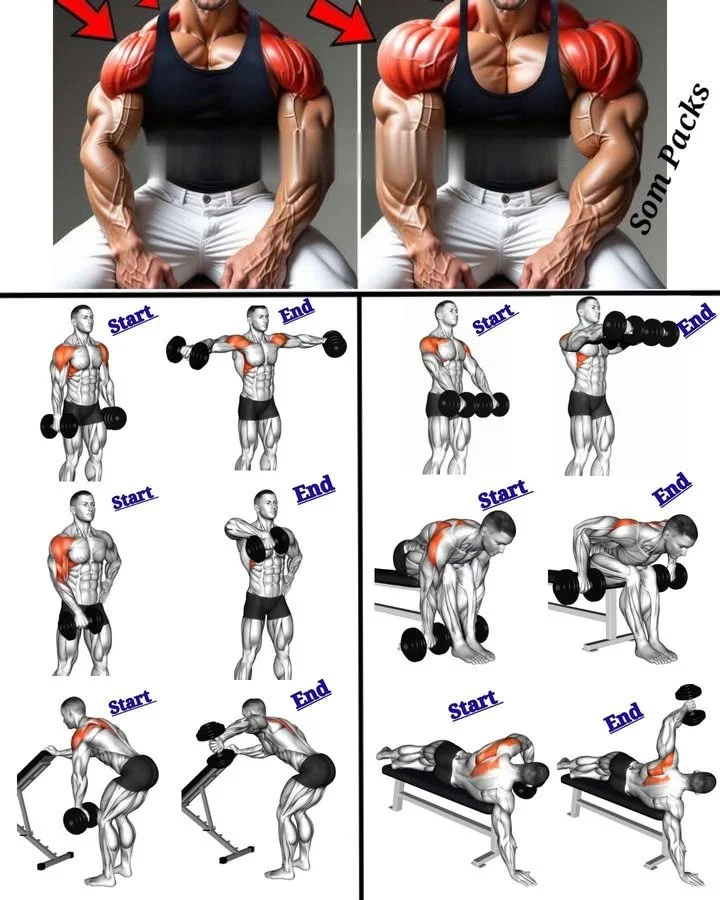
Dumbbells for effective shoulder exercises for strength and sculpting

best Dumbbells only shoulder exercises to improve your body

why should be training shoulder exercises by dumbbells

When it comes to building strong and defined shoulders, dumbbells are an invaluable tool. They not only allow for a full range of motion but also help in enhancing muscle symmetry and stability. Whether you’re a beginner or an experienced lifter, incorporating dumbbell-only shoulder exercises into your routine can yield impressive results. Below are some of the most effective dumbbell shoulder exercises you can perform to sculpt your shoulders and enhance overall upper body strength.

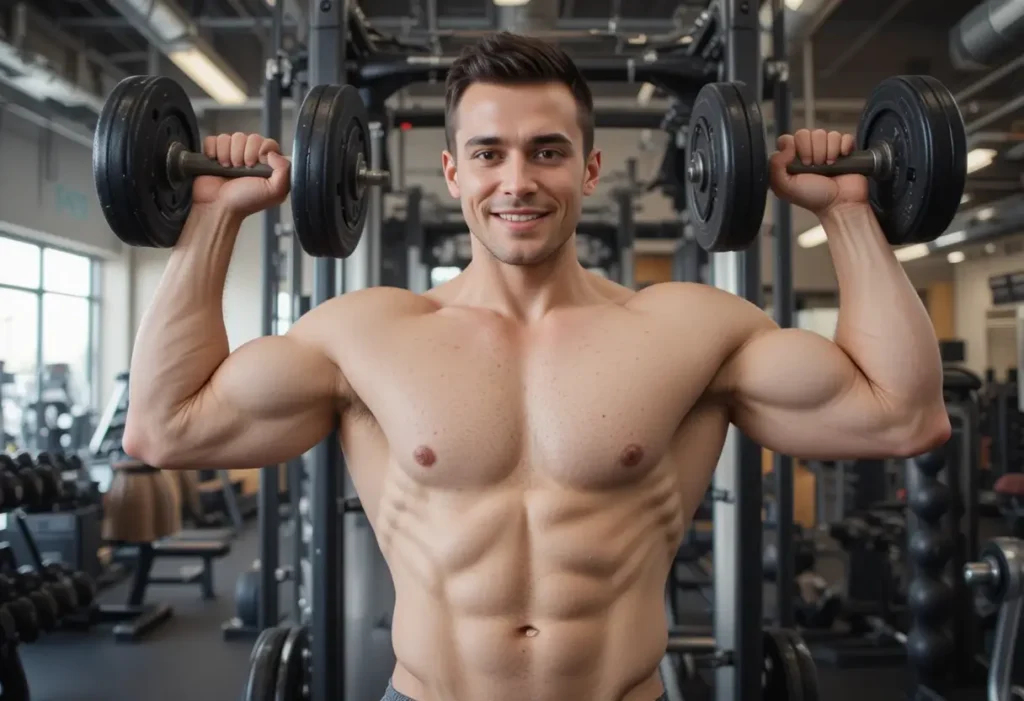
1. Dumbbell Shoulder Press

The dumbbell shoulder press is a fundamental exercise that targets the entire shoulder area, particularly the deltoids.

Dumbbell Shoulder Press

How to Perform:

  1. Stand or sit upright with a dumbbell in each hand, positioned at shoulder height.
  2. Engage your core and press the dumbbells overhead until your arms are straight.
  3. Slowly lower the weights back to shoulder height.
  4. Perform 3 sets of 8-12 reps.

2. Dumbbell Lateral Raise

This exercise is excellent for targeting the side deltoids, helping to create broader-looking shoulders.

How to Perform:

  1. Stand with a dumbbell in each hand at your sides, palms facing your body.
  2. Keeping a slight bend in your elbows, raise the dumbbells out to the sides until they reach shoulder height.
  3. Lower the weights back to the starting position.
  4. Aim for 3 sets of 10-15 reps.

3. Dumbbell Front Raise

The dumbbell front raise focuses on the front deltoids and helps in building strength and size in the anterior shoulder muscles.

How to Perform:

  1. Stand with your feet shoulder-width apart, holding a dumbbell in each hand at your thighs.
  2. With a straight back, raise the dumbbells in front of you to shoulder height (palms facing down).
  3. Lower them back down to the starting position.
  4. Complete 3 sets of 10-12 reps.

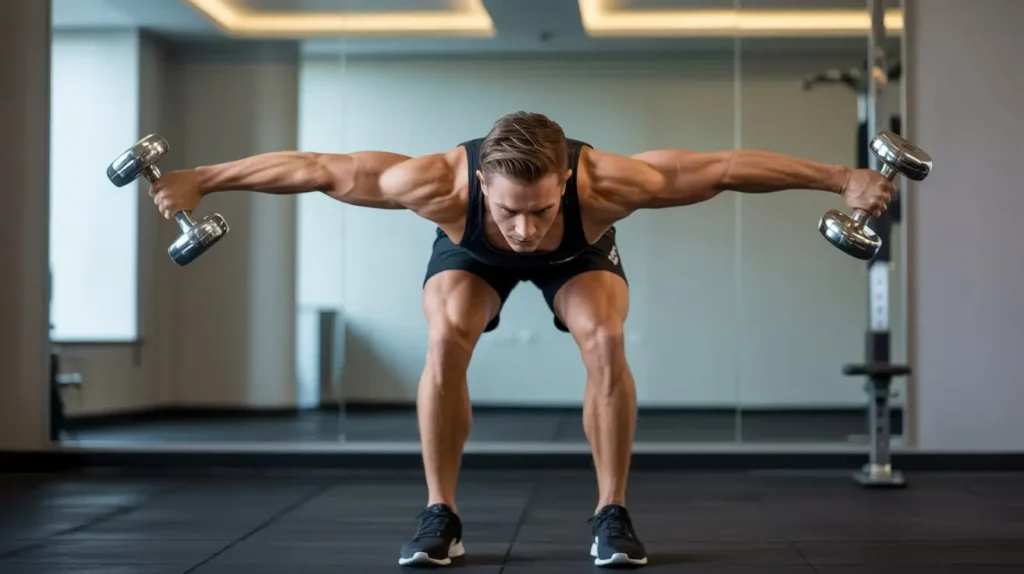
4. Dumbbell Reverse Fly

This exercise targets the rear deltoids as well as the upper back, promoting balanced shoulder development.

Dumbbell Reverse Fly

How to Perform:

  1. Bend at the hips with a slight knee bend, holding a dumbbell in each hand with palms facing each other.
  2. Keeping a flat back, lift the dumbbells out to the sides until they are at shoulder level.
  3. Slowly lower them back to the starting position.
  4. Perform 3 sets of 10-15 reps.

5. Dumbbell Arnold Press

The Arnold press is a variation of the traditional shoulder press that emphasizes all areas of the deltoids by combining rotation into the movement.

How to Perform:

  1. Sit on a bench with back support, holding a dumbbell in each hand at chin level, palms facing your body.
  2. Press the weights overhead while rotating your palms to face forward at the top of the movement.
  3. Lower the weights back to the starting position while rotating your palms back to face you.
  4. Aim for 3 sets of 8-10 reps.

Conclusion

Incorporating these dumbbell-only shoulder exercises into your workout routine can significantly enhance your shoulder strength and definition. Always remember to focus on proper form and control to maximize benefits and minimize the risk of injury. Whether your goal is aesthetics or performance, building strong shoulders will undoubtedly contribute to overall body strength and stability. Happy lifting!

you can read also These 4 workout strategies are specifically crafted for the time-crunched reality of parenthood.


Want to elevate your fitness journey further? Be sure to share this article with your friends and check out more tips at #fbifestyle!

best Dumbbells only shoulder exercises to improve your body Read More »

, , , ,
Scroll to Top