
gym motivation

Individual lifting 200KG weight for 25 reps showcasing strength.

25 reps using 200KG Weight 💪 This is the most reps I’ve ever seen.

25 Reps with 200 kg: Breaking Down an Incredible Strength-Endurance Feat

Intro
Watching someone blast out 25 reps with 200 kg on the bar is the kind of moment that stops a gym in its tracks. Whether it was a back squat, hack squat, or a loaded machine set, the feat signals an unusual mix of strength, conditioning, and technique. Cross-training activities that build stamina and mental grit — even things as different as long hikes — can contribute to that capacity; I’ve seen similar endurance improvements from athletes who embraced outdoor conditioning like hiking retreats as part of their plan.

Why 25 reps at 200 kg is remarkable

  • Strength vs. strength-endurance: Lifting a heavy load for one to five reps is primarily maximal strength. Doing 25 reps flips the emphasis to muscular endurance and repeated force production. For most lifters, 200 kg for a set of 25 is far beyond routine programming.
  • Energy systems: A long, taxing set uses a blend of anaerobic glycolysis and aerobic recovery between reps. The athlete must tolerate rising acidity and maintain motor control as fatigue accumulates.
  • Technical efficiency: To hold form across dozens of reps, the lifter must be economical with bar path, breathing, and joint positioning. Small technical escapes (shortened range of motion, slight tempo changes) often appear as reps pile up.
  • Equipment and load interpretation: Check whether the weight was raw, on a machine, or assisted by a belt/suit. Machine-based lifts or partial ranges can allow much higher rep counts at heavy nominal loads.

How to interpret that performance realistically

  • Don’t assume absolute maximal strength: Twenty-five reps at a heavy weight indicates impressive work capacity. But it isn’t the same as maximizing a one-rep max (1RM) in a single explosive attempt. Different adaptations are prioritized in each context.
  • Range and tempo matter: Were these full-depth reps? Slower eccentric tempos or brief pauses drastically change the stimulus. Always look beyond the number on the plates.
  • Bodyweight and leverages: A taller lifter with longer limbs may move the same load differently than a compact lifter. Bodyweight and anthropometry change how impressive a number truly is.

Training lessons and practical takeaways

  • Build a foundation of volume before chasing one-off feats. Progressive overload with sets in the 6–15 rep range builds both strength and hypertrophy that can later support higher-rep, heavy sets.
  • Incorporate density work and tempo sets. Training blocks of challenging rep-endurance (for example, 3–5 sets of 12–20 at submaximal loads, or AMRAPs with purposeful tempo) will improve tolerance for long sets.
  • Use accessory work that reinforces stability and pressing/squatting mechanics. For those focused on chest or pressing strength, specific dumbbell work can improve balance and muscle activation — consider program variations like the twist incline fly and dumbbell chest routines to shore up weak points.
  • Recovery and nutrition: High-rep heavy work is metabolically taxing. Prioritize carbs around training, quality sleep, and active recovery to sustain frequent intense sessions.
  • Safety first: If you’re attempting high-rep sets with very heavy loads, use spotters or machines, and scale range and load conservatively to avoid injury from fatigue-induced technical breakdown.

How to test and replicate it safely

  • Start with conservative rep ranges at a percentage of a known 10RM or 5RM and slowly increase reps over weeks.
  • Use cluster sets and short rests to accumulate volume without gross technical failure.
  • Track tempo and range methodically so you’re comparing apples to apples when attempting similar feats.
  • Consider alternating high-load endurance blocks with traditional strength blocks to allow nervous system recovery.

A final perspective
A single display of 25 reps with 200 kg is a memorable performance, but it’s also a springboard for questions: what was the lift, what equipment was used, and what was the athlete’s training history? Behind every headline number is a context that matters — and useful lessons for any lifter who wants to expand both their raw strength and their capacity to sustain it.

Conclusion

If you want a practical way to translate heavy dumbbell performance into expectations for barbell bench numbers, check this discussion on How much weight can I lift in bench press if I can do dumbbell bench … for examples and community estimates.

25 reps using 200KG Weight 💪 This is the most reps I’ve ever seen. Read More »
, , , ,
10 motivational quotes to boost gym sessions and inspire fitness goals

10 Motivational Quotes to Ignite Your Gym Sessions

10 Motivational Quotes to Ignite Your Gym Sessions

A great quote can be the spark that turns a stagnant workout into a breakthrough session. Below are ten carefully chosen motivational quotes, each paired with a short interpretation and a small actionable tip to help you bring the message to life in the gym. If you want to fuel your workouts with better nutrition, consider practical tactics like increasing protein at each meal to support recovery — for ideas check out this easy-to-follow guide on boosting protein intake.

  1. "Do something today that your future self will thank you for."

    • Why it matters: Progress compounds. Small consistent choices create big gains.
    • Action tip: Add one extra set or five more minutes of cardio than usual.
  2. "The only bad workout is the one that didn’t happen."

    • Why it matters: Showing up builds momentum even on low-energy days.
    • Action tip: Commit to a 20-minute minimum — once there, decide whether to continue.
  3. "Strength does not come from physical capacity. It comes from an indomitable will."

    • Why it matters: Mental toughness often determines consistency and long-term progress.
    • Action tip: Choose one challenging exercise and push for one more rep than planned.
  4. "Sweat is just fat crying."

    • Why it matters: A lighthearted way to reframe discomfort and enjoy the process.
    • Action tip: Track perceived exertion and aim to push one level higher in a single set.
  5. "You are one workout away from a better mood."

    • Why it matters: Exercise yields immediate mental health benefits, so use it as a reliable reset.
    • Action tip: When stressed, swap one leisure activity for a brisk 30-minute session.
  6. "Progress is rarely linear; celebrate the small wins."

    • Why it matters: Plateaus are normal — recognizing tiny improvements keeps motivation alive.
    • Action tip: Keep a simple log of weights, reps, or times. If you want a quick way to gauge overall wellness as you progress, try this simple health assessment method to guide long-term goals.
  7. "Don’t wish for it — work for it."

    • Why it matters: Desire without action leads nowhere; commitment drives results.
    • Action tip: Set a micro-goal for the week (e.g., consistent training days) and schedule workouts like appointments.
  8. "Focus on being better than you were yesterday."

    • Why it matters: Comparing yourself to your past self keeps goals realistic and sustainable.
    • Action tip: Improve technique on one lift instead of chasing heavier numbers.
  9. "The body achieves what the mind believes."

    • Why it matters: Confidence and visualization can enhance performance.
    • Action tip: Before difficult sets, spend 30 seconds visualizing successful reps.
  10. "It never gets easier; you just get stronger."

    • Why it matters: Challenges scale with your capabilities — embrace increasingly difficult goals.
    • Action tip: Periodically increase intensity, volume, or complexity every 4–6 weeks.

Conclusion

Use these quotes as verbal cues during warm-ups, as notes on your phone, or as mantras when a set gets tough. For a broader collection of motivating (and sometimes humorous) reminders to keep you moving, check out Workout Wisdom: 89 Funny and Thoughtful PT Motivational Quotes.

10 Motivational Quotes to Ignite Your Gym Sessions Read More »

, , , ,
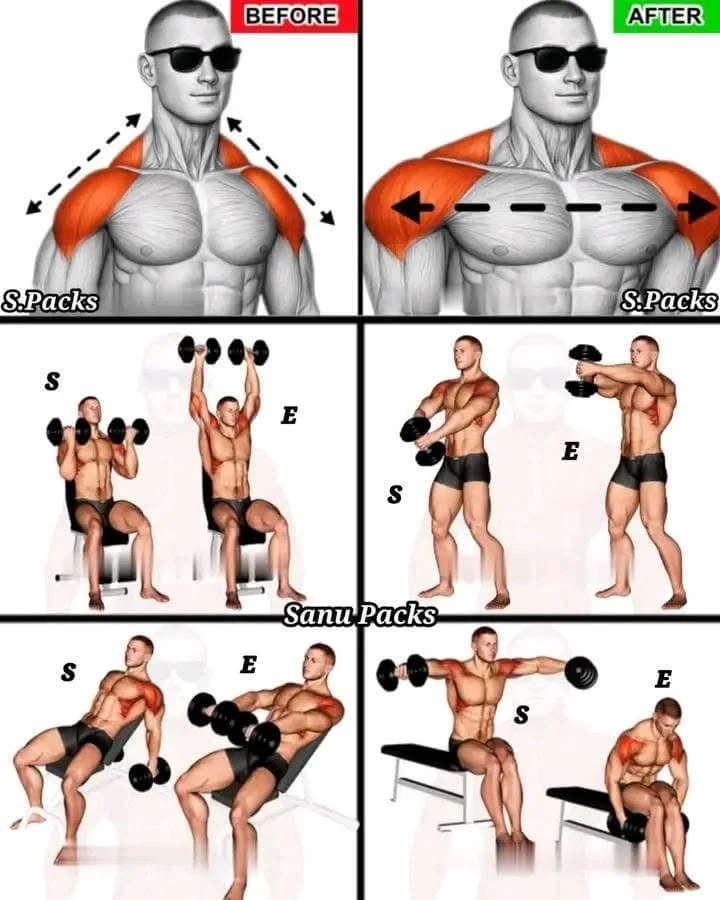
Dumbbell shoulder workout demonstration for fitness enthusiasts.

✅ Dumbbell Shoulder Workout #gymmotivation #gym #fitness Mateo Jeff Adan

Ultimate Dumbbell Shoulder Workout for Maximum Gains

If you’re looking to build strength, definition, and overall muscle mass in your shoulders, a dumbbell shoulder workout is a fantastic way to achieve those goals. Dumbbells are incredibly versatile tools that allow for a full range of motion while also engaging stabilizing muscles that may be overlooked with other equipment. So grab your dumbbells, and let’s dive into a workout that will challenge you and push you to new heights!

Why Dumbbells for Shoulder Workouts?

Dumbbells offer several benefits when it comes to shoulder exercises:

  • Increased Range of Motion: With dumbbells, you can move freely, working your muscles through a wider range of motion.
  • Improved Stability: Holding a dumbbell in each hand engages your stabilizing muscles, leading to better all-around strength and coordination.
  • Unilateral Training: Dumbbells help correct muscle imbalances by allowing you to train each side of your body independently.

The Ultimate Dumbbell Shoulder Workout Routine

Warm-Up (5-10 Minutes)

Before diving into the workout, it’s crucial to warm up your shoulders to prevent injury:

  1. Arm Circles – 2 minutes (1 minute forward, 1 minute backward)
  2. Dynamic Shoulder Stretch – 2 minutes (hold each stretch for 15-20 seconds)
  3. Scapular Push-Ups – 2 sets of 10-15 reps

The Workout

  1. Dumbbell Shoulder Press

    • Reps: 3 sets of 8-12
    • Tip: Ensure your elbows don’t flare out to the sides; keep them slightly in front of your body.
  2. Dumbbell Lateral Raise

    • Reps: 3 sets of 10-15
    • Tip: Keep a slight bend in your elbows and raise the dumbbells to shoulder height, pausing briefly at the top.
  3. Dumbbell Front Raise

    • Reps: 3 sets of 10-12
    • Tip: Lift the dumbbells slowly and control the descent to maximize tension on the deltoids.
  4. Dumbbell Bent-Over Reverse Fly

    • Reps: 3 sets of 10-15
    • Tip: Keep your back straight and hinge at your hips; focus on squeezing your shoulder blades together at the top of the movement.
  5. Dumbbell Arnold Press

    • Reps: 3 sets of 8-12
    • Tip: Start with the dumbbells in front of your face and rotate your wrists as you press them upwards.

Cool Down (5-10 Minutes)

Finish your workout with some stretches to help recover and improve flexibility:

  • Shoulder Stretch: Hold each arm across your body for 20-30 seconds.
  • Triceps Stretch: Raise one arm overhead, bending at the elbow, and gently pull with the other hand for 20-30 seconds.
  • Chest Opener: Stand or sit with your hands behind your back and gently pull your shoulder blades together while lifting your chest.

Conclusion

Incorporating a dumbbell shoulder workout into your routine is an excellent way to build strong, defined shoulders while improving overall strength and stability. Remember to listen to your body, maintain proper form, and increase weights gradually as you gain strength.

Stay motivated, track your progress, and share your journey using the hashtags: #gymmotivation #gym #fitness. Let’s crush those fitness goals together!


Feel free to mix and match these exercises as you see fit and make this routine your own. Happy lifting, and may your shoulders be as strong as your determination!

✅ Dumbbell Shoulder Workout #gymmotivation #gym #fitness Mateo Jeff Adan Read More »

, , , ,
Scroll to Top