Fitness tips

Effective exercises to build abs faster without planks

5 Exercises That Build Your ABS 3X Faster (Stop Doing Planks)

Core Charge: 5 Moves That Build Abs 3X Faster

If you’re tired of holding planks and not seeing the shredded midline you want, it’s time to switch to exercises that produce faster, measurable results. The five moves below train your rectus abdominis, obliques, and deep core with greater tension, range of motion, and progressive overload — the three ingredients missing from endless static holds. Try pairing core days with targeted cable work to keep your posture balanced and reduce injury risk.

5 Exercises That Build Your ABS 3X Faster (Stop Doing Planks)

Why these moves work faster than planks

  • They create greater dynamic tension and stretch-shortening across the abs.
  • They allow progressive overload (weight, range, reps) rather than time-based holds.
  • They challenge anti-rotation, flexion, and loaded stability so your midsection adapts functionally.

How to program them

  • Frequency: 2–3 core sessions per week (can be added to upper or lower body days).
  • Sets & Reps: 3–4 sets per exercise. Aim for 8–15 reps for strength/hypertrophy; 12–20 for endurance.
  • Tempo: Controlled eccentric (2–3s), explosive concentric when appropriate (e.g., med ball), and full-control return.
  • Rest: 45–90 seconds between sets.
  • Progressive overload: Add weight, increase ROM, slow the tempo, or increase reps each week.

The 5 exercises (with technique and progressions)

  1. Hanging Leg Raises — vertical force, huge ROM
  • How: Hang from a pull-up bar. Keeping ribs down, lift legs with hips flexion until toes reach bar level (or as high as you can) and lower slowly.
  • Why: Maximal rectus engagement with long eccentric length; trains hip flexors and core simultaneously.
  • Progressions: Knee raises → Straight-leg raises → Toes-to-bar → Weighted ankle cuffs.
  • Cue: Avoid swinging; initiate with the abs, not momentum.
  1. Ab Wheel Rollouts — anti-extension powerhouse
  • How: Kneel, grip the ab wheel, roll forward keeping a neutral spine until you feel a deep abdominal stretch, then pull back.
  • Why: Trains the core under high tension through long-lever extension — superior to static planks for strength.
  • Progressions: Partial rollouts → Full rollouts → Standing rollouts → Add pause at full stretch.
  • Cue: Maintain a braced belly; don’t let hips sag.
  1. Cable or Band Pallof Press + Chop Variations — anti-rotation and powerful oblique training
  • How (Pallof): Stand side-on to a cable or band, press the handle away from your chest and resist rotation. Hold briefly and return.
  • How (Chop): From high to low or low to high, pull the cable across your body in a controlled arc.
  • Why: Trains anti-rotation stability and rotational power — something planks don’t target dynamically.
  • Progressions: Increase load, single-leg stance, or add tempo holds.
  • Cue: Keep shoulders square and ribcage down while you press or rotate.
  • Related resource for programming similar cable movements: Leila’s abs workout has practical home-friendly variations you can adapt.
  1. Weighted Reverse Crunches (on decline or bench) — focused lower-abs recruitment
  • How: Lie on a decline bench or flat surface, hands under hips or holding weight overhead, draw knees to chest and lift hips off the bench using your lower abs.
  • Why: Emphasizes lower-rectus control and hip curl strength; excellent for defined lower abs.
  • Progressions: Bodyweight → Add dumbbell between feet → Decline bench → Slow negatives.
  1. Medicine Ball Rotational Throws / Slams — explosive core power
  • How: From a staggered stance, rotate explosively and throw a med ball to a partner or slam it to the ground.
  • Why: Develops rotational power and rapid core recruitment — transfers to sports and daily power needs more than static planks.
  • Progressions: Light ball for high speed → Heavier ball for power → Single-arm throws for anti-rotation under load.
  • Cue: Use hips to start the movement; the arms are the guide, not the engine.

Warm-up and breathing

  • Warm up with 5–10 minutes of dynamic hip mobility, light anti-rotation holds (Pallof), and torso twists.
  • Breathe through the movement: inhale to prepare, exhale on the hard phase (lift/throw/press), while maintaining intra-abdominal pressure.

Common mistakes and fixes

  • Relying on momentum: Slow the eccentric and control returns. If momentum appears, reduce ROM or weight.
  • Holding the breath: Practice braced breathing to stabilize the spine without valsalva on every rep.
  • Overloading too soon: Gradually increase load; quality reps beat heavy sloppy sets.

Sample 20-minute core circuit (do 3 rounds)

  • Hanging leg raises: 8–12 reps
  • Ab wheel rollouts: 8–10 reps
  • Pallof press (each side): 10–12 presses
  • Med ball rotational throws (each side): 8–10
    Rest 60–90s between rounds.

Tracking progress

  • Take measurements monthly (waist circumference, photos).
  • Track reps, load, and ROM for each exercise and aim to progress one variable weekly.

5 Exercises That Build Your ABS 3X Faster (Stop Doing Planks)

Conclusion

If you want to beat plateaus and build abs faster, swap long static planks for targeted, progressive moves like hanging leg raises, rollouts, Pallof presses, and explosive med-ball work. For a researched overview of what planks actually do and how they fit into a balanced routine, see this summary on Plank Exercises: What They Do For Your Body.

5 Exercises That Build Your ABS 3X Faster (Stop Doing Planks) Read More »
, , , ,
Post-workout recovery tips and best practices for effective muscle recovery.

8 Best Things to do After a Workout

After-Workout Playbook: 8 Smart Moves

A great workout deserves an equally deliberate finish. The minutes and hours after exercise are when your body recovers, rebuilds, and adapts — and doing the right things can speed recovery, reduce soreness, and lock in gains. Simple post-workout habits, from cooling down to refueling, make a big difference over time. Consider also how your overall routine relates to what you eat before and after training — for example, your choice of pre-workout snacks can affect how you feel and recover afterward.

8 Best Things to do After a Workout

  1. Cool down and stretch
  • Spend 5–10 minutes walking or doing light cardio to gradually lower heart rate. Follow with gentle static stretches for the muscles you worked. This helps reduce tightness and promotes flexibility.
  1. Rehydrate properly
  • Replace fluids lost in sweat. Water is fine for most sessions under an hour; for long or intense workouts, consider an electrolyte drink. Sip steadily rather than gulping to support circulation and digestion.
  1. Refuel with the right macros
  • Aim to eat a mix of protein and carbohydrates within 45–90 minutes post-workout: protein to support muscle repair (20–30 g) and carbs to replenish glycogen. A small meal or shake works well.
  1. Use foam rolling or self-massage
  • Spend 5–10 minutes foam rolling sore or tight areas to improve blood flow and speed recovery. Focus on major muscle groups and move slowly over tender spots.
  1. Cool shower and change clothes
  • A warm shower relaxes muscles; a contrast or cooler rinse can help reduce inflammation after very intense sessions. Change out of sweaty clothes to prevent skin irritation and promote comfort.
  1. Track recovery and training progress
  • Log how you feel, any soreness, and workout notes. This helps you adjust volume, intensity, and rest days so you progress without overtraining.
  1. Prioritize sleep and passive recovery
  • Sleep is when your body does most of the rebuilding. Aim for consistent, quality rest each night and consider short naps after extremely taxing sessions.
  1. Plan active recovery and mobility work
  • On rest days, include low-impact activities like walking, swimming, or yoga to maintain circulation. If you have a specific body type or training goal, tailor recovery to match — for example, those adapting routines for an endomorph body type may emphasize certain recovery and cardio patterns differently.

8 Best Things to do After a Workout

Conclusion

Post-workout routines don’t need to be complicated — a thoughtful cooldown, hydration, targeted refueling, and consistent recovery habits add up. For a concise checklist and extra tips to try after training, see What to Do After Working Out: 11 Tips to Try Post-Workout.

8 Best Things to do After a Workout Read More »

, , , ,
Common creatine usage mistakes that affect workout performance

Creatine Isn’t the Problem—You Are: 5 Usage Mistakes Almost Every Lifter Makes

You’re Misusing Creatine: 5 Fixes

Creatine works — most problems come from how people use it. If your performance, recovery, or weight changes aren’t matching expectations, it’s usually down to timing, dosing, hydration, training style, or unrealistic expectations rather than the supplement itself. If you’re just starting your fitness journey, resources like New to bodyweight training? Calisthenics workout for beginners (2025) can help you pair sensible programming with supplement use.

Creatine Isn’t the Problem—You Are: 5 Usage Mistakes Almost Every Lifter Makes

Why creatine gets blamed

  • It’s simple to buy and easy to self-blame when results stall.
  • Misunderstanding side effects (water weight, GI upset) leads lifters to stop taking it too soon.
  • Poor training choices or nutrition often look like supplement failure.

5 common mistakes almost every lifter makes

  1. Thinking more is better
  • The typical effective dose is 3–5 g daily after the loading phase (if you choose to load).
  • Excessive dosing doesn’t speed results and can increase the chance of stomach upset.
  • If you’re chasing faster gains, focus on progressive overload and consistent protein intake instead.
  1. Skipping consistency and timing myths
  • Creatine benefits come from muscle saturation, which requires consistent daily intake.
  • Timing (pre vs. post) matters far less than simply taking it every day.
  • If you miss doses, don’t binge later — resume your usual daily amount.
  1. Pairing it with the wrong training or expecting instant miracles
  • Creatine helps high-intensity, short-duration efforts (sprints, heavy sets), so programs that never challenge strength or power will show limited benefit.
  • Don’t expect it to fix poor exercise selection; address weak points with targeted work and alternatives — for example, consider Bulgarian split squat alternatives to build stronger legs without the balance struggle if stability limits your progress.
  • Use creatine alongside structured progression (sets, reps, load) to get measurable gains.
  1. Ignoring hydration and diet
  • Creatine can cause a small increase in intracellular water; staying hydrated reduces cramping and GI issues.
  • If your calorie or protein intake is too low, you’ll blunt the potential strength and size benefits.
  • Simple rule: drink to thirst plus a bit more on training days and aim for adequate daily protein.
  1. Misattributing unrelated symptoms to creatine
  • Weight gain is often water plus muscle, not fat — reassess body composition, not just scale changes.
  • Severe muscle pain, extreme weakness, or dark urine are not typical creatine effects and require immediate medical attention.
  • Keep perspective: creatine has one of the best safety profiles among supplements when used properly.

Practical starter plan

  • Beginner: 3–5 g daily with any meal (no loading necessary).
  • Combine with a strength-focused program that progressively increases intensity.
  • Track training and recovery metrics over 8–12 weeks to judge effectiveness.

Troubleshooting quick wins

  • GI upset: split doses (e.g., 2.5 g twice daily) or take with food.
  • No visible change: ensure training intensity and protein intake are adequate.
  • Water retention worries: monitor body comp and consider cycling only if it helps your psychology — it’s not required.

Creatine Isn’t the Problem—You Are: 5 Usage Mistakes Almost Every Lifter Makes

Conclusion

If you ever experience severe muscle pain, swelling, extreme weakness, or dark-colored urine while training or taking supplements, seek medical attention and review authoritative resources about serious conditions like rhabdomyolysis – StatPearls – NCBI Bookshelf. Proper use of creatine, combined with good training and nutrition, will benefit most lifters — the supplement is seldom the real problem.

Creatine Isn’t the Problem—You Are: 5 Usage Mistakes Almost Every Lifter Makes Read More »

, , , ,
Person performing exercises to develop a superhuman neck for strength and aesthetics.

3 Exercises That Build SUPERHUMAN Neck (Stop Looking Weak)

Bulletproof Neck: 3 Moves to Stop Looking Weak

A strong, well-developed neck not only improves your look and presence — it protects the cervical spine, helps stabilize the head under load, and reduces injury risk in contact sports. Whether you’re a desk worker battling forward-head posture or an athlete wanting added resilience, these three focused exercises build a thick, powerful neck with safe progressions for every level. If tightness and posture are a concern, try this neck and shoulder tension routine alongside the work below for faster relief and better results.

3 Exercises That Build SUPERHUMAN Neck (Stop Looking Weak)

Why train the neck?

  • Improves posture and head control.
  • Reduces concussion and whiplash risk in contact sports.
  • Adds a confident, powerful aesthetic to your upper body.
  • Enhances performance in lifts where head stability matters (e.g., carries, deadlifts).

How to program these three exercises

  • Frequency: 2–3 times per week.
  • Warm up: 5–10 minutes of light cervical mobility (slow neck circles, chin tucks).
  • Progression: increase reps, time under tension, or add small loads before heavier variations.
  • Safety: move slowly, breathe, don’t force end-range, and stop if you feel sharp pain or tingling.

Exercise 1 — Isometric Neck Holds (Beginner to Intermediate)
What it trains: All-plane neck stability (flexion, extension, lateral flexion).
How to do it:

  • Sit upright with neutral spine.
  • Place your palm on your forehead and apply gentle pressure while resisting with your neck; hold a 10–20 second contraction. Repeat for 3–5 sets.
  • Repeat for the back of the head (hands behind head) and both sides (hand on temple), keeping chin tucked on flexion holds and neutral on extensions.
    Progressions:
  • Increase hold time to 30–45 seconds.
  • Use a resistance band anchored behind/above for added load.
    Notes: Controlled breathing and a neutral spine are essential. This builds endurance and control before adding dynamic or loaded neck movements.

Exercise 2 — Weighted Neck Extensions (Intermediate)
What it trains: Posterior cervical extensors and upper traps.
How to do it (neck harness or lying variation):

  • Lying face down on a bench with head hanging off the end, hold a light plate on your forehead (or use a neck harness).
  • Slowly lift your head to align with your spine, pause 1–2 seconds at the top, then lower under control. 3 sets of 8–12 reps.
    Progressions:
  • Gradually add 1–2 kg (2–5 lb) increments or switch to a neck harness for standing extensions.
  • Increase tempo control (3-second negatives) to build eccentric strength.
    Safety: Start very light — the neck is sensitive to load. If you feel radiating numbness, stop and reassess technique.

Exercise 3 — Bridge Progressions & Heavy Carries (Advanced & Indirect Strength)
What it trains: Whole-neck and upper-back integration, compressive strength, and functional stability.
How to do it:

  • Wrestler bridge (advanced): From kneeling, place crown of head on mat and push hips up, driving through neck and upper traps. Hold static bridges for 10–30 seconds, 2–3 sets. Only for experienced lifters with prior neck conditioning.
  • Safer alternatives: Weighted shrugs, farmer carries, and heavy trap work. These indirect movements strengthen the musculature that supports the neck and improve overall carry strength. For program ideas, consider the 3D shoulders program to build complementary upper-back and trap strength that helps protect the neck.
    Progressions:
  • Work up from holds to dynamic repetitions, then to loaded bridges (only under supervision).
  • Integrate heavy carries (60–120 seconds) to build durable postural control.

Tips, recovery, and common mistakes

  • Don’t rush to heavy loads. Build endurance and control first with isometrics.
  • Keep the chin slightly tucked to avoid excessive cervical extension during most exercises.
  • Include upper-back mobility and thoracic extension work to reduce compensatory neck strain.
  • Rest 48 hours between intense neck sessions. Use ice or gentle heat for soreness and soft-tissue work (foam ball) to relieve tight traps.
  • If you have a preexisting cervical injury, consult a clinician before starting loaded neck work.

Sample 6-week progression (twice weekly)
Weeks 1–2: Isometric holds 3x20s, light mobility, no load.
Weeks 3–4: Isometrics 3x30s + 2 sets 8–10 neck extensions with light load.
Weeks 5–6: Add farmer carries 2x60s, neck extensions 3×8 with increased load, and controlled bridge holds (if ready) 2×15–30s.

3 Exercises That Build SUPERHUMAN Neck (Stop Looking Weak)

Conclusion

A resilient neck takes consistent, attentive work: start with control (isometrics), add load gradually, and build supporting upper-back strength. If you notice unusual symptoms like excessive sweating or other systemic signs during exercise, consider medical evaluation — see this research on hyperhidrosis in heart failure patients for context on when sweating can indicate a broader health issue.

3 Exercises That Build SUPERHUMAN Neck (Stop Looking Weak) Read More »

, , , ,
Man demonstrating exercises to achieve GORILLA strength and build muscle.

5 Exercises That Give You GORILLA Strength

Primal Power: 5 Moves for Gorilla Strength

If you want raw, practical strength—think powerful hips, an iron back, and a vice-like grip—these five movements build that primal “gorilla” power. Start each session with a brief warm-up and mobility work; if you need shoulder prep, check these cable shoulder drills to prime your joints and avoid injury.

5 Exercises That Give You GORILLA Strength

  1. Deadlift — The King of Posterior Power
  • Why: Deadlifts train the entire posterior chain (hamstrings, glutes, lower back) and transfer directly to lifting strength and carrying heavy objects.
  • How: Set feet hip-width, hinge at the hips, keep a neutral spine, and drive the floor away with your legs while finishing with glutes contracted.
  • Programming: 3–5 sets of 3–6 reps for strength; use progressive overload and prioritize form over ego.
  • Tip: If you struggle to engage glutes, pair deadlift work with targeted glute exercises like this glute-focused at-home routine on lighter days.
  1. Weighted Pull-Ups — Upper-Body Pulling Power
  • Why: Pull-ups build a thick back and brutal pulling strength—essential for any “gorilla” upper body.
  • How: Full hang to chin-over-bar, controlled descent, add weight via belt or vest once bodyweight reps exceed 8–10.
  • Programming: 4–6 sets of 3–8 reps for strength; include varied grips (neutral, wide) for balanced development.
  1. Farmer’s Carry — Grip, Core, and Brutal Conditioning
  • Why: Simple and savage — carries test grip, traps, core, and conditioning simultaneously.
  • How: Pick heavy dumbbells or farmer handles, stand tall, walk set distances with short rest.
  • Programming: 4–6 carries of 30–80 meters or 20–60 seconds; increase load before distance for strength focus.
  1. Kettlebell Swings — Hip Snap and Athletic Power
  • Why: Trains explosive hip extension, conditioning, and posterior chain speed—key for generating force.
  • How: Hinge hard at the hips, snap through, keep arms relaxed; the power comes from hips, not shoulders.
  • Programming: 5 sets of 10–20 reps; use heavier kettlebells for strength and lighter for conditioning intervals.
  1. Overhead Press / Push Press — Upper-Body Drive and Stability
  • Why: Overhead strength shows full-body coordination and shoulder resilience. Push presses allow heavier loads using leg drive, building that raw pressing power.
  • How: Press strict for stability and mobility; use push press for heavier loads—dip, drive, and lockout overhead.
  • Programming: 4–6 sets of 3–6 reps for push press (strength), or 3–5 sets of 5–8 reps strict for endurance/resilience.

Training Notes and Structure

  • Frequency: Lift heavy 2–3 times/week with at least one heavy full-body session and one accessory or conditioning day.
  • Progression: Add small weight increments, increase reps, or improve set quality (less rest, more tension).
  • Recovery: Heavy pulling and carries demand sleep, nutrition, and active recovery. Mobility and prehab keep you training longer.

5 Exercises That Give You GORILLA Strength

Conclusion

Incorporate these five lifts into a balanced routine to build functional, gorilla-like strength—hip drive, pulling power, grip endurance, and overhead resiliency. For band-based shoulder options and dos and don’ts to support these movements, check out 5 Best Resistance Band Shoulder Exercises: Dos and Don’ts.

5 Exercises That Give You GORILLA Strength Read More »

, , , ,
Man performing push-ups to build chest muscles effectively

Push-Ups Aren’t Growing Your Chest? Do THIS

Push-Up Chest Fix

If your chest hasn’t grown despite doing countless push-ups, you’re not alone — push-ups can be an excellent exercise, but they won’t always produce hypertrophy without the right tweaks. Small changes to load, range of motion, tempo, and nutrition can make the difference between staying the same and seeing real chest growth. For context on how daily tracking can fool you about progress, see why your weight fluctuates daily.

Push-Ups Aren’t Growing Your Chest? Do THIS

Why push-ups sometimes fail to grow the chest

  • Lack of progressive overload: Muscles need increasing stimulus to grow. Bodyweight push-ups can plateau if you never add difficulty.
  • Poor range of motion or form: Shallow reps or flared elbows move stress away from the pecs.
  • Insufficient volume or frequency: Too few quality sets per week won’t trigger hypertrophy.
  • Missing nutritional support: Without enough protein and calories, growth stalls.

Simple fixes that actually work

  • Add progressive overload: Use a weighted vest, backpack, or single-arm progressions to increase resistance over time.
  • Change angles: Incline push-ups hit upper chest; decline emphasizes lower chest — rotate them through your program.
  • Slow the negative & pause: 3–4 second eccentrics and a short pause at the bottom increase time under tension.
  • Increase full range: Use push-up handles or do push-ups from a higher surface to allow deeper descent safely.
  • Use tempo and rep ranges: Mix heavier, lower-rep work (6–8) with moderate (8–12) and higher-rep endurance sets (15+).

Programming examples (beginner → intermediate)

  • Beginner: 3×8–12 classic push-ups, 2×8 incline push-ups, 2×10 slow negatives — 3 sessions/week.
  • Intermediate: 4×6 weighted push-ups, 3×8 single-arm assisted push-ups, 3×12 decline — 2–3 sessions/week, progressive load each week.

Nutrition & recovery that support chest gains

  • Prioritize protein and a small calorie surplus if you want size. For practical protein ideas to fit every meal, see 10 easy ways to increase your protein intake.
  • Sleep, hydration, and spacing workouts for recovery matter as much as the exercises themselves.

Quick checklist to implement today

  • Add 1–2 overloaded sets (weighted or single-arm) to your push-up routine.
  • Slow the eccentric on all sets and push for full range.
  • Track weekly progress by load or total reps, not daily weight or how you “feel.”
  • Ensure daily protein target (roughly 0.7–1.0 g/lb bodyweight depending on goals) and adequate calories.

Push-Ups Aren’t Growing Your Chest? Do THIS

Conclusion

If you want community perspectives on why push-ups alone sometimes don’t build the chest, check this Quora discussion: I do a lot of pushups but my chest isn’t growing. I don’t think it’s …

Push-Ups Aren’t Growing Your Chest? Do THIS Read More »

, , , ,
Man building muscle using biohacks for faster gains

How to Build Muscle 3x Faster (7 Proven Biohacks)

3x Gain Protocol: 7 Muscle-Building Biohacks

Building muscle faster isn’t about gimmicks — it’s about stacking small, evidence-based strategies that amplify each other. This guide gives seven practical biohacks you can start using this week to accelerate hypertrophy, recovery, and strength with minimal extra time. For meal ideas that support rapid growth, try these high-protein smoothie recipes that pair perfectly with the tactics below.

How to Build Muscle 3x Faster (7 Proven Biohacks)

  1. Train Smarter — Progressive Overload with Intention
    Progressive overload remains the foundation: increase volume, load, or density over time. Use compound lifts (squats, deadlifts, presses, rows) as your training spine and add an accessory set for weak points. Instead of chasing max weight every session, manipulate frequency and density — more frequent moderate sessions often beat infrequent maximal efforts for muscle growth.

  2. Hit the Protein Dose — Quality, Timing, and Leucine
    Aim for 0.7–1.0 g per pound of bodyweight daily (1.6–2.2 g/kg). Prioritize high-leucine sources (whey, eggs, beef) and distribute 25–40 g of protein across 3–5 meals to maximize muscle protein synthesis. Post-workout protein + a small carbohydrate bolus speeds recovery and glycogen repletion.

  3. Optimize Training Frequency & Volume
    Muscle responds to weekly volume per muscle group. For many lifters, 10–20 working sets per week per major muscle (distributed across 2–4 sessions) is a sweet spot. If you’re short on time, full-body or upper/lower splits with higher frequency produce faster gains than long once-weekly sessions.

  4. Boost Time Under Tension & Use Strategic Variations
    Increase muscular stimulus by adding controlled tempo (2–3 sec eccentrics), rest-pause, and occasional drop sets. Rotate training phases: a heavy strength block (3–6 reps) then a hypertrophy block (8–15 reps) to recruit different motor units and stimulate growth.

  5. Recovery is Non-Negotiable — Prioritize Sleep & Active Recovery
    Sleep quality directly impacts hormone balance and protein synthesis. Aim for 7–9 hours nightly and a consistent sleep schedule. On off-days, use low-intensity mobility, light walking, or brief contrast showers to promote circulation and repair.

  6. Use Evidence-Based Supplements
    Creatine monohydrate (5 g/day) is the best-supported supplement for strength and size. Consider vitamin D if deficient, and omega-3s for inflammation control. Avoid overloading on unproven supplements — stack one or two that fill real gaps in your diet.

  7. Technique, Core Stability & Injury Prevention
    Better movement = lift more safely and more often. Solid bracing, hip hinge mechanics, and a resilient core let you progressively overload without breakdown. For practical core progression ideas, try this band twist core exercise guide to build transferable stability that supports heavy compound lifts.

Micro-Routines to Implement This Week

  • Day 1 (Full-body): 3 compounds, 2 accessory sets each, focus on controlled eccentrics.
  • Day 3 (Full-body): Slightly higher rep ranges, bands or tempo variations.
  • Day 5 (Optional): Short heavy session or targeted weak-point work.
    Add a protein meal or high-quality shake within 60 minutes after training and log volume (sets x reps x load) to ensure progressive overload.

Common Mistakes That Slow Progress

  • Under-eating: muscle gain requires a modest calorie surplus for most lifters.
  • Chasing novelty over consistency: stick with proven lifts and progressive load.
  • Skipping sleep and recovery: training more without recovery is counterproductive.

How to Build Muscle 3x Faster (7 Proven Biohacks)

Conclusion

Implement the seven biohacks above consistently, and you’ll compress months of typical progress into weeks. If you want time-efficient, science-driven conditioning to complement your lifting sessions, consider the CAROL Bike as a tool for short, high-intensity workouts that support strength and hypertrophy goals.

How to Build Muscle 3x Faster (7 Proven Biohacks) Read More »

, , , ,
Person demonstrating calisthenics hacks for a stronger physique

5 Calisthenics Hacks to Look 10lbs Bigger (Instantly)

Instant Size: 5 Calisthenics Hacks to Look 10 lbs Bigger

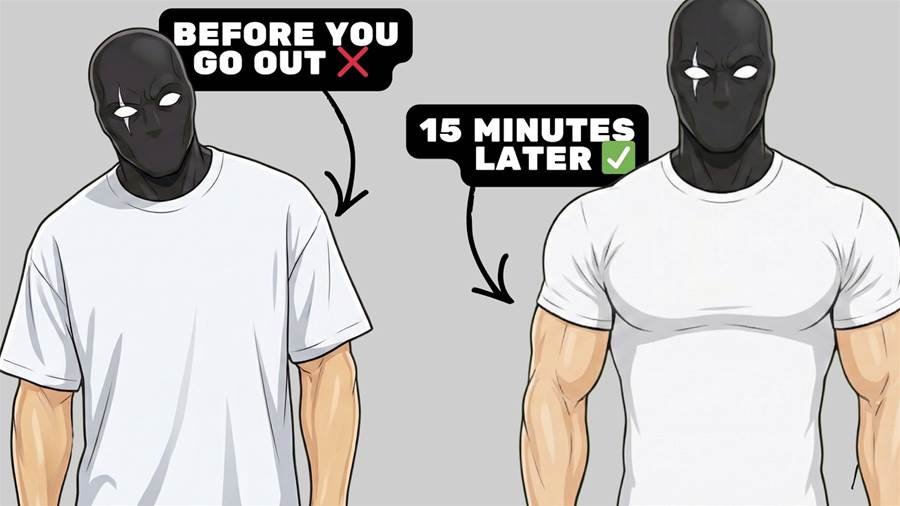
Want to look fuller and more muscular using only bodyweight moves and smart styling? These five practical calisthenics hacks add immediate visual mass and lasting density to your frame — no bulky gym machines required. If you’re just starting out, this beginner calisthenics guide can help you get the basics down before applying the tips below.

5 Calisthenics Hacks to Look 10lbs Bigger (Instantly)

  1. Prioritize upper-body breadth with horizontal volume
    Do more horizontal pressing and rowing to widen the chest and back. Superset push-up variations (wide, archer, and pseudo planche) with bodyweight rows to create a thicker torso. Aim for medium-high reps with short rest (8–15 reps, 3–5 sets) to pump the muscles — the immediate fullness makes you read as heavier on camera and in person.

  2. Use posture and bracing to add mass instantly
    Stand tall, pull your shoulders slightly back, and brace your core before photos or meetings. A small scapular retraction plus a proud chest increases perceived width and projects a heavier silhouette without changing bodyweight. Practice diaphragmatic breathing to maintain a natural, not forced, look.

  3. Smart layering, clothes, and optics
    Wear slightly structured tops (light jackets, henleys, or tees with shoulder seams that sit correctly). Darker colors on the torso with lighter sleeves can broaden shoulders visually. Horizontal textures (subtle stripes, ribbed fabrics) and garments with minimal taper through the waist help add immediate presence.

  4. Build denser legs to create a thicker overall frame
    Thicker legs change how weight distributes visually. Focus on higher-volume unilateral and compound lower-body bodyweight work — deep lunges, pistol progressions, and step-ups. If balance is a challenge, check these Bulgarian split squat alternatives for options that add leg mass without falling over. Finish sessions with slow, controlled eccentrics to promote muscle thickness.

  5. Pump and timing: train before events or photos
    A light, high-rep upper-body circuit 20–40 minutes before a photo or social occasion creates a vascular, pumped look that reads heavier. Use timed sets (30–45 seconds per exercise) of push-ups, rows, and dips; finish with brief isometric holds for shoulder and chest tension.

Quick training and diet notes

  • To maintain the “look heavier” effect long-term, combine these hacks with a modest calorie surplus focused on protein (0.7–1.0 g/lb of bodyweight) and progressive bodyweight overload.
  • Focus on slow eccentrics and time under tension to increase muscle density without heavy weights.
  • Mobility and posture work prevent tightness as you build size — better posture equals better perceived mass.

5 Calisthenics Hacks to Look 10lbs Bigger (Instantly)

Conclusion

Apply these five hacks together — training, posture, clothing choices, and pre-event pumping — and you can look noticeably bigger instantly while building genuine, dense muscle over time. For athletes and older lifters wanting advice on long-term training adjustments and recovery strategies, see this helpful resource: 5 Things Aging Runners Need To Do In Your 50s, 60s, and Beyond …

5 Calisthenics Hacks to Look 10lbs Bigger (Instantly) Read More »

, , , ,
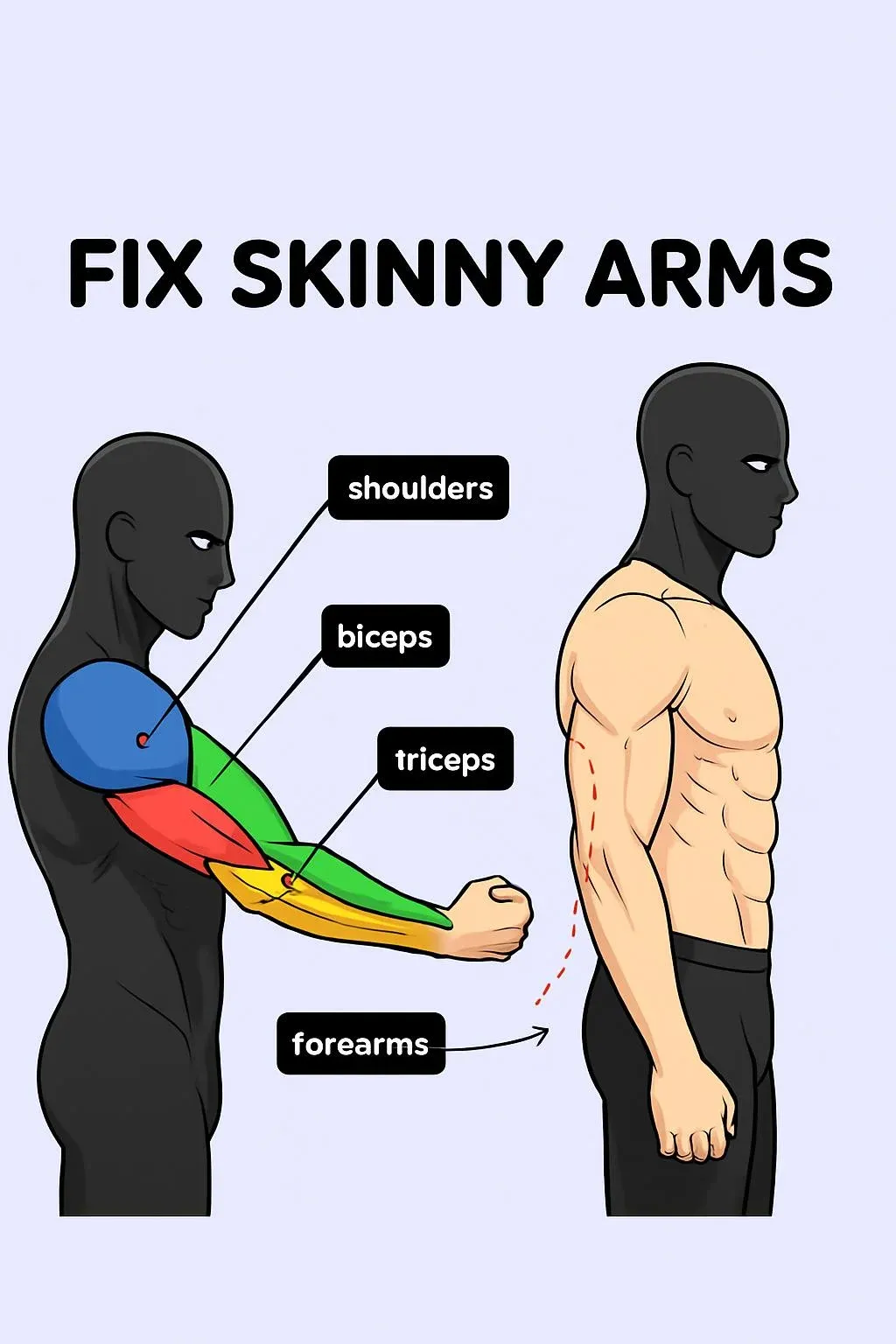
Exercises for building muscle and strength in skinny arms using calisthenics.

Skinny Arms? Do THIS Calisthenics Fix

Title: Arm Gain Blueprint: Calisthenics Fix for Skinny Arms

Skinny arms usually mean you haven’t yet given your muscles the right stimulus, volume, or nutrition to grow. With targeted calisthenics and a few smart adjustments to your routine, you can add visible size and shape to your arms without weights — focusing on progressive difficulty, smart rep ranges, and consistent eating.

Skinny Arms? Do THIS Calisthenics Fix

Why calisthenics works for arm size
Calisthenics trains muscle through full-body tension and joint-friendly movement patterns. For arm growth you’ll emphasize pushing and pulling variations that overload the biceps, triceps, and forearms in different ways. To maximize gains, combine direct arm work with compound upper-body moves and ensure progressive overload over weeks. For ideas on building complementary upper-body strength, check out this guide to 5 must-do back moves — a stronger back helps you pull harder and stimulate arm growth.

Core principles of the calisthenics arm program

  • Progressive difficulty: Move from easier to harder variations (e.g., incline push-ups → regular push-ups → diamond push-ups → deficit or weighted push-ups).
  • Volume and frequency: Train arms directly 2–3 times per week with 8–20 sets per muscle group weekly, divided across sessions.
  • Time under tension: Slow down eccentrics (3–4 seconds down) to increase stimulus.
  • Balanced push/pull: Pair triceps-focused push work with biceps-focused pulls for symmetrical growth.

Key bodyweight exercises and how to progress

  • Triceps
    • Bench/Incline push-ups → Regular push-ups → Diamond push-ups → Archer/One-arm assisted push-ups.
    • Bench dips → Elevated dips → Straight bar dips.
  • Biceps
    • Australian/inverted rows with underhand grip → Feet-elevated rows → One-arm rows (assisted) → Towel or ring curls (using horizontal pulling leverage).
  • Forearms
    • Fingertip push-ups → Supported fingertip holds → Towel hangs and wrist rotations.
  • Complementary upper-body moves
    • Chin-ups (underhand) are excellent for biceps size; work weighted or higher-rep sets as strength allows.

Sample 6-week progression (twice-weekly direct arm focus)
Week 1–2: Build base — 3 sets per exercise, 8–12 reps, focus on form.
Week 3–4: Increase volume — 4–5 sets, 10–15 reps, add harder variations.
Week 5–6: Intensify — incorporate negatives, paused reps, and assisted one-arm work; aim for 6–10 quality sets per muscle group per session.

Nutrition and recovery (eat to grow)
You won’t add arm size without a caloric surplus and sufficient protein. Aim for roughly +200–400 kcal per day above maintenance and 0.7–1.0 g protein per pound of bodyweight. Smart snacks and small, frequent meals can help you meet calories without discomfort — for convenient ideas, see these healthy snack options that can be adapted to a muscle-building plan. Prioritize sleep (7–9 hours) and rest days; muscles grow between workouts, not during them.

Technique tips and troubleshooting

  • If you stall, add volume first, then increase difficulty.
  • Keep joint-friendly ranges — stop if you feel sharp pain; discomfort should be muscular burn, not joint strain.
  • Track workouts: record variations, sets, reps, and tempo so you can force progressive overload every 1–2 weeks.
  • Use partials and negatives if you can’t yet perform full reps of a harder variation.

Quick weekly template

  • Day A: Push emphasis (diamond push-ups, dips, core)
  • Day B: Pull emphasis (chin-ups/rows, curls variations, grip work)
  • Day C: Full upper-body light day (higher reps, tempo work)
    Rotate and adjust intensity; aim to stimulate arms multiple times without crushing recovery.

Skinny Arms? Do THIS Calisthenics Fix

Conclusion

If you want a deeper discussion about structuring a calisthenic-only plan specifically for someone who’s skinny-fat or aiming to pack on muscle, check out this detailed community answer on what kind of a calisthenic-only workout a skinny-fat guy should follow.

Skinny Arms? Do THIS Calisthenics Fix Read More »

, , , ,
A fit person measuring muscle growth while maintaining a slim waistline.

Want Bigger Muscles Without a Bigger Waistline? Here’s How to Eat in a Surplus the Right Way

Short Title: Smart Surplus — Grow Muscle, Not Waist

Want bigger muscles without a bigger waistline? You can—if you treat a calorie surplus like a targeted experiment, not a free pass to overeat. The goal is to provide just enough extra energy to support new muscle tissue while minimizing fat gain. Start small, measure often, and prioritize protein and quality training over endless carbs and calories. For balanced lower-body growth and movement variety, don’t forget to mix in focused leg work and progression like the routines that help you build bigger legs as part of your plan.

Want Bigger Muscles Without a Bigger Waistline? Here’s How to Eat in a Surplus the Right Way

How a modest surplus works

  • Aim for a conservative surplus: +200–400 kcal/day above maintenance. This is usually enough to fuel muscle growth for most trainees while keeping fat gain limited.
  • Bigger surpluses speed up weight gain but tend to increase the proportion of fat gained. If you want better body composition, slow and steady wins.

Protein and macronutrient priorities

  • Protein: target ~1.6–2.2 g/kg (0.7–1.0 g/lb) of body weight daily. This supports repair and hypertrophy.
  • Carbs: provide training fuel and replenish glycogen. Time higher-carb meals around workouts for better performance and recovery.
  • Fats: keep dietary fat at 20–30% of calories to support hormones and satiety.

Training to make the surplus effective

  • Progressive overload is the non-negotiable driver of muscle growth. Track reps, sets, and loads to ensure steady progression.
  • Combine compound lifts with targeted accessory work to maximize muscle-building stimulus. For upper-body strength and pressing mechanics, incorporate cues and variations similar to proven bench press strategies—consider technical refinements like those in the close-grip bench technique to get more from your pressing days.
  • Frequency: train each muscle group 2–3 times per week when possible, using a mix of volume, intensity, and rep ranges.

Meal timing and distribution

  • Spread protein evenly across 3–5 meals to support muscle protein synthesis throughout the day.
  • Pre- and post-workout meals: include an easy-to-digest carb and 20–40 g protein within a couple hours of training for best recovery.
  • Liquid calories (smoothies, milk) can make hitting a small surplus easier without making you feel overly full.

Minimizing fat gain while bulking

  • Monitor: weigh yourself weekly and take body measurements or progress photos every 2–4 weeks. Aim for ~0.25–0.5% bodyweight gain per week (roughly 0.5–1.0 lb/week for many).
  • If weight rises faster or belly fat increases, trim the surplus by 100–200 kcal/day and reassess.
  • Add low-impact cardio or structured conditioning 1–3x/week if fat gain is more than you want — keep sessions moderate to avoid impairing recovery.

Advanced strategies (if needed)

  • Reverse dieting: When coming off a diet, slowly increase calories to maintenance to limit rapid fat regain.
  • Calorie cycling: use higher calories on heavy training days and lower calories on rest days to concentrate energy where it’s most needed.
  • Refeeds: periodic higher-carb days can replenish glycogen and help regulate hormones like leptin, which affects hunger and metabolic rate.

Lifestyle factors that matter

  • Sleep: aim for 7–9 hours. Poor sleep undermines recovery and increases fat gain risk.
  • Stress management: chronic stress raises cortisol, which can make fat retention more likely.
  • Protein quality, whole foods, fiber, and veggies improve satiety and micronutrient intake, making a leaner bulk easier to sustain.

Practical weekly checklist

  • Calculate maintenance calories, add +200–400 kcal for your surplus.
  • Hit protein target daily; prioritize whole foods.
  • Train with progressive overload 3–5x/week and include both compounds and accessories.
  • Weigh/measure weekly and adjust calories based on rate of gain.
  • Sleep, hydrate, and manage stress for optimal results.

Want Bigger Muscles Without a Bigger Waistline? Here’s How to Eat in a Surplus the Right Way

Conclusion

If your goal is to add muscle without a larger waistline, focus on a conservative calorie surplus, high protein, progressive resistance training, and regular monitoring. For additional guidance on trimming belly fat and improving overall health alongside a clean bulk, see these practical tips from Johns Hopkins: 8 Ways to Lose Belly Fat and Live a Healthier Life.

Want Bigger Muscles Without a Bigger Waistline? Here’s How to Eat in a Surplus the Right Way Read More »

, , , ,
Muscle builders like creatine and fish oil for enhanced gym performance.

From Creatine to Fish Oil: 5 Evidence-Based Muscle Builders That Give You a Real Edge in the Gym

Smart Gains: 5 Evidence-Based Muscle Boosters

Building more muscle isn’t just about lifting heavier — smart, evidence-based supplementation can safely enhance strength, recovery, and training quality when paired with a solid program and nutrition. Below are five supplements with the best data behind them, practical dosing tips, and safety notes so you can use them to get a real edge in the gym.

From Creatine to Fish Oil: 5 Evidence-Based Muscle Builders That Give You a Real Edge in the Gym

Introduction
Supplements don’t replace hard training or sound nutrition, but they can be useful tools. If you’re just getting started and learning how to structure effective workouts, check out this bodyweight training guide for beginners to pair with your supplement plan.

  1. Creatine (Creatine Monohydrate)
  • What it does: Creatine increases intramuscular phosphocreatine stores, improving short-term high-intensity performance and enabling slightly greater gains in strength and lean mass over time.
  • Typical dose: 3–5 g daily. A loading phase (20 g/day split for 4–7 days) is optional; long-term maintenance at 3–5 g works well.
  • Timing: Any time of day is fine; post-workout with carbs/protein may help uptake but isn’t required.
  • Safety: Well-studied and safe for healthy adults. Stay hydrated and consult a clinician if you have kidney disease.
  1. High-quality Protein (Whey or Equivalent)
  • What it does: Adequate protein is the foundation for muscle growth; supplemental whey is a convenient, rapid-digesting source of essential amino acids, especially leucine.
  • Typical dose: Aim for total daily protein of ~1.6–2.2 g/kg bodyweight. For a single serving, 20–40 g of whey around workouts is effective.
  • Timing: Distribute protein evenly across meals; consume protein within a few hours of training to support recovery.
  • Practical tip: Use protein powder to hit targets on busy days or immediately post-session. If you’re lifting heavy (e.g., intense deadlift sessions), pairing protein with structured strength work amplifies gains — see this 15-minute heavy deadlift EMOM for an example of a time-efficient strength stimulus.
  • Safety: Safe for most people; adjust portions if you have renal impairment and consult your provider.
  1. Fish Oil (Omega-3 Fatty Acids — EPA & DHA)
  • What it does: Omega-3s can reduce exercise-induced inflammation, support recovery, and — in some studies — help preserve muscle mass and improve protein synthesis signaling, particularly in older adults. Benefits for performance are modest but meaningful for recovery and long-term adaptation.
  • Typical dose: 1–3 g combined EPA+DHA daily (check product labels).
  • Timing: Daily with meals.
  • Safety: Generally safe; high doses can affect bleeding risk — talk to your clinician if you use blood thinners.
  1. Beta-Alanine
  • What it does: Beta-alanine raises muscle carnosine levels, buffering acid during high-intensity efforts lasting ~30–240 seconds. This can allow you to perform more reps or maintain intensity, indirectly supporting greater hypertrophy over time.
  • Typical dose: 2–5 g/day, split into smaller doses to reduce tingling (paresthesia). Expect 4–8 weeks for carnosine to accumulate.
  • Use-case: Best for athletes doing repeated high-intensity sets, sprints, or metabolic conditioning.
  1. Vitamin D (When Deficient)
  • What it does: Vitamin D plays roles in muscle function and immune health. Supplementation shows the most benefit for muscle strength and performance in people who are insufficient or deficient.
  • Typical dose: Test levels if possible. Common supplemental doses range from 1,000–4,000 IU/day depending on baseline status; treat deficiency under medical guidance.
  • Safety: Avoid excessive dosing; very high long-term intakes can cause toxicity.

General stacking and safety notes

  • Start with the basics: prioritize progressive resistance training, caloric/protein sufficiency, sleep, and recovery; supplements are adjuncts.
  • A simple, effective stack: creatine (3–5 g/day), whey protein as needed to meet protein targets, and fish oil (1–3 g EPA+DHA/day). Consider beta-alanine if your training involves repeated high-intensity efforts; supplement vitamin D only if levels are low or insufficient.
  • Watch for product quality: choose third-party tested supplements to avoid contaminants and ensure accurate dosing.
  • Special populations: pregnant or nursing people, those with chronic medical conditions, and athletes subject to anti-doping rules should consult a clinician before starting supplements.

From Creatine to Fish Oil: 5 Evidence-Based Muscle Builders That Give You a Real Edge in the Gym

Conclusion

Used sensibly, the five supplements above — creatine, protein, fish oil, beta-alanine, and vitamin D when indicated — can meaningfully support training adaptations and recovery. For an evidence-based overview of dietary supplements and how they relate to exercise performance, see the Dietary Supplements for Exercise and Athletic Performance – Health factsheet.

From Creatine to Fish Oil: 5 Evidence-Based Muscle Builders That Give You a Real Edge in the Gym Read More »

, , , ,
Exercise for chicken legs that is better than squats for toning and strength.

If You Have CHICKEN LEGS Do This Exercise (Better Than Squats)

Title: Fix “Chicken Legs” with This One Move

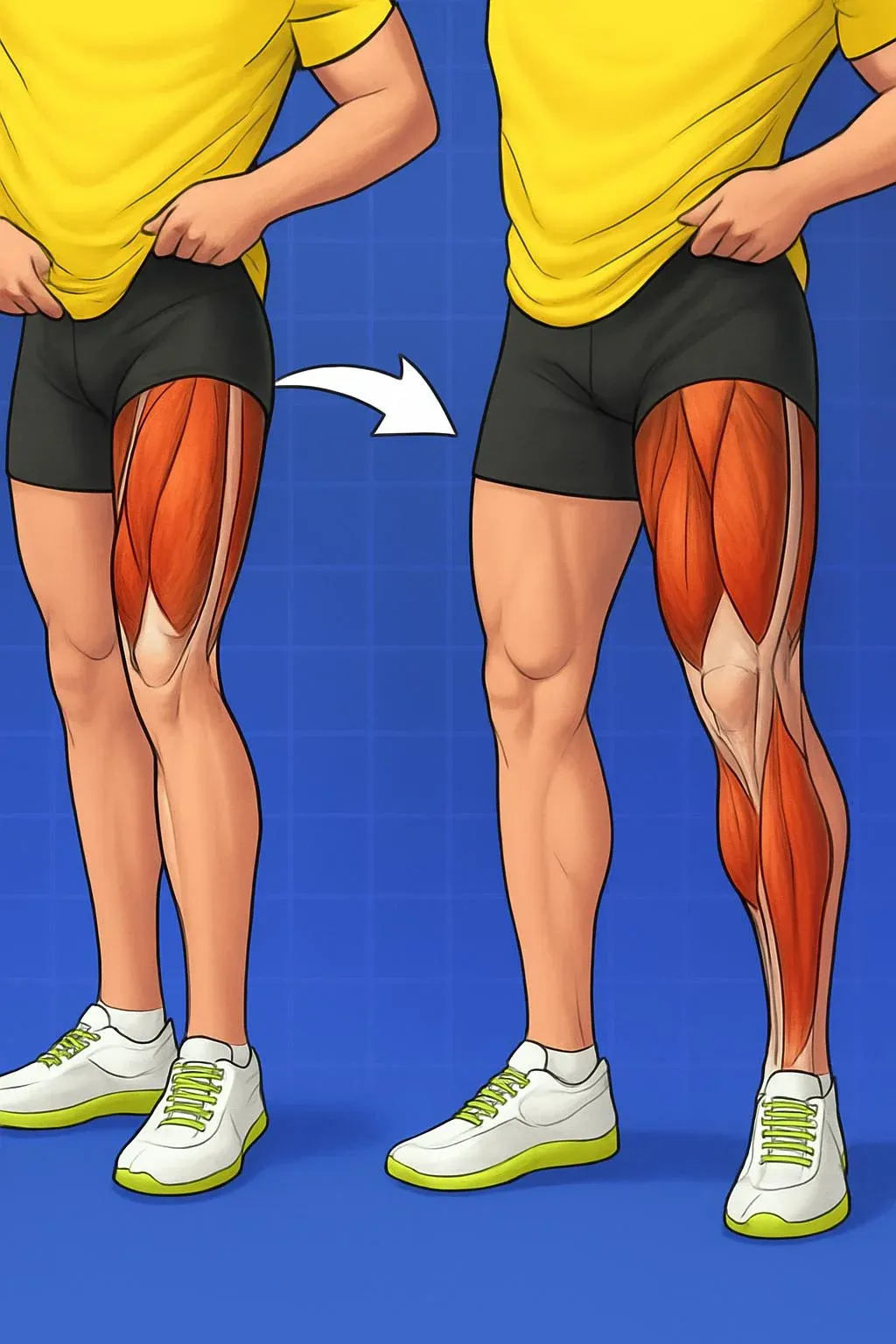
If your legs look underdeveloped despite heavy squatting, you probably need a smarter, more targeted exercise that corrects imbalances and forces each leg to grow on its own. The Bulgarian split squat is one of the best options — it delivers unilateral overload, deep hip and quad activation, and easier progression than trying to endlessly load a back squat. For a complete physique approach, don’t forget to balance leg work with smart upper-body accessory routines like chisel your lower chest for a proportional look.

If You Have CHICKEN LEGS Do This Exercise (Better Than Squats)

Why squats sometimes fail to build big legs

  • Bilateral dominance: A stronger leg can dominate in a two-legged squat, leaving the weaker side under-stimulated.
  • Compensations: Low back and hip mobility issues can limit depth, reducing quad and glute activation.
  • Load ceiling: Adding more weight to a barbell squat often increases neural demand more than local muscle hypertrophy, especially if form degrades.

Why the Bulgarian split squat beats squats for “chicken legs”

  • Unilateral focus: Each leg works independently, so the weaker side can’t hide.
  • Greater range-of-motion: Elevating the rear foot increases hip and quad stretch, boosting muscle fiber recruitment.
  • Easier to progressive-overload with dumbbells, kettlebells, or a weighted vest without sacrificing form.
  • Build stability and balance alongside size — carryover to athleticism and everyday function.

How to perform the Bulgarian split squat (step-by-step)

  1. Setup: Stand about 2–3 feet in front of a bench. Place the top of your rear foot on the bench.
  2. Positioning: Keep your front foot far enough forward so that when you descend, your knee tracks over your toes and your torso remains upright.
  3. Descent: Lower slowly by flexing at the front hip and knee until your front thigh is near parallel to the floor. Keep weight on the midfoot.
  4. Ascent: Drive through the front heel to return to standing. Keep the torso tall and avoid excessive forward lean.
  5. Reps and tempo: Use a controlled 2–3 second descent, a brief pause at the bottom, and an explosive drive up.

Programming for hypertrophy and balance

  • Beginner: 3 sets x 8–10 reps per leg, twice per week. Use bodyweight or light dumbbells to learn form.
  • Intermediate: 4 sets x 6–10 reps per leg, 2–3 times per week. Add weight progressively.
  • Advanced: 4–5 sets x 6–12 reps, using tempo, paused reps, or loaded carries afterward. Consider single-leg RDLs or step-ups as supplementary work.

Progressions and variations

  • Weighted Bulgarian split squat: Hold dumbbells at your sides or a single kettlebell goblet-style.
  • Barbell rear-foot-elevated split squat: For higher loading if you have a strong core and stable knee.
  • Tempo or paused reps: Increase time under tension by 3–5 second eccentrics or a 1–2 second pause at the bottom.
  • Reverse lunge and walking lunge: Use these as dynamic variations once the split squat movement pattern is solid.

Accessory work to accelerate leg growth

  • Calf raises: Often neglected, calves complete the “big leg” look.
  • Hip thrusts or RDLs: Improve glute size and posterior chain strength for balanced leg development.
  • Single-leg leg extensions or Nordic curls: Target specific fibers and address weak points.

Common mistakes and how to fix them

  • Too close to the bench: Causes the knee to track badly and reduces stability. Step forward.
  • Leaning forward excessively: Engage your core, shorten your stride, or reduce weight.
  • Letting the rear foot do work: Keep weight on the front leg; the rear foot should be a support, not the driver.

Balancing legs with the rest of your physique
Train legs hard, but maintain upper-body balance. If your shoulders and chest lag while you hammer legs, include accessory sessions — for example, cable work can help shape the delts and upper chest. For ideas, check out enhance your shoulders top 5 cable exercises to pair with your leg days.

Quick sample week

  • Day 1: Bulgarian split squats 4×8 per leg, RDLs 3×8, calf raises 3×12
  • Day 2: Upper-body push/pull (accessory cable work)
  • Day 3: Light single-leg work and conditioning or active recovery
  • Day 4: Heavy split squats 5×5 per leg, hip thrusts 3×8

If You Have CHICKEN LEGS Do This Exercise (Better Than Squats)

Conclusion

If you’ve been stuck with “chicken legs,” prioritize unilateral work like the Bulgarian split squat to correct imbalances and drive hypertrophy. For more discussion on squatting and how lower-body training relates to different body types, see this article: Squatting With Chicken Legs – Competitive Bodybuilding – T NATION.

If You Have CHICKEN LEGS Do This Exercise (Better Than Squats) Read More »

, , , ,
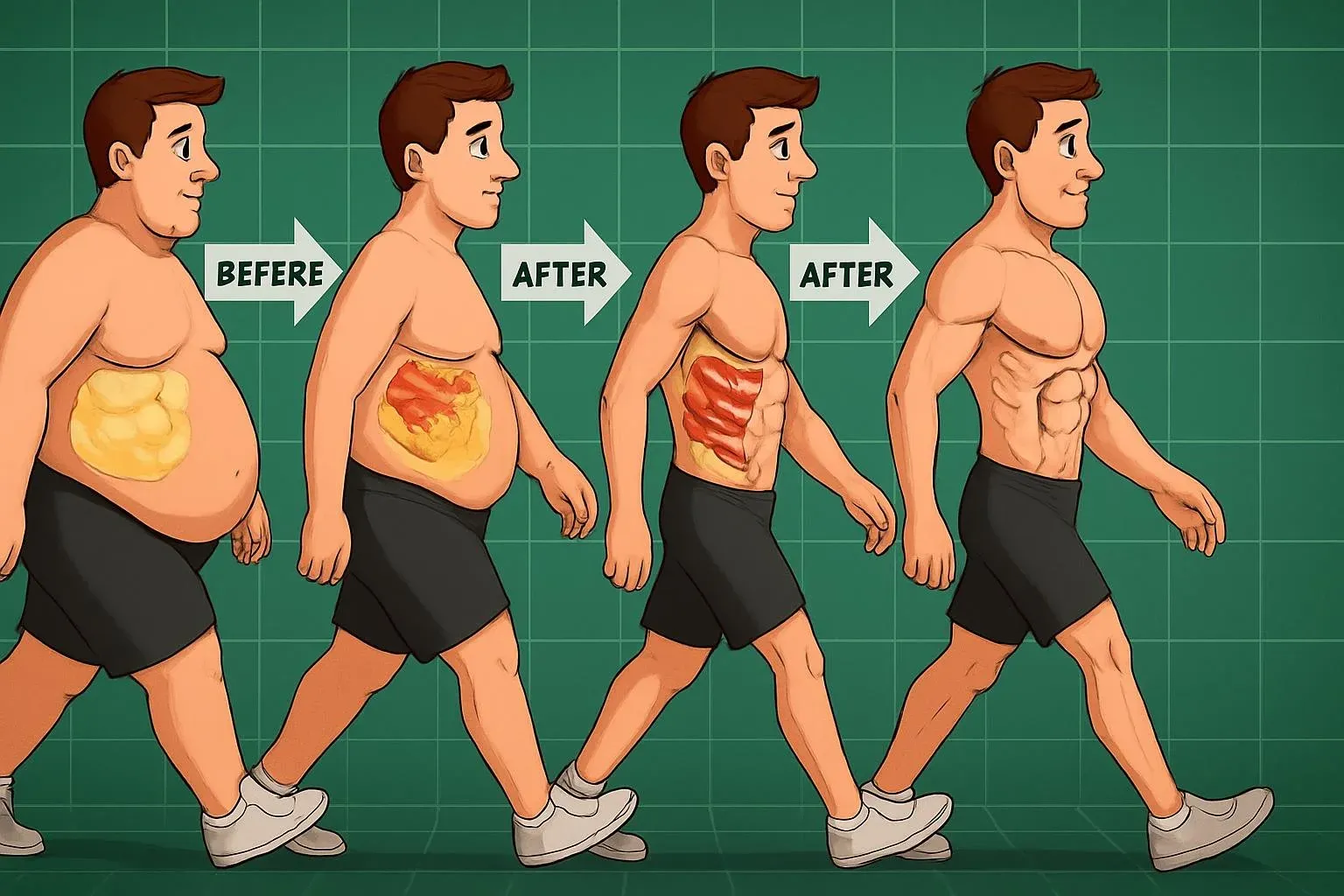
Person walking outdoors as a walking tip for losing belly fat.

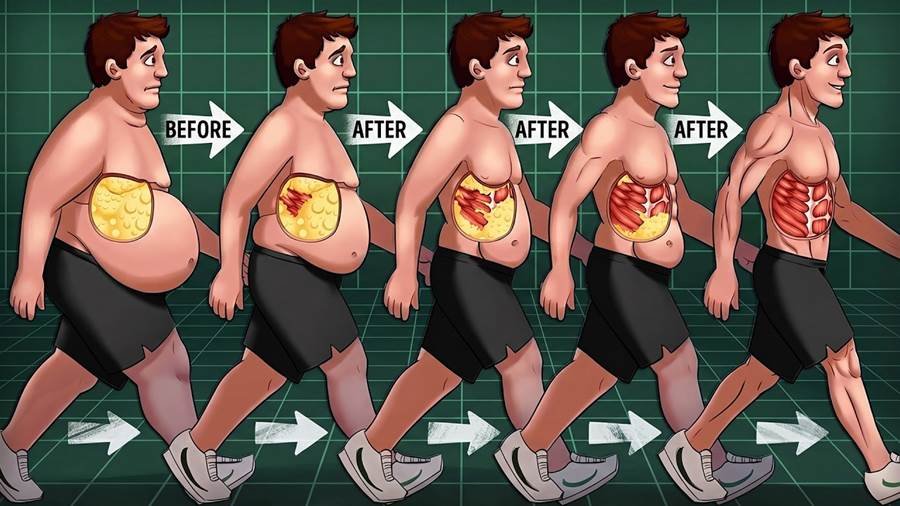
9 Walking Tips to Lose Belly Fat Faster

Title: Walk Off Belly Fat: 9 Fast Walking Hacks

Walking is one of the simplest, most sustainable ways to trim belly fat when combined with consistency and smart habits. Whether you’re short on time or easing back into fitness, the right walking strategy can accelerate fat loss, boost metabolism, and improve posture and mood. For added success, pair walking with small lifestyle shifts like improved sleep and reduced stress—simple adjustments that compound over time. Learn more about small life changes that help belly-fat loss.

9 Walking Tips to Lose Belly Fat Faster

  1. Pick the right pace
  • Aim for brisk walking where you can talk but not sing. That moderate-intensity zone burns more calories than a leisurely stroll and helps tap into fat stores.
  1. Add intervals
  • Alternate 1–2 minutes of fast walking or uphill bursts with 2–3 minutes of steady pace. Intervals raise post-exercise calorie burn and improve cardiovascular fitness.
  1. Use incline and hills
  • Walking uphill or increasing treadmill incline recruits glutes and hamstrings and increases calorie expenditure without extra time.
  1. Lengthen your stride carefully
  • Slightly longer strides and a quicker cadence boost efficiency and calorie burn. Avoid overstriding to reduce injury risk.
  1. Engage your core
  • Keep your pelvis neutral, shoulders back, and draw the navel slightly toward the spine as you walk. Light core engagement improves posture and enhances abdominal muscle activation.
  1. Fuel smartly before and after
  • Pair walks with balanced nutrition: a small protein-rich snack before longer walks and a recovery snack afterward. For ideas on fat-burning foods to support your walks, check this guide: 9 fat-burning foods to reach goals faster.
  1. Increase daily NEAT (non-exercise activity)
  • Add short walking breaks, take stairs, or park farther from entrances. Small movement increments throughout the day add meaningful calorie burn.
  1. Track progress and set small goals
  • Use a step counter or a simple log to track minutes, intensity, and consistency. Gradually increase time or intensity to avoid plateaus.
  1. Prioritize recovery and sleep
  • Adequate sleep, hydration, and gentle stretching support hormonal balance and fat loss. Overtraining or poor recovery can stall progress.

9 Walking Tips to Lose Belly Fat Faster

Conclusion

Combine consistency in walking with smart nutrition and recovery to accelerate belly-fat loss. For a concise set of strategies you can apply together with these walking tips, see How To Get Shredded: My Top 9 Weight Loss Tips.

9 Walking Tips to Lose Belly Fat Faster Read More »
, , , ,
Man demonstrating proper squat form for increased lower-body strength

Squat Like a Pro — 7 Secrets That Instantly Upgrade Your Lower‐Body Strength

Title: Squat Upgrade: 7 Pro Secrets for Instant Lower-Body Strength

Mastering the squat is the fastest way to build powerful legs, improve athleticism and protect your joints. These seven practical, science-backed tweaks make your squat safer and stronger without adding extra gym time — small changes, big results. Boosting your protein intake supports recovery as you implement them.

Squat Like a Pro — 7 Secrets That Instantly Upgrade Your Lower‐Body Strength

  1. Nail the Hip-First Descent
  • Think “hips back” before “knees forward.” Initiate the movement by hinging at the hips and sitting between your heels. This loads the glutes and hamstrings and prevents excessive forward knee travel that stresses the knees.
  • Drill: Slow three-count eccentric focusing on hip control.
  1. Find the Right Bar Path and Chest Position
  • Keep a vertical bar path over mid-foot. Maintain a proud chest (not hyperextended), which helps the bar track straight and reduces undue lumbar shear.
  • Cue: Imagine your sternum gently pointing up at the ceiling as you descend.
  1. Depth That Builds Strength (Not Pain)
  • Depth is individual. Aim to reach a point where your hips break parallel while maintaining a neutral spine and no knee pain. If mobility limits depth, work on ankle and thoracic mobility rather than forcing position.
  • Accessory: Glute bridges and banded ankle dorsiflexion drills produce measurable improvements.
  1. Tempo and Tension — Control Before Power
  • Use a controlled 2–3 second descent, a brief pause to remove elastic rebound, then an explosive ascent. Maintain full-body tension — brace your core, press the feet into the floor, and drive the hips forward.
  • Tip: Over-breathing ruins tension; inhale into your belly, brace, then hold that pressure through the rep.
  1. Progress Load Intelligently
  • Progress with micro-loads, volume cycling, and auto-regulation. If form breaks, reduce weight, not reps. Incorporate heavier triples and occasional singles for strength, and lighter higher-rep sets for technique.
  • Programming sample: 3 weeks build (3–5 reps), 1 week deload (6–8 reps).
  1. Use Accessory Movements that Transfer
  • Front squats and paused back squats build upright torso strength and top-end drive. Romanian deadlifts and split squats strengthen the posterior chain and single-leg stability for a balanced squat.
  • Include short bands, single-leg work, and weighted carries to shore up weak links.
  1. Mobility, Warm-Up & Fueling
  • Prioritize ankle dorsiflexion, hip external rotation, and thoracic extension mobility. A 6–8 minute dynamic warm-up focusing on these areas prevents breakdown mid-set.
  • Recovery and pre-workout choices matter. For consistent energy and fewer on-set drop-offs try targeted snacks that combine carbs and moderate protein; they help power your squat sessions without gut discomfort. Smart pre-workout snacks

Quick Weekly Mini-Program (8 weeks)

  • Day A (Heavy): Back squat 4×4 at 85% of your 4RM; paused squats 3×3 (60%).
  • Day B (Volume): Front squat 5×5 at moderate weight; Romanian deadlifts 3×8.
  • Day C (Speed/Control): Jump squats or box squats 6×3 (explosive), single-leg RDLs 3×8.
  • Rotate magnitudes and include a light recovery week every fourth week.

Common Mistakes to Watch

  • Letting knees collapse: strengthen glute med and use banded warm-ups.
  • Losing neutral spine: reduce depth or lighten load and focus on bracing.
  • Skipping accessory work: compound lifts hide imbalances; accessory work corrects them.

Squat Like a Pro — 7 Secrets That Instantly Upgrade Your Lower‐Body Strength

Conclusion

Use the safety squat bar to reduce shoulder strain and change leverage when regular back squats feel limiting — learn more in this helpful safety squat bar guide. Implement the seven tweaks above progressively: prioritize technique, dial in nutrition and recovery, and the pounds on the bar will follow.

Squat Like a Pro — 7 Secrets That Instantly Upgrade Your Lower‐Body Strength Read More »
, , , ,
Healthy meals for optimal performance before and after lifting weights

What to Eat Before & After Lifting Weights

Lift Fuel: Pre & Post-Workout Eats

Whether you’re pushing through heavy sets or finishing with high reps, what you eat before and after lifting matters. Proper timing and food choices help power your workout, protect muscle, and speed recovery—so you get stronger, faster. For a comfortable, confident session, pair your nutrition plan with comfortable gym outfits like these comfortable gym outfits that stay out of the way while you train.

What to Eat Before & After Lifting Weights

Quick rules of thumb

  • Pre-workout: prioritize easily digested carbs + a little protein 30–90 minutes before lifting. Aim for a balance that prevents hunger but avoids GI distress.
  • During training: water is essential; for sessions >90 minutes or very intense work, consider electrolytes or a small carb drink.
  • Post-workout: focus on protein + carbs within 30–120 minutes to maximize muscle repair and glycogen replenishment.
  • Adjust portions to your body size, workout length, and goals (fat loss vs. muscle gain).

What to eat before lifting
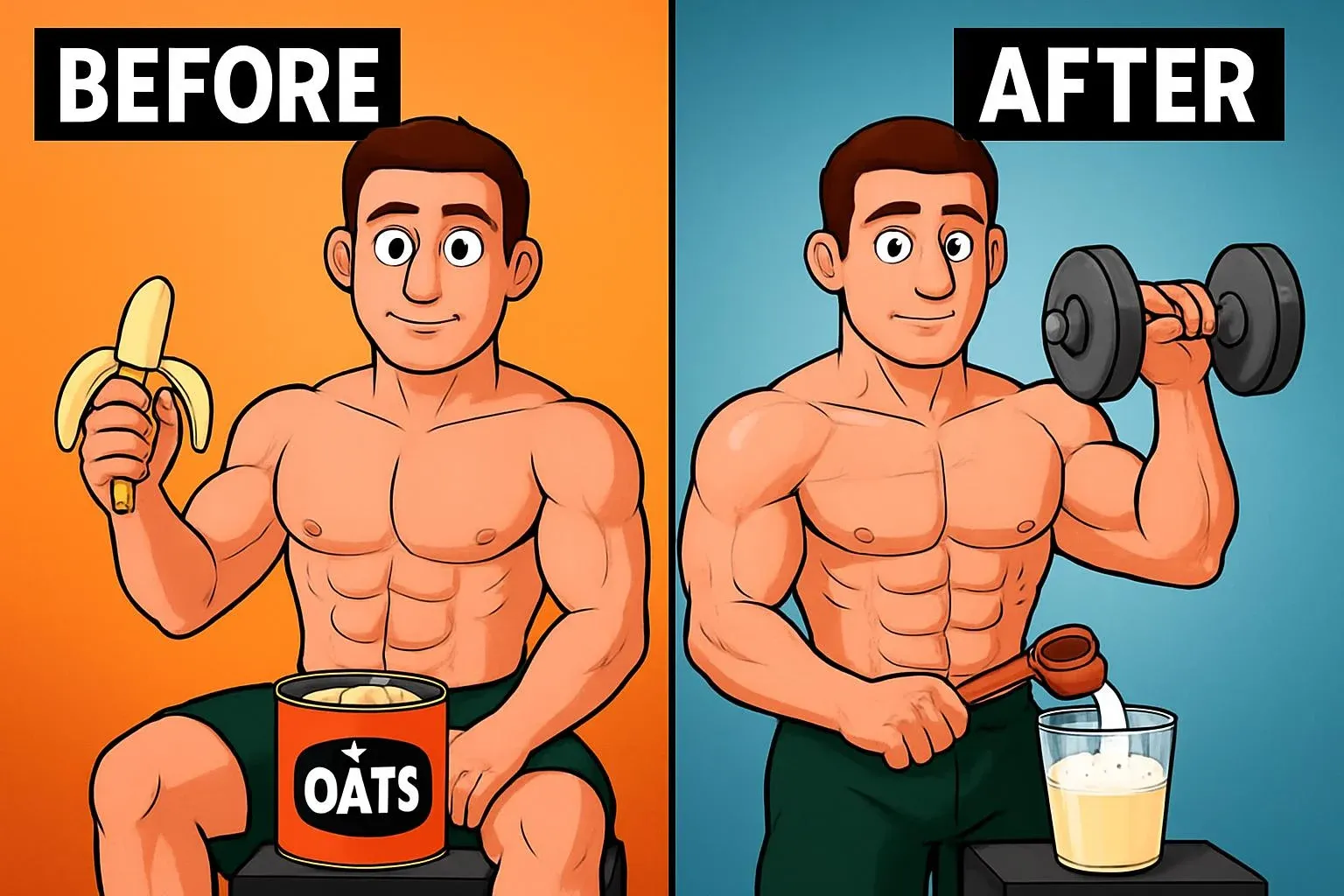
Short workouts (under 45 minutes): A small carb snack such as a banana, rice cake with jam, or a slice of toast keeps energy steady. If you train fasted and feel fine, a small coffee and light carb may suffice.

Moderate workouts (45–90 minutes): Combine 20–40 g of carbs with 10–20 g of protein: yogurt with fruit, oatmeal and whey, or a turkey sandwich on whole grain. These choices provide fuel and reduce muscle breakdown.

Long or high-intensity sessions (>90 minutes): Add more carbs and a bit more protein. A plain bagel with nut butter and a scoop of protein, or a sports drink plus a protein bar, can help you sustain performance.

What to eat after lifting
The goal after lifting is repair and replenishment.

  • Protein: 20–40 g of high-quality protein (whey, dairy, lean meat, or plant-based blends) supports muscle protein synthesis.
  • Carbs: 0.5–1.2 g/kg body weight over the next 2–4 hours helps restore glycogen — more if you have another session the same day.
  • Fats: Include a small amount; large high-fat meals immediately post-workout can slow digestion but are fine later.

Quick post-workout options

  • Protein shake with banana and milk (fast, portable).
  • Chicken, rice, and steamed veggies (balanced and filling).
  • Greek yogurt with granola and fruit (protein + carbs).

Hydration and electrolytes
Drink water before, during, and after sessions. For long or very sweaty workouts, include sodium and potassium (sports drinks, salted snacks, or electrolyte tablets) to maintain performance and prevent cramps.

Timing and portion tips

  • If training early in the morning, a small easily digested snack (half a banana, toast) often works better than a big meal.
  • For muscle gain, ensure daily protein targets are met (around 1.6–2.2 g/kg body weight), not just the post-workout window.
  • If you’re unsure when to push heavier or increase volume, read about signs for progression and when to increase weight to match your nutrition plan.

Sample day for a 75–90 minute lifting session

  • 60–90 minutes before: oatmeal with fruit + small scoop of protein.
  • During: water; sip electrolytes if needed.
  • 0–60 minutes after: whey shake + banana or chicken and rice.
  • 2–4 hours later: balanced meal with vegetables, whole grains, and lean protein.

Practical meal ideas by goal

  • Strength/mass: larger portions, more total calories, frequent protein every 3–4 hours.
  • Fat loss: keep pre-workout carbs moderate, emphasize protein to preserve muscle, and create a controlled calorie deficit.
  • Performance/endurance: prioritize carbs around the session and replenish glycogen thoroughly.

What to Eat Before & After Lifting Weights

Conclusion

For a concise guide to tailoring pre- and post-workout meals by session type, see this helpful resource from UCLA Health: What to eat before and after a workout, based on your workout type.

What to Eat Before & After Lifting Weights Read More »
, , , ,
Individual resting between sets during a workout for optimal performance.

How long should you rest between sets?

Pause to Progress

How long you rest between sets can be just as important as the exercises, loads, and volume you choose. Rest intervals influence strength, hypertrophy, metabolic stress and recovery — and they should be selected to match your goal, the lift, and your individual response. For guidance on progressing load and intensity along with rest strategies, see how progressive overload breaks you out.

How long should you rest between sets?

Why rest intervals matter
Rest period length determines how much ATP and phosphocreatine recover, how much metabolic byproduct clears, and how nervous system fatigue dissipates. Shorter rests (30–60 seconds) keep metabolic stress high and increase density, which can promote hypertrophy for some trainees. Longer rests (2–5 minutes) allow more full recovery and better performance on heavy sets, improving strength and power adaptations.

General rest ranges (practical starting points)

  • Strength/power: 2–5 minutes. Use long rests when lifting near-max loads (≤6 reps) or training explosive lifts so you can maintain high force output each set.
  • Hypertrophy: 60–120 seconds. This middle zone balances mechanical tension and metabolic stress; many lifters find 1–2 minutes works well for moderate rep ranges (6–12 reps).
  • Muscular endurance/metabolic conditioning: 30–60 seconds (or less). Short rests increase cardiovascular demand and work capacity, useful for circuits and conditioning.
  • Rehab, technique-focused sets, or light accessory work: 30–90 seconds depending on goals and fatigue.

Matching rest to exercise and session

  • Compound vs. isolation: Big, multi-joint lifts (squats, deadlifts, bench) demand longer rest because they stress the nervous system more. Single-joint movements recover faster.
  • Load and rep scheme: Heavier loads and lower reps need longer recovery; lighter loads and higher reps allow shorter rests.
  • Training frequency and fatigue: If you’re doing multiple heavy sessions per week, slightly longer rests can help manage accumulated fatigue and preserve performance.

Programming tips and variations

  • Individualize: Track performance — if your bar speed or rep count drops dramatically across sets, add 30–60 seconds to your rest. Use RPE to gauge readiness.
  • Use clusters or mini-rests: For heavy sets where accumulated fatigue limits reps, break sets into short clusters (e.g., 3×(3+20s rest) to complete 9 total reps with higher quality).
  • Supersets and antagonistic pairing: Pair opposing muscle groups (e.g., chest and back) to reduce rest without compromising set quality. This also boosts session density.
  • Active rest: Light mobility, low-intensity cardio, or breathing work can speed recovery without dropping heart rate too low. Avoid activities that fatigue the muscles you’re about to train.
  • Progress over time: As you adapt, adjust rest to match heavier loads or different rep ranges. For programming ideas that combine progressing load with smart rest choices, try incorporating the principles in top cable exercises for shoulders as accessory work with tailored rest.

Practical guidelines for workouts

  • Time your rests: Use a watch or phone timer for consistency.
  • Be goal-focused: If your aim is strength, err on the longer side; for hypertrophy, start with ~90 seconds and adjust by feel.
  • Keep notes: Log rest length alongside sets, reps, and RPE — small changes in rest can explain progress or stalls.
  • Stay flexible: Stress, sleep, and nutrition change recovery. On low-energy days, increase rest slightly and prioritize technique.

How long should you rest between sets?

Conclusion

For an evidence-based review of how rest intervals affect strength training outcomes, see the study on Rest interval between sets in strength training.

How long should you rest between sets? Read More »
, , , ,
Scroll to Top