exercise form

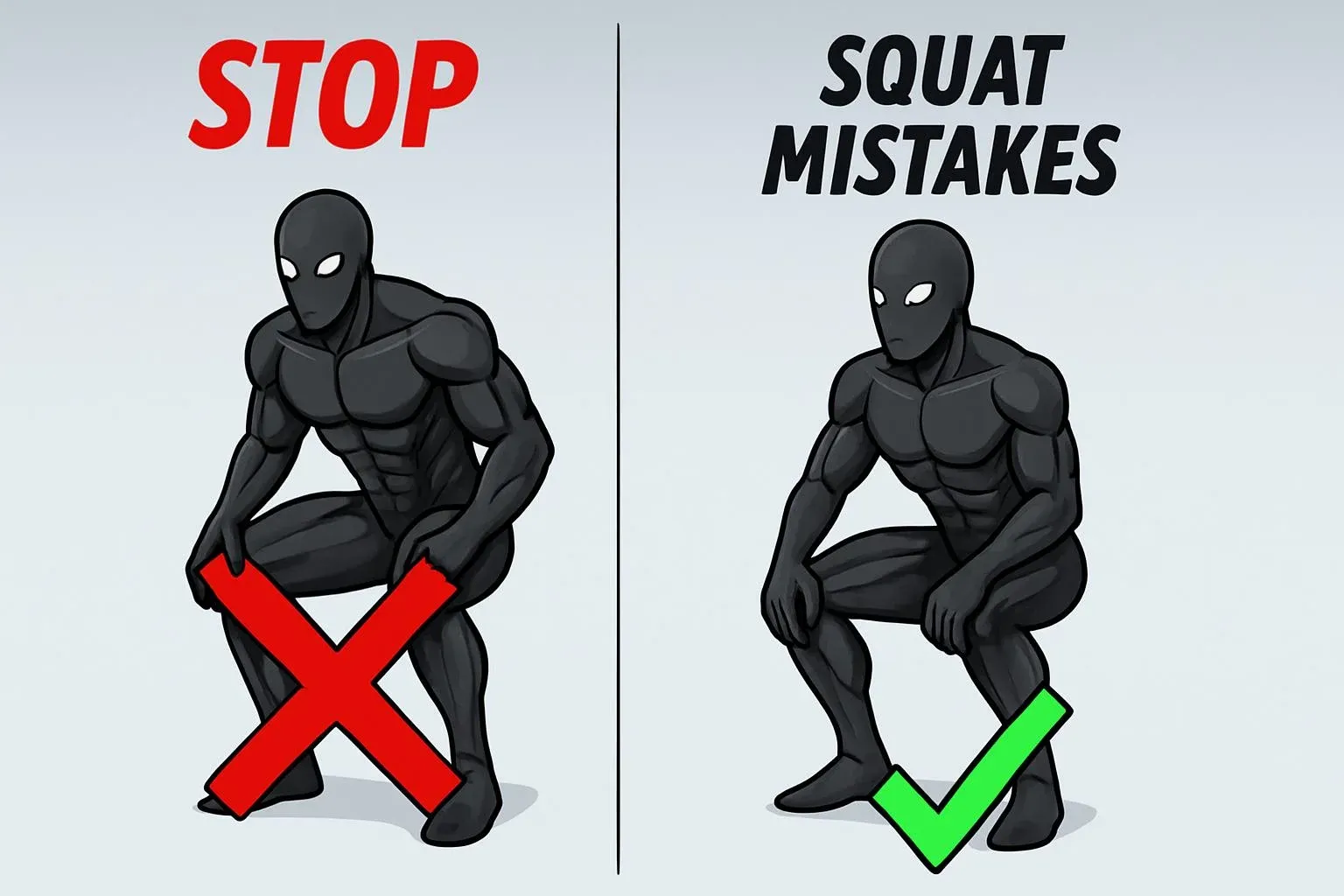
Illustration of correct vs. incorrect squat techniques highlighting common squat mistakes.

1. STOP Doing Squats Like This (Fix These 5 Mistakes)

Title: Quit These 5 Squat Mistakes — Fix Your Form Fast

Squats are one of the best overall strength moves — when done correctly. But subtle faults can stall progress, cause pain, or make you weaker. Before you add more weight, fix the basics so every rep builds strength and stays safe. For guidance on fueling for better performance, see what 150g of protein looks like on a plate.
1. STOP Doing Squats Like This (Fix These 5 Mistakes)

  1. Knee Valgus (Knees Caving In)
  • What it looks like: Knees collapse toward the midline during descent or ascent.
  • Why it matters: Strains the medial knee structures and robs power from your hips.
  • Fixes:
    • Cue: Push the knees out over the toes as you descend.
    • Drill: Banded side steps — loop a mini-band above the knees and perform controlled squats and lateral walks.
    • Progression: Pause squats at the bottom while holding the knees out to train stability.
  1. Heel Rise / Weight Forward
  • What it looks like: Heels lift, weight shifts onto toes.
  • Why it matters: Reduces braking force, increases knee stress, and limits depth.
  • Fixes:
    • Cue: Grip the floor with your heels; think “big toe and heel” balance.
    • Mobility check: Ankle dorsiflexion — work on ankle mobility before blaming technique.
    • Drill: Goblet squats with a light dumbbell; holding the weight in front helps keep an upright torso and heels grounded.
  1. Not Reaching Depth / Quarters Only
  • What it looks like: Shallow squats that don’t pass parallel.
  • Why it matters: Limits glute and adductor engagement and messes up movement patterns.
  • Fixes:
    • Cue: Break at the hips first, then drop between the knees; aim for hip crease below the knee if mobility allows.
    • Drill: Box or tempo squats — sit back to a box that’s at or just below target depth, then pause and drive up.
    • Progression: Slow negatives to build eccentric control and confidence below parallel.
  1. Rounded Upper Back / Collapsed Chest
  • What it looks like: Shoulder rounding, chest caving, especially with heavier loads or front squats.
  • Why it matters: Creates a forward lean, stresses the lumbar spine, and ruins bar path.
  • Fixes:
    • Cue: Brace the core, puff the chest, pinch the shoulder blades slightly.
    • Mobility and posture: Work thoracic extension and upper-back mobility; gentle stretches can help — see these stretches to relieve stiffness in the upper body.
    • Drill: Wall squats (facing a wall a few inches away) to practice an upright torso and correct bar path.
  1. Holding Breath or Weak Bracing
  • What it looks like: Either no bracing or breath-holding that leads to dizziness and inconsistent reps.
  • Why it matters: Poor intra-abdominal pressure reduces stability and raises injury risk.
  • Fixes:
    • Cue: Take a deep belly breath before the descent, brace the core like you’ll get punched, then exhale on the way up.
    • Drill: Plank and dead-bug variations to train bracing in neutral spine positions.
    • Progression: Add load slowly while maintaining consistent breathing and tightness.

Quick checklist to run through before every set

  • Feet: Shoulder-width (or slightly wider) with toes slightly out.
  • Depth: Aim for hip crease at or below knee if mobile and pain-free.
  • Knees: Track over the second-toe; fight valgus with hip drive.
  • Heels: Weighted and grounded.
  • Core: Deep belly breath and brace.

Sample warm-up (6–8 minutes)

  • 30s light cardio (bike/jump rope)
  • 2×10 bodyweight squats (slow tempo)
  • 2×10 banded lateral walks
  • 2×5 wall or box squats to depth
  • 2×30s glute bridges

Sample progression for form (for beginners)

  • Week 1: Bodyweight tempo squats, pause at bottom.
  • Week 2: Goblet squats with light weight, focus on knees and heels.
  • Week 3: Add sets with heavier goblet or unloaded barbell, maintain depth and bracing.
  • Week 4+: Gradually increase load only if all cues are consistent.

1. STOP Doing Squats Like This (Fix These 5 Mistakes)

Conclusion

Fixing these five common squat mistakes will make every rep safer and more productive. If you want to cross-check form cues with other bodyweight basics, this helpful guide on 5 Common Push-Up Mistakes to Avoid offers complementary technique tips that translate to better squats.

1. STOP Doing Squats Like This (Fix These 5 Mistakes) Read More »
, , , ,
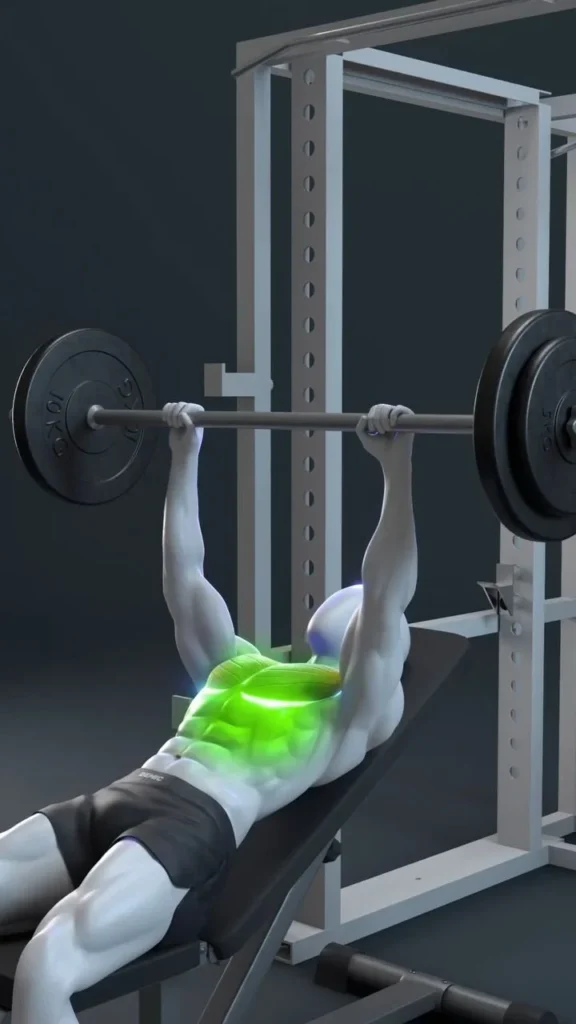
Person demonstrating perfect incline bench press form for effective chest workouts

Perfect Incline Bench Press Form

Perfect Incline Bench Press Form

The incline bench press is one of the best compound lifts for building upper-chest thickness and shoulder stability when performed correctly. Small adjustments in setup, bar path, and muscle recruitment separate an effective, joint-friendly press from an inefficient or injurious one. Before diving in, review related shoulder mechanics—for example, this primer on the seated dumbbell shoulder press setup—to better understand how the delts and scapula should behave during incline pressing.

Why incline press matters

  • Targets clavicular head of the pectoralis major more than flat benching.
  • Improves upper-chest fullness and the transition between chest and shoulders.
  • Encourages a more upright pressing pattern that translates to overhead strength.

Setup: bench angle, feet, and grip

  • Bench angle: Aim for 30–45 degrees. Lower angles (around 30°) emphasize the upper chest while reducing excessive anterior deltoid stress; higher angles shift load to the shoulders.
  • Feet: Plant them firmly to create a stable base and enable leg drive. Your feet should remain flat throughout the rep.
  • Grip width: Use a grip that places your forearms vertical at the bottom of the press. Too wide reduces range of motion and increases shoulder strain; too narrow makes the press more triceps-dominant.

Positioning the body: scapula and chest

  • Retract and depress the scapulae: Pinch your shoulder blades together and slightly down to create a solid pressing platform. This protects the shoulder joint and increases chest recruitment.
  • Chest up: Think about presenting your sternum toward the bar. Keeping the chest elevated shortens the ROM and promotes better pectoral activation.
  • Maintain a natural lower-back arch; don’t over-bridge. The arch should be stable, not mobile.

Bar path and elbow position

  • Bar path: Lower the bar to the upper-chest / lower-clavicle area, then press up and slightly back toward your eyes. This diagonal path keeps the load aligned with the muscle work.
  • Elbow angle: Aim for elbows 45–70 degrees from your torso (roughly halfway between flared and tucked). This reduces impingement risk while allowing the chest to work.
  • Touch point: Lightly touch the chest—do not bounce. Controlled contact ensures tension stays on the muscles.

Breathing, tempo, and tension

  • Inhale and brace the core as you lower the bar, maintaining full-body tension.
  • Pause for a brief moment at the bottom (no dead stop if using continuous tension), then exhale as you press.
  • Tempo: A controlled 2–3 second descent with a deliberate press up maximizes muscle fiber recruitment and control.
  • Keep tension through the glutes, legs, core, and lats to transfer force efficiently.

Common mistakes and fixes

  • Excessive bench angle: If you feel your front delts dominating, lower the angle a few degrees.
  • Flaring elbows: If your shoulders ache, bring elbows closer to the torso and focus on chest squeeze.
  • Poor scapular control: Practice retracted holds and lighter sets to engrain the position.
  • Lack of leg drive: Drive the feet and squeeze the glutes at the top of each rep to stabilize the torso.

Progressions and accessory work

  • Use varied rep ranges: heavier sets (3–6) for strength, moderate (8–12) for hypertrophy, and lighter (<15) for endurance and control.
  • Accessory lifts: Incline dumbbell press, incline flyes, and pressing variations strengthen weak points. For triceps-focused assistance and lockout work, consider techniques from the close-grip press family—see this piece on the close-grip bench press technique.
  • Deload and mobility: If shoulder stiffness appears, reduce load and add mobility work for the thoracic spine and shoulder girdle.

How to program it

  • Frequency: 1–3 times per week depending on goals and recovery.
  • Volume: Start with 6–12 working sets per week for the incline press and adjust based on progress.
  • Pair with vertical press and row variations to balance pushing and pulling strength.

Conclusion

For a complete reference on form, benefits, and common variations, check out this detailed guide to the Incline Bench Press: Proper Form & Benefits | Legion.

Perfect Incline Bench Press Form Read More »

, , , ,
Scroll to Top