daily workout

Person performing a 2-minute plank for fitness and core strength improvement

What Would Happen If You Did a 2-Minute Plank Every Day?

Title: Two-Minute Plank: What Changes?

A simple two-minute plank every day sounds trivial, but done consistently it can produce noticeable changes in your core strength, posture, and overall stability. This article explores what to expect from a daily 2-minute plank, how to do it safely, and how to progress without overdoing it. increase your protein intake can help recovery when you start any consistent routine.

What Would Happen If You Did a 2-Minute Plank Every Day?

Why a 2-minute plank?

  • Time-efficient: Two minutes is short enough to fit into nearly any schedule yet long enough to challenge the body when performed with good form.
  • Full-core engagement: The plank recruits rectus abdominis, transverse abdominis, obliques, glutes, shoulders, and even the quads to maintain a straight line.
  • Low impact, high reward: No jumping or equipment required — great for people who want strength gains without joint stress.

What you’ll likely notice in the first 1–2 weeks

  • Better awareness of your posture and midline: You may find yourself naturally sitting and standing taller.
  • Reduced lower-back discomfort: Strengthening the deep core can ease common stiffness for many people.
  • Improved endurance: Holding a 2-minute plank repeatedly trains muscular stamina.

Progress after 3–6 weeks

  • Stronger, tighter midsection: Clothes may feel a bit different; core activation during daily activities improves.
  • Better balance and functional strength for tasks like carrying groceries or standing on one leg.
  • Slight metabolic uptick: While not a cardio session, regular strength holds increase overall muscle engagement and can help with day-to-day calorie burn.

How to do the 2-minute plank correctly

  1. Setup: Forearms on the floor (or palms for a high plank), elbows under shoulders, feet hip-width. Keep a straight line from head to heels.
  2. Breathe: Don’t hold your breath — slow diaphragmatic breaths help maintain form.
  3. Cue points: Pull your ribs down, engage the glutes, and imagine hugging a belt around your waist.
  4. Adjust if needed: If two minutes is too long at first, break it into sets (4 x 30 seconds) and gradually increase continuous hold time.

Common mistakes to avoid

  • Sagging hips (low back strain)
  • Piking hips (reduces core engagement)
  • Neck craning upward (strain)
  • Holding breath (limits endurance)

Variations and progressions

  • Knee plank: start here if full plank is too difficult.
  • Side plank: targets obliques and shoulder stability.
  • Weighted plank or plank-to-push-up: add challenge after you can hold 2 minutes comfortably.
    If you encounter persistent form problems or unusual pain, reassess technique and consider alternating with complementary core moves to build balanced strength and avoid common training pitfalls like those discussed in bodybuilding struggles.

A simple 30-day plan

  • Week 1: 4 x 30 seconds or 3 x 40 seconds with 30–60s rest.
  • Week 2: 2 x 60 seconds or 1 x 90 seconds + 1 x 30 seconds.
  • Week 3: Aim for 1 x 2 minutes; add a side plank on alternate days.
  • Week 4: Hold 2 minutes daily; add a dynamic plank variation twice weekly.

When two minutes isn’t enough
If you can hold 2 minutes with perfect form and no challenge, progress by adding difficulty (variations, reduced rest, or weighted holds). Two minutes is a great baseline, but adaptation means you’ll want to increase intensity over time.

Safety notes

  • Listen to your body: sharp pain, especially in the lower back, is a sign to stop.
  • Prior injuries: consult a professional if you have a history of spine or shoulder issues.
  • Recovery: include mobility work and posterior chain strengthening (glutes, hamstrings) for balanced improvements.

What Would Happen If You Did a 2-Minute Plank Every Day?

Conclusion

A daily two-minute plank is a tiny habit that can yield meaningful improvements to posture, core strength, and endurance when performed correctly. For a firsthand account of someone who tried this exact routine and documented the results, see I Did a 2-Minute Plank Every Day for 30 Days — Here’s What ….

What Would Happen If You Did a 2-Minute Plank Every Day? Read More »
, , , ,
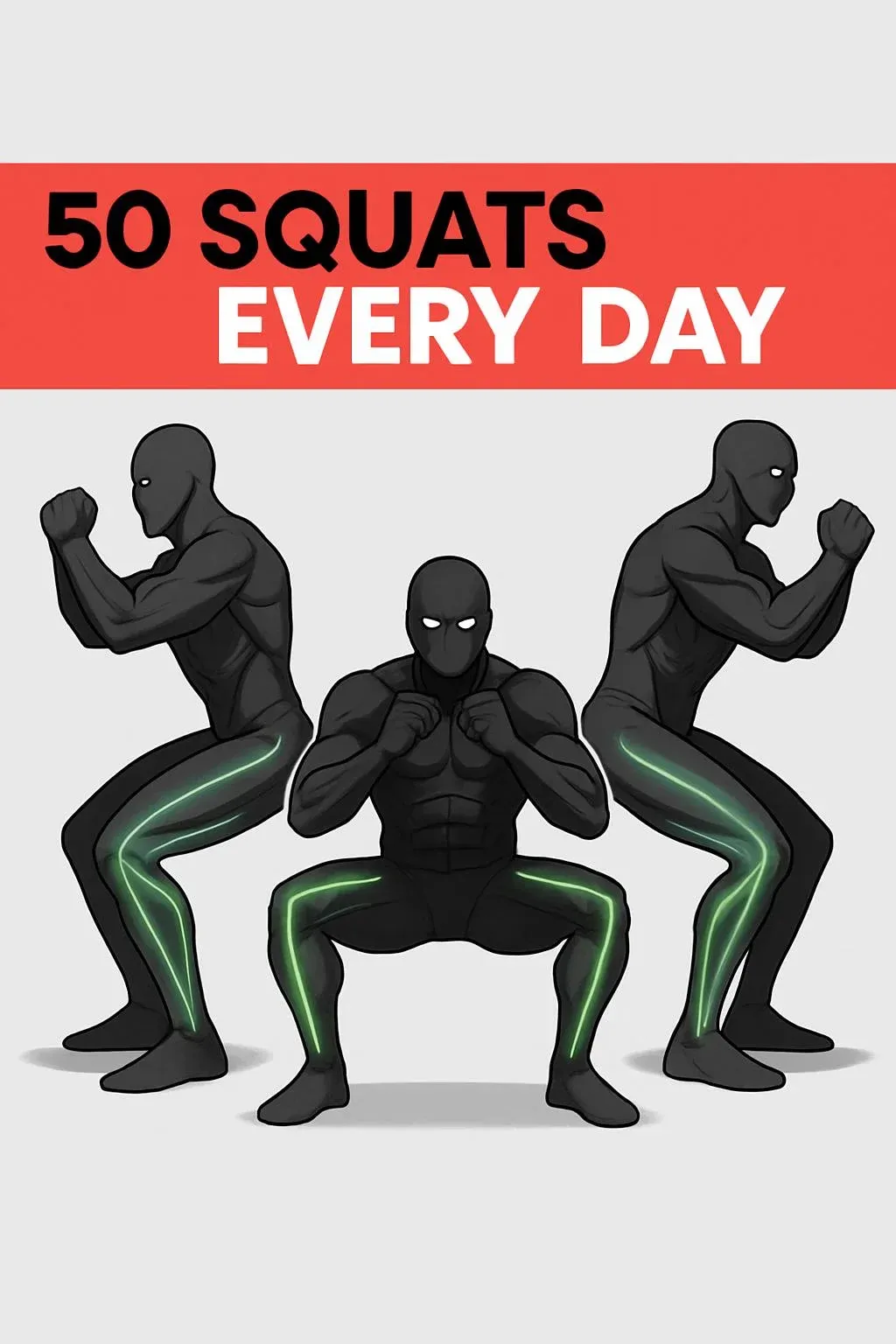
Man doing 50 squats daily for fitness and strength improvement

Doing 50 Squats Every Day – what Happens.

What 50 Squats a Day Does

Doing 50 squats every day is a simple, time-efficient challenge that many people try to boost their leg strength, endurance, and consistency. In just a few minutes each day you can build muscle tone, improve mobility, and form a habit that supports broader fitness goals — especially if you’re supporting recovery and nutrition properly, for example by understanding what adequate protein looks like on your plate.

Doing 50 Squats Every Day – what Happens.

Why choose 50 squats? It’s a number large enough to be challenging but small enough to be sustainable for most people. It’s also easy to scale: bodyweight squats, slow tempo, or adding pauses and variations can make those 50 reps feel very different day-to-day.

What changes to expect

  • Week 1: neuromuscular adaptation. Your body learns the movement pattern and you’ll likely feel soreness if you’re new to squats. Expect improved coordination and a modest increase in muscular endurance.
  • Weeks 2–4: visible tone and stamina gains. Quadriceps, glutes, and hamstrings will look and feel firmer. You may notice daily tasks like climbing stairs become easier.
  • Month 2+: increased strength and potential muscle growth if you progressively overload (add depth, tempo changes, or resistance). If you want to accelerate muscle gains, pairing the challenge with targeted nutrition strategies can help—see simple methods like easy ways to increase protein intake with every meal.

How to do 50 squats safely

  • Set-up: feet hip-width or slightly wider, chest up, weight in heels. Keep a neutral spine and avoid letting knees cave inward.
  • Depth: aim for thighs parallel to the floor if mobility allows; partial squats are fine as a start. Control the descent to avoid stress on the knees.
  • Tempo and breathing: inhale on the way down, exhale as you push up. Try a 2-0-1 tempo (two seconds down, no pause, one second up) for better muscle engagement.
  • Recovery: if you feel joint pain (sharp or persistent), reduce depth, perform fewer reps, or take rest days. For general soreness, prioritize sleep, hydration, and mobility work.

Variations to keep progress going

  • Split the 50 into sets (e.g., 5 sets of 10) if fatigue compromises form.
  • Add single-leg moves like split squats or pistol progressions to increase difficulty.
  • Try tempo changes (slow negatives) or pause squats to increase time under tension.
  • Use resistance (dumbbells, kettlebells, resistance bands) once bodyweight 50 becomes easy.

Tracking and realistic expectations

  • Take photos or note how daily activities feel rather than obsessing over the scale; changes in posture and strength are more meaningful.
  • Keep a simple log: date, number of reps, pain or soreness level, and any added variations. Over 30 days you should see measurable endurance gains; meaningful hypertrophy typically takes longer and benefits from progressive overload.

Common mistakes to avoid

  • Sacrificing form for reps. Rapid, bouncing squats reduce benefits and increase injury risk.
  • Doing the same motion forever. Your body adapts — introduce progressive overload or new variations.
  • Ignoring recovery and nutrition. Building muscle and preventing chronic fatigue requires fuel and rest.

Mental and habit benefits

  • Consistency builds confidence. A daily 50-squat habit teaches discipline and makes it easier to add other quick workouts.
  • It’s an accessible win: you can do it anywhere, with no special equipment, making it great for travel or busy days.

Doing 50 Squats Every Day – what Happens.

Conclusion

If you want a detailed firsthand account of someone who tried a daily squat challenge, read I Did 50 Squats A Day For 30 Days—Here’s What My Squat … for a real-world perspective and practical takeaways.

Doing 50 Squats Every Day – what Happens. Read More »

, , , ,
Scroll to Top