core workout

Person performing a 2-minute plank for fitness and core strength improvement

What Would Happen If You Did a 2-Minute Plank Every Day?

Title: Two-Minute Plank: What Changes?

A simple two-minute plank every day sounds trivial, but done consistently it can produce noticeable changes in your core strength, posture, and overall stability. This article explores what to expect from a daily 2-minute plank, how to do it safely, and how to progress without overdoing it. increase your protein intake can help recovery when you start any consistent routine.

What Would Happen If You Did a 2-Minute Plank Every Day?

Why a 2-minute plank?

  • Time-efficient: Two minutes is short enough to fit into nearly any schedule yet long enough to challenge the body when performed with good form.
  • Full-core engagement: The plank recruits rectus abdominis, transverse abdominis, obliques, glutes, shoulders, and even the quads to maintain a straight line.
  • Low impact, high reward: No jumping or equipment required — great for people who want strength gains without joint stress.

What you’ll likely notice in the first 1–2 weeks

  • Better awareness of your posture and midline: You may find yourself naturally sitting and standing taller.
  • Reduced lower-back discomfort: Strengthening the deep core can ease common stiffness for many people.
  • Improved endurance: Holding a 2-minute plank repeatedly trains muscular stamina.

Progress after 3–6 weeks

  • Stronger, tighter midsection: Clothes may feel a bit different; core activation during daily activities improves.
  • Better balance and functional strength for tasks like carrying groceries or standing on one leg.
  • Slight metabolic uptick: While not a cardio session, regular strength holds increase overall muscle engagement and can help with day-to-day calorie burn.

How to do the 2-minute plank correctly

  1. Setup: Forearms on the floor (or palms for a high plank), elbows under shoulders, feet hip-width. Keep a straight line from head to heels.
  2. Breathe: Don’t hold your breath — slow diaphragmatic breaths help maintain form.
  3. Cue points: Pull your ribs down, engage the glutes, and imagine hugging a belt around your waist.
  4. Adjust if needed: If two minutes is too long at first, break it into sets (4 x 30 seconds) and gradually increase continuous hold time.

Common mistakes to avoid

  • Sagging hips (low back strain)
  • Piking hips (reduces core engagement)
  • Neck craning upward (strain)
  • Holding breath (limits endurance)

Variations and progressions

  • Knee plank: start here if full plank is too difficult.
  • Side plank: targets obliques and shoulder stability.
  • Weighted plank or plank-to-push-up: add challenge after you can hold 2 minutes comfortably.
    If you encounter persistent form problems or unusual pain, reassess technique and consider alternating with complementary core moves to build balanced strength and avoid common training pitfalls like those discussed in bodybuilding struggles.

A simple 30-day plan

  • Week 1: 4 x 30 seconds or 3 x 40 seconds with 30–60s rest.
  • Week 2: 2 x 60 seconds or 1 x 90 seconds + 1 x 30 seconds.
  • Week 3: Aim for 1 x 2 minutes; add a side plank on alternate days.
  • Week 4: Hold 2 minutes daily; add a dynamic plank variation twice weekly.

When two minutes isn’t enough
If you can hold 2 minutes with perfect form and no challenge, progress by adding difficulty (variations, reduced rest, or weighted holds). Two minutes is a great baseline, but adaptation means you’ll want to increase intensity over time.

Safety notes

  • Listen to your body: sharp pain, especially in the lower back, is a sign to stop.
  • Prior injuries: consult a professional if you have a history of spine or shoulder issues.
  • Recovery: include mobility work and posterior chain strengthening (glutes, hamstrings) for balanced improvements.

What Would Happen If You Did a 2-Minute Plank Every Day?

Conclusion

A daily two-minute plank is a tiny habit that can yield meaningful improvements to posture, core strength, and endurance when performed correctly. For a firsthand account of someone who tried this exact routine and documented the results, see I Did a 2-Minute Plank Every Day for 30 Days — Here’s What ….

What Would Happen If You Did a 2-Minute Plank Every Day? Read More »
, , , ,
30 Day Ab Challenge for fabulous abs in 30 days with effective exercises.

30 Day Ab Challenge – Get Fabulous Abs in 30 Days

30 Day Ab Challenge — Get Fabulous Abs in 30 Days

Introduction
A focused 30-day plan can kickstart stronger, leaner abs by combining progressive workouts, smart nutrition, and daily consistency. This challenge is designed for busy people: short, effective sessions you can do at home with no special equipment. If you enjoy body-transformation programs, you might also like a complementary plan such as this 30-day butt transformation challenge to round out your routine.

Why a 30-Day Challenge Works
Short-term, intensive programs are powerful because they set a clear goal, build momentum, and are easy to commit to. Thirty days is long enough to create a habit and see measurable improvements in endurance, muscle tone, and posture — especially when paired with the right eating approach. This challenge emphasises progressive overload (adding reps, time under tension, or complexity) so your core has to adapt each week.

Core Principles

  • Frequency: 5 workout days, 2 active-recovery days per week.
  • Duration: 10–25 minutes per session — efficient but effective.
  • Variety: Mix static holds, dynamic movements, and rotational work.
  • Progression: Increase reps, sets, or difficulty every 7–10 days.
  • Nutrition: Slight calorie deficit for fat loss, plenty of protein, and whole foods.

Weekly Structure
Week 1 — Foundation: Learn form, build endurance

  • Focus: Planks, basic crunch variations, and controlled breathing
  • Sessions: 10–12 minutes focusing on technique and consistent tempo

Week 2 — Intensify: Add dynamic moves and tempo changes

  • Focus: Bicycle crunches, mountain climbers, leg raises
  • Sessions: 12–15 minutes with short rest intervals

Week 3 — Challenge: Introduce harder holds and weighted options (optional)

  • Focus: Side planks with dips, hollow holds, toe touches
  • Sessions: 15–20 minutes; add light weight or ankle weights if comfortable

Week 4 — Peak & Polish: Max effort, focus on conditioning

  • Focus: Supersets combining strength and cardio-based abdominal moves
  • Sessions: 20–25 minutes; perform timed circuits with minimal rest

Daily Sample Routine (Beginner to Intermediate)

  • Warm-up (2–3 minutes): Marching in place, torso twists, cat-cow
  • Circuit (repeat 2–4 rounds depending on fitness):
    1. Plank — 30–60 seconds
    2. Bicycle crunches — 30 seconds
    3. Reverse crunches — 12–15 reps
    4. Mountain climbers — 30 seconds
    5. Side plank (each side) — 20–40 seconds
  • Cool-down (2 minutes): Child’s pose, supine twist, deep belly breaths

Key Exercises Explained
For best results, focus on movement quality, not just quantity. If you want a concise guide to the most effective abs moves and proper execution, check this detailed routine of the top 4 abs exercises and routine. That resource breaks down form cues and regressions so you can safely advance.

Nutrition Habits That Reveal Abs

  • Aim for a modest calorie deficit (around 200–500 kcal/day) if fat loss is the goal.
  • Prioritise protein: 0.7–1.0 g per pound of bodyweight to preserve muscle.
  • Fill your plate with vegetables, lean proteins, whole grains, and healthy fats.
  • Hydration matters — sipping water throughout the day can reduce bloating and help performance.
  • Minimise processed sugars and refined carbs, especially near bedtime.

Modifications and Safety

  • Beginner: Reduce plank times, perform crunches with knees bent, and focus on slow tempo.
  • Intermediate/Advanced: Add instability (exercise ball), weights, or increase time under tension.
  • If you have back pain, prioritise core stability moves (dead bug, bird dog) and consult a professional before progressing.
  • Rest and recovery: Two active-recovery days per week (walk, gentle yoga) keep the body fresh.

Tracking Progress

  • Take photos at day 0, day 15, and day 30 to visually track changes.
  • Measure waist and hip circumference weekly — small wins add up.
  • Log workouts (sets, reps, times) to ensure progression.
  • Note energy levels, sleep quality, and how clothes fit — these often change before visible abs appear.

Staying Motivated

  • Set specific, measurable goals (e.g., hold a 90-second plank by day 30).
  • Partner with a friend or join a challenge group for accountability.
  • Celebrate non-scale victories: improved posture, better sleep, higher stamina.

Conclusion

If you want a guided companion to this plan, try the Six Pack in 30 Days – Apps on Google Play which offers progressive daily workouts and built-in tracking to help you stay on course.

30 Day Ab Challenge – Get Fabulous Abs in 30 Days Read More »

, , , ,
Pilates Core Burner workout with no equipment needed for effective core strengthening

Pilates Core Burner — No Equipment Needed ❤️‍🔥

Pilates Core Burner — No Equipment Needed ❤️‍🔥

Looking to torch your midsection without machines or bands? This no-equipment Pilates core burner gives you precise, effective exercises that target the deep abdominals, obliques, and lower back using only your bodyweight. Whether you’re a Pilates regular or new to mat work, this routine is scalable and easy to fit into short home workouts. If you enjoy progressive core challenges, you can pair these moves with other strength patterns like a band twist tutorial for rotational power on different days.

Why Pilates for the Core?

Pilates emphasizes controlled movement, breath, and alignment — making it ideal for strengthening the transversus abdominis (deep core) rather than just producing visible “six-pack” tension. This approach improves posture, stabilizes the pelvis and spine, and reduces injury risk while giving you a functional, toned midsection.

Quick Warm-Up (5 minutes)

  • Cat-Cow: 6–8 slow reps to mobilize the spine.
  • Pelvic tilts: 10 reps lying on your back to find neutral pelvis and engage deep abdominals.
  • Marching bridge: 8–10 reps per side to activate glutes and coordinated core control.

Core-Burning Exercises (No Equipment)

  1. Hundred Prep (60 seconds)

    • Lying on your back, knees bent into tabletop. Lift head and shoulders slightly, extend arms and pump small pulses while breathing 5 in/5 out for 10 cycles (or 60 seconds).
    • Cue: Keep ribs down and draw navel toward spine.
  2. Pilatés Single Leg Stretch (8–12 reps per side)

    • One knee into chest while the other extends out at 45°, shoulders lifted, alternating. Hands on shin, shoulder blades stable.
    • Modify by keeping head down if neck sensitive.
  3. Roll-Up (6–8 reps)

    • From lying tall, peel the spine up to seated reaching toward toes and roll down slowly. Focus on articulating the spine and using abdominal contraction to lift, not momentum.
  4. Double Leg Lowering (6–10 reps)

    • Legs start vertical; lower slowly toward the mat while keeping low back long. Only lower as far as you can without the lumbar arching.
    • Regression: Bend knees or perform single-leg lowers.
  5. Side Plank with Hip Dips (6–10 reps per side)

    • From side plank, dip hips slightly then lift. Builds oblique strength and shoulder stability.
    • If full side plank is too intense, drop the bottom knee to the floor.
  6. Teaser Prep (4–6 reps)

    • From supine, roll to a short-sit position with knees bent; hold for a breath and roll back. Progress toward straight legs as control improves.
  7. Bird Dog Pulse (8–12 reps per side)

    • On hands and knees, reach one arm forward and opposite leg back; pulse small lifts to challenge spinal stability.
  8. Heel Beats (20–40 beats)

    • Lying supine with legs in tabletop, pulse heels toward each other for a controlled burn. Breathe rhythmically and maintain low belly connection.

Sample 20-Minute Workout

  • Warm-up (5 min)
  • Circuit 1 (Repeat twice): Hundred Prep (60s), Single Leg Stretch (12 each), Roll-Up (8)
  • Circuit 2 (Repeat twice): Double Leg Lowering (8), Side Plank Hip Dips (8 each side), Bird Dog Pulse (10 each)
  • Finisher: Teaser Prep (4–6) + Heel Beats (30s)
  • Cool-down stretches (2–3 min)

Breathing and Form Tips

  • Inhale to prepare, exhale to initiate the movement. Pilates breath is lateral (ribcage expansion) to maintain pelvic stability.
  • Move slowly and with intention — quality trumps quantity. If you lose alignment (ribs popping up, lumbar overarching), reduce range or rest.
  • Keep neck long; support your head with hands during high-rep neck-lifting exercises if needed.

Modifications & Progressions

  • Beginner: Reduce reps, keep knees bent, perform movements with feet on the floor, or lower tempo.
  • Intermediate: Increase reps, lengthen lever (straighten legs), and add pauses at peak contraction.
  • Advanced: Combine exercises into flowing sequences (e.g., roll-up into teaser), slow negatives, or add pulses and isometric holds.

Recovery & Frequency

  • Aim for 3–4 focused core sessions per week, with rest or active recovery days in between.
  • Pair this routine with mobility work and lower-body strength training for balanced fitness. For guidance on nutritious pairing and whole-food choices that support recovery, read about food sourcing and nutrition to help your body refuel optimally.

Safety Notes

  • Avoid straining your neck — support gently with hands or keep chin tucked.
  • If you have lower back pain, prioritize neutral pelvis and reduce lever length (bend knees).
  • Stop if you feel sharp pain; consult a clinician for persistent issues.

Conclusion

Ready to add a standing element to your Pilates practice and work the legs with the same attention to control? Try this Standing Leg Workout – The Pilates Class for complementary standing core and leg stability work to round out your no-equipment routine.

Pilates Core Burner — No Equipment Needed ❤️‍🔥 Read More »

, , , ,
Top abs workout exercises: planks twist, reverse crunches, Russian twist, lying legs twist

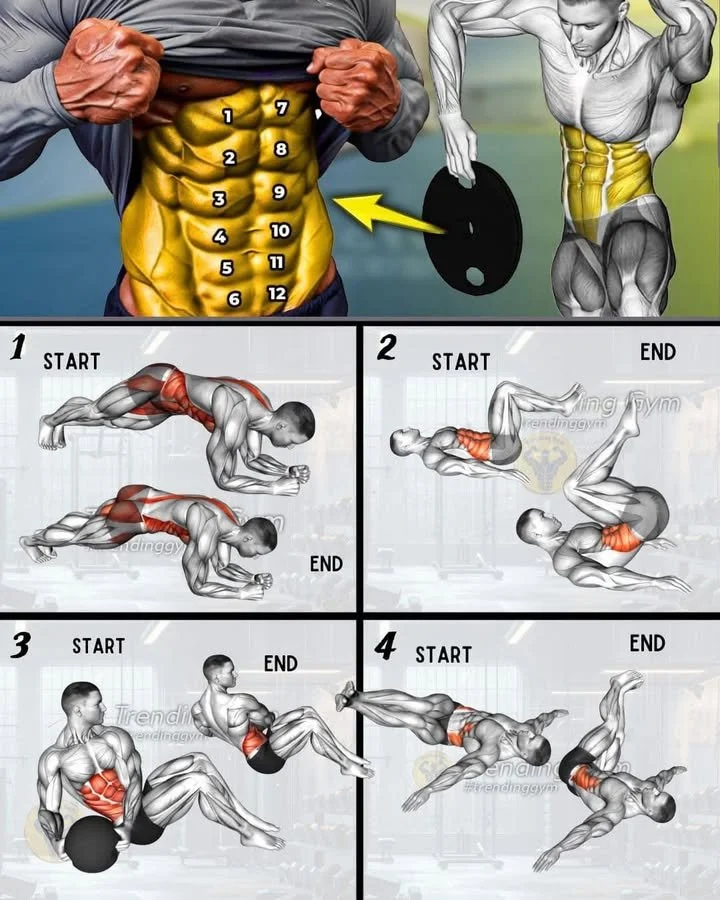
✅ Top 4 Abs Exercises Routine – Abs Workout🔥 1 Planks Twist 2 Reverse Crunches 3 Russian Twist 4 Lying Legs Twist 3 sets 10-12 reps #absday #absworkout #coreworkout #trendinggym #fblifestyle

Ultimate Abs Workout: Top 4 Exercises to Sculpt Your Core

Are you ready to chisel your abs and strengthen your core? A strong core is essential for overall fitness, stability, and improved athletic performance. This article presents a dynamic routine featuring the top four exercises that specifically target your abdominal muscles. Incorporate this routine into your fitness plan for impressive results!

The Routine: 4 Powerful Abs Exercises

  1. Plank Twists

    • Description: Start in a plank position with your arms straight and body in a straight line from head to heels. Engage your core and twist your hips to one side, bringing them toward the ground. Return to the center and repeat on the other side.
    • Benefits: This exercise not only strengthens your abs but also engages the obliques and improves stabilization.
  2. Reverse Crunches

    • Description: Lie on your back with your knees bent and feet flat on the floor. Place your hands at your sides or under your head for support. Engage your core to lift your hips off the ground, bringing your knees toward your chest. Slowly lower your hips back down and repeat.
    • Benefits: Targeting the lower abs, reverse crunches help in building strength and definition while minimizing strain on your back.
  3. Russian Twists

    • Description: Sit on the floor with your knees bent and feet lifted off the ground for a challenge. Lean back slightly, keeping your back straight, and clasp your hands together. Rotate your torso to one side, then to the other, tapping the ground beside you as you go.
    • Benefits: This exercise is excellent for strengthening the obliques and improving rotational movement, essential for many sports activities.
  4. Lying Leg Twists

    • Description: Lie on your back with your legs straight up in the air. While keeping your shoulders flat on the ground, lower your legs to one side while maintaining control. Use your core to lift your legs back to the center and then repeat on the other side.
    • Benefits: Lying leg twists work the entire abdominal region, helping to build strength and flexibility while promoting stability in the core.

Workout Guidelines

For best results, perform 3 sets of 10-12 repetitions for each exercise. Focus on maintaining proper form to maximize effectiveness and minimize injury risk. Take a brief rest between sets to recover but keep it under a minute to sustain your heart rate and calorie burn.

Conclusion

This abs workout routine is a powerful and efficient way to enhance your core strength and definition. Whether you’re a fitness beginner or a seasoned athlete, adding these exercises to your regimen can help achieve a sculpted midsection. So, prepare to hit the gym, and let’s get to work on those abs!


Stay Motivated!

Don’t forget to track your progress and share your journey on social media using the hashtags:
#absday #absworkout #coreworkout #trendinggym #fblifestyle. Let’s inspire each other as we work towards our fitness goals!

✅ Top 4 Abs Exercises Routine – Abs Workout🔥 1 Planks Twist 2 Reverse Crunches 3 Russian Twist 4 Lying Legs Twist 3 sets 10-12 reps #absday #absworkout #coreworkout #trendinggym #fblifestyle Read More »

, , , ,
Scroll to Top