core exercises

Person performing an abs workout routine for core strength and definition.

Abs Workout

Abs Workout: Build a Strong, Functional Core

A well-rounded abs workout does more than create a visible six-pack — it builds a stable, resilient core that improves posture, reduces injury risk, and enhances athletic performance. Whether you train at home or in a gym, consistent progress comes from balanced programming, solid technique, and gradual overload. If you want a quick at-home starter routine, see this Top 3 Abs Workout at Home for simple options you can do with minimal equipment.

Why Train the Abs (Beyond Aesthetics)

The abdominal muscles are central to nearly every movement pattern:

  • They stabilize the spine during lifting and bending.
  • They transfer force between upper and lower body (important for athletics).
  • They assist breathing mechanics and pelvic alignment.

Training the abs with functional, multi-plane exercises improves real-world strength more than endless isolated crunches.

Core Anatomy — What to Target

Focus on these major players:

  • Rectus abdominis: responsible for trunk flexion (the “six-pack”).
  • External and internal obliques: rotate and side-bend the torso; key for anti-rotation strength.
  • Transverse abdominis: deep stabilizer that compresses the abdomen and protects the lumbar spine.
  • Hip flexors: contribute to leg-raise movements but can dominate if overused — balance is crucial.

Understanding each muscle’s role helps you pick exercises that develop both stability and movement.

Designing an Effective Abs Workout

Follow these programming principles:

  • Frequency: 2–4 sessions per week depending on overall training volume.
  • Volume: 8–20 working sets per week for the abs spread across sessions.
  • Intensity: prioritize quality of contraction and progressive challenge (add resistance, increase time under tension, or reduce stability).
  • Balance: combine anti-flexion (planks), anti-rotation (pallof press variations), rotational (Russian twists), and dynamic flexion (leg raises) movements.

If you want a structured routine that focuses on a few high-impact moves, consider the Top 4 Abs Exercises Routine for a concise template to follow.

Sample Workouts

Beginner (2–3x per week)

  • Dead Bug — 3 sets of 8–12 reps per side
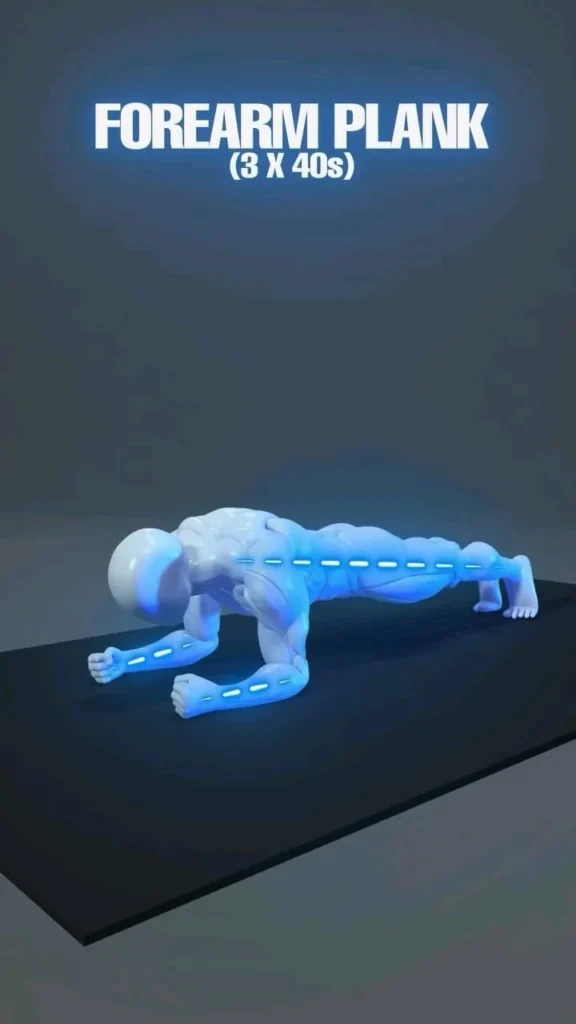
  • Front Plank — 3 × 20–45 seconds
  • Standing Pallof Press (light band) — 3 × 10–12 per side

Intermediate (3x per week)

  • Hanging Knee Raises — 3 × 10–15
  • Side Plank with Hip Drop — 3 × 8–12 per side
  • Russian Twist (medicine ball) — 3 × 12–20 total

Advanced (2–3x per week)

  • Hanging Leg Raises to Toes — 4 × 8–12
  • Weighted Decline Sit-Up — 4 × 8–12
  • Cable Anti-Rotation (heavy) — 4 × 8–10 per side

Mix stability-focused sets with higher-rep dynamic work to train both endurance and strength.

Technique Tips & Common Mistakes

  • Breathe rhythmically: exhale during the effort (e.g., curl or crunch) and inhale during release.
  • Control movement: avoid momentum-driven reps; slower eccentrics build strength and reduce injury risk.
  • Protect the low back: if you feel lumbar pain during leg raises, regress to bent-knee variations or perform anti-extension planks.
  • Progress sensibly: add resistance, range, or instability only after mastering form.
  • Recovery: treat abs like other muscles — allow at least 48 hours when performing high-intensity sets.

Equipment Options

You don’t need a gym to train your abs well. Useful tools:

  • Resistance bands for anti-rotation work
  • Medicine ball or dumbbell for loaded rotation
  • Pull-up bar for hanging leg raises
  • Stability ball for rollouts and stir-the-pot variations

Choose tools that challenge your weak links while letting you maintain good form.

Conclusion

A complete abs routine blends stabilization, rotation, and dynamic flexion with progressive overload and smart recovery. For a large library of demonstrations to help you vary and execute effective exercises, check out this comprehensive guide to Abs Exercises: 150+ Free Video Exercise Guides | Muscle & Strength.
Abs Workout Read More »

, , , ,
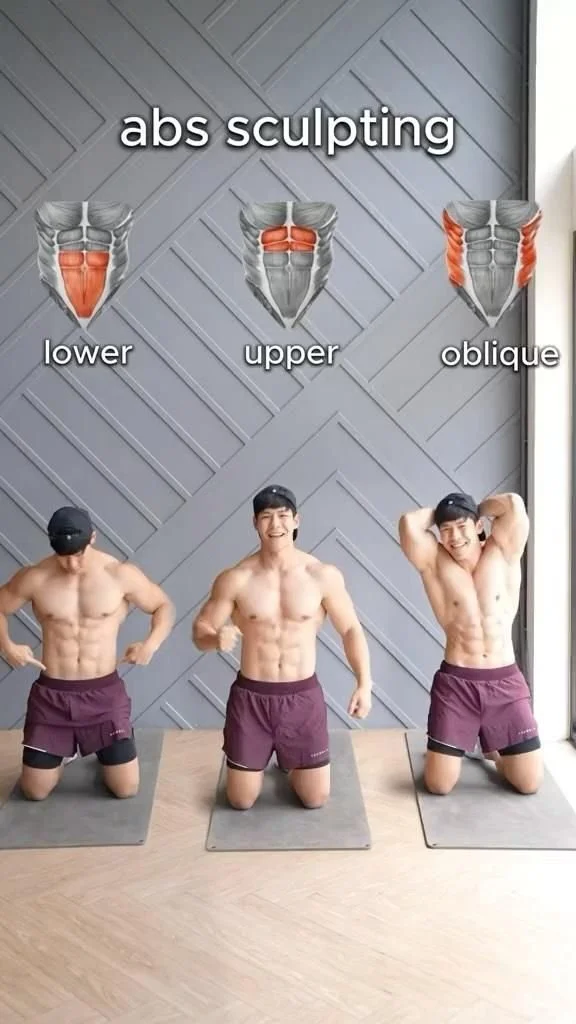
Abs workout video showcasing exercises to sculpt and tone your core.

PhrzeApparel on Instagram: “ABS KILLER EXERCISES TO BURN YOUR CORE! 🔥 Try these to tone & sculpt your abs: • Work on upper abs for a chiseled six-pack 💪 • C… [Video] [Video] | Workout videos, Abs workout, Bodyweight back workout

Abs Killer: 8 Core Moves to Burn, Tone, and Sculpt Your Midsection

A ripped midsection comes from consistent, targeted work and smart programming — not endless crunches. To truly carve and strengthen your abs, combine exercises that attack the upper, lower, and obliques while prioritizing technique, progressive overload, and sufficient recovery. For best results, pair core development with complementary posterior-chain training; a balanced approach to back and core helps posture and performance — try this back workout to balance your routine.

Why targeted ab work matters

Many people default to one or two moves (crunches, sit-ups) and wonder why their midsection doesn’t improve. The abs are a functional muscle group with different regions:

  • Upper abs: flex the torso (e.g., crunch variations).
  • Lower abs: control pelvic tilt and lift the legs (e.g., leg raises).
  • Obliques: resist rotation and lateral flexion (e.g., side planks, Russian twists).
    Training each region with progressive difficulty and varied planes of motion yields the best visual and functional results.

8 Killer Exercises to Burn Your Core

Perform these exercises as a circuit or broken into supersets. Focus on control, full range, and breathing.

  1. Hollow Body Hold (30–60 sec)
  • Why: Builds total-core isometric strength and creates that “tight” midsection.
  • Cue: Flatten your lower back to the floor, squeeze glutes, hold shoulders off the mat, legs extended and slightly off the ground.
  1. Weighted Crunch (3 sets of 10–15)
  • Why: Targets upper abs with added load for hypertrophy.
  • Cue: Use a plate or dumbbell across the chest or behind the head; exhale on the lift, keep chin tucked.
  1. Hanging Leg Raises (3 sets of 8–12)
  • Why: High activation of lower abs and hip flexors.
  • Cue: Control the descent; avoid swinging. Progress by straightening knees or adding ankle weights.
  1. Russian Twists (3 sets of 20 total)
  • Why: Hits the obliques and improves rotational strength.
  • Cue: Keep back at a 45° angle, rotate from the torso, not just the arms. Add a med ball for load.
  1. Bicycle Crunches (3 sets of 20 total)
  • Why: Great dynamic movement for obliques and rectus abdominis coordination.
  • Cue: Drive elbow to opposite knee, not just moving the elbow. Slow and controlled reps beat speed.
  1. Pallof Press (3 sets of 10–12 each side)
  • Why: Anti-rotation move that strengthens the deep core stabilizers.
  • Cue: Press resistance away from chest, resist rotation, maintain braced torso.
  1. Decline Sit-Ups or V-Ups (3 sets of 10–15)
  • Why: Adds intensity to upper and mid-ab focus; V-ups incorporate lower abs too.
  • Cue: Focus on an explosive concentric and controlled eccentric.
  1. Side Plank With Hip Dips (3 sets of 10–15 dips each side)
  • Why: Strengthens lateral chain and obliques for aesthetics and stability.
  • Cue: Keep hips high, slow dip and return. Add a weight on the top hip for progression.

Sample 20–30 Minute Killer Core Circuit

  • Warm up: 5 minutes dynamic mobility (cat-camel, leg swings).
  • Circuit (3 rounds, minimal rest):
    • Hollow Body Hold — 30 sec
    • Hanging Leg Raises — 10 reps
    • Pallof Press (each side) — 10 reps
    • Russian Twists — 16 reps
    • Side Plank Hip Dips (each side) — 12 reps
      Rest 60–90 seconds between rounds.

Tip: If you’re short on time, superset abs with upper-body movements (e.g., biceps or presses). For efficient pairing and programming ideas, consider this compact barbell-only biceps routine to alternate with core sets.

Progression and troubleshooting

  • Increase difficulty by adding load, range, or instability (e.g., weighted Russian twists, single-leg hollow holds).
  • If you feel neck strain, support the head lightly and focus on pelvic tilt to use abs rather than neck muscles.
  • Swaying or momentum means you’re too fast — slow it down.
  • Track reps and time under tension instead of just “how many sets” you did.

Nutrition and recovery

Sculpted abs are built in the kitchen as much as the gym. Aim for:

  • A slight calorie deficit if body fat reduction is the goal.
  • Adequate protein to preserve lean mass.
  • Whole-food carbohydrates timed around workouts for performance.
    Also prioritize sleep and active recovery; core training demands CNS readiness and spinal health.

Final tips

  • Train abs 2–4 times per week, mixing heavy-loaded sessions with endurance and stability work.
  • Pair core work with posterior chain training to prevent imbalances and protect your spine.
  • Consistency and progressive overload will win over countless reps of the same old crunch.

Start with the fundamentals, practice perfect form, and gradually layer intensity. With the right plan and patience, you’ll see both strength and sculpting results in your core.

PhrzeApparel on Instagram: “ABS KILLER EXERCISES TO BURN YOUR CORE! 🔥 Try these to tone & sculpt your abs: • Work on upper abs for a chiseled six-pack 💪 • C… [Video] [Video] | Workout videos, Abs workout, Bodyweight back workout Read More »

, , , ,
Video demonstration of an abs workout featuring various exercises for core strength.

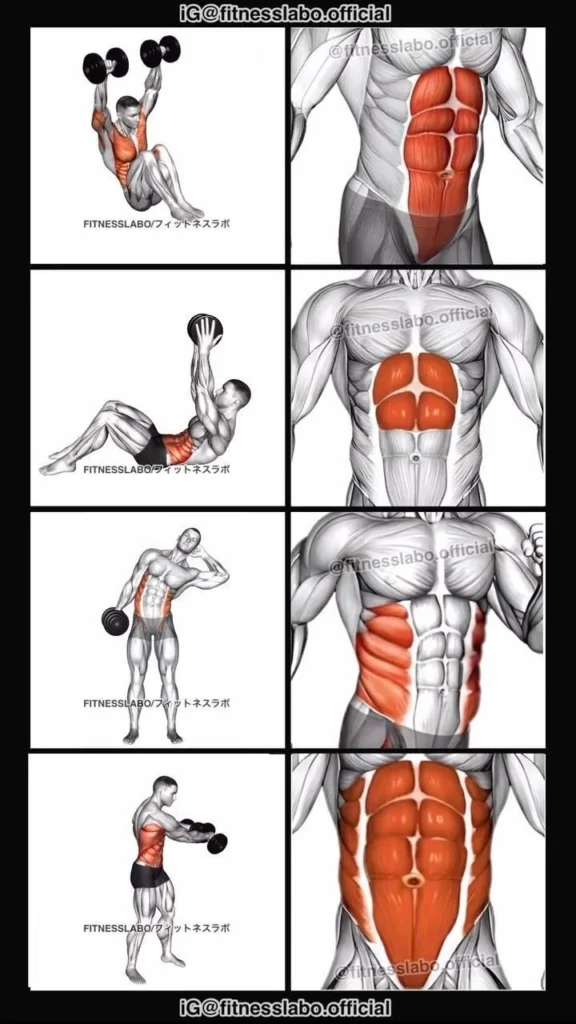
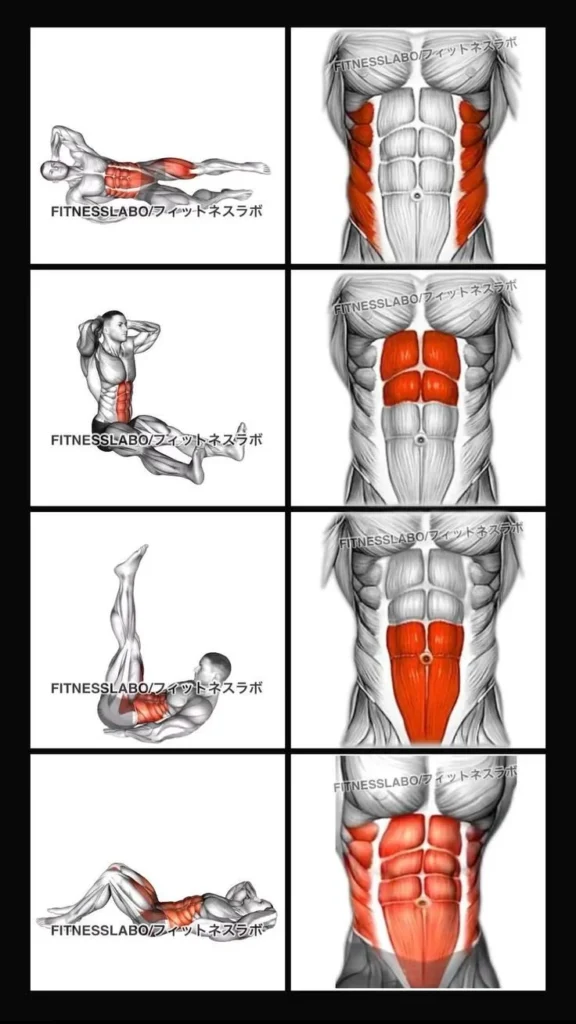
「✅ Abs Workout ① Leg Raise Oblique Crunch ② Abdominal Squeeze ③ Pulse Up ④ Alternate Oblique Crunch #fitness #gym #exerci…」[動画]【2025】 | 腹部のエクササイズ, トレーニングチャレンジ, トレーニングプラン

2025 Abs Workout — 4 Moves to Sculpt Your Midsection

A short, focused routine can make a big difference when you consistently target your core with quality movement. This abs workout centers on four efficient exercises — Leg Raise Oblique Crunch, Abdominal Squeeze, Pulse Up, and Alternate Oblique Crunch — designed for home or gym settings. To get the best results, think of your core as part of a system: pairing core work with targeted lower-body activation improves posture and movement quality, so consider adding some dedicated glute work like these how to build bigger glutes routines to support your progress.

Introduction

  • Goal: Improve midline stability, reduce belly fat through consistent training + nutrition, and develop visible obliques and lower-abs strength.
  • Time: 10–20 minutes per session.
  • Frequency: 3–5 times per week, or 2–3 times/week as part of a balanced full-body program.

The 4 Core Exercises (what they are and how to do them)

  1. Leg Raise Oblique Crunch

    • How: Lie flat with hands under hips, lift legs to 90°. As you lower legs, rotate hips so one knee tracks slightly toward the elbow, performing an oblique crunch. Alternate sides each rep.
    • Reps: 10–15 per side.
    • Tip: Keep lower back pressed lightly into the floor; move slowly to avoid momentum.
  2. Abdominal Squeeze

    • How: Sit or lie down, exhale deeply and pull your belly button toward your spine, holding the contraction for 3–6 seconds. Release slowly and repeat.
    • Reps: 8–12 holds; 2–3 sets.
    • Tip: Focus on hollowing the transverse abdominis (deep core) rather than tucking the ribcage.
  3. Pulse Up

    • How: From a low-leg raise or crunch position, pulse your legs/torso upward in small, controlled motion — think short-range, high-tension reps.
    • Reps: 12–20 pulses.
    • Tip: Keep movements small and controlled; this targets endurance and the mind-muscle connection.
  4. Alternate Oblique Crunch

    • How: On your back, knees bent, rotate your torso to crunch the opposite elbow toward the lifted knee in alternating fashion.
    • Reps: 12–20 alternating reps.
    • Tip: Do not yank your neck; lead with the ribcage and use the obliques to rotate.

Sample Circuit & Training Plan

  • Warm-up: 3–5 minutes light cardio + dynamic hip swings.
  • Circuit (repeat 3 rounds):
    1. Leg Raise Oblique Crunch — 12 each side
    2. Abdominal Squeeze — 10 holds (4–6 sec)
    3. Pulse Up — 15 pulses
    4. Alternate Oblique Crunch — 16 total (8/side)
    5. 30–45 seconds rest
  • Cool-down: gentle spinal twists and deep diaphragmatic breathing.

If you’re pairing this core circuit with upper-body training or need a balanced weekly split, consider integrating an at-home chest focus day (push-ups, towel-assisted progressions, dips) to keep your program rounded. For practical at-home chest progressions, check this chest workout at home guide to balance pressing strength with your core work.

Progressions & Modifications

  • Beginner: Reduce range of motion, perform fewer reps, and add longer rest. Replace leg raises with bent-knee raises.
  • Intermediate: Increase reps, add tempo changes (slow negatives), or include a light hold at peak contraction.
  • Advanced: Add ankle weights, resistance bands, or perform moves on unstable surfaces to increase challenge.

Technique & Safety

  • Breathe: Exhale on effort (crunch/pulse) and inhale on release.
  • Spine: Maintain a neutral neck and avoid hyperextending the lower back.
  • Quality over quantity: Controlled reps deliver more remodeling than rushed, high-rep sets.
  • If you have lower-back pain or recent abdominal surgery, consult a professional before attempting leg-raise variations.

30-Day Mini Challenge (optional)

  • Week 1: 3 sessions of the circuit, light intensity.
  • Week 2: 4 sessions, moderate intensity with added holds.
  • Week 3: 4–5 sessions, increase pulses and reduce rest.
  • Week 4: 5 sessions, include one test day to measure max controlled reps for each exercise.

Conclusion
Consistent, focused work on the four exercises above will strengthen your core, improve posture, and help define the midsection when combined with proper nutrition and overall resistance training. Start conservatively, prioritize form, and gradually progress intensity. Keep a log of reps/sets to track improvements and adjust as you get stronger.

Categories: Abdominal Exercises, Training Challenge, Training Plan

「✅ Abs Workout ① Leg Raise Oblique Crunch ② Abdominal Squeeze ③ Pulse Up ④ Alternate Oblique Crunch #fitness #gym #exerci…」[動画]【2025】 | 腹部のエクササイズ, トレーニングチャレンジ, トレーニングプラン Read More »

, , , ,
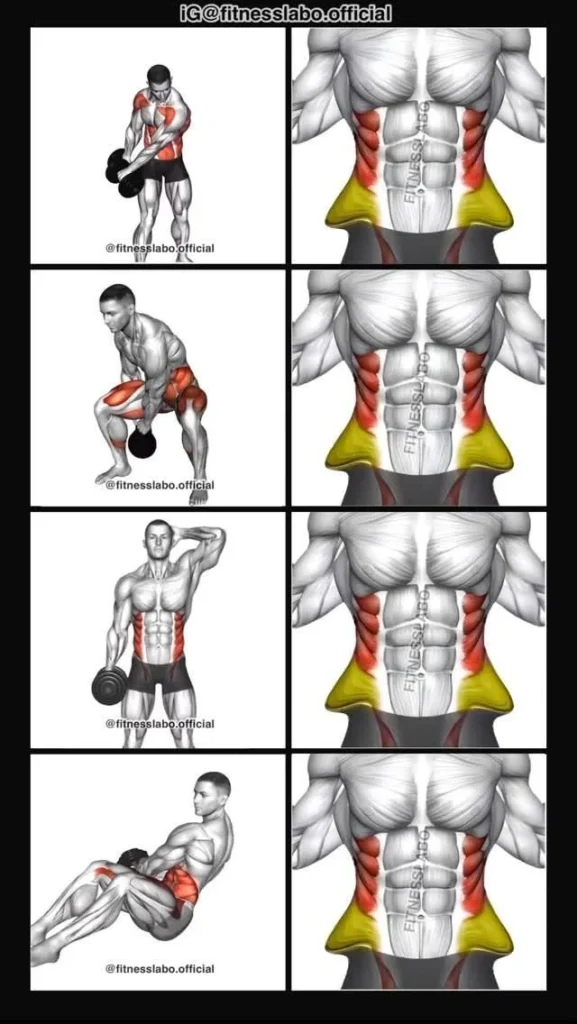
Effective exercises for achieving a slim waist including side bends and Russian twists

「「𝗙𝗜𝗧𝗡𝗘𝗦𝗦𝗟𝗔𝗕𝗢 on Instagram: “✅ How to Get a Slim Waist ① Spell Caster ② Physique 8 ③ Side Bend ④ Russian Twist 3 sets 15-20 reps #fitness #gym #ex…」[動画]」[動画]【2025】 | 腹筋のルーティン, 腹部のエクササイズ, ジムのエクササイズ

Slim Waist Routine (2025) — A Practical Guide to the Instagram 4-Move Ab Circuit

A popular Instagram clip from FITNESSLABO recently circled the feed with a compact four-move abdominal circuit promising a slimmer waist: Spell Caster, Physique 8, Side Bend, and Russian Twist — 3 sets of 15–20 reps each. It’s a simple, high-volume routine that can be done in the gym or at home with minimal equipment. Before you start, make sure you’re following a basic gym-safety routine to protect your back and joints — here’s a useful gym safety checklist to review first.

Below is a practical breakdown of each move, coaching cues, and ways to scale the circuit so it’s effective and safe.

The four-move circuit — what each exercise does and how to perform it

  1. Spell Caster

    • What it targets: anti-rotation and transverse abdominis engagement; trains core stability through standing rotation.
    • How to do it: Stand feet hip-width apart, hold a light weight or medicine ball at chest level. Rotate your torso slowly to one side while maintaining a braced core, then return to center and rotate to the other side. Think of “casting” the weight across your body in a controlled arc.
    • Tips: Keep hips relatively stable; avoid using momentum. Maintain neutral spine and breathe steadily.
  2. Physique 8

    • What it targets: lower abs and hip control with a figure-8 leg pathway.
    • How to do it: Lie on your back, lift legs slightly off the floor. Move the legs in a slow figure-eight pattern, focusing on controlled motion from the hips and lower abs rather than momentum from the legs.
    • Tips: Keep the lower back gently pressed into the floor; if you feel arching, raise the legs a little higher or reduce range of motion.
  3. Side Bend

    • What it targets: obliques and lateral flexors.
    • How to do it: Standing or seated, hold a dumbbell in one hand and lower it toward the knee on the same side by bending at the waist, then return to upright. Repeat for reps and switch sides.
    • Tips: Don’t rush through reps; avoid rotating the torso — aim for pure lateral flexion. Use moderate weight to avoid compensations.
  4. Russian Twist

    • What it targets: rotational strength for the obliques and the entire core.
    • How to do it: Sit with knees bent and heels near the floor, lean back slightly to engage the core, hold a weight or medicine ball and rotate the torso from side to side. Move with control and full breathing.
    • Tips: Keep shoulders relaxed and spine tall; if lower back discomfort appears, reduce range of motion or perform the movement with feet on the floor.

Routine format: 3 sets × 15–20 reps per exercise. Rest 45–60 seconds between sets. Adjust reps and load based on form quality — perfect reps win over high rep counts.

Programming, progressions, and alternatives

  • Frequency: 2–4 core-focused sessions per week is sufficient. Combine this circuit with compound lifts and cardiovascular work for best results in waistline reduction.
  • Progressive overload: Add weight, slow the tempo, or increase time-under-tension before increasing reps. For example, hold a longer isometric pause at the end range of a Spell Caster or perform slow 3–4 second eccentrics on the Physique 8.
  • Regressions: Reduce range of motion, perform fewer reps per set (8–12), or substitute seated or supported versions of the moves until you build strength.
  • Variations: To add variety and build rotational power, consider resisted alternatives such as band rotations. A helpful band twist tutorial explains safe progressions and cues for using bands to strengthen the core while protecting the spine.

Common mistakes to avoid: swinging the weight, holding breath, flaring ribs, and letting the lower back dominate the movement. Quality reps at moderate intensity beat sloppy high-volume sets.

Sample 12-minute circuit (beginner to intermediate)

  • Warm-up: 3 minutes — light cardio + dynamic hip and thoracic mobility
  • Circuit: Perform each exercise back-to-back (15 reps each), rest 60 seconds after the four exercises, repeat for 3 rounds.
  • Cool-down: 2–3 minutes — gentle stretching and diaphragmatic breathing

This short, focused training session fits easily into most workout schedules and reinforces core stability, rotational control, and oblique strength — all contributing to a tighter waistline when combined with nutrition and overall fat-loss strategies.

Conclusion

The Spell Caster → Physique 8 → Side Bend → Russian Twist circuit is a practical, time-efficient way to train your core. Prioritize correct technique, progressive overload, and gym safety. When done consistently alongside a sensible diet and full-body training, these exercises can help sculpt a leaner midsection.

「「𝗙𝗜𝗧𝗡𝗘𝗦𝗦𝗟𝗔𝗕𝗢 on Instagram: “✅ How to Get a Slim Waist ① Spell Caster ② Physique 8 ③ Side Bend ④ Russian Twist 3 sets 15-20 reps #fitness #gym #ex…」[動画]」[動画]【2025】 | 腹筋のルーティン, 腹部のエクササイズ, ジムのエクササイズ Read More »

, , , ,
Flat belly workout exercises for a toned midsection.

ボード「Flat belly workout」のピン

From a Pin to a Plan: Building a Realistic Flat-Belly Workout Routine

A single pin on a board labeled "Flat belly workout" can spark a lot of ideas — short circuits, exotic moves, and the promise of quick results. But turning inspiration into sustainable progress requires context: efficient exercises, consistent habits, realistic expectations, and an understanding of common fitness myths. If you clicked on that pin hoping for an instant transformation, start here with a practical path from pin to plan. For a deeper look at why some promises are misleading, see this explanation of the spot reduction myth.

Why a Pinterest Pin Isn’t a Complete Plan

Pins are visual and motivating, but they usually lack critical details: progression, frequency, nutrition, and recovery. A balanced approach addresses:

  • Strength (to shape and support your core)
  • Cardiovascular fitness (to help with overall fat loss)
  • Mobility and posture (so your results look and feel functional)
  • Nutrition and sleep (which drive body composition changes)

Keep in mind that visible abdominal definition is affected by overall body fat, genetics, and hormone balances — not only by which abs moves you do.

Core Principles for a Real Flat-Belly Routine

Follow these principles rather than copying random sequences from pins:

  • Progressive overload: increase difficulty or volume over time.
  • Multi-planar movement: include anti-flexion (planks), anti-rotation (pallof presses), and loaded carries, not just crunches.
  • Consistency over intensity: short, frequent sessions beat sporadic extremes.
  • Diet quality and caloric balance: moderate calorie control and protein support muscle retention.

If you want a science-based debunking of quick fixes and myths linked to core workouts, refer to this clear overview: why spot reduction is a myth.

A Simple Weekly Template (Beginner to Intermediate)

Aim for 3–5 sessions per week, mixing core-focused work with full-body strength and cardio:

  • Day 1 — Full-body strength + 8–12 min core finisher (plank progressions, dead bugs)
  • Day 2 — Low-intensity steady-state cardio or active recovery
  • Day 3 — HIIT (15–20 minutes) + loaded carries (farmer carries)
  • Day 4 — Mobility/yoga and breathing work
  • Day 5 — Strength emphasis (squats/hinges) + anti-rotation/core stability
  • Weekend — Light activity, walks, and nutrition planning

Sample core finisher (10 minutes):

  • 45s plank, 15s rest
  • 30s dead bugs, 15s rest
  • 30s side plank (each side), 15s rest
  • 60s farmer carry (or suitcase carry)
    Repeat until 10 minutes is reached. These moves build tension and transfer to real-life posture better than endless sit-ups.

Nutrition, Recovery, and Lifestyle

Abdominal appearance is highly sensitive to body fat and bloating:

  • Aim for a modest calorie deficit or maintenance with body-composition-focused goals.
  • Prioritize protein (1.2–1.8 g/kg bodyweight) and whole foods for satiety.
  • Hydrate and reduce sodium-heavy processed foods to minimize bloating.
  • Sleep 7–9 hours — poor sleep increases cravings and slows recovery.
  • Manage stress; chronic cortisol elevation can affect abdominal fat distribution.

Common Pitfalls to Avoid

  • Chasing 6-pack-only moves: Core strength is more than aesthetics.
  • Expecting rapid change from brief viral workouts.
  • Ignoring posture and breathing: diaphragmatic breathing and pelvic control matter.
  • Overtraining the abs: they recover like other muscles and need rest.

Practical Tips for Turning Pins into Progress

  • Save the pin as a reference, then build a weekly plan incorporating its best elements.
  • Track progress with photos, performance metrics (plank hold time, loaded carry distance), and measurements, not just scale weight.
  • Use variety: rotate exercises every 4–6 weeks to keep strength and motivation improving.
  • Work with coaches or reputable resources when unsure about form or programming.

Conclusion

If a Pinterest board kickstarted your journey, convert that inspiration into a balanced routine combining strength, cardio, recovery, and sensible nutrition. For curated programs and quick-start products that some people use to supplement a structured plan, consider checking the Hot flat tummy in 7 days Store.

ボード「Flat belly workout」のピン Read More »

, , , ,
Scroll to Top