Calisthenics

Calisthenics training for muscle growth and overcoming common mistakes.

Calisthenics Muscle Growth: The Hidden Mistakes Killing Your Progress

Calisthenics Growth Killers

Calisthenics builds strength and size without a gym, but many athletes stall because of small, avoidable mistakes. This article pinpoints the hidden errors that quietly kill your muscle growth and gives practical fixes so you can start making consistent progress again. For a quick nutrition tip, consider how lean protein choices affect recovery and synthesis: lean meat boosts post-workout protein synthesis.

Calisthenics Muscle Growth: The Hidden Mistakes Killing Your Progress

Why progress stalls

  • Failure to apply progressive overload. Bodyweight training still needs gradual increases in tension, volume, or difficulty. Doing the same reps and routines week after week won’t drive growth.
  • Poor exercise selection. Relying on variations that don’t sufficiently load target muscles (e.g., light-range push-ups instead of weighted or advanced push variations) limits stimulus.
  • Neglecting volume and frequency. Calisthenics lifters often underdo total weekly sets for hypertrophy because single-session rep counts look high, but overall weekly stimulus remains low.

Form, range, and tempo

  • Rushed reps and short ranges reduce muscle tension. Slow eccentrics and full range-of-motion reps amplify hypertrophic signaling.
  • Skipping progressions. Instead of forcing a skill-level move repeatedly, use regressions that let you hit quality volume (e.g., ring rows, incline variations, or negatives).
  • Ignoring eccentric and isometric loading. Incorporate controlled negatives and holds to increase time under tension without needing heavy external load.

Programming mistakes

  • No plan for periodization. Rotate intensity, volume, and focus (strength vs hypertrophy) across weeks to prevent stagnation.
  • Random exercise mixing. Track what works; repeat and gradually intensify proven progressions rather than constantly switching for novelty.
  • Underestimating recovery. Without adequate sleep and deload periods, the nervous system and muscles fail to adapt.

Nutrition and calories

  • Under-eating. Many calisthenics athletes assume bodyweight training needs less fuel — in reality, growth requires a caloric surplus or at least maintenance with optimal protein.
  • Protein neglect. Aim for 0.7–1.0 g per pound of bodyweight (1.6–2.2 g/kg). If you struggle to hit targets, use practical strategies like the ones in 10 easy ways to increase your protein intake.
  • Timing and distribution. Spread protein across meals and include a quality source after training to support repair and synthesis.

Common training anti-patterns

  • Doing endless skill practice but no hypertrophy work. Skills improve neural efficiency but don’t always deliver enough volume for muscle growth.
  • Chasing high reps only. Extremely high reps can build endurance but may not maximize hypertrophy unless matched with progressive overload.
  • Skipping accessory work. Small isolation-style pulls/pushes and unilateral exercises correct imbalances and increase total volume.

Tracking and adjustments

  • Not measuring progress. Track sets, reps, tempo, and perceived effort. If you aren’t improving one of those metrics, change something.
  • Waiting too long to adjust. If 4–6 weeks of consistent effort yields no improvement, alter load, volume, or nutrition.
  • Overdoing everything at once. Change one variable at a time (e.g., increase weekly sets by 10–20%) to find what drives gains without burning out.

Quick, practical tweaks to restart growth

  • Add small, weekly progression steps: extra rep, added tempo, or harder variation.
  • Schedule 2–3 hypertrophy-focused sessions weekly with 8–20 total weekly sets per muscle group depending on experience.
  • Prioritize sleep, protein, and a modest calorie surplus if your goal is size.
  • Use negatives, holds, and tempo work to increase intensity without weights.
  • Track workouts and body measurements to objectively assess progress.

Calisthenics Muscle Growth: The Hidden Mistakes Killing Your Progress

Conclusion

If your calisthenics gains have plateaued, revisiting these common pitfalls is the fastest path back to progress. For a focused breakdown of mistakes that stop progress and how to fix them, see 9 Mistakes Why You are Not Making ANY Progress with Calisthenics …

Calisthenics Muscle Growth: The Hidden Mistakes Killing Your Progress Read More »

, , , ,
Diagram showing calisthenics levels for mastering push-ups from beginner to advanced

5 Calisthenics Levels to Master Push-Ups — From Beginner to Pro

Push-Up Progression: 5 Levels to Go From Zero to One-Arm

Push-ups are more than a single exercise — they’re a scalable skill that builds strength, stability, and coordination. This guide breaks push-up mastery into five clear calisthenics levels with progressions, cues, and sample sets so you can train deliberately and avoid plateaus. If you’re just starting, check this new-to-bodyweight training guide for fundamentals on mobility and form before diving in.

5 Calisthenics Levels to Master Push-Ups — From Beginner to Pro

How to use this progression

  • Train the level you can perform with perfect form for the prescribed sets and reps.
  • Move up when you can complete every set with control and full range of motion for two consecutive workouts.
  • Include 1–2 push-up-focused sessions per week and accessory pulling work to maintain balance.

Level 1 — Foundation: Wall & Incline Push-Ups

Goal: Learn scapular control, hollow body tension, and full elbow extension.

  • Progressions: wall push-ups → knee incline on a counter → low table incline.
  • Cues: keep a straight line from head to hips, retract shoulder blades at the top, protract slightly at the bottom.
  • Sample workout: 3 sets of 10–15 wall or incline reps, tempo 2s down / 1s up.
  • Common mistakes: collapsing through the midline, flared elbows. Fix with core bracing and narrower hand placement.

Level 2 — Vertical Strength: Knee & Assisted Push-Ups

Goal: Add load while keeping strict form; start building full-range chest and triceps strength.

  • Progressions: knee push-ups → band-assisted full push-ups.
  • Cues: maintain a rigid plank, lead with chest (not shoulders), breathe out on the press.
  • Sample workout: 4 sets of 8–12 knee or band-assisted reps, focus on slow negatives.
  • Tip: Pair with posterior-chain work (planks, deadbugs) to preserve posture.

Level 3 — Standard Push-Up (Full Bodyweight)

Goal: Perform multiple strict full push-ups with solid technique.

  • Progressions: half reps → full reps → tempo variations (slow descent).
  • Cues: hands under chest, slight forward lean, tight lats to avoid shoulder collapse.
  • Sample workout: 5 sets of 6–12 strict push-ups or AMRAP sets for conditioning.
  • Nutrition note: recovery and muscle repair benefit from quality protein in the morning — try a protein-packed meal like this low-carb burrito bowl after training.
  • Troubleshooting: If your shoulders fatigue first, reduce range or add scapular pull-ups to strengthen retractors.

Level 4 — Uneven & Explosive Variations

Goal: Create unilateral strength and power transfer — archer push-ups, pseudo planche lean push-ups, clap push-ups.

  • Progressions: elevated feet push-ups → archer/uneven → explosive push-ups.
  • Cues: maintain torso stiffness during single-side loading; land softly on explosive moves.
  • Sample workout: 4 sets of 6–10 per side (archer or uneven), or 3–5 explosive sets of 4–6 reps.
  • Accessory work: triceps-dips, straight-arm planche leans, and core anti-rotation drills.

Level 5 — Advanced Mastery: One-Arm & Planche Push-Ups

Goal: Maximal unilateral strength and static control under extreme leverage.

  • Progressions: deep pseudo planche → assisted one-arm negatives → full one-arm push-ups/planche push-ups.
  • Cues: full body tension, hips aligned with shoulders, elbow tracking close to the body for one-arm.
  • Sample workout: Skill-focused sessions — e.g., 5–8 assisted negatives, 3–5 focused sets of high-quality one-arm practice, plus careful recovery.
  • Programming tip: Rotate intensity and volume across weeks. Advanced moves demand more recovery — use lower frequency with high quality.

Training Principles to Remember

  • Form over ego: volume and progressions only work if technique is perfect.
  • Small, consistent progressions beat giant leaps. Increase difficulty by adjusting angle, leverage, or adding resistance.
  • Balance push work with pulling and posterior chain exercises to prevent imbalances and shoulder pain.

5 Calisthenics Levels to Master Push-Ups — From Beginner to Pro

Conclusion

Ready to expand your entire calisthenics vocabulary beyond push-ups? Explore a comprehensive resource for progressions and skills with the Complete Calisthenics Skills List – 40+ Exercises from Beginner to Pro. This list gives ideas for accessory work, mobility drills, and next-level goals to pair with the push-up levels outlined above.

5 Calisthenics Levels to Master Push-Ups — From Beginner to Pro Read More »

, , , ,
Person demonstrating calisthenics hacks for a stronger physique

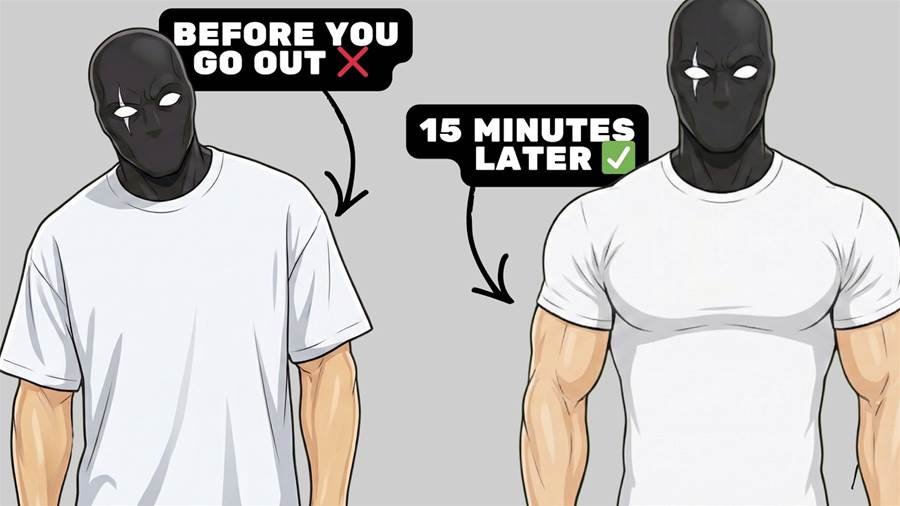
5 Calisthenics Hacks to Look 10lbs Bigger (Instantly)

Instant Size: 5 Calisthenics Hacks to Look 10 lbs Bigger

Want to look fuller and more muscular using only bodyweight moves and smart styling? These five practical calisthenics hacks add immediate visual mass and lasting density to your frame — no bulky gym machines required. If you’re just starting out, this beginner calisthenics guide can help you get the basics down before applying the tips below.

5 Calisthenics Hacks to Look 10lbs Bigger (Instantly)

  1. Prioritize upper-body breadth with horizontal volume
    Do more horizontal pressing and rowing to widen the chest and back. Superset push-up variations (wide, archer, and pseudo planche) with bodyweight rows to create a thicker torso. Aim for medium-high reps with short rest (8–15 reps, 3–5 sets) to pump the muscles — the immediate fullness makes you read as heavier on camera and in person.

  2. Use posture and bracing to add mass instantly
    Stand tall, pull your shoulders slightly back, and brace your core before photos or meetings. A small scapular retraction plus a proud chest increases perceived width and projects a heavier silhouette without changing bodyweight. Practice diaphragmatic breathing to maintain a natural, not forced, look.

  3. Smart layering, clothes, and optics
    Wear slightly structured tops (light jackets, henleys, or tees with shoulder seams that sit correctly). Darker colors on the torso with lighter sleeves can broaden shoulders visually. Horizontal textures (subtle stripes, ribbed fabrics) and garments with minimal taper through the waist help add immediate presence.

  4. Build denser legs to create a thicker overall frame
    Thicker legs change how weight distributes visually. Focus on higher-volume unilateral and compound lower-body bodyweight work — deep lunges, pistol progressions, and step-ups. If balance is a challenge, check these Bulgarian split squat alternatives for options that add leg mass without falling over. Finish sessions with slow, controlled eccentrics to promote muscle thickness.

  5. Pump and timing: train before events or photos
    A light, high-rep upper-body circuit 20–40 minutes before a photo or social occasion creates a vascular, pumped look that reads heavier. Use timed sets (30–45 seconds per exercise) of push-ups, rows, and dips; finish with brief isometric holds for shoulder and chest tension.

Quick training and diet notes

  • To maintain the “look heavier” effect long-term, combine these hacks with a modest calorie surplus focused on protein (0.7–1.0 g/lb of bodyweight) and progressive bodyweight overload.
  • Focus on slow eccentrics and time under tension to increase muscle density without heavy weights.
  • Mobility and posture work prevent tightness as you build size — better posture equals better perceived mass.

5 Calisthenics Hacks to Look 10lbs Bigger (Instantly)

Conclusion

Apply these five hacks together — training, posture, clothing choices, and pre-event pumping — and you can look noticeably bigger instantly while building genuine, dense muscle over time. For athletes and older lifters wanting advice on long-term training adjustments and recovery strategies, see this helpful resource: 5 Things Aging Runners Need To Do In Your 50s, 60s, and Beyond …

5 Calisthenics Hacks to Look 10lbs Bigger (Instantly) Read More »

, , , ,
Exercises for building muscle and strength in skinny arms using calisthenics.

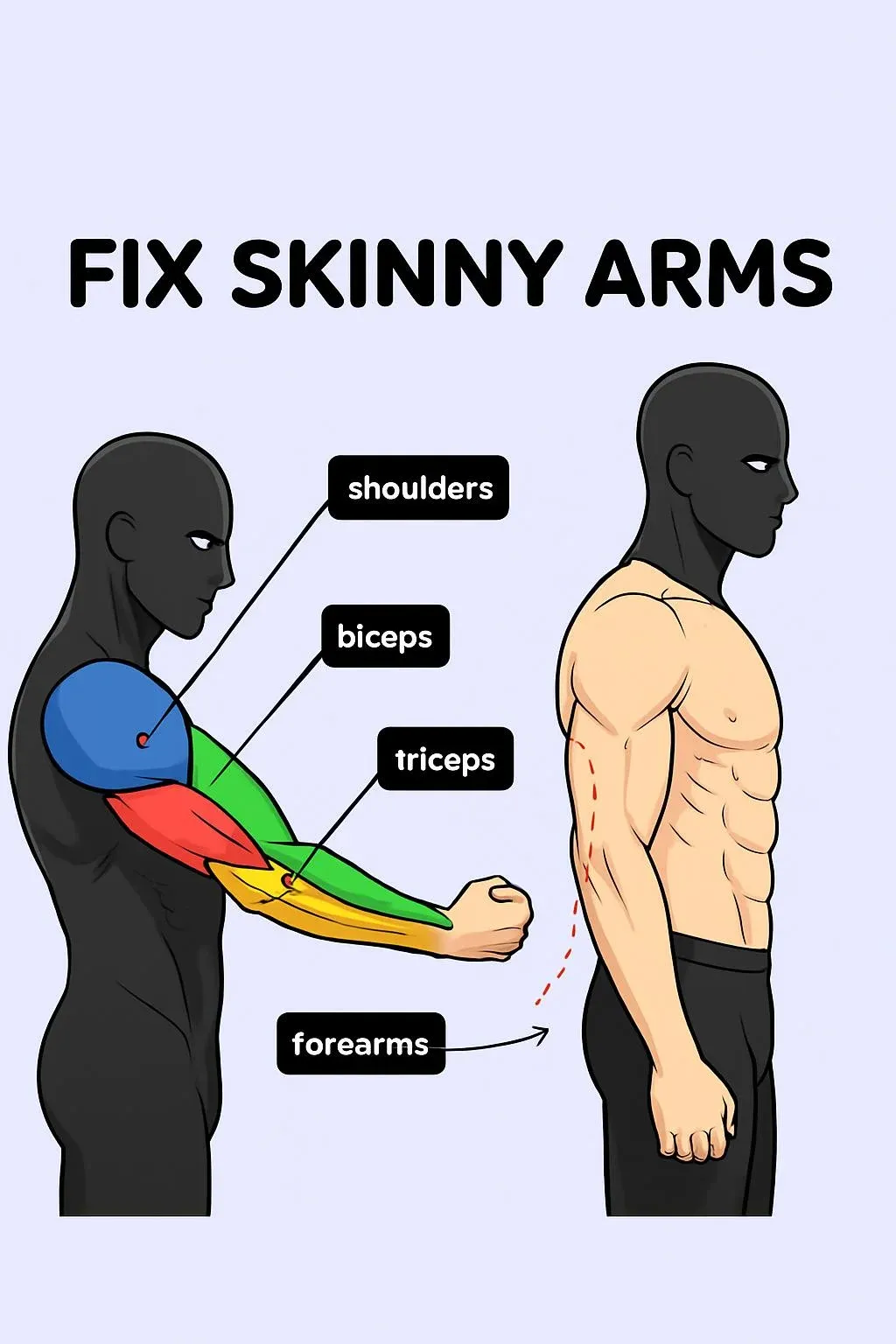
Skinny Arms? Do THIS Calisthenics Fix

Title: Arm Gain Blueprint: Calisthenics Fix for Skinny Arms

Skinny arms usually mean you haven’t yet given your muscles the right stimulus, volume, or nutrition to grow. With targeted calisthenics and a few smart adjustments to your routine, you can add visible size and shape to your arms without weights — focusing on progressive difficulty, smart rep ranges, and consistent eating.

Skinny Arms? Do THIS Calisthenics Fix

Why calisthenics works for arm size
Calisthenics trains muscle through full-body tension and joint-friendly movement patterns. For arm growth you’ll emphasize pushing and pulling variations that overload the biceps, triceps, and forearms in different ways. To maximize gains, combine direct arm work with compound upper-body moves and ensure progressive overload over weeks. For ideas on building complementary upper-body strength, check out this guide to 5 must-do back moves — a stronger back helps you pull harder and stimulate arm growth.

Core principles of the calisthenics arm program

  • Progressive difficulty: Move from easier to harder variations (e.g., incline push-ups → regular push-ups → diamond push-ups → deficit or weighted push-ups).
  • Volume and frequency: Train arms directly 2–3 times per week with 8–20 sets per muscle group weekly, divided across sessions.
  • Time under tension: Slow down eccentrics (3–4 seconds down) to increase stimulus.
  • Balanced push/pull: Pair triceps-focused push work with biceps-focused pulls for symmetrical growth.

Key bodyweight exercises and how to progress

  • Triceps
    • Bench/Incline push-ups → Regular push-ups → Diamond push-ups → Archer/One-arm assisted push-ups.
    • Bench dips → Elevated dips → Straight bar dips.
  • Biceps
    • Australian/inverted rows with underhand grip → Feet-elevated rows → One-arm rows (assisted) → Towel or ring curls (using horizontal pulling leverage).
  • Forearms
    • Fingertip push-ups → Supported fingertip holds → Towel hangs and wrist rotations.
  • Complementary upper-body moves
    • Chin-ups (underhand) are excellent for biceps size; work weighted or higher-rep sets as strength allows.

Sample 6-week progression (twice-weekly direct arm focus)
Week 1–2: Build base — 3 sets per exercise, 8–12 reps, focus on form.
Week 3–4: Increase volume — 4–5 sets, 10–15 reps, add harder variations.
Week 5–6: Intensify — incorporate negatives, paused reps, and assisted one-arm work; aim for 6–10 quality sets per muscle group per session.

Nutrition and recovery (eat to grow)
You won’t add arm size without a caloric surplus and sufficient protein. Aim for roughly +200–400 kcal per day above maintenance and 0.7–1.0 g protein per pound of bodyweight. Smart snacks and small, frequent meals can help you meet calories without discomfort — for convenient ideas, see these healthy snack options that can be adapted to a muscle-building plan. Prioritize sleep (7–9 hours) and rest days; muscles grow between workouts, not during them.

Technique tips and troubleshooting

  • If you stall, add volume first, then increase difficulty.
  • Keep joint-friendly ranges — stop if you feel sharp pain; discomfort should be muscular burn, not joint strain.
  • Track workouts: record variations, sets, reps, and tempo so you can force progressive overload every 1–2 weeks.
  • Use partials and negatives if you can’t yet perform full reps of a harder variation.

Quick weekly template

  • Day A: Push emphasis (diamond push-ups, dips, core)
  • Day B: Pull emphasis (chin-ups/rows, curls variations, grip work)
  • Day C: Full upper-body light day (higher reps, tempo work)
    Rotate and adjust intensity; aim to stimulate arms multiple times without crushing recovery.

Skinny Arms? Do THIS Calisthenics Fix

Conclusion

If you want a deeper discussion about structuring a calisthenic-only plan specifically for someone who’s skinny-fat or aiming to pack on muscle, check out this detailed community answer on what kind of a calisthenic-only workout a skinny-fat guy should follow.

Skinny Arms? Do THIS Calisthenics Fix Read More »

, , , ,
Person performing calisthenics and dumbbell exercises for 3D shoulders

Build 3D Shoulders — 2 Proven Methods: Calisthenics vs Dumbbells

Title: Sculpted Shoulders: Calisthenics vs Dumbbells

Build 3D shoulders that turn heads by focusing on width, thickness, and roundness — not just size. Whether you prefer bodyweight mastery or weighted precision, each approach offers unique tools to develop deltoid caps, rear delts, and stabilizers for true three-dimensional shape. For an actionable plan to get started, check this guide on how to build 3D shoulders quickly and safely: Get 3D Shoulders — Build Strength & Definition Fast.

Build 3D Shoulders — 2 Proven Methods: Calisthenics vs Dumbbells

Why 3D Shoulders Matter

  • Aesthetics: Round, full shoulders create the V-taper that makes the upper body look broader and more athletic.
  • Function: Strong deltoids improve pressing strength, shoulder stability, and injury resilience.
  • Balance: Proper shoulder development reduces posture issues and complements chest and back work.

Calisthenics: Build Shape with Bodyweight Mastery
Calisthenics builds shoulder density and control by training movement patterns, scapular stability, and unilateral balance. Key moves:

  • Pike Push-Ups / Elevated Pike Push-Ups — great for vertical pressing mechanics and progressive overload.
  • Handstand Push-Ups (HSPU) — the gold standard for bodyweight vertical pressing once you’ve built strength.
  • Archer/Typewriter Push-Ups — emphasize unilateral loading and outer deltoid stretch.
  • Spider Push-Ups and Planche Progressions — increase shoulder tension and front delt activation.
    Programming tips:
  • Progress gradually: increase elevation, add internal tempo, or use weighted vests to advance.
  • Frequency: 2–3 shoulder-focused sessions/week with 3–5 total sets per exercise.
  • Rep ranges: 6–12 for strength-focused moves (HSPU), 8–20 for hypertrophy-style variations (pike, archer).
    Calisthenics also forces you to improve stability and scapular control, which transfers to better pressing forms with weights.

Dumbbells: Targeted Shape and Isolation
Dumbbells let you isolate heads, adjust load precisely, and attack weak spots.
Key moves:

  • Seated/Standing Dumbbell Overhead Press — builds thick delts and improves unilateral balance.
  • Lateral Raises (strict and partials) — add width by targeting the middle deltoid.
  • Rear Delt Flyes / Reverse Pec Deck — carve the posterior shoulder for true roundness.
  • Incline Front Raises / Arnold Press — emphasize front delts and rotational stability.
    Programming tips:
  • Use a mix of heavy compound pressing (4–6 reps) and higher-rep isolation (10–20 reps).
  • Incorporate unilateral work (single-arm presses) to fix left/right imbalances.
  • Tempo: slow negatives (2–4s) on raises increase time under tension for hypertrophy.
    Pair dumbbell training with compound barbell movements occasionally for maximal overload.

Balancing Both Worlds
You don’t have to choose one exclusively. Many lifters get the best results by combining calisthenics for control and stability with dumbbells for targeted hypertrophy.

  • Example split: Calisthenics vertical pressing + core on Day A; Dumbbell press + raises on Day B.
  • Keep recovery in mind: shoulders are used in many upper-body movements, so avoid overtraining.
    Also remember to train legs and posterior chain — strong foundations reduce injury risk and improve overall symmetry. Complement shoulder work with lower-body strength routines like those in this practical thigh development guide: Thigh Muscles — 10 Proven Steps to Build Rock-Solid Legs.

Sample Routines
Calisthenics-Focused (3x/week)

  • Warm-up: banded shoulder circles, scapular push-ups
  • Elevated Pike Push-Ups: 4 x 6–12
  • L-Sit to HSPU progressions (or negatives): 3 x 5–8
  • Archer Push-Ups: 3 x 6–10 each side
  • Face Pulls with band: 3 x 12–15

Dumbbell-Focused (3x/week)

  • Warm-up: light dumbbell presses, shoulder dislocations
  • Dumbbell Overhead Press: 4 x 5–8
  • Lateral Raises (strict): 4 x 10–15
  • Single-Arm Rear Delt Fly: 3 x 12–15
  • Farmer Carry or Suitcase Carry for stability: 3 x 30–60s

Nutrition & Recovery

  • Aim for a slight calorie surplus (+200–300 kcal) with 0.7–1.0 g protein per lb of bodyweight for growth.
  • Prioritize sleep, mobility work, and deload weeks every 6–8 weeks.
  • Track progress with photos and strength markers (e.g., increased reps on HSPU or more load on overhead presses).

Build 3D Shoulders — 2 Proven Methods: Calisthenics vs Dumbbells

Conclusion

Both calisthenics and dumbbells are proven methods to build 3D shoulders; choosing one—or combining them—depends on your goals, equipment, and training preferences. For an in-depth primer on bodyweight progression and how calisthenics can transform your shoulder development, read this complete guide to calisthenics: Calisthenics: Everything You Need To Know.

Build 3D Shoulders — 2 Proven Methods: Calisthenics vs Dumbbells Read More »

, , , ,
Man demonstrating a pushup, showcasing strength training techniques.

You CAN do pushups, my dude (feat. Hybrid Calisthenics)

Pushups Unlocked

Get off the sidelines — you CAN do pushups, my dude. Whether you’re just starting or coming back after a break, pushups are a scalable, effective movement that builds strength, posture, and confidence. This guide breaks down progressions, common mistakes, and simple programming so you can progress without overthinking it. Spot reduction myths won’t stop your gains; consistency will.

You CAN do pushups, my dude (feat. Hybrid Calisthenics)

Why pushups matter
Pushups train the chest, shoulders, triceps, and core while reinforcing good shoulder mechanics. They’re accessible, require no equipment, and transfer to many daily activities and sports. More than aesthetics, pushups improve posture and resilience against common upper-body injuries when done with control.

Getting started: regressions and setup

  • Wall pushups: stand facing a wall, hands shoulder-width, lean and push back. Great for absolute beginners.
  • Incline pushups: use a table or bench to reduce load.
  • Knee pushups: keep a straight line from knee to head; build confidence with full range of motion.

Key setup cues:

  • Hands under shoulders, fingers spread.
  • Tight core, neutral spine, glutes engaged.
  • Lower chest toward the floor as a unit; avoid letting hips sag.

Progressions to full pushup

  • Negative (eccentric) pushups: slowly lower for 3–5 seconds, then reset at the top.
  • Tempo sets: slow lowering, controlled pause, then explosive push.
  • Partial-to-full reps: start with partial range and gradually increase depth.

Programming tips

  • Start with quality over quantity: 3–5 sets of 5–12 controlled reps, 2–3 times per week.
  • Use a simple progression: if you can do 3 sets of 10 reps with good form, increase difficulty (reduce incline or add tempo).
  • Rest and recovery are part of the plan — muscles grow between sessions.

Common mistakes and how to fix them

  • Hips sagging: engage the core and glutes; imagine a straight plank line.
  • Flaring elbows: aim for elbows at ~45 degrees to protect shoulders.
  • Too fast: slow, controlled reps build strength and reduce injury risk.

Pushups and the core: what to expect
Pushups are a compound movement that challenges the core isometrically. Don’t expect pushups alone to reveal abs; overall diet and targeted training matter — beware of fitness myths like those about spot reduction. For a deeper dive into abdominal training misconceptions, check out myths about six-pack and how they relate to functional strength.

Adding variety once you’re strong

  • Diamond pushups for triceps emphasis.
  • Decline pushups to overload the shoulders.
  • Explosive/clap pushups for power.
  • Weighted or tempo variations for further progression.

Sample 8-week mini-plan
Weeks 1–2: Wall/incline work, focusing on form (3x/week).
Weeks 3–4: Move to knee/negative pushups, add eccentric control.
Weeks 5–6: Full pushup attempts, 3 sets of 5–8 reps.
Weeks 7–8: Introduce variations (tempo, decline, plyo) and increase volume slowly.

Troubleshooting plateaus

  • Deload for a week if progress stalls.
  • Track rep quality, not just numbers.
  • Add accessory work: plank holds, shoulder mobility, and triceps strengthening.

Motivation and mindset
Start where you are, not where you want to be. Small wins compound — celebrate the first full pushup, the first unbroken set, and the way you feel stronger and more capable.

You CAN do pushups, my dude (feat. Hybrid Calisthenics)

Conclusion

If you’re ready to translate bodyweight progress into pulling strength and complementary skills, read the guide You CAN Do Pullups, My Friend! — Hybrid Calisthenics for practical, progressive advice that pairs well with your pushup journey.

You CAN do pushups, my dude (feat. Hybrid Calisthenics) Read More »

, , , ,
Person performing exercises to achieve a WIDE V-Taper with dumbbells and calisthenics.

How to Build a WIDE V-Taper (Calisthenics OR Dumbbells)

Wide V-Taper Blueprint

Building a wide V-taper—broad shoulders and a narrow waist—comes down to targeted back and shoulder development, smart progressions, and consistent effort. Whether you prefer calisthenics or dumbbells, the same principles apply: emphasize lat width, upper-back thickness, and posture while keeping a tight, lean midsection.

How to Build a WIDE V-Taper (Calisthenics OR Dumbbells)

Why the V-Taper Works

A true V-taper combines expanded upper-back width (lats and rear delts), well-developed shoulder caps, and a slim waist. Prioritize exercises that pull your arms down and back while training the shoulder girdle to create visual breadth. Core stability is also crucial for transferring force and maintaining posture; consider adding banded core work to your routine like a focused band twist progression for better stability (band twist core routine).

Training Principles (Both Modalities)

  • Progressive overload: add reps, sets, or difficulty over weeks.
  • Vertical and horizontal pulls: mix pulling angles to hit lats and mid-back.
  • Frequency: train back and shoulders 2–3 times per week for best growth.
  • Form over ego: full range of motion and controlled negatives build width more than sloppy heavy reps.

Calisthenics Approach — Build Width Without Weights

Key calisthenics moves:

  • Australian rows/progressions: increase angle to make them harder and build mid-back thickness.
  • Wide-grip pull-ups and weighted pull-ups (as progressions): focus on initiating the pull with lats.
  • Archer pull-ups and typewriter pull-ups: great for unilateral overload and widening.
  • Front lever progressions: develop scapular control and lat strength.
  • Face pulls with bands and banded rear-delt raises: refine rear delts and posture.

Programming tips:

  • Use 3–5 sets per exercise, 6–12 reps (or time under tension for isometrics).
  • Add negatives and slow eccentrics for advanced progressions.
  • Include scapular pull-ups and active hang drills for shoulder health.

Dumbbell Approach — Simple, Effective Equipment-Based Workouts

Top dumbbell moves for a wide back and shoulders:

  • Single-arm dumbbell row (wide torso rotation emphasis): hit lats and create sweep.
  • Incline dumbbell rows: target upper lats and mid-back.
  • Dumbbell pullover: stretches and emphasizes the lats when done with control.
  • Lateral raises and seated rear-delt flyes: build shoulder width and rear-delt balance.
  • Renegade rows and dumbbell shrugs: add variety and thickness.

Programming tips:

  • Prioritize a heavy row movement first (3–5 sets of 6–10 reps) then higher-rep isolation.
  • Use unilateral work to correct imbalances and increase mind-muscle connection.

Sample Weekly Split (Intermediate)

  • Day 1 — Pull focus: Wide-grip pull-ups, single-arm dumbbell rows, face pulls
  • Day 2 — Push & shoulders: Overhead press, lateral raises, rear-delt work
  • Day 3 — Active recovery & core
  • Day 4 — Calisthenics strength: Archer pull-ups, front lever progressions
  • Day 5 — Volume back day: Higher-rep rows, pullovers, banded face pulls
  • Day 6 — Legs & posterior chain (keep legs strong to balance aesthetics)
  • Day 7 — Rest

Balance upper-body work with lower-body strength so you don’t develop disproportionally; stronger hips and posterior chain help posture and back thickness. For structured lower-body programming and glute development that complements upper-body symmetry, check this glute and leg guide (glute & leg growth guide).

Nutrition & Recovery

  • Aim for a slight caloric surplus if adding mass, or a slight deficit while maintaining protein to keep the waist lean.
  • Protein: ~0.7–1.0 g per lb of bodyweight.
  • Sleep and recovery: 7–9 hours per night and deloads every 6–8 weeks optimize growth.
  • Track progress with measurements and photos rather than only the scale.

How to Build a WIDE V-Taper (Calisthenics OR Dumbbells)

Conclusion

For a practical step-by-step dumbbell plan that targets width and shoulder development, see this comprehensive guide: The Best V-Taper Dumbbell Workout (Step By Step Guide) – Fitbod. Follow the principles above, stay consistent, and choose the modality—calisthenics or dumbbells—that you’ll stick with.

How to Build a WIDE V-Taper (Calisthenics OR Dumbbells) Read More »

, , , ,
Scroll to Top