
No Gym? No Problem — 5 Moves That Turn Any Beginner Into a Strength Machine
Strength Anywhere: 5 No‑Gym Moves to Get Strong
No gym? No problem. With just your body, a chair, and a doorframe you can build real strength, improve posture, and gain confidence. This short plan focuses on five foundational moves that scale for beginners and progress smoothly as you get stronger. If you like challenges, consider pairing these moves with structured programs like the Built Not Bought challenge to stay consistent.
Why these five? They cover the pushing, pulling, leg drive, hip hinge, and core stability you need to move well and add muscle without equipment. Aim to practice 3 times per week, rest at least one day between sessions, and prioritize form over reps.
How to use this article
- Warm up 5–8 minutes before starting (light cardio, joint circles, hip openers).
- Perform each move for 3 sets with the suggested reps or time; rest 60–90 seconds between sets.
- Increase difficulty by changing leverage, adding reps, slowing tempo, or moving to harder variations.
Move 1 — Push‑Up Progressions
- Why: Builds chest, shoulders, triceps, and core stability.
- Beginner option: Wall push‑ups — stand an arm’s length from the wall, hands at chest height, lower chest to the wall, press back.
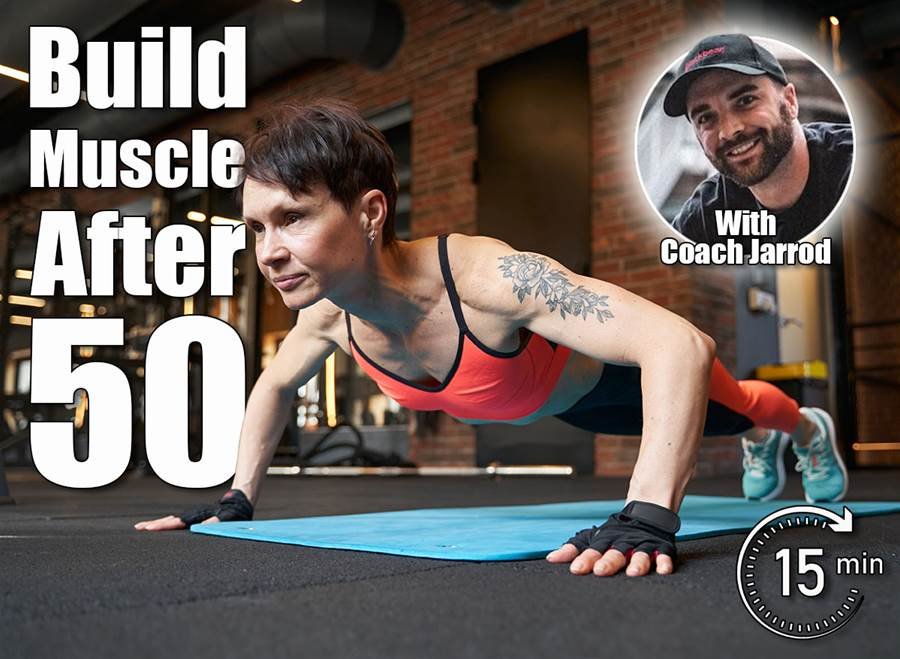
- Next step: Incline push‑ups (hands on a bench or sturdy table), then standard floor push‑ups.
- Cue: Keep a straight line from head to heels, avoid sagging hips.
- Rep guideline: 3 sets of 6–12 (or 20–40 seconds of slow, controlled reps for beginners).
Move 2 — Bodyweight Squat Variations
- Why: Trains quads, glutes, knees through healthy range of motion.
- Beginner option: Box or chair squats — sit back to a chair and stand without using momentum.
- Progressions: Narrow, standard, then wider stance; add tempo (3 seconds down, 1 up).
- Cue: Sit hips back, knees tracking toes, chest up.
- Rep guideline: 3 sets of 10–20 reps.
Move 3 — Hip Hinge: Single‑Leg Romanian Deadlift (RDL)
- Why: Trains posterior chain — hamstrings, glutes, and balance — critical for raw strength.
- Beginner option: Two‑leg RDL or Romanian deadlift to a chair for depth control.
- Progression: Move to single‑leg RDL, reaching opposite hand toward the floor while keeping a soft knee.
- Cue: Hinge at the hips, keep spine neutral, feel a stretch in the back of the standing leg.
- Rep guideline: 3 sets of 6–10 per leg.
Move 4 — Horizontal Pulls (Rows) — Doorframe/Inverted Row
- Why: Balances pushing work, strengthens the back and improves posture.
- Setup: Use a sturdy table edge or a low bar; for a doorframe row, loop a towel over the top and grip each end (be cautious — ensure stability).
- Beginner option: Tabletop rows with feet on the floor and knees bent.
- Progression: Lower the angle (feet straight) to make the row harder.
- Cue: Squeeze shoulder blades together, lead with the chest toward the hands.
- Rep guideline: 3 sets of 6–12.
For more focused back mechanics and drills, check out these targeted moves: 5 must-do back moves to build a massive back.
Move 5 — Triceps & Shoulders: Chair Dips + Plank Variations
- Why: Rounds out upper‑body pressing strength and core control.
- Chair dips: Hands on a sturdy chair, lower hips straight down and press up. Keep knees bent for beginners.
- Plank variations: Forearm plank, side planks, and plank shoulder taps to build anti‑rotation strength.
- Cue: Keep shoulders down and back during dips; maintain a neutral spine during planks.
- Rep guideline: Dips 3 sets of 6–12; planks 3 rounds of 20–60 seconds.
Quick workout example (full session)
- Warm‑up 5–8 minutes
- Circuit (3 rounds): 8–12 push‑ups (or progressions), 12–15 bodyweight squats, 8 single‑leg RDLs per side, 8–12 rows, 10 chair dips — rest 60–90s between rounds.
- Cool down: Hip and chest stretches, 3–5 minutes.
Progression tips
- Track reps and aim to add 1–2 reps per week or move to a harder variation once you can complete the high end of a rep range with good form.
- Manipulate tempo: slow the eccentric (lowering) phase to increase difficulty without more equipment.
- Add unilateral work (one leg/arm at a time) to build stability and strength asymmetrically.
Common mistakes to avoid
- Sacrificing form for reps — stop early and regress if form dips.
- Neglecting mobility — tight hips or shoulders limit effective range; add mobility drills.
- Too much too soon — strength is built consistently; prioritize progression over intensity spikes.
Conclusion
Ready to expand these five moves into full at‑home routines? For curated no‑equipment plans that pair well with this approach, see The 10 Best at Home Workouts (No-Equipment!) | Nerd Fitness.
No Gym? No Problem — 5 Moves That Turn Any Beginner Into a Strength Machine Read More »