
back workout

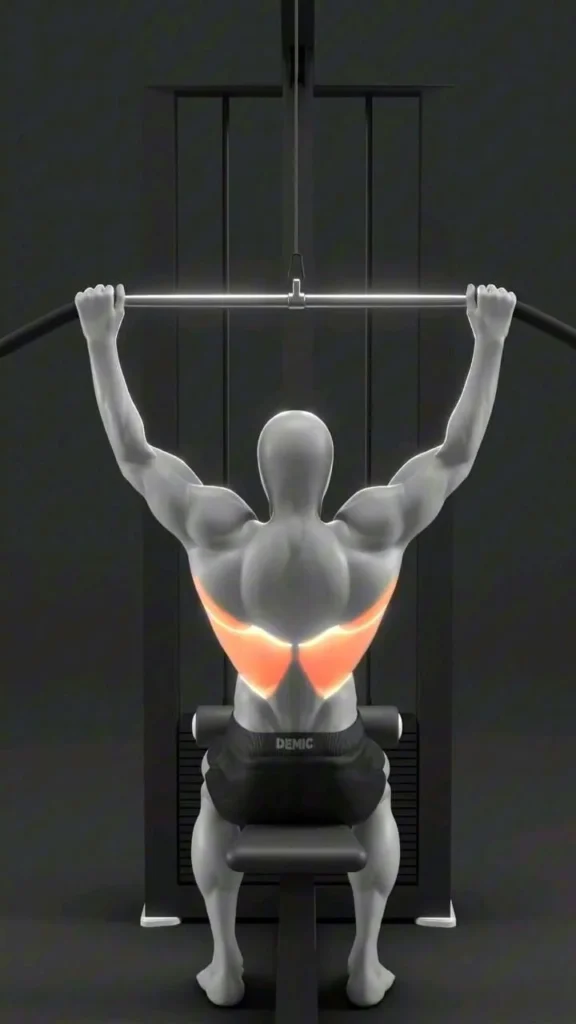
Person performing lat pulldowns to strengthen back muscles

Unlock the power of lat pulldowns for a stronger back!

Lat pulldowns are a fundamental back-builder;  ideal for anyone chasing a wider V-shape, better posture, and stronger pulling power. Whether you’re new to the gym or refining your routine, this quick guide breaks down the key benefits, smart technique tips, and a simple sample set to get immediate results.

Unlock the power of lat pulldowns for a stronger back! 💪 Here's a quick dive into the benefits and tips to get the most out of this exercise.
Benefits:Builds wide lats for that coveted V-shaped bac...

Introduction

  • Why lat pulldowns matter: They target the latissimus dorsi, reinforce scapular control, and transfer to improved performance in rows, pull-ups, and daily pulling tasks.
  • For balanced development, combine lat work with leg and lower-body training; check this Bulgarian split squat alternatives guide when planning full-body cycles.

Benefits

  • Wider lats and that V-taper: Lat pulldowns emphasize the outer fibers of the lats to broaden the back.
  • Strength and stability: Improved scapular retraction and shoulder extension for safer heavy lifts.
  • Scalable for all levels: Use lighter weight and higher reps or heavier weight for strength gains.
  • Posture improvement: Strengthening lats and upper back counters slouching from desk work.

How to perform an effective lat pulldown

  1. Setup: Sit tall, feet flat, chest lifted, knees secure under pads. Grip width matters; a slightly wider than shoulder-width grip emphasizes outer lats.
  2. Movement cue: Lead with your elbows, pull down to the upper chest while retracting your shoulder blades; avoid pulling with your hands or leaning back excessively.
  3. Tempo: 2 seconds down (concentric), 1–2 second squeeze at the bottom, 2–3 seconds controlled return.
  4. Rep ranges: 8–12 for hypertrophy, 5–8 for strength (heavier), 12–15+ for endurance or technique work.

Common mistakes to avoid

  • Using momentum: Excessive leaning or swinging removes tension from the lats.
  • Pulling to the stomach: Pull to the upper chest to maintain ideal lat activation.
  • Over-gripping: A death grip shifts work to forearms; focus on elbows driving the movement.
  • Skipping scapular retraction: Initiate each rep by pulling the shoulder blades down and together.

Programming tips

  • Frequency: 2x per week for most lifters; pair one heavier, lower-rep session with one higher-rep volume day.
  • Variation: Rotate grips (wide, neutral, underhand) to hit fibers differently and reduce joint strain.
  • Accessory pairing: Follow lat pulldowns with single-arm rows or face pulls to balance thickness and rear deltoid health; see advanced back routines like Damien Patrick’s Olympia back workout for ideas to progress width and thickness.

Sample lat-focused mini-workout

  • Warm-up: 5–8 minutes light cardio + band pull-aparts (2 sets of 15).
  • Lat pulldown: 4 sets; 12, 10, 8, 8 (increase weight as reps drop).
  • Single-arm cable row: 3 sets of 10–12 each side.
  • Straight-arm pulldown: 3 sets of 12–15 for lat stretch and finish.

Unlock the power of lat pulldowns for a stronger back! 💪 Here's a quick dive into the benefits and tips to get the most out of this exercise.
Benefits:Builds wide lats for that coveted V-shaped bac...

Conclusion

Want more movement ideas to build a toned back? Try these 4 Dumbbell Row Variations for a Toned Back to complement your lat pulldowns and accelerate width and detail.

Unlock the power of lat pulldowns for a stronger back! Read More »
, , , ,
Person performing a Lat Pulldown exercise in a gym setting

Lat Pulldown Workout

Lat Pulldown Workout: Build a Strong, Wide Back

The lat pulldown is a staple exercise for developing the latissimus dorsi (lats), improving posture, and increasing pulling strength for rows and pull-ups. Whether you’re a beginner or an experienced lifter, a well-structured lat pulldown workout can add width to your back and balance upper-body development. If you train full-body routines, lat pulldowns pair well with compound movements—see a suggested pairing in this 10 Best Full-Body Workouts guide.

Why the Lat Pulldown Matters

  • Targets the lats, teres major, and middle back muscles, helping create the coveted “V” taper.
  • Assists in improving posture by strengthening scapular depressors and retractors.
  • Transfers to functional and sport-specific movements like climbing, rowing, and pull-ups.
  • Scalable for beginners through advanced lifters using different grips and tempos.

Proper Technique: Step-by-Step

  1. Setup: Sit with knees secured under the pad, chest tall, and feet flat. Choose a grip width appropriate to the variation you’re performing.
  2. Grip and alignment: Hold the bar with a grip that’s slightly wider than shoulder-width for the classic wide pulldown. Keep shoulder blades pulled down and back before initiating the pull.
  3. The pull: Pull the bar down in a controlled arc to the upper chest (or slightly below chin for some variations). Lead with the elbows, not the hands, and maintain a slight backward lean from the hips—avoid excessive torso swinging.
  4. Lowering phase: Slowly return the bar to the starting position with control, allowing a full stretch in the lats without letting the weight stack slam.
  5. Breathing: Exhale while pulling down, inhale while returning to start.

Key cues: “Elbows to ribs,” “Chest up,” and “Slow on the negative.”

Variations to Target Different Angles

  • Wide-Grip Lat Pulldown: Emphasizes outer lats and width.
  • Close-Grip/Neutral-Grip Pulldown: Hits lower lats and biceps more.
  • Reverse (Underhand) Grip: Increases biceps involvement and can help lifters with elbow mobility.
  • Single-Arm Pulldown: Corrects left-right strength imbalances and improves scapular control.
  • Behind-the-Neck Pulldown: Not generally recommended due to shoulder stress—use caution and only if you have excellent mobility and supervision.

Programming: Sets, Reps, and Progression

  • Beginners: 3 sets of 8–12 reps with moderate weight and strict form.
  • Intermediate: 3–5 sets of 6–10 reps for strength, or 8–12 for hypertrophy. Add tempo variations (e.g., 2-1-3) to increase time under tension.
  • Advanced: Incorporate drop sets, supersets (e.g., with rows or face pulls), and single-arm work to break plateaus.

Lat pulldowns fit well into full-body or upper-body days. For busy schedules, you can include a focused lat pulldown superset in a time-efficient routine—see a practical template in this 20-Minute Full-Body Workout for Busy Schedules article.

Sample workouts:

  • Hypertrophy session: 4 sets x 10 reps (wide grip), superset with 3 sets x 12 single-arm cable rows.
  • Strength session: 5 sets x 5 reps (close grip), rest 2–3 minutes between sets.
  • Volume day: 3 sets x 8 (wide), 3 sets x 10 (reverse grip), finish with 2 drop sets.

Common Mistakes and Fixes

  • Using momentum: Reduce weight and focus on elbow drive to stay strict.
  • Pulling behind the neck: This can compromise shoulder health—pull to the chest instead.
  • Shrugging shoulders: Pre-activate scapular depression before each rep to shift tension to the lats.
  • Not achieving full range of motion: Allow a controlled stretch at the top and a full contraction at the bottom.

Accessory Exercises and Progressions

  • Assisted or banded pull-ups to transfer vertical pulling strength.
  • Bent-over rows and single-arm dumbbell rows to build mid-back thickness.
  • Face pulls and band pull-aparts to strengthen rear delts and improve shoulder stability.
  • Gradually reduce machine assistance or add weight to the stack while maintaining strict form for progression.

Modifications and Who Should Be Cautious

  • If you have shoulder impingement or limited overhead mobility, use neutral-grip handles or perform single-arm pulldowns to reduce strain.
  • Those with lower-back issues should avoid excessive leaning—focus on an upright torso and core bracing.
  • Always prioritize pain-free movement; stop if you feel sharp joint pain.

Safety Tips

  • Warm up with light rows and band pull-aparts to prime the scapular muscles.
  • Control the eccentric phase—don’t let the weight slam back up.
  • Use a full range of motion tailored to your mobility and training goals.
  • Keep a steady cadence and track progressive overload (weight, reps, or time under tension).

Conclusion

For a comprehensive how-to, variations, and safety considerations on the exercise, consult this detailed guide: Lat Pulldowns: Techniques, Benefits, Variations.

Lat Pulldown Workout Read More »

, , , ,
Person performing Smith Machine Row for back strength training

Smith Machine Row Techniques

Smith Machine Row Techniques

The Smith machine row is an accessible, stable choice for targeting the mid-back and lats while minimizing balance demands. By guiding the bar along a fixed vertical path, the Smith machine lets you focus on contraction, tempo, and position without worrying about barbell stability. Below are practical techniques, cueing, and programming tips to get the most from this exercise while avoiding common pitfalls.

Why use the Smith machine for rows?

  • Stability: The fixed bar path reduces the need for stabilizer recruitment, allowing heavier loads or focused muscle work.
  • Safety: Built-in catches and locking points make it easier to train near failure without a spotter.
  • Variety: Allows for grip and body-angle adjustments (e.g., torso angle, foot placement) that change emphasis across the back muscles.

Setup and starting position

  1. Bar height: Set the Smith bar so it sits at about knee height or slightly below when standing upright. This gives a natural pulling path that approximates a bent-over row.
  2. Foot placement: Stand with feet roughly hip-width apart. You can step forward slightly to allow more torso flexion and a fuller ROM.
  3. Torso angle: Hinge at the hips to roughly 30–45° from vertical for a classic row. More horizontal (closer to 90°) increases posterior chain demand.
  4. Grip: Use an overhand (pronated) grip for upper back emphasis; an underhand (supinated) grip shifts emphasis onto the lats and biceps. Grip width should be just outside shoulder width for balanced lat and rhomboid activation.
  5. Core and spine: Brace the core, keep a neutral spine, and maintain a fixed rib-to-pelvis relationship to avoid lumbar flexion.

Execution cues and technique

  • Initiate with the lats: Think about pulling your elbows back into your hips rather than pulling with your hands.
  • Elbow path: Drive elbows toward your lower ribs or hips (not straight out to the sides) to maximize lat engagement.
  • Shoulder blades: Pull your scapulae together at the top of the movement, pause 0.5–1.0s, then control the lowering phase.
  • Range of motion: Pull until your torso is close to vertical or until you achieve a strong contraction at the back—do not hyper-extend the shoulders.
  • Tempo: A common tempo is 2:0:1:2 (2s eccentric, no pause, 1s concentric, 2s isometric squeeze), though slower eccentrics increase time under tension.

Variations and when to use them

  • Chest-supported Smith rows: Lie face-down on an incline bench and row the Smith bar. Great for removing lower-back strain and isolating the mid-back.
  • Incline/decline foot placement: Stepping forward or backward changes torso angle and the bar path—experiment to feel different muscle emphasis.
  • Underhand (supinated) Smith rows: Use when you want more biceps and lower-lat drive.
  • Wide-grip Smith rows: Emphasizes upper traps and rear delts; keep elbows higher but avoid flaring too much.
  • Single-arm supported row with the Smith: Place one hand behind your back on a bench and row with the other for unilateral balance work.

Programming guidelines

  • Strength focus: 4–6 sets of 4–6 reps with heavier load and controlled tempo; longer rests (2–3 minutes).
  • Hypertrophy focus: 3–5 sets of 8–12 reps, 60–90s rest; emphasize full contraction and 2–3s eccentric.
  • Endurance/conditioning: 2–4 sets of 15–25 reps with lighter load and shorter rests.
  • Frequency: 1–3 back sessions per week depending on total training volume and recovery. Combine Smith rows with vertical pulls (pull-ups/lat pulldowns) and posterior-chain work for balanced development.

Common mistakes and how to fix them

  • Rounding the lower back: Fix by reducing range of motion or using a chest-supported variation and by reinforcing a strong core brace.
  • Using momentum: Slow the eccentric and control the concentric; think “pull with the elbows” to reduce arm-dominant movement.
  • Shrugging at the top: Drive elbows back into hips rather than elevating the shoulders; maintain scapular control.
  • Too narrow or too wide grip: Find a neutral grip width that feels strongest—generally just outside shoulders.
  • Too upright or too horizontal torso: Adjust feet and bench position to hit the desired muscle emphasis. If the torso is too upright, the movement resembles a vertical pull; too horizontal risks lumbar strain.

Safety tips

  • Warm up the posterior chain and scapular retractors before heavy sets (band pull-aparts, face pulls, light rows).
  • Set bar height so you don’t have to reach or over-flex at the start position.
  • Use the machine’s safety catches and consider stopping a rep earlier than risking form breakdown.
  • If you have lower-back issues, use chest-supported variations or reduce the range until core stability improves.

Sample sessions

  • Strength day: Warm-up, then Smith machine rows 5×5 heavy with 2–3 minutes rest; follow with heavy deadlifts or rack pulls.
  • Hypertrophy day: Smith machine rows 4×10 with 90s rest, superset with single-arm cable rows or face pulls.
  • Back-focused conditioning: 3 rounds — 12 Smith rows, 10 pull-ups, 15 kettlebell swings (light-moderate load), 60s rest.

Coaching cues (quick)

  • “Drive elbows back into your hips.”
  • “Brace your core like someone’s about to punch you.”
  • “Pull with the lats, squeeze the blades.”
  • “Control the lowering—don’t drop the bar.”

Conclusion

For step-by-step setup, form cues, and a list of benefits to refine your technique, see How to Do Smith Machine Rows (Form and Benefits) – Steel ….

Smith Machine Row Techniques Read More »

, , , ,
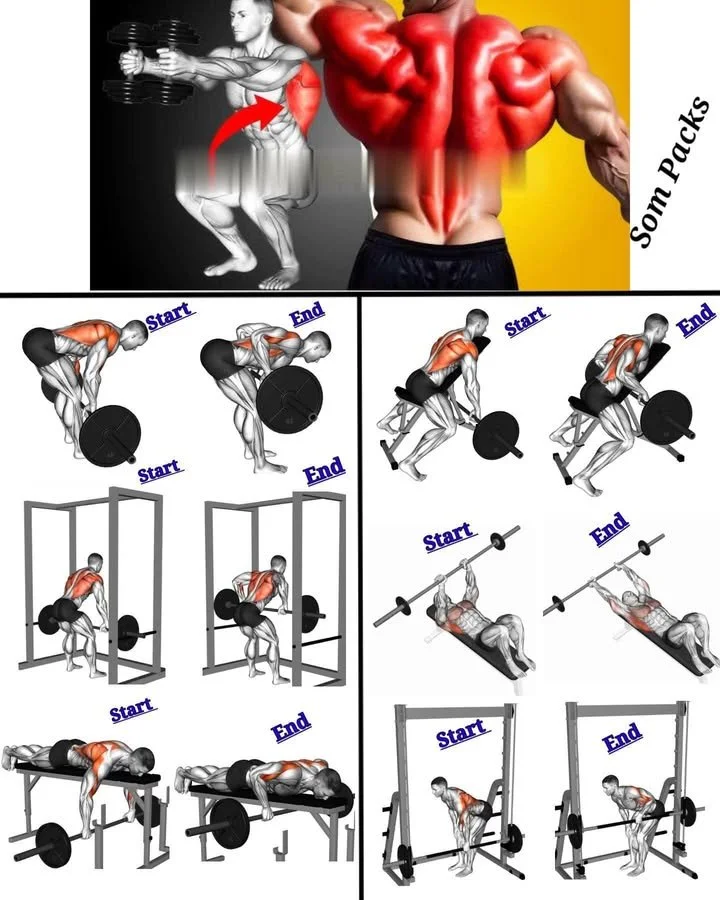
Barbells only cobra back workout for strengthening the back

Barbells only cobra back workout 💪

The Ultimate Barbells-Only Cobra Back Workout 💪

When it comes to building a strong and defined back, incorporating a variety of exercises is key. While many people often rely on machines or bodyweight exercises, the barbells-only approach can be incredibly effective for sculpting your lats, traps, and entire posterior chain. One particular routine that stands out is the Cobra Back Workout. Designed to enhance strength, stability, and overall muscle definition, this workout emphasizes using barbells to achieve maximum results. Let’s dive into how to conduct a barbells-only cobra back workout.

Why Choose Barbells?

Barbells offer a unique advantage when it comes to strength training. They allow for progressive overload, meaning you can increase the weight over time to continue challenging your muscles. Additionally, barbell movements engage multiple muscle groups, improving functional strength and coordination.

Benefits of the Cobra Back Workout

  • Strengthens the Entire Back: This workout primarily targets the upper and lower back, helping to create a balanced and strong physique.
  • Improves Posture: By focusing on back muscles, the cobra workout helps counteract poor posture caused by long hours of sitting.
  • Enhances Athletic Performance: A strong back is essential for most athletic activities. This workout can improve performance in various sports and exercises.
  • Increases Muscle Definition: The combination of compound movements in this routine promotes hypertrophy, leading to a more defined back.

The Cobra Back Workout Routine

Here’s a detailed routine highlighting a variety of barbell exercises to help you achieve your fitness goals:

1. Barbell Deadlifts

Sets: 3
Reps: 8-10
Rest: 60-90 seconds

Deadlifts are a quintessential compound movement that engage your entire back along with your hamstrings and glutes. Start with your feet hip-width apart, grip the barbell with both hands, and lift while keeping your back straight.

2. Bent-Over Barbell Rows

Sets: 3
Reps: 8-12
Rest: 60-90 seconds

With your feet shoulder-width apart, bend your knees slightly and hinge at the hips to lower your torso. Pull the barbell towards your lower ribs, squeezing your shoulder blades together at the top of the movement.

3. Barbell Shrugs

Sets: 3
Reps: 10-15
Rest: 60 seconds

Stand straight holding the barbell in front of you. Elevate your shoulders towards your ears as high as possible before lowering back down. This exercise focuses on the trapezius muscles.

4. Barbell Overhead Press

Sets: 3
Reps: 8-10
Rest: 90 seconds

While primarily a shoulder exercise, the overhead press also engages your upper back. Stand with your feet shoulder-width apart, and press the barbell overhead while keeping your core tight.

5. Barbell Reverse Grip Bent-Over Rows

Sets: 3
Reps: 8-12
Rest: 60-90 seconds

Using an underhand grip on the barbell, perform the bent-over row. This variation targets the biceps as well as the back, ensuring an effective total body workout.

Tips for an Effective Workout

  • Warm-up: Always start with a warm-up to prepare your muscles and prevent injuries.
  • Focus on Form: Proper form is crucial when lifting heavy weights. Prioritize technique over the amount of weight lifted.
  • Controlled Movements: Use controlled, smooth movements to maximize effectiveness and avoid injury.
  • Cooldown: Don’t forget to stretch your back after the workout to promote flexibility and recovery.

Conclusion

The barbells-only cobra back workout is an excellent way to strengthen your back, improve your posture, and achieve that muscular definition you desire. By incorporating these barbell exercises into your routine, you’ll develop a strong, functional back that supports your overall fitness goals. Whether you’re a seasoned lifter or just starting out, this workout can be adjusted to suit your needs. So grab your barbell, focus on your form, and let’s get to work! 💪

Barbells only cobra back workout 💪 Read More »

, , , ,
Scroll to Top