
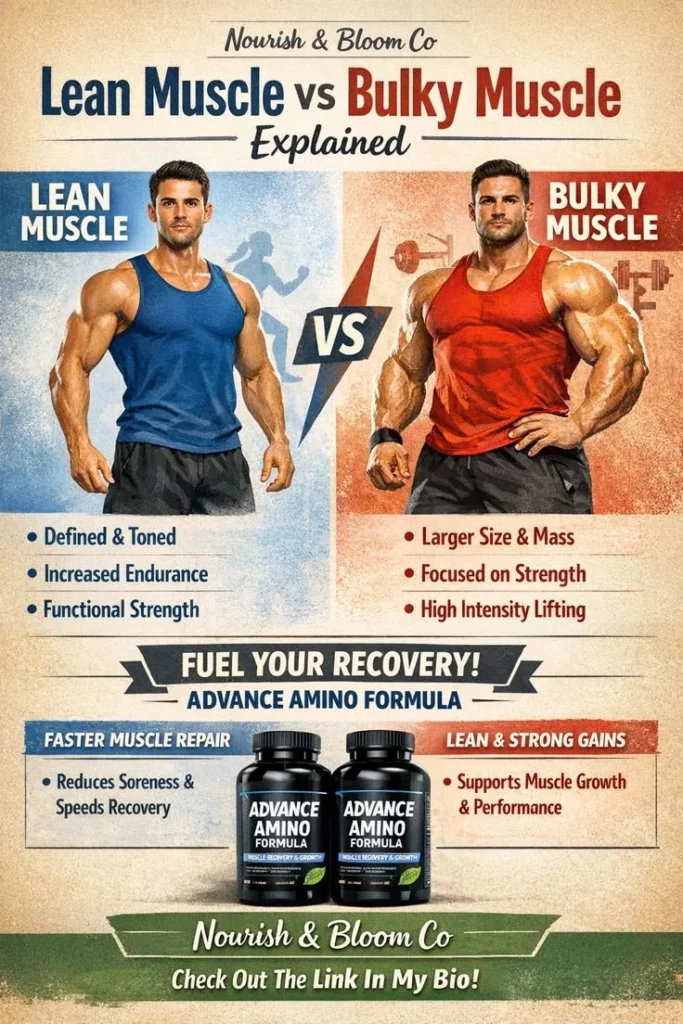
Lean vs Bulky: The Real Difference
Understanding whether you want lean muscle or a bulkier, thicker look starts with knowing how training, nutrition, and genetics shape your results. This guide breaks down the practical differences so you can plan workouts and meals that match your goals. If you’re new to structured training, consider this 30-day beginner calisthenics morning routine to build a solid foundation.
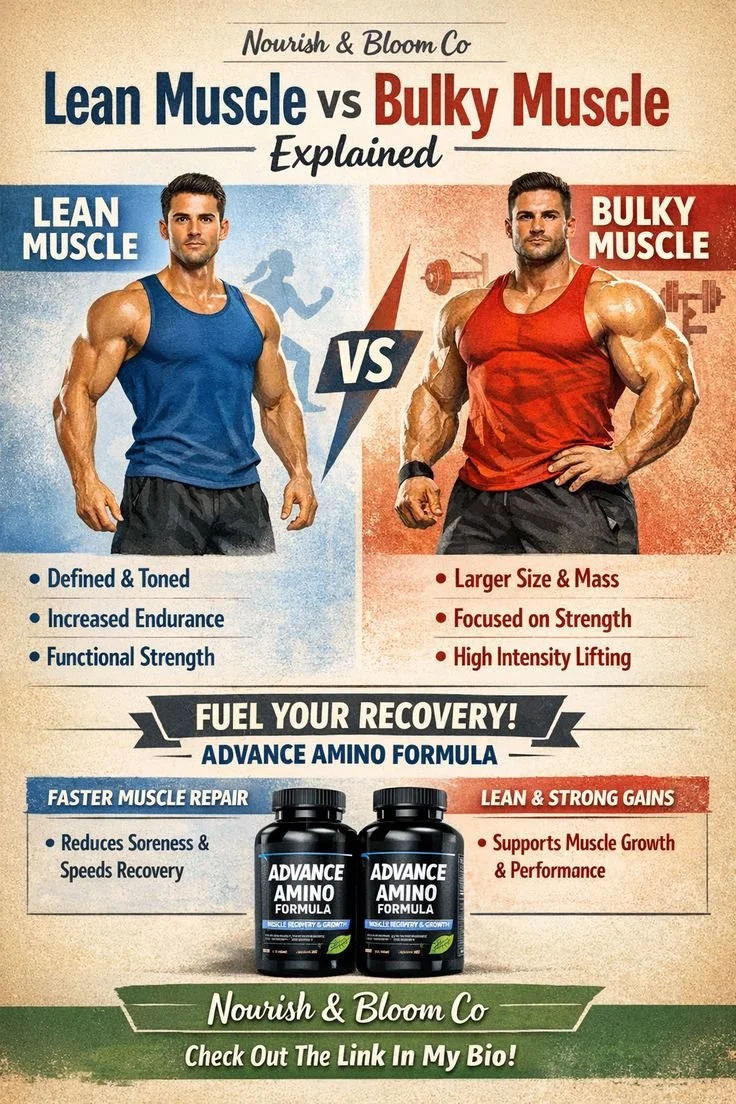
What “lean” and “bulky” really mean
- Lean muscle: Generally refers to denser, more defined tissue with lower body fat overlay; often associated with higher reps, shorter rest periods, and an emphasis on conditioning and muscle endurance.
- Bulky muscle: Refers to greater overall muscle cross-sectional area and visible size; typically the result of heavy, low-rep strength work, higher caloric intake, and training that prioritizes hypertrophy for size.
Training differences
- Rep ranges and load: Bulking programs lean toward heavier weights and lower reps (3–8 reps) with longer rests to maximize mechanical tension. Lean-focused programs favor moderate loads with higher rep ranges (8–15+), shorter rests, and techniques like supersets to increase metabolic stress.
- Volume and frequency: Both goals require progressive overload, but bulking often uses higher total volume per muscle group with emphasis on compound lifts; leaning out emphasizes volume plus cardio or conditioning to manage body fat.
- Exercise selection: Compound movements (squats, deadlifts, presses) are essential for size and strength; isolation and tempo work refine shape and definition for a leaner look.
Nutrition and body composition
- Calorie balance: To grow bulky muscle you usually need a caloric surplus to fuel tissue growth; to achieve lean muscle you maintain or slightly deficit while prioritizing protein to preserve and reveal muscle.
- Protein and macros: Aim for adequate protein (around 0.7–1.0 g per pound of bodyweight depending on goals), with carbs timed around workouts for performance and fats for hormonal health.
- Managing fat: Visible “lean” is as much about low body fat as it is muscle. Strategic diet phases (cycle bulking and cutting) let you build muscle then reduce fat for definition.
Genetics, recovery, and hormones
- Genetics set the ceiling: Muscle fiber distribution, insertion points, and natural hormone levels influence whether you appear more “bulky” or “lean” as you gain muscle.
- Recovery matters: Heavy, size-focused training demands more recovery—sleep, deloads, and nutrition—while lean-focused programs also require careful energy management to avoid overreaching.
- Hormonal environment: Testosterone and other hormones influence how easily you gain mass; older trainees may find lean gains easier than large mass increases.
Practical programs and examples
- For lean muscle: Moderate weights, 8–15 reps, 3–4 sets, circuits and shorter rests, plus 2–4 weekly conditioning sessions.
- For size/bulk: Heavier loads, 3–8 reps for compounds, add hypertrophy sets at 6–12 reps, longer rests, and a calorie surplus of 250–500 kcal/day.
- Mixed approach: Many athletes cycle phases—build (bulk) then refine (cut)—to gain muscle while controlling fat. Periodization helps avoid plateaus and keeps progress balanced.
Common misconceptions
- You can’t turn “fat” into muscle: Fat and muscle are different tissues; losing fat and gaining muscle occur through different processes and often require separate phases.
- Lifting heavy always makes you bulky: Without a calorie surplus and specific hypertrophy programming, heavy lifts alone won’t necessarily produce a bulky physique.
- Abs visibility = lean muscle: Visible abs require low body fat; muscle quality and training influence shape but diet controls the reveal. For more perspective on abdominal myths, read about common six-pack misconceptions.
How to choose the right path
- Define your priority: Aesthetics, performance, or health will steer your plan.
- Start with a baseline: Build strength and technique first, then adjust calories and training to shift toward lean or bulky objectives.
- Track and adapt: Use measurements, photos, and strength logs to determine if you need more volume, calories, or conditioning.
Conclusion
If you have concerns about muscle weakness or unexplained changes in muscle size and function, consult authoritative medical resources such as the NINDS overview of muscular dystrophy for reliable information.