Title: Static Power — 8 Isometric Holds That Rebuild Strength
Isometric holds let you build raw strength, joint stability, and muscular endurance without joint-travel or heavy loading. Whether you’re rehabbing, traveling with minimal equipment, or simply want to add a fresh stimulus to your routine, these eight holds force muscles to work through sustained tension — translating to improved control and force production across lifts and daily movements.
Why isometrics work: when you hold a position under tension your nervous system recruits and refines motor units, increases time-under-tension, and improves rate of force development at specific joint angles. Below are eight highly effective isometric holds, how to perform them, progressions, and simple programming tips.
- Wall Sit (Quad Burner)
- How: Stand with your back against a wall, slide down until knees are at about 90°. Keep weight in heels and chest tall.
- Hold target: 30–90 seconds. Repeat 3 sets.
- Progression: Raise one heel, hold a dumbbell, or sit for longer intervals. Great for building lower-body endurance without balance demands.
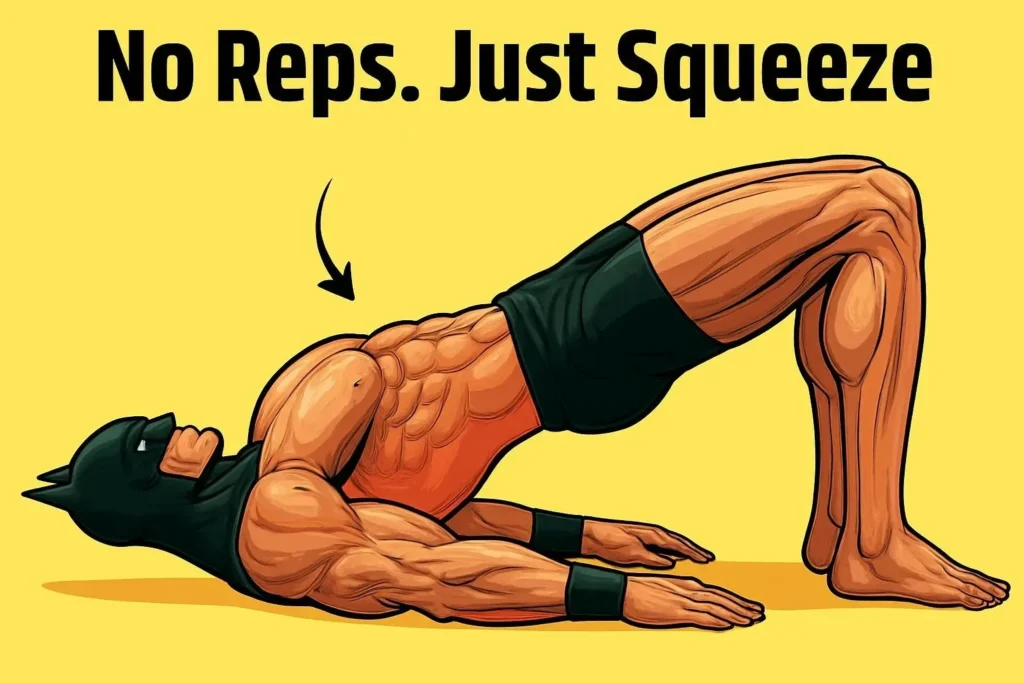
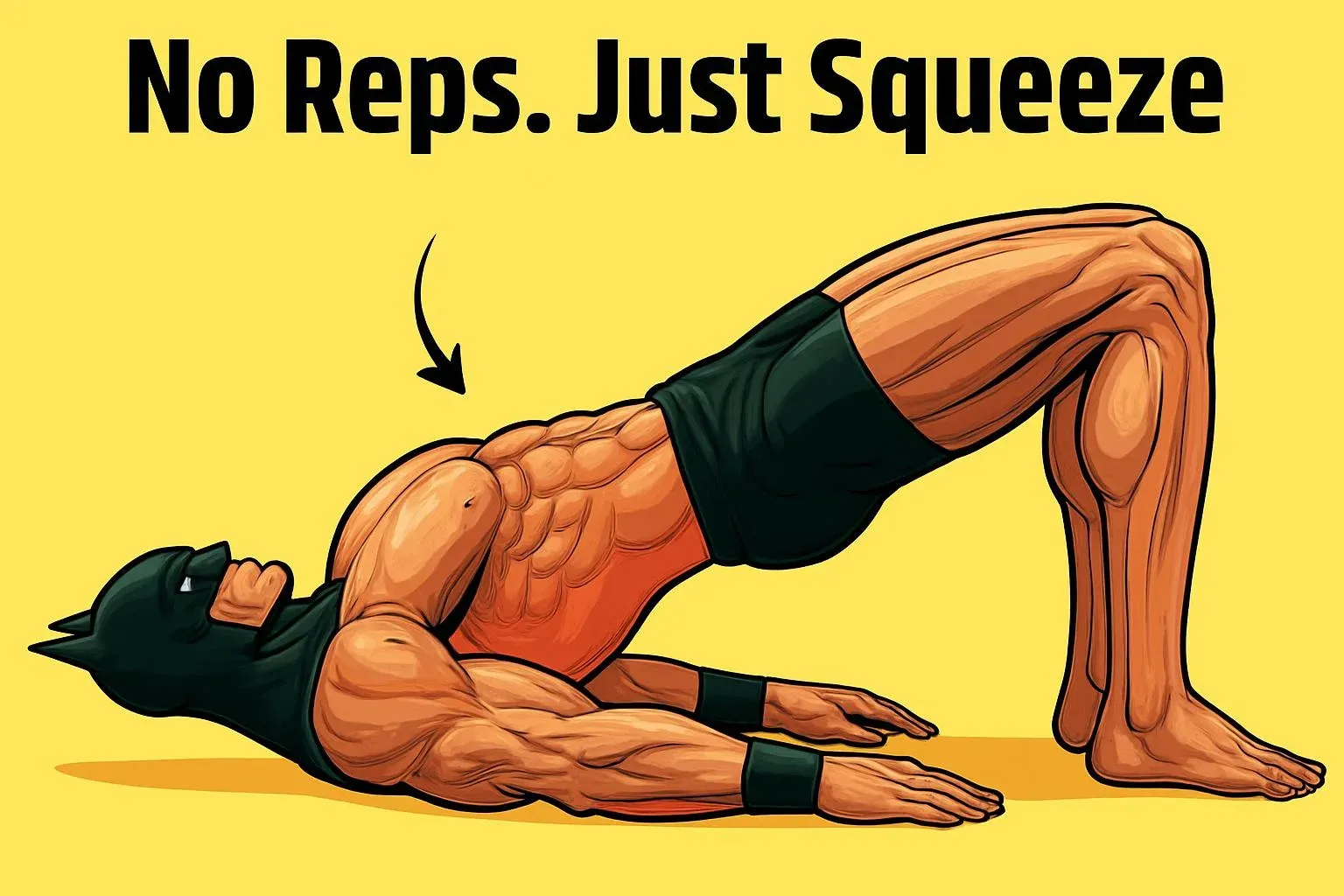
- Glute Bridge Hold (Posterior Chain)
- How: Lie on your back, knees bent, feet hip-width. Drive hips up until torso and thighs align; squeeze glutes and hold.
- Hold target: 20–60 seconds. Repeat 3–4 sets.
- Progression: Single-leg bridge holds or add a band around knees. Use between squat sets for extra glute activation.
- Plank (Core & Shoulder Stability)
- How: Forearms on ground, body in straight line. Pull belly button toward spine and avoid sagging.
- Hold target: 30–120 seconds. Repeat 3 sets.
- Progression: Single-arm or single-leg planks, elevated feet, or add shoulder taps while maintaining core tension.
- Hollow Hold (Anti-Extension Core)
- How: Lie on your back, lift shoulders and legs slightly off floor, keep lower back pressed into the ground.
- Hold target: 15–60 seconds. Repeat 3 sets.
- Progression: Longer holds, straighten legs more, or combine with hollow rocks for dynamic work.
- Isometric Chin-Up / Pull-Up Hold (Upper Back & Grip)
- How: Pull to the top of a chin-up/pull-up and hold with chin over bar. If you can’t reach the top, use a band or a jump-and-hold from a box.
- Hold target: 5–20 seconds. Repeat 4–6 sets.
- Progression: Increase hold time, reduce band assistance, or hold at multiple points of the pull.
- Push-Up Hold at Bottom (Pressed Stability)
- How: Lower into bottom of push-up and hold 1–3 inches above ground, elbows tucked.
- Hold target: 10–30 seconds. Repeat 3–5 sets.
- Progression: Shorter rests between holds, deeper holds, or full-range hold if strong enough.
- Jefferson Curl (Slow Eccentric Hold — modified isometric timing)
- How: With light load, slowly curl down vertebrae-by-vertebra and pause at the bottom for an isometric hold before reversing. Focus on control and spinal safety.
- Hold target: 5–10 seconds at the end-range. Repeat 3–5 slow reps.
- Progression: Gradually increase range, then weight, keeping strict technique.
- Farmer Carry Isometric Hold (Grip & Posture)
- How: Pick up heavy dumbbells or kettlebells and simply hold at your sides with shoulders packed and core braced.
- Hold target: 30–90 seconds static holds repeated, or timed carries. Repeat 3 sets.
- Progression: Increase weight or single-arm holds to challenge anti-rotation stability.
Programming and sets
- Beginner: 3 holds per session, 2–3 times per week. Start with 3 sets of manageable durations.
- Intermediate: 4–6 holds per session, mix short max-effort holds (5–15s) and longer endurance holds (30–90s).
- Advanced: Combine holds with dynamic movements (e.g., isometric holds between heavy lifts) or perform repeated maximal attempts with longer rest for strength gains.
Recovery and nutrition
- Isometrics are deceptively taxing on the nervous system; allow 24–48 hours between high-intensity isometric sessions for the same muscle group.
- Fueling properly helps performance and recovery — quick, protein-rich snacks post-session are effective. For ideas on fueling for muscle-building after isometric-heavy sessions, see high-protein smoothies.
Tips and precautions
- Breathe: Don’t hold your breath during holds — use controlled rhythmic breathing. Breath-holding raises blood pressure and reduces efficiency.
- Joint angles matter: Isometric strength gains are greatest near the joint angle trained. Vary hold positions to cover full ranges of motion.
- Rehab-friendly: Isometrics are often prescribed during rehab because they minimize joint movement while maintaining activation. For alternative lower-body options that avoid balance challenges, check out this guide to Bulgarian split squat alternatives.
- Monitor pain: Discomfort from working muscles is normal; sharp joint pain is not. If unsure, consult a professional.
Sample session (Full-body isometric circuit)
- Wall Sit — 60s
- Plank — 60s
- Glute Bridge Hold — 45s
- Push-Up Bottom Hold — 20s
- Farmer Carry Hold — 60s
Repeat circuit 2–3 times with 90s rest between circuits.

Conclusion
Isometric holds are a versatile tool for strength, stability, and rehab. For an authoritative overview on the benefits and precautions of isometric training, see this resource from the Isometric exercises: Good for strength training? – Mayo Clinic.