
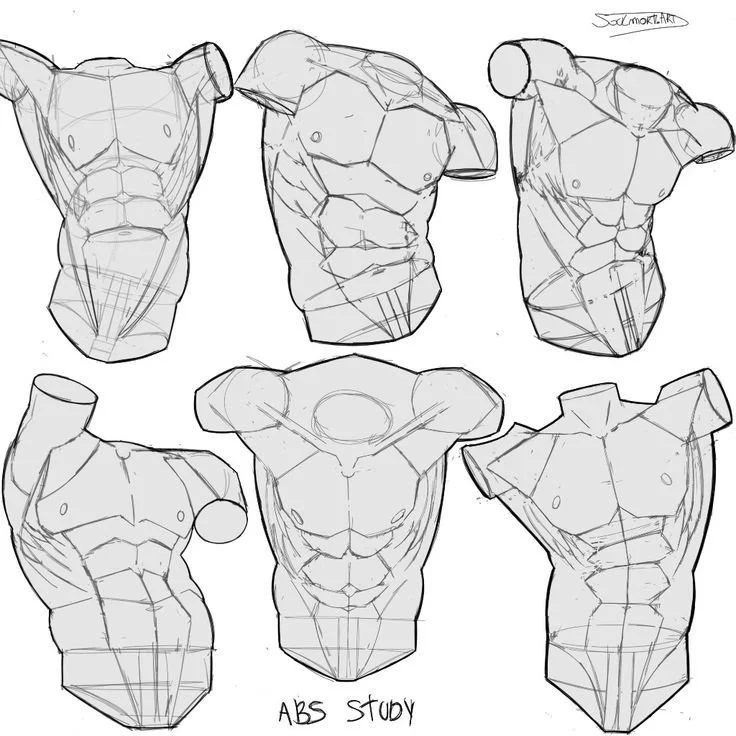
Human Figure Drawing: Essential Techniques for Artists
Drawing the human figure is a foundational skill for artists across styles — from realistic portraiture to expressive cartooning. This guide distills essential techniques that will help you see, simplify, and render the human body with confidence. Whether you’re sketching from life, photos, or imagination, these principles will speed up your learning and deepen your visual understanding.
Start by observing movement and rhythm before worrying about details. A quick, confident gesture captures the energy and flow of a pose and sets up the whole drawing. For artists interested in cross-disciplinary approaches — for example, how anatomy and physical training influence posture and silhouette — consider exploring practical resources on how musculature and strength change visual presence, such as this article on stronger, wider wings and its impact on posture. Short studies that connect movement to structure are incredibly valuable.
1. Gesture and Line of Action
- Begin every figure with a line of action: a single flowing curve that represents the main movement.
- Use quick, loose strokes (30 seconds–2 minutes) to map weight shifts and balance.
- Focus on rhythm and relationships between major masses (head, ribcage, pelvis) rather than anatomy at first.
2. Simplify into Basic Forms
- Reduce the body to simple volumes: ovoids for the ribcage, a block or bowl for the pelvis, cylinders for limbs. This helps you visualize rotation and perspective.
- Establish the axes of the ribcage and pelvis to communicate twist and counter-twist — essential for believable poses.
3. Proportion and Landmarks
- Learn reliable proportions as starting points (e.g., average adult figure = ~7–8 heads tall) but adjust for stylization.
- Memorize key landmarks: clavicles, ASIS (front hip bones), greater trochanter, patella, and the bony landmarks of the skull. Landmarks anchor your simplified forms to human anatomy.
4. Anatomy as a Map, Not a Rulebook
- Study muscle groups to understand surface forms and how they contract, stretch, and fold.
- Prioritize muscles that affect external shape (deltoids, pectorals, trapezius, gluteals, quads, hamstrings) rather than trying to memorize every muscle.
- Use anatomy to solve drawing problems—if a shoulder looks wrong, check the clavicle and scapula orientation rather than redrawing the whole arm.
5. Value, Light, and Volume
- Treat the figure as a three-dimensional form by establishing a simple light source early.
- Block in large light and shadow shapes before refining edges and midtones. This clarifies volumes and makes the figure feel solid.
- Learn edge control: hard edges in shadow breaks and soft edges where forms turn gradually toward light.
6. Foreshortening and Perspective
- Foreshortening compresses limbs and torsos in the picture plane; use simplified forms (boxes, cylinders) to place parts convincingly in perspective.
- Use overlap, size diminution, and contour compression to sell depth. When in doubt, construct a quick perspective box around the body mass to check alignment.
7. Line Quality and Economy
- Vary line weight to suggest volume and weight: heavier lines for shadowed, nearer, or weight-bearing elements; lighter lines for receding forms.
- Practice economy: don’t outline everything. Allow implied lines to complete forms—this keeps drawings lively and avoids stiffness.
8. Capturing Character and Gesture
- Move beyond anatomy to mood: tilt of the head, gesture of the hands, and asymmetry communicate personality.
- Use small, readable details (a gesture in the hand, eyebrow tilt) to hint at emotion without overwriting the figure.
9. Practical Exercises
- Gesture drills: 30-second to 2-minute poses, 20–30 per session.
- Constructive studies: 10–20 minute drawings focusing on volumes and landmarks.
- Long studies: 1–3 hour drawings for refining anatomy, value, and expression.
- Cross-train with related disciplines — for educational or workshop design ideas that connect anatomy learning with teaching methods, see this resource on designing educational fitness workshops to adapt active, kinesthetic approaches to drawing instruction.
10. Critique, Iteration, and Reference Use
- Compare your drawing against references and measure relationships — sight-size, comparative measurement, or plumb lines help.
- Iterate: keep older studies to track progress. Re-drawing the same pose over days reveals improvements.
- Get feedback from peers or instructors and incorporate small, focused corrections rather than overhauling your approach each time.
Tools and Materials
- Use what’s comfortable: graphite pencils (HB–6B), charcoal sticks, Conte, and kneaded erasers are all effective.
- Try both toned paper with white chalk for highlights and white paper with a full value range for different training benefits.
- Digital tools are great for undo/redo and layering, but foundational skills transfer across media.
Conclusion
Mastering the human figure comes from combining observation, simplification, and consistent practice. For structured, entertaining lessons that guide you step by step through gesture, anatomy, and rendering techniques, check out Proko – Learn How to Draw with Fun Tutorials.