
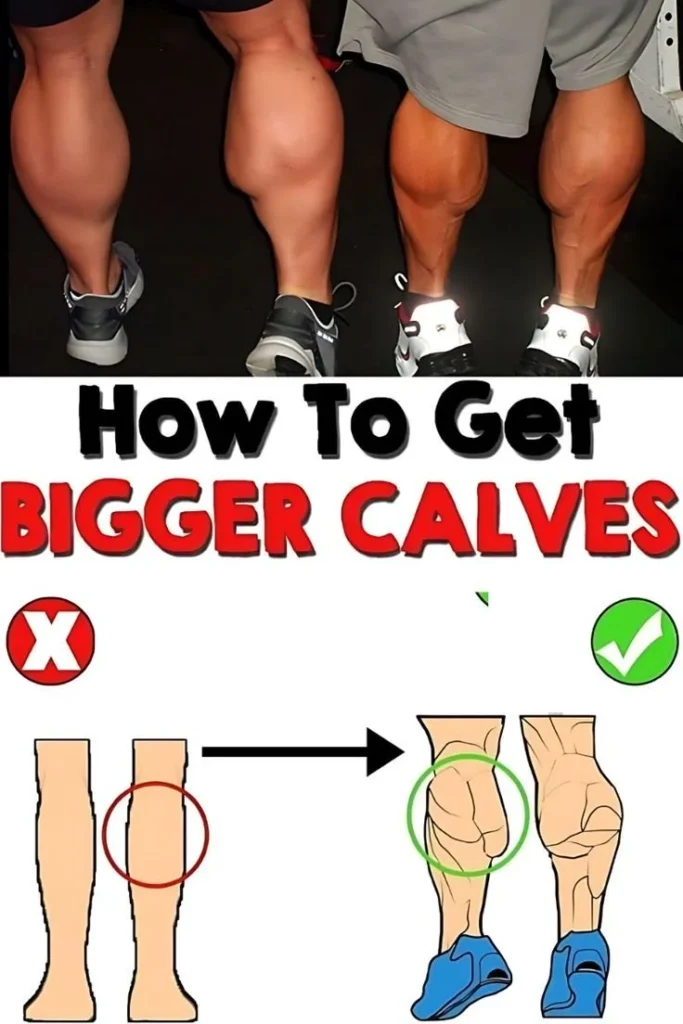
Calf Gains Blueprint
Growing thicker, stronger calves takes a mix of targeted exercises, smart programming, and patience — many of the same principles used to develop other muscle groups apply, as explained in this guide on how to get huge arms. Whether you’re starting from a genetic disadvantage or simply want more shape and definition, the following plan will help you prioritize calf growth effectively.
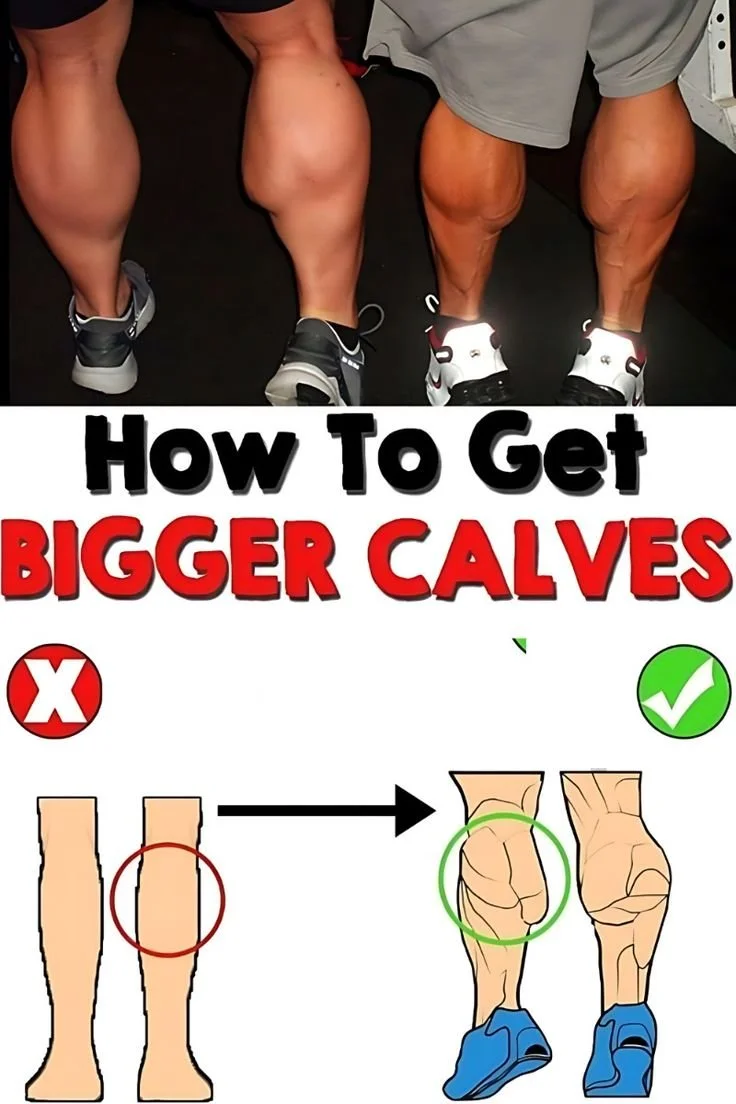
Why calves are stubborn (and how to beat it)
Calf muscles (primarily the gastrocnemius and soleus) are trained constantly during walking and standing, so they adapt differently than other muscles. They respond best to:
- High frequency (2–4x per week)
- A mix of heavy, low-rep work and higher-rep endurance-style sets
- Full range of motion and deliberate time under tension
Consistent variety and progressive overload are key — these are the same training principles that help you when focusing on upper body mass or strength gains and are similar to the top tips to build bigger traps used for stubborn muscles.
The best exercises for maximum calf growth
Focus on movements that target both heads of the calf and allow progressive loading or strict high-rep work.
- Standing calf raises (barbell or machine): emphasize the gastrocnemius; use heavy sets of 6–12 with strict reps.
- Seated calf raises: target the soleus; perform higher reps (12–25) with full stretch and pause at the top.
- Single-leg calf raises: great for fixing left/right imbalances and increasing range of motion.
- Donkey calf raises or belt-loaded variations: allow heavy loading and deep stretches.
- Hill sprints or incline walking: add dynamic overload and boost muscle fiber recruitment.
Rotate heavy days and volume days across the week and apply progressive overload like other body-part plans; a strategy similar to the staged approach in 5 steps to get bigger arms in 30 days can be adapted to calves—small, consistent increases in load or reps over weeks.
Sample weekly programming
Aim for 2–4 calf sessions each week, mixing intensity and volume.
- Day A (Strength): Standing calf raises 4 sets of 6–10 heavy reps, pause at the top.
- Day B (Volume): Seated calf raises 5 sets of 15–25 slow reps, 2–3 second negatives.
- Day C (Mixed): Single-leg calf raises 3 sets of 10–15 + hill sprints 4–6 x 10–20s.
Keep progressive overload measurable: add 2.5–5 lb when you can hit upper rep ranges, or add an extra set. For frequency and vascularity tips that transfer across muscle groups, see this guide on 5 tips to get veiny arms fast for ideas about conditioning and circulation that also help calves.
Technique pointers that boost results
- Full range of motion: drop the heel as far as possible and then rise up fully; partial reps limit growth.
- Control the eccentric: 2–4 second negatives increase time under tension.
- Avoid bouncing: strict reps recruit muscle fibers better.
- Train to near-failure on at least one set per session to drive hypertrophy.
Nutrition and recovery
Calf growth requires calories and protein just like any other muscle. Aim for:
- Protein: ~0.7–1.0 g per pound of bodyweight daily
- Calories: small surplus for consistent gains (200–300 kcal/day)
- Recovery: sleep 7–9 hours and manage overall training volume so calves aren’t chronically sore and underrecovered
Pair targeted training with sufficient recovery and a slight caloric surplus to see the best rate of growth.
Advanced tips and common mistakes
- Don’t over-rely on machines with fixed path; free-weight variations improve functional strength and stability.
- If calves plateau, try a short specialization phase: double the weekly frequency for 4–6 weeks with reduced intensity on other leg work.
- Avoid neglecting hip and ankle mobility — limited dorsiflexion reduces effective range for calf exercises.
- Track metrics: log weight, sets, reps, and heel elevation depth to ensure real progress.
Conclusion
For an expert-curated list of calf exercises and programming ideas you can compare with this plan, check out ISSA’s calf workout guide for additional exercise variations and cues.