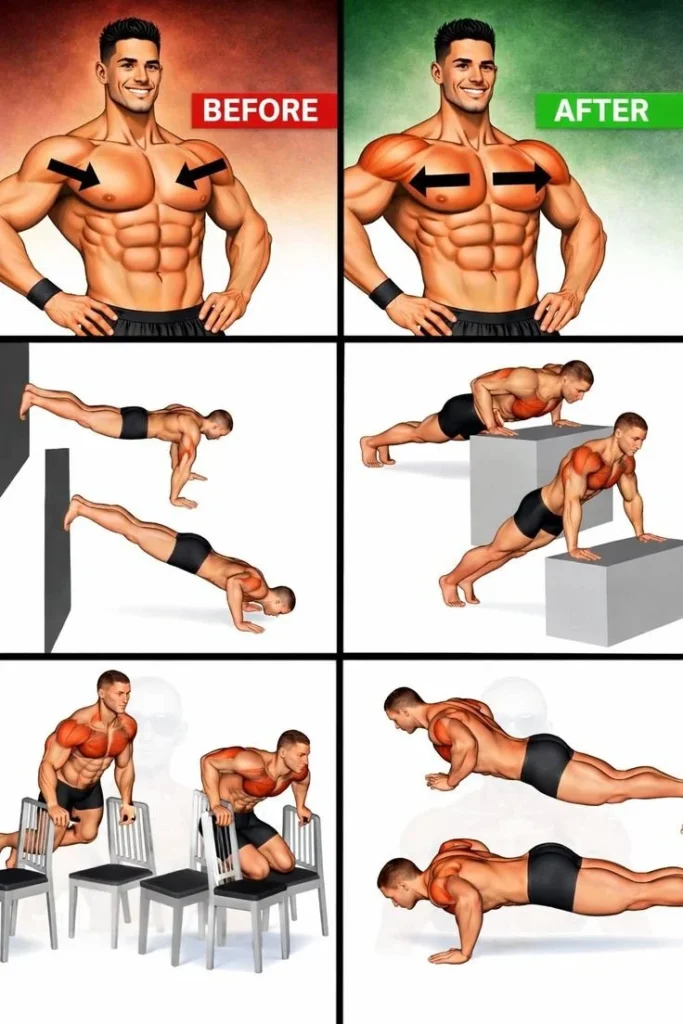
Home Chest Sculpt — No Gym Needed
You don’t need heavy weights to build a strong, defined chest. With the right bodyweight moves, tempo, and consistency you can create size, strength, and shape from your living room—no gym membership required. If you want a longer, structured plan to build chest strength at home, check the detailed chest program for strength gains at home for more progressions and routines.
Warm-up (5–7 minutes)
- Arm circles (30 seconds each direction)
- Scapular push-ups: 2 sets of 10 (activate the shoulder blades)
- Light dynamic chest stretches (doorway or band pull-aparts if available)
Core chest workout (45–50 minutes)
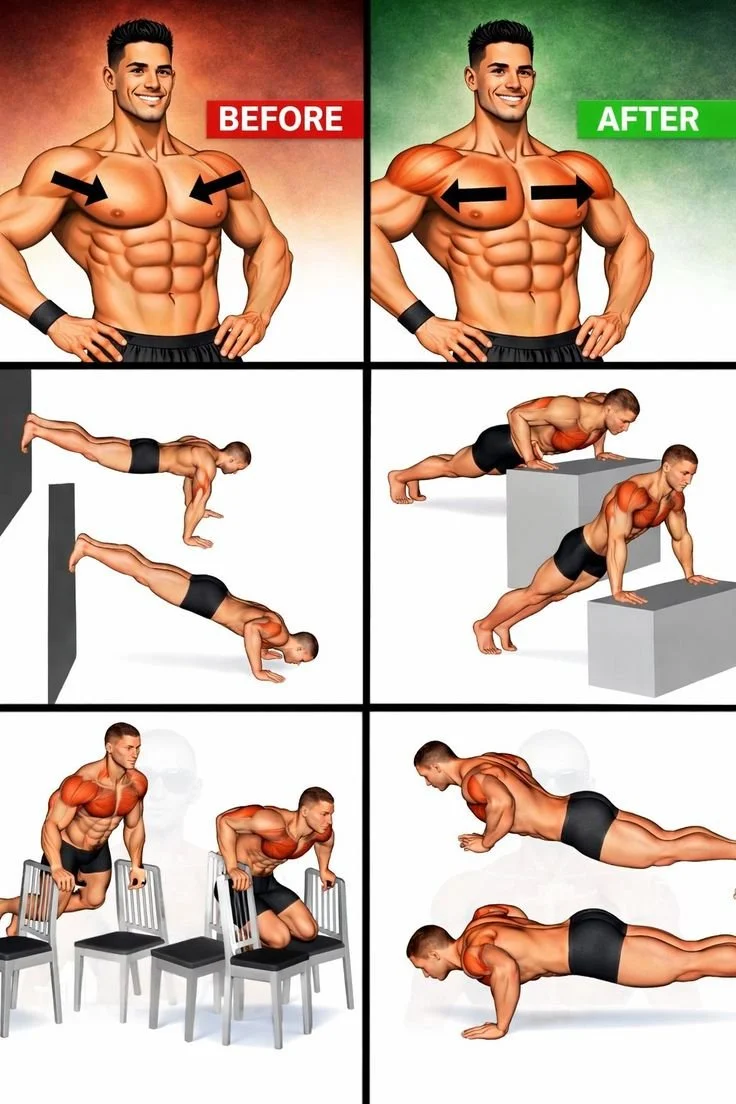
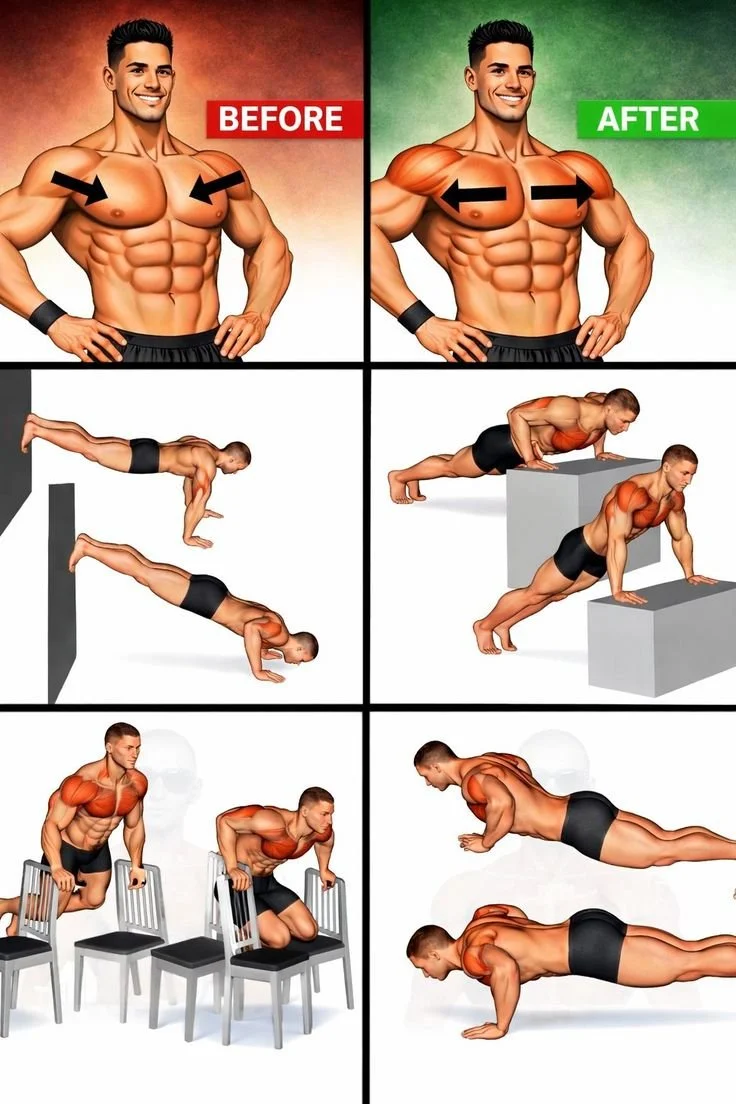
Push-up variations (progress from one to the next as you get stronger)
- Standard push-ups: 3 sets of 8–15 reps
- Narrow (triceps) push-ups: 2–3 sets of 8–12 reps
- Wide push-ups: 2 sets of 6–12 reps
- Decline push-ups (feet elevated): 3 sets of 6–12 reps
Tempo tip: Try a 3-1-1 tempo (3s lowering, 1s pause at bottom, 1s up) for increased time under tension.
Chest-focused dip alternatives
- Bench/Chair dips (chest-leaning): 3 sets of 8–12 reps
- Negative controlled dips (if you have parallel bars): 3 slow negatives, 3–5 reps each
Single-arm and assisted unilateral moves
- Archer push-ups or assisted one-arm push-ups: 3 sets of 4–8 reps per side (or regress with wide hands and brief support)
- Isometric holds (push-up hold at mid-range): 3 x 20–40 seconds
Finisher: Plyometrics/Endurance
- Clap push-ups or explosive push-ups: 3 sets of 5–12 reps (substitute with fast push-ups if jumps are too intense)
- Slow eccentrics: 2 sets to near-failure with a 5–6s descent
Programming and progression
- Frequency: 2–3 chest-focused sessions per week (e.g., Mon/Thu or Tue/Fri) with at least 48 hours recovery between intense sessions.
- Progression methods: increase reps, add sets, slow the eccentric, elevate feet, reduce assistance, or add pauses. Track one variable at a time.
- For size: aim for 8–15 reps per set and include a couple of higher-volume sets (15–20) at the end. For strength: keep reps lower (4–8) with harder progressions like incline/decline or single-arm work.
Accessory work and balance
- Rear delts and upper back: band pull-aparts or prone Y/T raises, 3 sets of 12–20 to protect your shoulders.
- Triceps: diamond push-ups, close-grip bench dips — 3 sets of 8–15. For balanced upper-body development, pair chest days with targeted arm work like the biceps workout that builds strong, defined arms on an alternate day.
Recovery and tips
- Sleep and protein matter: aim for 7–9 hours sleep and roughly 0.7–1.0 g protein per pound of bodyweight if muscle growth is your goal.
- Form over reps: full range of motion and scapular control beat half-reps every time.
- Use household items safely: a sturdy chair, elevated surface, or backpack with books can increase intensity—prioritize safety.
Minimal equipment progressions (optional)
- Weighted backpack: +5–20 lbs for added resistance on push-ups and dips.
- Resistance bands: excellent for adding variable resistance and for banded push-ups or fly variations.
- Rings/TRX: if available, use for deep-range chest work and unilateral variations.
Conclusion
If you want an easy-to-follow app to guide at-home workouts without equipment, try the Home Workout – No Equipment app on Google Play for additional routines and progress tracking.