Elizabeth Keen

Pilates Core Burner workout with no equipment needed for effective core strengthening

Pilates Core Burner — No Equipment Needed ❤️‍🔥

Pilates Core Burner — No Equipment Needed ❤️‍🔥

Looking to torch your midsection without machines or bands? This no-equipment Pilates core burner gives you precise, effective exercises that target the deep abdominals, obliques, and lower back using only your bodyweight. Whether you’re a Pilates regular or new to mat work, this routine is scalable and easy to fit into short home workouts. If you enjoy progressive core challenges, you can pair these moves with other strength patterns like a band twist tutorial for rotational power on different days.

Why Pilates for the Core?

Pilates emphasizes controlled movement, breath, and alignment — making it ideal for strengthening the transversus abdominis (deep core) rather than just producing visible “six-pack” tension. This approach improves posture, stabilizes the pelvis and spine, and reduces injury risk while giving you a functional, toned midsection.

Quick Warm-Up (5 minutes)

  • Cat-Cow: 6–8 slow reps to mobilize the spine.
  • Pelvic tilts: 10 reps lying on your back to find neutral pelvis and engage deep abdominals.
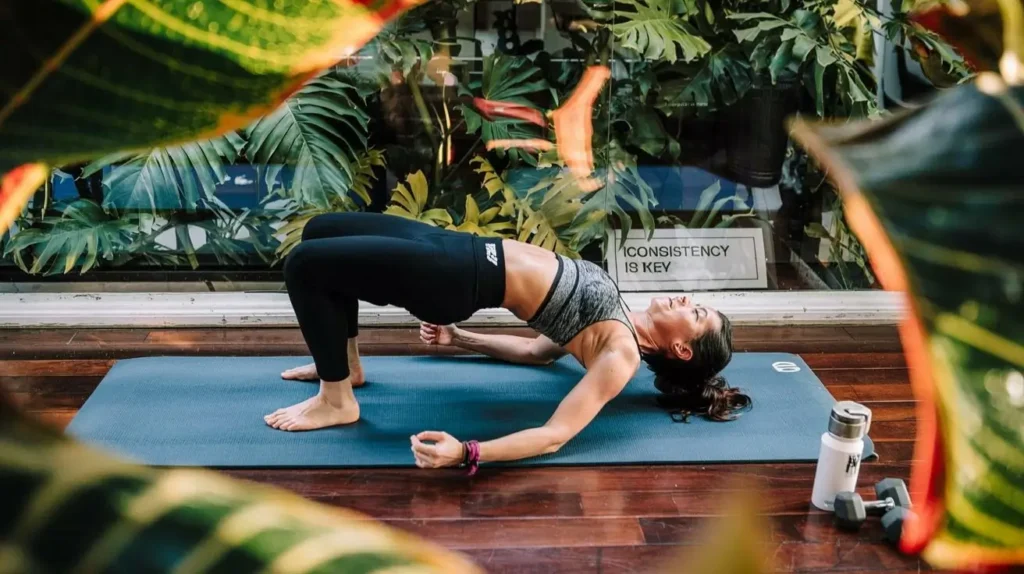
  • Marching bridge: 8–10 reps per side to activate glutes and coordinated core control.

Core-Burning Exercises (No Equipment)

  1. Hundred Prep (60 seconds)

    • Lying on your back, knees bent into tabletop. Lift head and shoulders slightly, extend arms and pump small pulses while breathing 5 in/5 out for 10 cycles (or 60 seconds).
    • Cue: Keep ribs down and draw navel toward spine.
  2. Pilatés Single Leg Stretch (8–12 reps per side)

    • One knee into chest while the other extends out at 45°, shoulders lifted, alternating. Hands on shin, shoulder blades stable.
    • Modify by keeping head down if neck sensitive.
  3. Roll-Up (6–8 reps)

    • From lying tall, peel the spine up to seated reaching toward toes and roll down slowly. Focus on articulating the spine and using abdominal contraction to lift, not momentum.
  4. Double Leg Lowering (6–10 reps)

    • Legs start vertical; lower slowly toward the mat while keeping low back long. Only lower as far as you can without the lumbar arching.
    • Regression: Bend knees or perform single-leg lowers.
  5. Side Plank with Hip Dips (6–10 reps per side)

    • From side plank, dip hips slightly then lift. Builds oblique strength and shoulder stability.
    • If full side plank is too intense, drop the bottom knee to the floor.
  6. Teaser Prep (4–6 reps)

    • From supine, roll to a short-sit position with knees bent; hold for a breath and roll back. Progress toward straight legs as control improves.
  7. Bird Dog Pulse (8–12 reps per side)

    • On hands and knees, reach one arm forward and opposite leg back; pulse small lifts to challenge spinal stability.
  8. Heel Beats (20–40 beats)

    • Lying supine with legs in tabletop, pulse heels toward each other for a controlled burn. Breathe rhythmically and maintain low belly connection.

Sample 20-Minute Workout

  • Warm-up (5 min)
  • Circuit 1 (Repeat twice): Hundred Prep (60s), Single Leg Stretch (12 each), Roll-Up (8)
  • Circuit 2 (Repeat twice): Double Leg Lowering (8), Side Plank Hip Dips (8 each side), Bird Dog Pulse (10 each)
  • Finisher: Teaser Prep (4–6) + Heel Beats (30s)
  • Cool-down stretches (2–3 min)

Breathing and Form Tips

  • Inhale to prepare, exhale to initiate the movement. Pilates breath is lateral (ribcage expansion) to maintain pelvic stability.
  • Move slowly and with intention — quality trumps quantity. If you lose alignment (ribs popping up, lumbar overarching), reduce range or rest.
  • Keep neck long; support your head with hands during high-rep neck-lifting exercises if needed.

Modifications & Progressions

  • Beginner: Reduce reps, keep knees bent, perform movements with feet on the floor, or lower tempo.
  • Intermediate: Increase reps, lengthen lever (straighten legs), and add pauses at peak contraction.
  • Advanced: Combine exercises into flowing sequences (e.g., roll-up into teaser), slow negatives, or add pulses and isometric holds.

Recovery & Frequency

  • Aim for 3–4 focused core sessions per week, with rest or active recovery days in between.
  • Pair this routine with mobility work and lower-body strength training for balanced fitness. For guidance on nutritious pairing and whole-food choices that support recovery, read about food sourcing and nutrition to help your body refuel optimally.

Safety Notes

  • Avoid straining your neck — support gently with hands or keep chin tucked.
  • If you have lower back pain, prioritize neutral pelvis and reduce lever length (bend knees).
  • Stop if you feel sharp pain; consult a clinician for persistent issues.

Conclusion

Ready to add a standing element to your Pilates practice and work the legs with the same attention to control? Try this Standing Leg Workout – The Pilates Class for complementary standing core and leg stability work to round out your no-equipment routine.

Pilates Core Burner — No Equipment Needed ❤️‍🔥 Read More »

, , , ,
4 moves for killer abs workout video demonstrating effective exercises.

Exercise Guide on Instagram: “4 Moves For Killer Abs! #reel2025 #exercise #workout #bellyfat #loseweight” [Video] [Video] in 2025 | Abs and obliques workout, Abs workout, Abs workout routines

4 Moves for Killer Abs — A Practical Guide (2025 Reel Inspired)

Short, sharp Instagram reels promise quick results. If you saw a clip titled "4 Moves For Killer Abs! #reel2025" and wondered how to turn that energy into a real, safe routine, this article walks you through an effective abs and obliques workout, why each move matters, how to scale them, and how to fit them into a balanced program.

Why a 4-move routine works

A short, focused sequence can be very effective when it trains the core in multiple planes (flexion, anti-extension, rotation, and anti-rotation). Four well-chosen exercises let you:

  • Target the rectus abdominis and obliques.
  • Keep total workout time under 20 minutes.
  • Use minimal equipment — ideal for home or gym.

Pairing specific core work with complementary pulling and pushing exercises helps posture and performance. For example, when you balance your program with a solid pulling routine, your core stabilizers get better support — consider adding a targeted back workout on another day to maintain structural balance.

The 4-move killer-abs circuit

Perform this circuit 3 rounds, resting 60–90 seconds between rounds. Choose slow, controlled reps — quality over quantity.

  1. Hollow Rock (anti-extension + global core)

    • Lie on your back, arms overhead, legs straight. Lift shoulders and legs a few inches off the ground into a hollow hold. Rock gently by shifting your torso forward and back.
    • Reps: 20–30 rocks or 30–45 seconds hold for advanced.
  2. Bicycle Crunch (obliques + rotation)

    • Elbow to opposite knee with controlled rotation. Keep lower back pressed to the floor.
    • Reps: 20–30 total slow reps (10–15 each side).
  3. Side Plank with Hip Dips (lateral endurance + oblique anti-lateral flexion)

    • From side plank, slowly lower hips toward the ground and lift. Keep shoulders stacked.
    • Reps: 12–18 dips per side or 30–45 seconds each side.
  4. Dead Bug with Single-Leg Extension (anti-extension + coordination)

    • On your back, arms straight up, knees bent 90°. Slowly extend one leg and lower the opposite arm behind your head while keeping your core pressed to the floor. Return and switch.
    • Reps: 8–12 each side slowly.

Warm-up and mobility (2–5 minutes)

Spend a few minutes preparing the hips and thoracic spine:

  • Cat–cow and thoracic rotations (1 minute)
  • Glute bridges and leg swings (1–2 minutes)
    A quick warm-up reduces compensation by other muscles and protects your lower back.

Progressions and regressions

  • Too hard? Reduce range: perform hollow holds with bent knees; do knee-supported side planks; perform bicycle motion slower and with smaller rotation.
  • Too easy? Add resistance: hold a light plate or dumbbell in hollow position, use a band around knees for side-plank tension, or perform slow eccentric (lowering) phases for extra difficulty.

How often and how to program

  • Frequency: 2–4 dedicated core sessions per week, or include 1–2 rounds after full-body workouts.
  • Volume: 3 rounds of the circuit is a good starting point. Increase to 4–5 rounds over weeks.

Accessory upper- and lower-body work supports core development. For example, building stronger arms helps with loaded carries and stability during complex lifts — you might pair core days with an arm-focused session such as a compact barbell biceps routine on alternate days to maintain balance without overloading the core.

Nutrition and body composition notes

Visible abs are largely driven by body fat percentage. A sensible calorie plan, adequate protein, and consistent training are keys. Focus on whole foods, sufficient sleep, and gradual fat loss if your priority is a more defined midsection.

Safety tips

  • If you feel lower-back pain (not typical muscle fatigue), stop and reassess technique.
  • Breathe — exhale on the effort during crunching or lifting phases.
  • Progress slowly; stability and control are more valuable than high rep counts.

Sample 12-minute quick routine (for busy days)

  • 60s warm-up (mobility + glute bridges)
  • Circuit x 2 rounds: Hollow Rock (30s), Bicycle (30s), Side Plank Dips (30s each side), Dead Bug (12 reps each side)
  • 60s cool-down stretch

Conclusion
A four-move abs circuit from a 2025-style reel can be a practical, effective tool when executed with good technique and placed inside a balanced program. Consistency, progressive overload (even for core), and sensible nutrition deliver the best results — and remember to pair core training with complementary upper- and lower-body work for overall strength and resilience.

Exercise Guide on Instagram: “4 Moves For Killer Abs! #reel2025 #exercise #workout #bellyfat #loseweight” [Video] [Video] in 2025 | Abs and obliques workout, Abs workout, Abs workout routines Read More »

, , , ,
At-home abs workout featuring Dragon Flag, Laying Hip Raises, and more.

「「𝗙𝗜𝗧𝗡𝗘𝗦𝗦𝗟𝗔𝗕𝗢 on Instagram: “✅ Abs Workout at Home ① Dragon Flag 10×3 ② Laying Hip Raise 10×3 ③ Alternate Leg Raise 20×3 ④ Half Wipers 20×3 #fitness #…」[動画]」[動画]【2025】 | トレーニングプラン, 腹筋のルーティン, 家でできるエクササイズ

Home Abs Routine: The 2025 Dragon Flag Circuit

Want a simple, high-impact ab routine you can do at home? This nine-minute style circuit focuses on four brutal core moves you can do with no equipment. The template below is adapted from a popular Instagram routine and optimized for progressive strength and safety so you can build control and visible results.

If you want to pair this core day with a simple upper-body push session later in the week, try the towel push-up and dip variations — they complement core work without needing a gym.


The Routine (3 rounds)

Perform each exercise in sequence. Rest 60–90 seconds between rounds.

  • Dragon Flag — 10 reps x 3 sets
    Cue: Lie on a bench or the floor, grab something secure behind your head, keep your body rigid, and lower slowly with control. Focus on a tight hollow position. If full dragon flags are too hard, use the regression tips below.

  • Lying Hip Raise — 10 reps x 3 sets
    Cue: Keep the pelvis tucked and lift hips toward the ceiling using your lower abs and glutes. Pause at the top for one second, then descend slowly.

  • Alternate Leg Raise — 20 reps (10 per leg) x 3 sets
    Cue: From a supine position, lift one leg at a time while keeping the other lightly off the floor. Keep the lower back pressed into the mat.

  • Half Wipers — 20 reps (10 each side) x 3 sets
    Cue: Legs extended toward the ceiling, drop legs to one side about 45°, return to center, then to the other side. Keep shoulders flat and core engaged.


Exercise Details & Technique Tips

  • Dragon Flag tips: Squeeze your lats, brace the core, and initiate movement from the ribcage. Move slowly—tempo is more important than range for building control.
  • Lying hip raise form: Emphasize posterior pelvic tilt at the top to fully engage the lower abs. Don’t overarch the lower back.
  • Alternate leg raises: Keep hands under your glutes for support if you feel lower-back strain. Control the downward phase—don’t let gravity pull you.
  • Half wipers: Limit range if you feel shoulder lift; keep elbows light and scapula pinned.

Regressions: bent-knee dragon negatives, single-leg hip raises, or reduced ROM on leg raises. Progressions: weighted hip raises (light dumbbell or plate), slow eccentrics, or controlled isometric holds at the top.


How to Structure This in a Weekly Plan

A balanced weekly split might look like:

  • Day 1: Full-body strength + core circuit (this routine)
  • Day 2: Active recovery or light cardio
  • Day 3: Lower-body focus — include glute strength work like deadlifts, sumo squats, and hip thrusts (see a helpful dumbbell-based glute sequence here: dumbbell glutes routine)
  • Day 4: Mobility & light core work
  • Day 5: Repeat or swap in another core variation

Pairing core days with targeted chest or glute sessions gives you balanced development and prevents overworking the same muscle groups two days in a row.


Programming Notes

  • Frequency: 2–3 times per week for general strengthening. Allow 48 hours recovery between intense core sessions.
  • Progression: Add 1–3 reps per set each week or increase time under tension (slower eccentric). Once 3×12 becomes manageable for each exercise, add a controlled progression or light resistance.
  • Warm-up: 5–10 minutes dynamic warm-up (hip circles, cat-cow, plank-to-push) before starting.
  • Safety: Stop if you feel sharp low-back pain. Focus on breathing—exhale on the exertion portion of each rep.

Conclusion

This at-home abs circuit is efficient, scalable, and targets the full midsection—from rectus abdominis to obliques and deep stabilizers. Start with conservative ranges, focus on strict technique, and progressively increase difficulty. Consistency and recovery will produce the best results.

「「𝗙𝗜𝗧𝗡𝗘𝗦𝗦𝗟𝗔𝗕𝗢 on Instagram: “✅ Abs Workout at Home ① Dragon Flag 10×3 ② Laying Hip Raise 10×3 ③ Alternate Leg Raise 20×3 ④ Half Wipers 20×3 #fitness #…」[動画]」[動画]【2025】 | トレーニングプラン, 腹筋のルーティン, 家でできるエクササイズ Read More »

, , , ,
Set of fabric resistance bands for leg workouts and core strengthening exercises.

Fabric Resistance Bands for Working Out – Exercise Bands Resistance Bands Set – Workout Bands Resistance Bands for Legs – Leg Bands Resistance Fitness Bands [Video] [Video] | Workout videos, Abs workout, Stomach workout

Fabric Resistance Bands: A Practical Guide to Stronger Legs, Core, and Full-Body Workouts

Fabric resistance bands — sometimes called leg bands, booty bands, or exercise bands — have become a staple in home gyms and studios. They’re portable, durable, and comfortable against the skin, making them ideal for lower-body and core training. Whether you’re following workout videos or building your own routine, fabric bands add constant tension that improves muscle activation and helps refine movement patterns.

Introduction
Fabric bands are thicker and less likely to roll than traditional latex loops, which makes them particularly friendly for exercises targeting hips, glutes, and outer thighs. If you’re focusing on shaping and strengthening the midsection, you may want to pair band work with focused abdominal routines — for examples and progressions, see this guide to top abs exercises.

Why choose fabric resistance bands?

  • Comfortable fit: Soft woven fabric reduces pinching and chafing during lateral movements.
  • Stable tension: Fabric bands maintain position during squats, clams, and side steps.
  • Durable: The material usually resists snapping and fraying better than thin latex.
  • Scalable: Sets often include several resistance levels so you can progress safely.

How fabric bands improve leg and glute workouts
Using bands around the thighs forces the hips to work harder through each repetition, improving activation of the gluteus medius and minimus — muscles critical for hip stability and athletic movement. Simple single-leg exercises become more effective when you add a band, because the band increases the demand on stabilizing muscles throughout each range of motion.

Core and stomach-focused uses
Fabric bands can be wrapped around the forearms or anchored to a stable point for anti-rotation and resisted torso work. They’re useful for standing Pallof presses, resisted Russian twists, and band-resisted dead bugs. When combined with dynamic ab-focused moves from guided routines, bands can help reinforce bracing and pelvic stability while increasing intensity without heavy weights.

Sample band workouts

  • Beginner glute activation (10–15 minutes): lateral steps (3×20), glute bridges with band above knees (3×15), clamshells (3×12 per side).
  • Legs + core circuit (20–25 minutes): banded squats (3×12), reverse lunges with band (3×10 per leg), Pallof presses (3×10 per side), standing banded marches (3×30 seconds).
  • Full-body combination: Integrate banded lower-body moves into a total-body session. For ideas that pair band work with compound movements, explore a range of full-body workout templates.

If you’re building a program that balances strength and conditioning, a set of band movements can slot neatly into both targeted sessions and full-body days — for inspiration on structuring whole routines, check out these top full-body workouts for maximum results.

Video workouts and progressions
Many creators provide short video progressions showing correct positioning, band placement, and common compensations to watch for (e.g., knee collapsing in squats). When following videos, pause and practice each movement slowly before increasing speed or adding repetitions. Films are especially helpful for learning the tactile feel of appropriate resistance and alignment cues.

Choosing the right resistance and caring for bands

  • Resistance levels: Start with a light-to-medium band for learning technique; progress to heavier bands as your form and strength improve.
  • Fit: A band should provide a clear challenge but still allow clean movement. If you can’t maintain form, the band is too strong.
  • Care: Keep fabric bands dry and away from rough surfaces. Spot-clean with mild soap and air-dry flat. Inspect for wear before each session.

Safety and common mistakes

  • Avoid using a band that causes you to compensate elsewhere — e.g., forcing hip external rotation by arching the low back.
  • Maintain knee alignment over toes during squats and lunges.
  • When performing standing anti-rotation moves, keep shoulders level and hips square to avoid unwanted spinal rotation.

Conclusion
Fabric resistance bands are a low-cost, versatile tool that can amplify leg, glute, and core development while fitting easily into home workouts and guided video programs. If you’re ready to add a reliable set to your kit, consider the Fit Simplify Pro Series Resistance Loop Exercise Bands, Set of 3 for a durable, beginner-friendly option.

Fabric Resistance Bands for Working Out – Exercise Bands Resistance Bands Set – Workout Bands Resistance Bands for Legs – Leg Bands Resistance Fitness Bands [Video] [Video] | Workout videos, Abs workout, Stomach workout Read More »

, , , ,
Person performing dead hangs for shoulder strength and posture improvement.

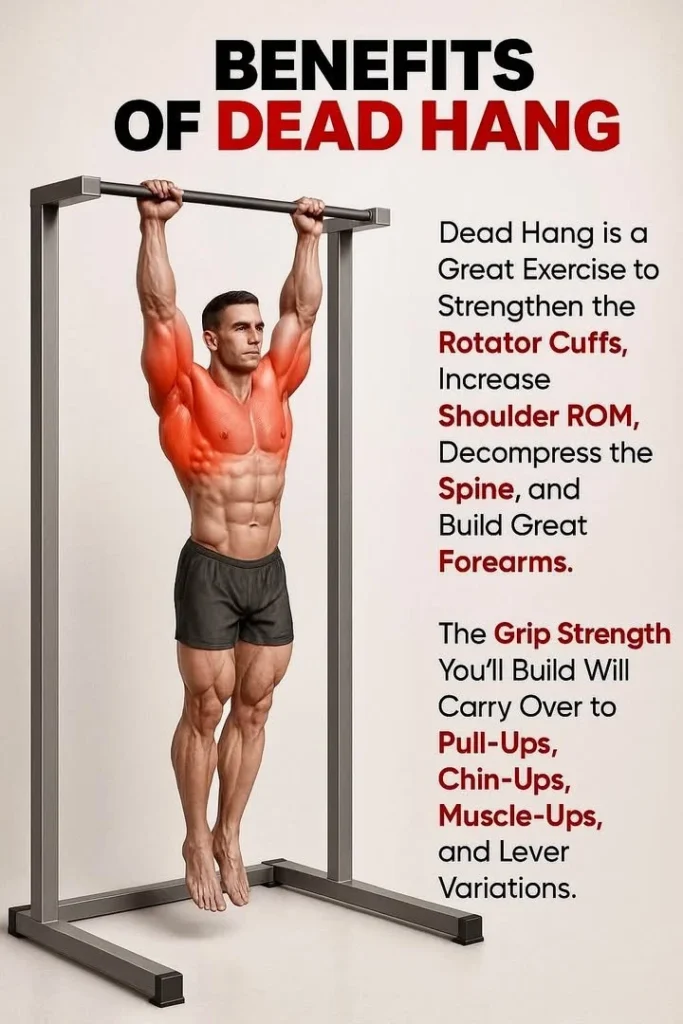
Sometimes the simplest exercises do the most. 💥 Dead hangs = ✅ Bulletproof shoulders ✅ Spine decompression ✅ Iron grip strength ✅ Forearms that pop Add them to your routine — your posture and lif…

The Power of Simplicity: Unleashing Benefits with Dead Hangs

When it comes to building strength and improving your overall fitness, sometimes the most straightforward exercises yield the greatest results. One such exercise that has gained attention for its multifaceted benefits is the dead hang. This simple yet effective practice comes packed with a host of advantages that can transform your fitness routine. Let’s explore why dead hangs should be a staple in your workout regimen.

What Are Dead Hangs?

A dead hang requires simply hanging from a pull-up bar or any sturdy surface with your arms fully extended and your body relaxed. Although it may seem trivial, this fundamental movement engages various muscle groups and promotes significant physical benefits.

Benefits of Dead Hangs

✅ Bulletproof Shoulders

Dead hangs are excellent for shoulder health. By allowing the shoulders to relax and stretch, this exercise helps maintain proper mobility and reduces the risk of injuries associated with other upper body workouts. Over time, you’ll build stronger, more resilient shoulders that can withstand intense training.

✅ Spine Decompression

In a world where we often find ourselves hunched over desks and screens, spinal decompression is a necessity. Hanging from a bar enables gravity to gently pull and elongate your spine, offering relief to compressed vertebrae and promoting better posture. This stretching action can be a game-changer for those dealing with back pain or discomfort prompted by prolonged sitting.

✅ Iron Grip Strength

Grip strength is an underrated element of overall physical fitness and can significantly impact performance in various sports and activities. Dead hangs force you to engage your forearms and hands, helping to develop a vice-like grip. This can translate to improved performance in weightlifting, climbing, and even everyday tasks.

✅ Forearms That Pop

In addition to enhancing grip strength, dead hangs also contribute to the development of muscular forearms. The static hold not only targets the flexors and extensors of the forearms but also builds endurance, leading to impressive definition over time. Well-developed forearms can serve as a mark of strength and fitness.

Incorporating Dead Hangs into Your Routine

Adding dead hangs to your workout regimen is straightforward. Here’s how to do it properly:

  1. Find a Sturdy Bar: Use a pull-up bar or any secure overhead structure.

  2. Grip the Bar: With both hands at shoulder width, grip the bar tightly with palms facing away from you.

  3. Hang Relaxed: Allow your body to hang freely, engaging your core slightly to maintain stability.

  4. Hold the Position: Start with 10-20 seconds per set and gradually increase the duration as you build strength.

  5. Include in Your Routine: Aim to incorporate dead hangs 2-3 times a week, either as a warm-up or as part of your strength training session.

Conclusion

Sometimes, the simplest exercises do the most. Dead hangs not only enhance shoulder strength and spinal health but also improve grip and forearm development. By integrating this straightforward movement into your routine, you can foster better posture and greater lifting capacity. Embrace the power of dead hangs, and watch your fitness transform! 💥

Sometimes the simplest exercises do the most. 💥 Dead hangs = ✅ Bulletproof shoulders ✅ Spine decompression ✅ Iron grip strength ✅ Forearms that pop Add them to your routine — your posture and lif… Read More »

, , , ,
Emoji 🫠 representing a range of emotions and expressions in digital communication.

🫠

The Unveiling of Emotions: Decoding the 🫠 Emoji

In the lexicon of modern communication, emojis have revolutionized the way we express our feelings and thoughts. Among these myriad symbols, the 🫠 emoji, featuring a face that appears to be melting, stands out for its unique representation of vulnerability and emotional complexity. This article explores the nuances of the 🫠 emoji and its significance in today’s digital discourse.

Understanding the 🫠 Emoji

The melting face emoji, introduced in Unicode 14.0, encapsulates a myriad of emotions. At first glance, it may evoke feelings of discomfort or defeat. However, its use is far more nuanced. It serves as a powerful metaphor for the overwhelming sensations we experience in our daily lives. Whether it’s the pressures of work, the challenges of personal relationships, or the chaos of the world around us, this emoji resonates with those moments when one feels as if they are quite literally melting under the weight of their emotions.

Symbolism of Melting

  1. Vulnerability: The melting aspect of the face can symbolize vulnerability. In a world where we often strive to appear strong and composed, this emoji provides a humorous yet poignant reminder that it’s okay to feel overwhelmed.

  2. Exhaustion: It can also convey fatigue. In a fast-paced society, the feeling of being "melted" can reflect an emotional or mental burnout that many experience, serving as a digital cry for help or understanding.

  3. Relatability: The face’s exaggerated expression captures the plight of many who feel that life’s pressures are too much to bear. By using this emoji, individuals can communicate their struggles in a relatable and lighthearted manner.

How to Use the 🫠 Emoji Wisely

Knowing the implications of the 🫠 emoji allows for more effective communication. Here are some contexts in which this emoji might shine:

  • Social Media Posts: Sharing a post about a long day or a stressful event can benefit from the inclusion of the 🫠 emoji, visually punctuating the sentiment of exhaustion.

  • Texting Friends: When catching up with friends after a tough week, this emoji can portray your emotional state without the need for detailed explanations.

  • Comments on Current Events: In discussions about overwhelming news, the melting face serves as a quick expression of shared feelings of despair or confusion.

Conclusion

In a world dominated by digital interaction, the 🫠 emoji emerges as a symbol that embodies a universal struggle—dealing with the pressures of modern life. Its clever design captures a complex set of emotions and provides a means of connection among users. As language evolves, so too does our method of expression, and the melting face is a testament to our need to communicate our emotional truths, however messy they may be.

As we continue to explore this digital era, let the 🫠 emoji remind us that we’re not alone in our feelings of vulnerability and that sometimes, it’s perfectly okay to melt a little.

🫠 Read More »

, , , ,
Strong arm emoji representing fitness and strength training.

💪🏻

Sure! Here’s a unique article based on the given text, formatted in Markdown.

# Embracing Strength: The Power of Resilience

In an increasingly challenging world, the concept of strength has evolved beyond mere physical prowess. The symbol of 💪🏻 is a testament to this changing paradigm, representing not only muscular strength but also resilience, determination, and the unwavering spirit to overcome obstacles.

## The Multi-Dimensional Nature of Strength

### Physical Strength
Traditionally, strength has been associated with physical abilities—lifting weights, running long distances, and performing strenuous activities. However, developing physical strength is just the tip of the iceberg. It serves as a foundation for a more balanced approach to overall well-being.

### Mental and Emotional Resilience
In recent years, the importance of mental and emotional resilience has gained recognition. The ability to bounce back from setbacks, manage stress, and maintain a positive outlook is critical in today's fast-paced environment. Cultivating mental strength can be likened to training a muscle; it requires practice, patience, and consistent effort.

### Community and Support
No one can achieve strength in isolation. Building a supportive community is essential for fostering resilience. Surrounding yourself with positive influences can provide motivation and encouragement, helping individuals navigate through life's challenges with greater ease. By sharing burdens and celebrating victories, we bolster our collective strength.

## Building Your Strength

### Set Realistic Goals
Establishing achievable goals is the first step in cultivating strength—be it physical, mental, or emotional. Breaking larger ambitions into smaller, more manageable tasks can prevent feelings of overwhelm and foster a sense of accomplishment.

### Practice Mindfulness
Incorporating mindfulness practices, such as meditation or yoga, can enhance resilience. These techniques promote self-awareness, helping individuals process emotions and stress effectively. Mindfulness allows for a more centered approach to challenges, enabling a clearer path to solutions.

### Engage in Regular Physical Activity
Physical exercise is a powerful tool for building strength across all dimensions. Whether it's hitting the gym, going for a run, or practicing a sport, regular activity helps boost mood and fosters mental clarity. The release of endorphins during exercise can significantly enhance resilience.

## The Journey of Transformation

Ultimately, strength is a journey, not a destination. Embracing and acknowledging the various facets of strength allows individuals to grow holistically. Each step taken towards resilience—be it a physical breakthrough, a mental triumph, or a moment of emotional clarity—builds a well-rounded sense of strength.

In a world where resilience is often tested, embodying the spirit of 💪🏻 can serve as a reminder of our capacity to overcome hardships. By focusing on continuous growth and support, we can cultivate a robust strength that prepares us for whatever challenges lie ahead.

Feel free to modify any part of it to better suit your needs!

💪🏻 Read More »

, , , ,
Man performing barbell biceps curls in an arms workout routine.

✅ 4 Biceps Exercises Routine (Barbell Only) – ARMS Workouts Routine !” 💪 1 Standing Barbell Curl 2 Seated Barbell Concentration Curls 3 Inclined Bench Reverse Grips Curl 4 Barbell Preacher Curls…

4 Biceps Exercises Routine (Barbell Only)

If you’re looking to build size and strength in your biceps, you’re in the right place! This article outlines a focused routine featuring four effective barbell exercises that can help you sculpt your arms. Grab a barbell and let’s get started with this arms workout routine.

1. Standing Barbell Curl

The standing barbell curl is a classic biceps exercise that targets the biceps brachii muscle.

How to Perform:

  • Stand with your feet shoulder-width apart, gripping a barbell with palms facing forward (supine grip).
  • Keep your elbows close to your torso and your upper arms stationary as you curl the barbell toward your shoulders.
  • Squeeze at the top of the movement and then slowly lower the barbell back to the starting position.

Tips:

  • Avoid swinging the weights; focus on a controlled movement to maximize tension on your biceps.
  • Consider different grips (wide vs. narrow) to target the muscle differently.

2. Seated Barbell Concentration Curls

This variation allows for greater muscle isolation by minimizing the use of other muscles during the lift.

How to Perform:

  • Sit on a bench with your feet firmly planted on the ground.
  • Hold a barbell with both hands, resting one arm on your knee for support.
  • Curl the barbell towards your shoulder while keeping your elbow stationary.
  • Lower back down to the starting position and repeat with the other arm.

Tips:

  • Focus on squeezing the bicep at the top and controlling the descent for maximum muscle engagement.
  • You can adjust your grip for variation; an underhand grip typically provides more bicep activation.

3. Inclined Bench Reverse Grip Curl

The inclined bench reverse grip curl targets the biceps while also engaging the forearms, offering a unique angle of attack.

How to Perform:

  • Set an incline bench to a comfortable angle and sit back against it.
  • With an underhand grip on the barbell, let your arms hang straight down.
  • Curl the barbell toward your shoulders while squeezing your biceps.
  • Return to the starting position in a controlled manner.

Tips:

  • Maintain tension throughout the movement and avoid letting your elbows drift forward.
  • This exercise can help develop the brachialis, adding overall size to your arms.

4. Barbell Preacher Curls

The preacher curl is excellent for isolating the biceps and preventing any cheating during the exercise.

How to Perform:

  • Position yourself on a preacher curl bench, ensuring your chest is against the pad.
  • Hold the barbell with an underhand grip, placing it at the top of the movement.
  • Curl the barbell upward toward your shoulders while keeping your upper arms against the pad.
  • Slowly lower back down to complete the repetition.

Tips:

  • Make sure to keep your elbows fixed against the pad for full isolation.
  • Utilize a weight that allows you to complete each rep with proper form—avoid going too heavy.

Conclusion

These four barbell exercises are a fantastic way to build strength and mass in your biceps. Incorporate them into your regular workout routine for balanced arm development. Remember to warm up properly, focus on form, and progressively increase the weights as your strength improves. Happy lifting! 💪

✅ 4 Biceps Exercises Routine (Barbell Only) – ARMS Workouts Routine !” 💪 1 Standing Barbell Curl 2 Seated Barbell Concentration Curls 3 Inclined Bench Reverse Grips Curl 4 Barbell Preacher Curls… Read More »

, , , ,
A vibrant collage representing the #fblifestyle trend in fitness and fashion.

#fblifestyle

Embracing the FB Lifestyle: A Journey Towards Balance and Fulfillment

In today’s fast-paced world, the concept of lifestyle has evolved dramatically, with social media platforms like Facebook (FB) playing a pivotal role in shaping our daily routines and interactions. The hashtag #fblifestyle symbolizes a rich tapestry of shared experiences, values, and aspirations that characterize this modern way of living. Let’s delve deeper into what it truly means to embrace an FB lifestyle and how it can lead to greater balance and fulfillment in our lives.

The Rise of Digital Communities

At its core, the FB lifestyle is defined by connections—both genuine and digital. For many, Facebook acts as a bridge, linking friends and family from all walks of life. This social platform has transitioned from merely connecting people to fostering communities where individuals can share their passions, ideas, and daily experiences.

Digital communities allow us to express ourselves in ways that previous generations could only dream of. Whether it’s through sharing hearty meals, fitness journeys, or travel adventures, the FB lifestyle embraces the idea of celebrating life’s moments, big and small.

Finding Balance in the Digital Age

While the FB lifestyle celebrates connectivity, it also emphasizes the importance of balance. The constant stream of updates, notifications, and curated images can sometimes lead to feelings of inadequacy or overwhelm. Here are a few strategies to ensure that the FB lifestyle remains a source of positivity:

1. Curate Your Feed

Be intentional about the accounts you follow. Surrounding yourself with uplifting, inspiring, and informative content can greatly enhance your experience. Take the time to unfollow pages or individuals that bring negativity into your feed.

2. Set Boundaries

It’s easy to get lost in the digital space, but setting time limits for social media use can help maintain a healthy relationship. Allocate specific times of the day to check Facebook, ensuring it doesn’t interfere with real-world interactions.

3. Engage Authentically

Instead of passively scrolling, engage with content that resonates with you. Leave meaningful comments, share stories, and foster genuine connections. This authentic engagement can create a more enjoyable experience and deepen relationships.

The Impact of Sharing

The act of sharing has become central to the FB lifestyle. From life milestones to everyday musings, sharing not only keeps us connected but also encourages vulnerability and trust within our communities. Here are some benefits of sharing your journey:

1. Building a Support Network

Sharing personal stories can invite empathy and support from others. Many find solace in knowing they are not alone in their struggles or triumphs, sparking conversations and creating bonds that can lead to lifelong friendships.

2. Inspiring Others

Your experiences can serve as motivation for someone else. Whether you’re conquering fitness goals, navigating career changes, or embracing personal growth, your journey might inspire others to take the next step in their lives.

3. Documenting Your Journey

The FB lifestyle allows for documentation of life moments, creating a digital scrapbook that you can look back on over the years. This reflection can serve as a reminder of growth, resilience, and the joy experienced along the way.

Conclusion

Embracing the FB lifestyle goes beyond the likes and shares; it’s about fostering genuine connections, maintaining balance, and celebrating life’s journey. By curating your digital experiences and engaging authentically, you can ensure that your online presence adds value to your life and the lives of those around you. So, as you navigate this fascinating world of social media, remember to embrace the positives and cultivate a lifestyle that reflects your true self.

#fblifestyle Read More »

, , , ,
Comprehensive leg day workout focusing on quads, hamstrings, calves, and glutes.

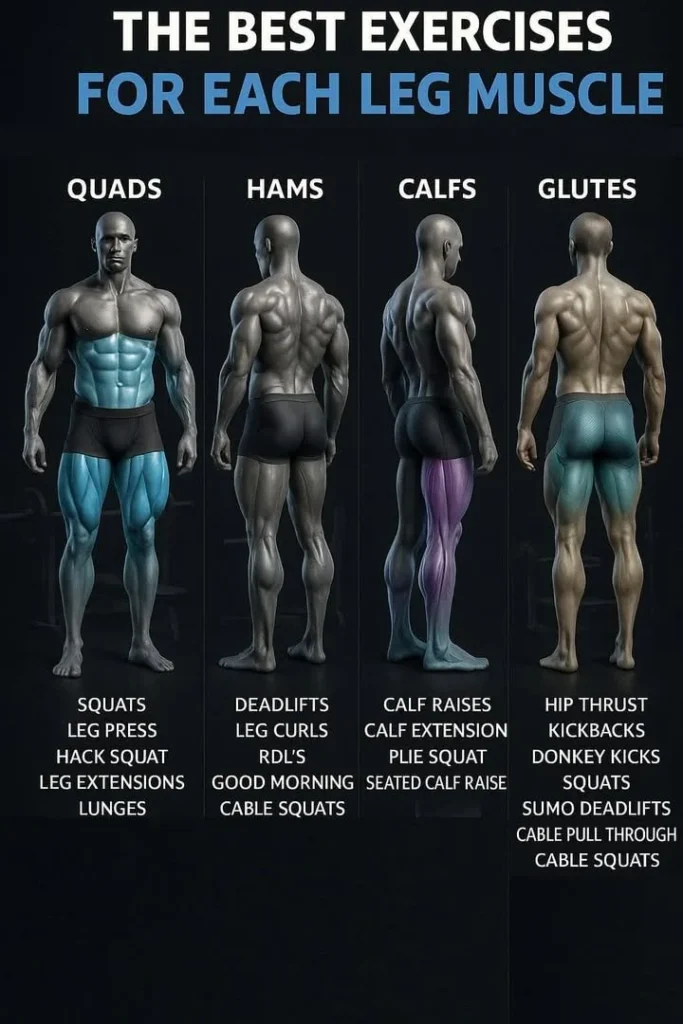
“Leg day hits different when you know exactly what you’re training 🔥 Quads, Hams, Calves, Glutes — hit them all for a complete lower body transformation 💥 #LegDay #MuscleBreakdown #TrainSmart”

# Unlocking the Power of Leg Day: A Complete Lower Body Transformation

Leg day hits different when you approach it with a clear plan and purpose. Understanding the specific muscle groups you’re targeting can transform your workouts from routine to results-driven. Are you ready to dive into the world of quads, hamstrings, calves, and glutes? Let’s break it down!

## The Importance of Leg Day

Many gym-goers often underestimate leg day, focusing primarily on upper body workouts. But neglecting the lower body can impede overall performance and lead to muscular imbalances. Strong legs not only enhance athletic performance but also provide a foundation for stability and balance in daily life. Plus, a well-rounded leg workout can rev up your metabolism, helping with fat loss.

## Targeting Key Muscle Groups

When planning your leg day routine, it’s crucial to remember the four main muscle groups you should be targeting:

### 1. Quadriceps (Quads)
The quads are a group of four muscles located on the front of the thigh, responsible for knee extension and hip flexion. Not only do they contribute to powerful movements like squats and lunges, but strong quads can also improve your overall stability. 

#### Recommended Exercises:
- Barbell Squats
- Lunges
- Leg Press

### 2. Hamstrings (Hams)
Located at the back of your thighs, the hamstrings are essential for knee flexion and hip extension. Balancing out the quads with hamstring-focused exercises is vital to prevent injury and improve muscle symmetry.

#### Recommended Exercises:
- Deadlifts
- Leg Curls
- Good Mornings

### 3. Calves
Often overlooked, the calves play a critical role in running and jumping. They consist of two main muscles — the gastrocnemius and the soleus — which work together to stabilize your body during movement.

#### Recommended Exercises:
- Standing Calf Raises
- Seated Calf Raises
- Calf Press on the Leg Press Machine

### 4. Glutes
The glute muscles are not only pivotal for aesthetics but also functional strength. Strong glutes contribute to better posture and performance in various sports, making them essential in any leg workout.

#### Recommended Exercises:
- Hip Thrusts
- Glute Bridges
- Bulgarian Split Squats

## Crafting Your Leg Day Routine

Now that you understand the key muscle groups, it's time to concoct your own leg day routine. Aim for a comprehensive session that includes exercises targeting each muscle group. Start with compound movements that engage multiple muscles followed by isolation exercises for a more focused approach.

### Sample Leg Day Workout:
1. **Barbell Squats** – 4 sets of 8-12 reps
2. **Deadlifts** – 3 sets of 8-10 reps
3. **Lunges** – 3 sets of 10-12 reps per leg
4. **Leg Curls** – 3 sets of 12-15 reps
5. **Standing Calf Raises** – 4 sets of 15-20 reps
6. **Hip Thrusts** – 3 sets of 10-12 reps

## Conclusion: Train Smart for Results

Leg day offers a unique opportunity to reframe how you think about lower body training. By knowing exactly what muscles you’re working and the importance of each, you can maximize your workout efficiency and effectiveness. So, take this knowledge into your next leg day session and witness the transformation that follows.

Unlock your leg day potential, and watch as you build a stronger, more powerful lower body! 🔥💥

#LegDay #MuscleBreakdown #TrainSmart

“Leg day hits different when you know exactly what you’re training 🔥 Quads, Hams, Calves, Glutes — hit them all for a complete lower body transformation 💥 #LegDay #MuscleBreakdown #TrainSmart” Read More »

, , , ,
Person performing various shoulder exercises for deltoid strength

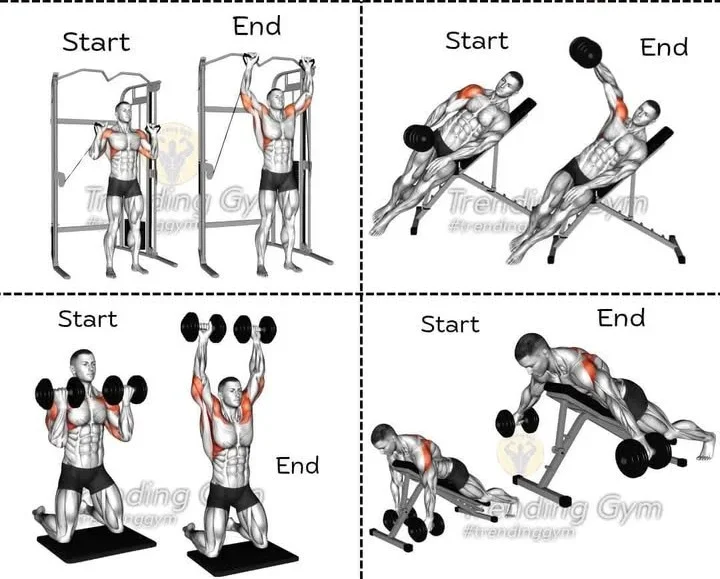
✅ Top 4 Best Shoulders Deltoid Exercises – Shoulder Day 1 Cable Standing Shoulder Press 2 Dumbbells Lateral Raises on Incline Bench 3 Dumbbells Front Raises 4 Dumbbells Rear Delts Raises on Inclin…

Top 4 Best Shoulder Deltoid Exercises for an Effective Shoulder Day

Shoulder workouts are essential for building upper body strength and achieving a balanced physique. The deltoid muscles, which form the rounded shape of the shoulders, can often be overlooked. However, incorporating targeted exercises can lead to significant gains in size and strength. In this article, we’ll explore the top four deltoid exercises to maximize your shoulder day routine.

1. Cable Standing Shoulder Press

The Cable Standing Shoulder Press is a fantastic exercise for building strength and stability in the deltoids. Using a cable machine helps to maintain constant tension throughout the movement, which is crucial for muscle growth.

How to Perform:

  • Stand facing away from the cable machine with the cables set to the lowest position.
  • Grip the handles with both hands at shoulder height, palms facing forward.
  • Engage your core, and press the handles overhead while keeping your elbows slightly in front of you.
  • Lower back down to shoulder height with control.

Repetitions: Aim for 3-4 sets of 8-12 reps.

2. Dumbbell Lateral Raises on Incline Bench

Performing Dumbbell Lateral Raises on an incline bench takes this classic shoulder exercise to the next level by isolating the lateral deltoid and minimizing cheating through momentum.

How to Perform:

  • Set an incline bench to about 30 degrees and lie on your side with a dumbbell in your top hand.
  • Start with the dumbbell at your side, arm fully extended.
  • Raise the dumbbell horizontally until it reaches shoulder height, keeping a slight bend in your elbow.
  • Lower the dumbbell back down slowly to the starting position.

Repetitions: Aim for 3-4 sets of 10-15 reps per arm.

3. Dumbbell Front Raises

Dumbbell Front Raises effectively target the anterior deltoids and improve shoulder definition. This exercise is straightforward but requires proper form to avoid injury.

How to Perform:

  • Stand with your feet shoulder-width apart, holding a dumbbell in each hand at your thighs.
  • Engage your core and raise both dumbbells simultaneously in front of you until they reach shoulder height.
  • Keep your arms straight but not locked, and control the weights as you lower them back to your thighs.

Repetitions: Aim for 3-4 sets of 10-15 reps.

4. Dumbbell Rear Delts Raises on Incline Bench

To achieve well-rounded shoulder development, it’s essential to target the rear deltoids. The Dumbbell Rear Delts Raises on an incline bench emphasizes the posterior deltoid and helps improve posture.

How to Perform:

  • Set an incline bench to about 30 degrees and lay face down with a dumbbell in each hand, arms hanging straight down.
  • Keeping a slight bend in your elbows, raise the dumbbells outward in a wide arc until they are parallel to the ground.
  • Squeeze the shoulder blades together at the top, then lower the weights back to the starting position.

Repetitions: Aim for 3-4 sets of 10-15 reps.

Conclusion

Incorporating these top four shoulder deltoid exercises into your shoulder day routine will help you build strength, improve muscle definition, and enhance your overall performance in the gym. Remember to focus on form and control to maximize your results and prevent injury. Happy lifting!

✅ Top 4 Best Shoulders Deltoid Exercises – Shoulder Day 1 Cable Standing Shoulder Press 2 Dumbbells Lateral Raises on Incline Bench 3 Dumbbells Front Raises 4 Dumbbells Rear Delts Raises on Inclin… Read More »

, , , ,
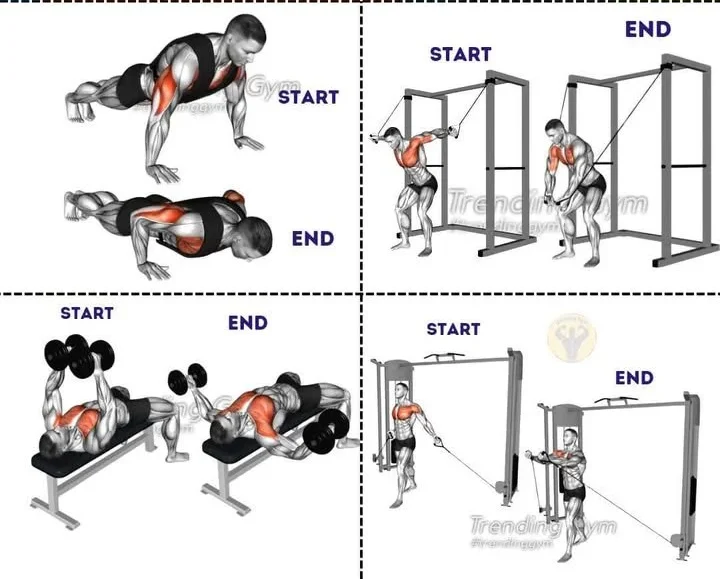
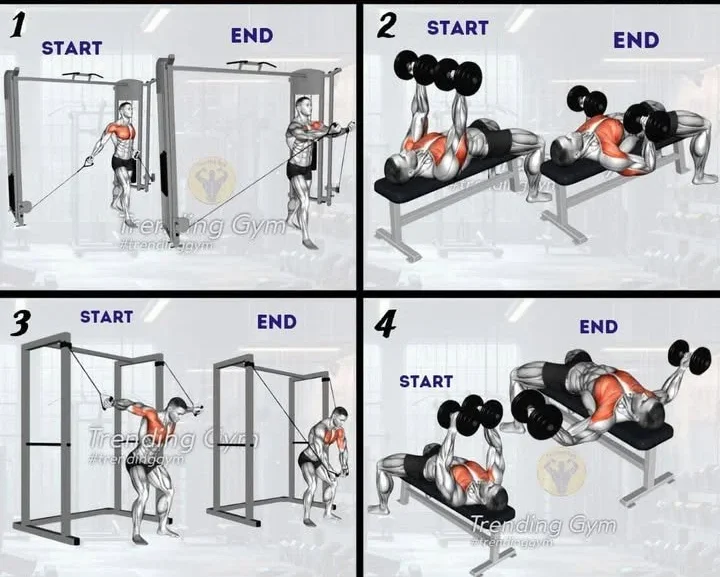
Chest workout routine with push-ups, dumbbell bench press, and cable low fly exercises.

✅ Best Chest Workout Routine – Chest Day 🔥 ✨ 1 Push-ups With Weight 2 Bend High Fly 3 Dumbbells Bench Press 4 Cable Low Fly 3 sets 10-12 reps #fitness #chestworkout #chestday #fblifestyle

Unleash the Power of Your Chest: The Ultimate Chest Workout Routine

If you’re on the journey to build a stronger and more defined chest, look no further! This workout routine is designed to challenge your muscles, promote growth, and enhance your overall upper body strength. Whether you’re a seasoned gym-goer or a fitness beginner, this chest day workout is perfect for you. Get ready to pump up your pecs with this killer routine!

Warm-Up: Preparing for the Burn

Before diving into your main workout, it’s crucial to warm up your body. A good warm-up can improve your flexibility, reduce the risk of injury, and enhance your performance. Spend 5-10 minutes stretching and performing light cardio, such as jumping jacks or arm circles, to get your blood flowing.

The Chest Workout Routine

1. Push-Ups With Weight

  • Sets: 3
  • Reps: 10-12

Start your workout with weighted push-ups. This classic exercise is fantastic for building overall chest strength. Add some weight to your back using a plate or a weighted vest to increase the intensity. Ensure your form is correct—keep your body straight and lower yourself until your chest almost touches the floor.

2. Bend High Fly

  • Sets: 3
  • Reps: 10-12

Next up is the bend high fly, which targets your chest muscles by emphasizing the stretch at the top of the movement. Use a pair of dumbbells and hinge at your hips while keeping a slight bend in your knees. Raise the weights out to the side at shoulder height, squeezing your pecs together at the top.

3. Dumbbells Bench Press

  • Sets: 3
  • Reps: 10-12

The dumbbell bench press is a staple for any chest workout and for good reason! Lie on a flat bench with a dumbbell in each hand, palms facing forward. Push the weights upwards until your arms are fully extended, and then lower them back down slowly. This exercise not only builds strength but also improves muscle symmetry.

4. Cable Low Fly

  • Sets: 3
  • Reps: 10-12

Finish your routine with the cable low fly. Adjust the cables to the lowest setting and stand in the middle. Grab the handles and with a slight bend in your elbows, bring your hands together in front of you. This move is excellent for targeting the inner chest and achieving that well-rounded look.

Cool Down: Stretch and Recover

After your workout, it’s essential to cool down and stretch your chest muscles to aid in recovery. Consider performing static stretches such as doorway stretches or chest openers to increase flexibility and reduce muscle tightness.

Conclusion

Incorporating this chest workout routine into your fitness regimen will not only help build a stronger chest but also improve your overall upper body strength. Remember to keep your form in check, stay hydrated, and listen to your body. Chest day is about pushing your limits—so get in there, work hard, and enjoy those gains!

Don’t forget to share your progress and tag us!

#fitness #chestworkout #chestday #fblifestyle

✅ Best Chest Workout Routine – Chest Day 🔥 ✨ 1 Push-ups With Weight 2 Bend High Fly 3 Dumbbells Bench Press 4 Cable Low Fly 3 sets 10-12 reps #fitness #chestworkout #chestday #fblifestyle Read More »

, , , ,
A vibrant #fblifestyle image showcasing fitness, beauty, and lifestyle inspiration.

#fblifestyle

Embracing the FB Lifestyle: A Journey Towards Fulfillment

In today’s fast-paced world, many individuals seek a lifestyle that fosters balance, positivity, and personal growth. The hashtag #FBLifestyle epitomizes this quest, representing a blend of health, happiness, and holistic living. By adopting principles of the FB lifestyle, people can cultivate a fulfilling existence that resonates with their values and aspirations.

Understanding the FB Lifestyle

The FB lifestyle isn’t just about fitness or well-being; it’s a comprehensive approach that encourages individuals to nourish their minds, bodies, and spirits. At its core lie four pivotal components:

  1. Fitness: Regular physical activity is paramount. Whether it’s hitting the gym, practicing yoga, or engaging in outdoor adventures, movement is essential for maintaining physical health and mental clarity.

  2. Balance: Achieving balance in life involves making conscious choices about work, relationships, and self-care. The FB lifestyle advocates for setting boundaries and prioritizing time for relaxation and personal pursuits.

  3. Nutrition: What we consume has a profound impact on our overall well-being. Adopting a diet rich in nutrients, whole foods, and mindfulness can improve energy levels, enhance mood, and support long-term health.

  4. Community: Building and nurturing relationships is a vital aspect of the FB lifestyle. Connections with like-minded individuals foster support, accountability, and encouragement on the journey to a fulfilling life.

Strategies for Adopting the FB Lifestyle

1. Set Realistic Goals

Begin your journey by establishing achievable goals for fitness, nutrition, and overall well-being. Whether it’s running a 5K, trying a new recipe each week, or practicing mindfulness, setting clear, manageable objectives can help maintain focus and motivation.

2. Incorporate Movement into Your Life

Find activities that you enjoy and integrate them into your daily routine. This could mean walking instead of driving, joining a dance class, or participating in group sports. The key is to make movement enjoyable, so it becomes a natural part of your lifestyle.

3. Mindful Eating Practices

Practice mindfulness in your eating habits by being present during meals, appreciating the flavors, and recognizing hunger and fullness cues. This approach not only enhances your relationship with food but also promotes healthier eating habits.

4. Foster Connection

Engage with friends, family, or community groups that share your interests and values. Whether through social gatherings, online forums, or local events, building a support system can provide motivation and inspiration in your journey.

5. Prioritize Self-Care

Don’t forget to dedicate time to self-care. This could include meditation, reading, pursuing hobbies, or simply taking a break. Prioritizing your mental and emotional health is just as important as physical fitness.

Conclusion

The #FBLifestyle is about embracing a holistic approach to living, where fitness, balance, nutrition, and community play significant roles in cultivating a fulfilling life. By implementing these strategies and making conscious decisions aligned with your values, you can embark on a rewarding journey toward well-being and happiness. Start today, and see how the FB lifestyle can transform your life for the better!

#fblifestyle Read More »

, , , ,
Inspiring legendary bodybuilders showcasing strength and dedication

Legendary 🏆 Bodybuilders 💪🏻🥵 #fblifestyle

The Legendary Bodybuilders: Icons of Strength and Dedication 🏆💪🏻

In the world of fitness and bodybuilding, certain individuals have etched their names into the annals of history, becoming legends in their own right. These bodybuilders have not only sculpted incredible physiques but have also inspired countless individuals to pursue their own fitness journeys. In this article, we will explore the lives and legacies of some of the most iconic bodybuilders, highlighting their contributions to the sport and the lifestyle that surrounds it.

1. Arnold Schwarzenegger: The Austrian Oak

Arnold Schwarzenegger

No discussion of legendary bodybuilders would be complete without mentioning Arnold Schwarzenegger. Born in Austria, Arnold rose to fame as a seven-time Mr. Olympia champion. His incredible physique and charismatic personality helped popularize bodybuilding as a sport. Beyond competitions, he became a Hollywood superstar, starring in iconic films like The Terminator and Predator. Arnold’s influence goes far beyond the stage; he is an advocate for fitness, health, and various philanthropic causes.

2. Ronnie Coleman: The King of Bodybuilding

Ronnie Coleman

Ronnie Coleman, another giant in the realm of bodybuilding, is known for his unmatched achievements, having won the Mr. Olympia title an astonishing eight times. His incredible work ethic and dedication to his training regimen set the standard for aspiring bodybuilders. Ronnie’s catchphrase, "Yeah Buddy!" has become synonymous with his motivational style. Despite facing numerous health challenges in recent years, his spirit and positive outlook continue to inspire both fans and fellow athletes alike.

3. Lee Haney: The Pioneer of Muscle

Lee Haney

Lee Haney is renowned for being one of the first to emphasize the importance of balanced training and a holistic approach to bodybuilding. He won the Mr. Olympia title eight times in the 1980s and is credited with helping to shift the sport toward a more athletic and aesthetic ideal. Lee’s philosophy on fitness includes a strong focus on health and longevity, proving that true bodybuilding is about more than just size; it’s about overall well-being.

4. Dorian Yates: The Shadow

Dorian Yates

Dorian Yates, known as "The Shadow," revolutionized bodybuilding with his intense training methods and incredible conditioning. He secured the Mr. Olympia title six times in the 1990s, setting a new standard for muscle size and symmetry. Dorian’s high-intensity training approach has influenced countless athletes, and he remains a respected figure in the fitness community. His dedication and groundbreaking techniques continue to shape the way bodybuilders train today.

5. Franco Columbu: The Multifaceted Champion

Franco Columbu

Franco Columbu, a two-time Mr. Olympia champion, is celebrated not just for his incredible strength and physique but also for his versatility. A skilled powerlifter and an accomplished actor, Franco played a significant role in the popularization of bodybuilding alongside Arnold. His entrepreneurial endeavors in fitness and nutrition showcase his dedication to promoting a healthy lifestyle. Franco’s legacy as an athlete and his contributions to the sport continue to inspire future generations.

Conclusion: A Legacy of Inspiration

The legendary bodybuilders of our time have transcended the world of fitness, becoming icons of strength, perseverance, and ambition. Their stories are not just about lifting weights but represent the culmination of hard work, discipline, and a dedication to the lifestyle of bodybuilding. Whether you are an aspiring bodybuilder or simply someone seeking inspiration, the legacies of these legends will continue to motivate individuals to pursue their best selves for years to come.

Get Inspired and Build Your Own Legacy

As you embark on your fitness journey, remember the stories of these legendary figures. Strength, both physical and mental, is a path filled with challenges and triumphs. Embrace the grind, stay dedicated, and who knows? You might just become the next legend in the world of bodybuilding. 🏆💪🏻🔥

Legendary 🏆 Bodybuilders 💪🏻🥵 #fblifestyle Read More »

, , , ,
A fun guess game that challenges your skills and intuition.

Guess?

The Art of Guesses: A Journey through Uncertainty

Guessing is an intrinsic part of human experience. Every day, we find ourselves in situations where we must make decisions without all the facts at hand. From predicting the weather to choosing a restaurant, our minds often engage in the art of guessing. But what does it mean to guess? And how does this process shape our lives?

The Psychology Behind Guessing

At its core, guessing is an exercise in estimation. It taps into our instincts and experiences, allowing us to make informed choices despite incomplete information. Psychologists suggest that the ability to guess effectively relies on our cognitive functions, including intuition and reasoning. When faced with uncertainty, our brains quickly scan our previous experiences, trying to find patterns or similarities to guide our decisions.

The Role of Intuition

Intuition plays a significant role in our guesswork. It is that gut feeling that nudges us toward a particular answer or choice, often before our logical mind has a chance to catch up. While some may dismiss intuition as mere whimsy, research indicates that it can be a reliable source of information, especially when we have a background understanding of a topic.

Guessing Games: A Fun Exploration

Guessing isn’t just reserved for serious decision-making; it also permeates our recreational lives. Guessing games, such as charades or trivia, challenge us to think outside the box and engage with others. These activities not only serve as entertainment but also foster social connections, encourage teamwork, and stimulate cognitive function.

Charades: The Classic Guessing Game

In charades, players communicate a word or phrase through gestures and expressions, while teammates attempt to guess what it is. This game highlights the importance of non-verbal cues in communication and allows players to showcase their creativity. The joy of bringing laughter and excitement through guessing contributes to its enduring popularity.

Trivia Nights: Sharpening Our Knowledge

Trivia nights encourage participants to guess answers based on their knowledge of various topics. This not only makes for an enjoyable evening but also allows individuals to learn new facts and engage with different subjects. The thrill of competition adds an exciting layer to the guessing game, as teams battle to showcase their knowledge and quick thinking.

Guessing in Everyday Life

In our everyday lives, we are frequently required to make guesses or estimates. From forecasting the time it takes to commute to predicting the outcome of a sporting event, we constantly navigate uncertainty. Understanding the mechanics behind our guesses can improve our decision-making skills and confidence in our choices.

The Importance of Making Educated Guesses

While guessing can sometimes feel like a shot in the dark, making educated guesses is an essential skill. This involves using previous knowledge, context clues, and logical reasoning to arrive at a conclusion. For instance, when attempting to guess the ending of a book, drawing on familiar plot structures or character development can provide valuable insights.

The Dangers of Guessing

Despite its benefits, there are pitfalls to guessing. Relying too heavily on intuition without critical thinking can lead to misguided choices. Furthermore, cognitive biases—such as confirmation bias—can cloud our judgment, causing us to favor information that aligns with our pre-existing beliefs.

Striking a Balance

Finding a balance between intuition and analytical thinking is crucial. By honing our ability to make informed guesses, we can navigate uncertainty more effectively. Taking time to assess information and considering multiple perspectives can mitigate the risks associated with guessing.

Conclusion

Guessing is an inevitable aspect of life that combines creativity, intuition, and reasoning. Whether we engage in fun guessing games, make educated estimates in our daily routines, or rely on intuition to guide our choices, the act of guessing is a complex interplay of cognitive processes. Embracing this uncertainty can lead to personal growth, unexpected discoveries, and meaningful connections with others. So the next time you find yourself pondering a question with no clear answer, remember the art of guessing and the adventure it can lead you on.

Guess? Read More »

, , , ,
How to Build Bigger Glutes

How to Build Bigger Glutes: A Comprehensive Guide

let’s fined out is it bigger Glutes

Achieving well-defined and bigger glutes is a common fitness goal for many individuals. A structured workout routine that focuses on the right exercises can help in strengthening and enlarging this muscle group effectively. Below, we will explore some key exercises you can incorporate into your fitness regime for massive glute gains.

How to Build Bigger Glutes

1. Reverse Hyper Extensions

Reverse hyperextensions are an excellent exercise for targeting the gluteus maximus while also engaging the lower back and hamstrings. This movement mimics the natural hip extension pattern, which is crucial for glute growth.

How to Perform:

  • Position yourself on the reverse hyperextension machine with your hips at the edge.
  • Grab the handles securely.
  • Allow your legs to hang off the edge, keeping your feet pointed and slightly together.
  • Engage your core and lift your legs in a controlled motion until they are parallel to the ground.
  • Slowly lower your legs back to the starting position.

Sets and Reps: Perform 3 sets of 12-15 reps.

2. Romanian Deadlift

The Romanian deadlift is a fantastic compound movement focusing on the posterior chain, particularly the glutes and hamstrings. This exercise not only builds strength but also improves flexibility in the hips.

How to Perform:

  • Stand with feet shoulder-width apart, holding a barbell with both hands in front of your thighs.
  • Keeping your knees slightly bent, hinge at the hips and lower the barbell along your legs, maintaining a straight back.
  • Go as low as your flexibility allows, ideally stopping when you feel a stretch in your hamstrings.
  • Engage your glutes to return to the starting position while keeping your back straight.

Sets and Reps: Complete 3 sets of 12-15 reps.

3. Back Extensions

How to Build Bigger Glutes

Back extensions, often performed on a hyperextension bench, are excellent for strengthening the lower back while also engaging the glutes. This exercise emphasizes hip extension and can contribute to building stronger glute muscles.

How to Perform:

  • Position yourself on the back extension machine, ensuring your hips are snug against the pad.
  • Cross your arms over your chest or place your hands behind your head.
  • Lower your upper body towards the ground while maintaining a straight spine.
  • Engage your glutes and lift your torso back to a neutral position.

Sets and Reps: Aim for 3 sets of 12-15 reps.

4. Wall Squats

Wall squats are a low-impact exercise that can help promote proper squat form while effectively targeting the glute muscles. This is an excellent movement for building endurance and strength in the glutes.

How to Perform:

  • Stand with your back against a wall, feet shoulder-width apart, and about 2 feet away from the wall.
  • Slide your back down the wall until your thighs are parallel to the ground, ensuring your knees do not go past your toes.
  • Hold this position while engaging your core and glutes.
  • Slowly push through your heels to stand back up against the wall.

Sets and Reps: Perform 3 sets of 12-15 reps.

Conclusion

Building bigger glutes requires a combination of effective exercises, proper form, and consistency. By incorporating reverse hyperextensions, Romanian deadlifts, back extensions, and wall squats into your routine, you will start seeing improvements in your strength and glute development. Always remember to warm up before your workout and listen to your body to prevent injuries. Happy lifting!

How to Build Bigger Glutes: A Comprehensive Guide Read More »

, , , ,
Scroll to Top