Abs Killer: 8 Core Moves to Burn, Tone, and Sculpt Your Midsection
A ripped midsection comes from consistent, targeted work and smart programming — not endless crunches. To truly carve and strengthen your abs, combine exercises that attack the upper, lower, and obliques while prioritizing technique, progressive overload, and sufficient recovery. For best results, pair core development with complementary posterior-chain training; a balanced approach to back and core helps posture and performance — try this back workout to balance your routine.
Why targeted ab work matters
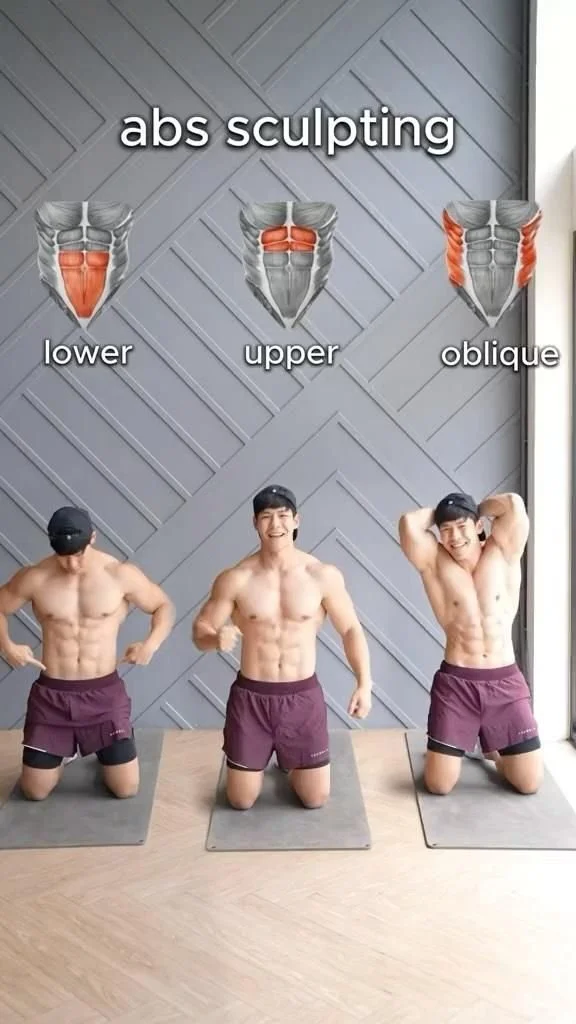
Many people default to one or two moves (crunches, sit-ups) and wonder why their midsection doesn’t improve. The abs are a functional muscle group with different regions:
- Upper abs: flex the torso (e.g., crunch variations).
- Lower abs: control pelvic tilt and lift the legs (e.g., leg raises).
- Obliques: resist rotation and lateral flexion (e.g., side planks, Russian twists).
Training each region with progressive difficulty and varied planes of motion yields the best visual and functional results.
8 Killer Exercises to Burn Your Core
Perform these exercises as a circuit or broken into supersets. Focus on control, full range, and breathing.
- Hollow Body Hold (30–60 sec)
- Why: Builds total-core isometric strength and creates that “tight” midsection.
- Cue: Flatten your lower back to the floor, squeeze glutes, hold shoulders off the mat, legs extended and slightly off the ground.
- Weighted Crunch (3 sets of 10–15)
- Why: Targets upper abs with added load for hypertrophy.
- Cue: Use a plate or dumbbell across the chest or behind the head; exhale on the lift, keep chin tucked.
- Hanging Leg Raises (3 sets of 8–12)
- Why: High activation of lower abs and hip flexors.
- Cue: Control the descent; avoid swinging. Progress by straightening knees or adding ankle weights.
- Russian Twists (3 sets of 20 total)
- Why: Hits the obliques and improves rotational strength.
- Cue: Keep back at a 45° angle, rotate from the torso, not just the arms. Add a med ball for load.
- Bicycle Crunches (3 sets of 20 total)
- Why: Great dynamic movement for obliques and rectus abdominis coordination.
- Cue: Drive elbow to opposite knee, not just moving the elbow. Slow and controlled reps beat speed.
- Pallof Press (3 sets of 10–12 each side)
- Why: Anti-rotation move that strengthens the deep core stabilizers.
- Cue: Press resistance away from chest, resist rotation, maintain braced torso.
- Decline Sit-Ups or V-Ups (3 sets of 10–15)
- Why: Adds intensity to upper and mid-ab focus; V-ups incorporate lower abs too.
- Cue: Focus on an explosive concentric and controlled eccentric.
- Side Plank With Hip Dips (3 sets of 10–15 dips each side)
- Why: Strengthens lateral chain and obliques for aesthetics and stability.
- Cue: Keep hips high, slow dip and return. Add a weight on the top hip for progression.
Sample 20–30 Minute Killer Core Circuit
- Warm up: 5 minutes dynamic mobility (cat-camel, leg swings).
- Circuit (3 rounds, minimal rest):
- Hollow Body Hold — 30 sec
- Hanging Leg Raises — 10 reps
- Pallof Press (each side) — 10 reps
- Russian Twists — 16 reps
- Side Plank Hip Dips (each side) — 12 reps
Rest 60–90 seconds between rounds.
Tip: If you’re short on time, superset abs with upper-body movements (e.g., biceps or presses). For efficient pairing and programming ideas, consider this compact barbell-only biceps routine to alternate with core sets.
Progression and troubleshooting
- Increase difficulty by adding load, range, or instability (e.g., weighted Russian twists, single-leg hollow holds).
- If you feel neck strain, support the head lightly and focus on pelvic tilt to use abs rather than neck muscles.
- Swaying or momentum means you’re too fast — slow it down.
- Track reps and time under tension instead of just “how many sets” you did.
Nutrition and recovery
Sculpted abs are built in the kitchen as much as the gym. Aim for:
- A slight calorie deficit if body fat reduction is the goal.
- Adequate protein to preserve lean mass.
- Whole-food carbohydrates timed around workouts for performance.
Also prioritize sleep and active recovery; core training demands CNS readiness and spinal health.
Final tips
- Train abs 2–4 times per week, mixing heavy-loaded sessions with endurance and stability work.
- Pair core work with posterior chain training to prevent imbalances and protect your spine.
- Consistency and progressive overload will win over countless reps of the same old crunch.
Start with the fundamentals, practice perfect form, and gradually layer intensity. With the right plan and patience, you’ll see both strength and sculpting results in your core.