Workout Plan Blueprint
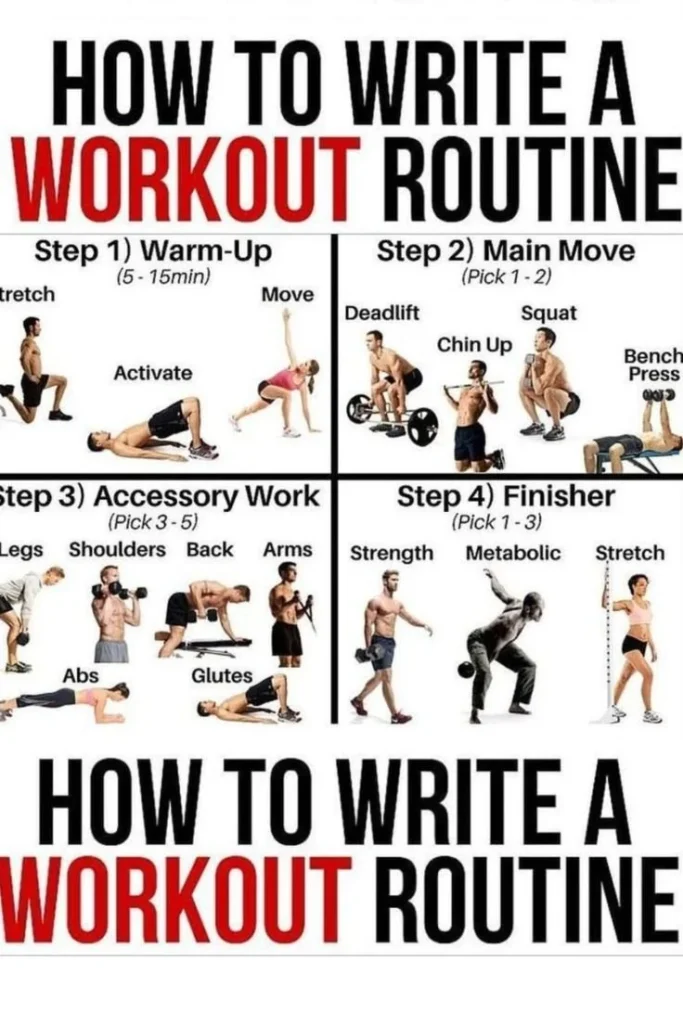
Writing an effective workout plan starts with clear goals, realistic scheduling, and exercises that match your fitness level and lifestyle. Whether you want strength, fat loss, or improved endurance, a structured approach keeps you consistent and progressing; for bodyweight-focused beginners, this approach pairs well with foundational calisthenics routines like those in a practical beginner’s calisthenics guide.
Step 1 — Define your goal and timeline
Decide whether your priority is strength, hypertrophy, endurance, mobility, or a mix. Set a realistic timeline (e.g., 8–12 weeks) and pick measurable markers: lifting numbers, body-fat percentage, performance targets, or consistency metrics. Smaller, specific milestones help you adapt the plan as you improve.
Step 2 — Choose training frequency and split
Pick how many days per week you can commit (3–6 is common). Example splits:
- 3 days: full-body sessions
- 4 days: upper/lower split
- 5 days: push/pull/legs + accessory days
For upper-body emphasis, consult a focused routine to structure presses, pulls, and accessory moves with correct progression and balance, such as guides detailing comprehensive upper-body programming in an ultimate upper-body guide.
Step 3 — Balance cardio and strength
Aim to schedule cardio and strength around each other so they don’t blunt each other’s benefits — e.g., separate intense cardio and heavy lifting onto different days or do low-intensity steady-state cardio after lifting. For principles and weekly layout ideas that help you merge both effectively, see this resource on how to balance cardiovascular and muscle-focused training: balancing cardio and muscle work.
Step 4 — Pick exercises and order them
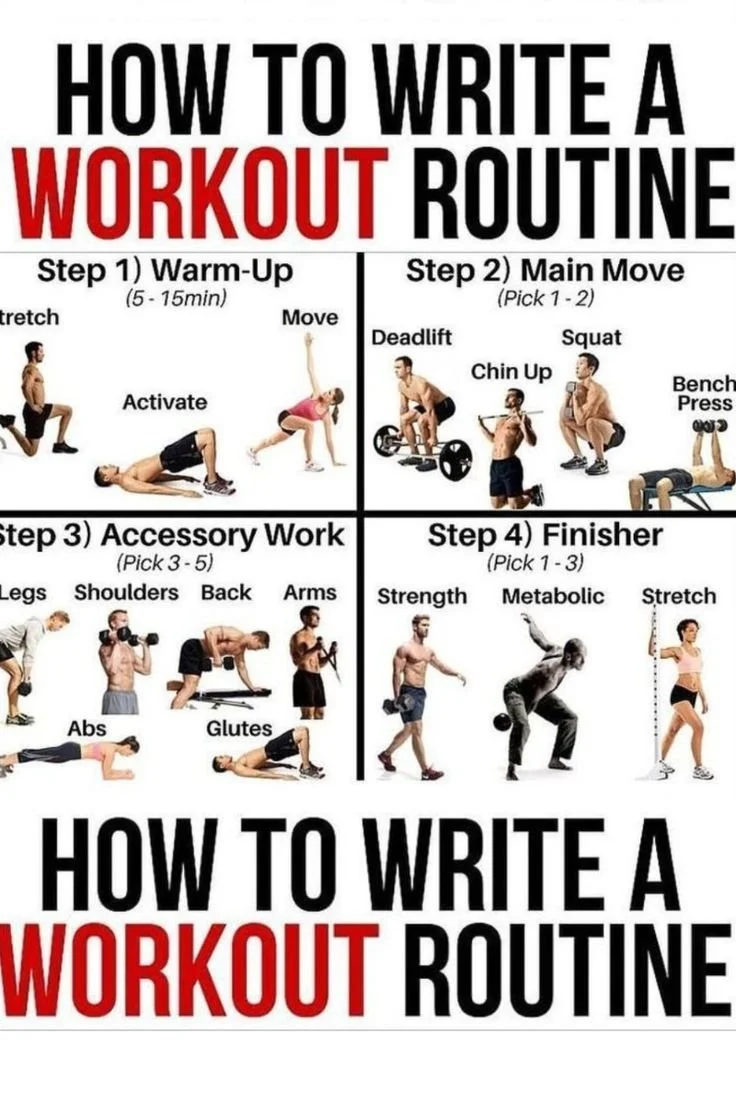
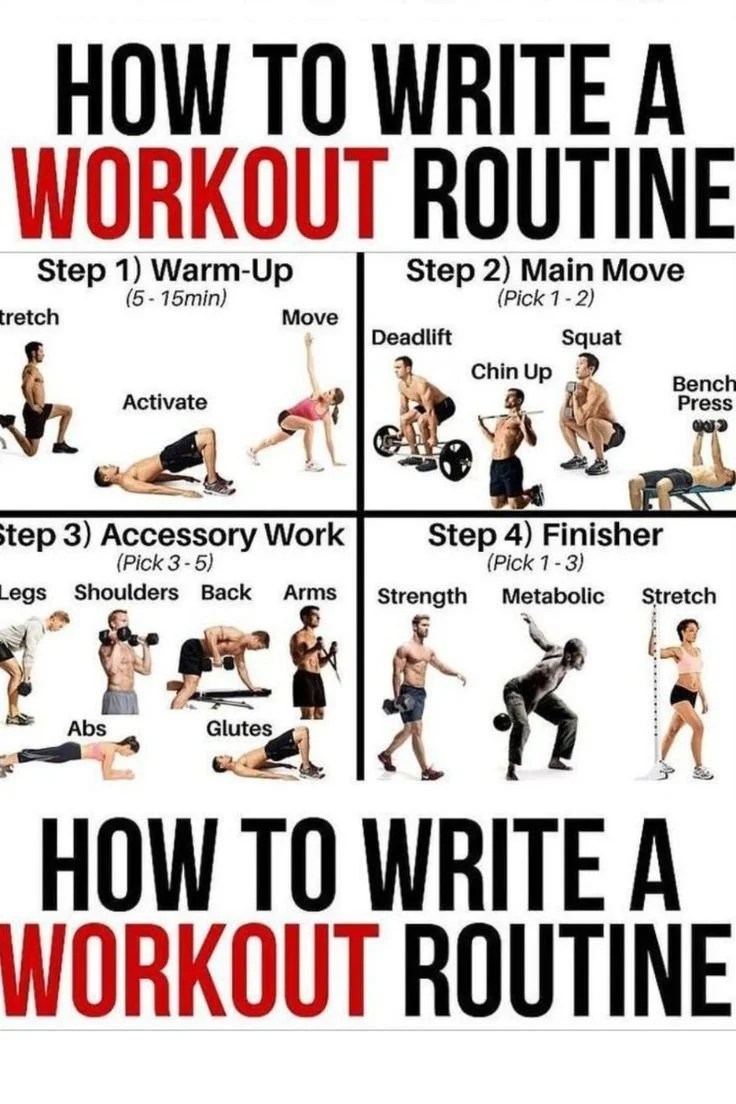
Prioritize compound lifts early in the session (squats, deadlifts, presses, rows) then move to isolation work. Example full-body session:
- Squat variation — 3–5 sets
- Push (bench or push-up variant) — 3–4 sets
- Pull (row or pull-up) — 3–4 sets
- Accessory/arms — 2–3 sets
If you need targeted arm development or at-home arm options, incorporate focused routines like the one in this arm workout resource to tailor volume and exercise choice.
Step 5 — Set sets, reps, and progression
Match rep ranges to your goal:
- Strength: 3–6 reps, heavier loads
- Hypertrophy: 6–12 reps, moderate loads
- Endurance: 12–20+ reps, lighter loads
Progress by increasing load, reps, sets, or improving form over weeks. Track workouts so you can follow progressive overload.
Step 6 — Recovery, mobility, and deloading
Schedule at least one full rest day per week and include mobility work daily. Every 4–8 weeks consider a lighter deload week to prevent burnout and allow adaptation.
Sample 4-week microcycle (example)
Week split: Upper / Lower / Rest / Upper / Lower / Active recovery / Rest
Upper sessions: Main press, main pull, accessory chest/back, arms
Lower sessions: Main squat/lunge, hinge, single-leg, core
Before increasing intensity, ensure movement quality and consistent nutrition/hydration.
Tips for staying consistent
- Keep sessions 45–75 minutes to avoid time burnout.
- Build habit cues: same workout times, accountable partner, or logging app.
- Adjust when life gets busy: reduce volume instead of skipping entirely.
- If you specialize in bodyweight progressions, apply systematic progressions and regressions to keep improving.
Conclusion
If you want a deeper walkthrough on building a personalized routine with exercise selections and progression models, a helpful reference is How To Build Your Own Workout Routine (Plans & Exercises), which complements the blueprint above with practical templates and examples.