
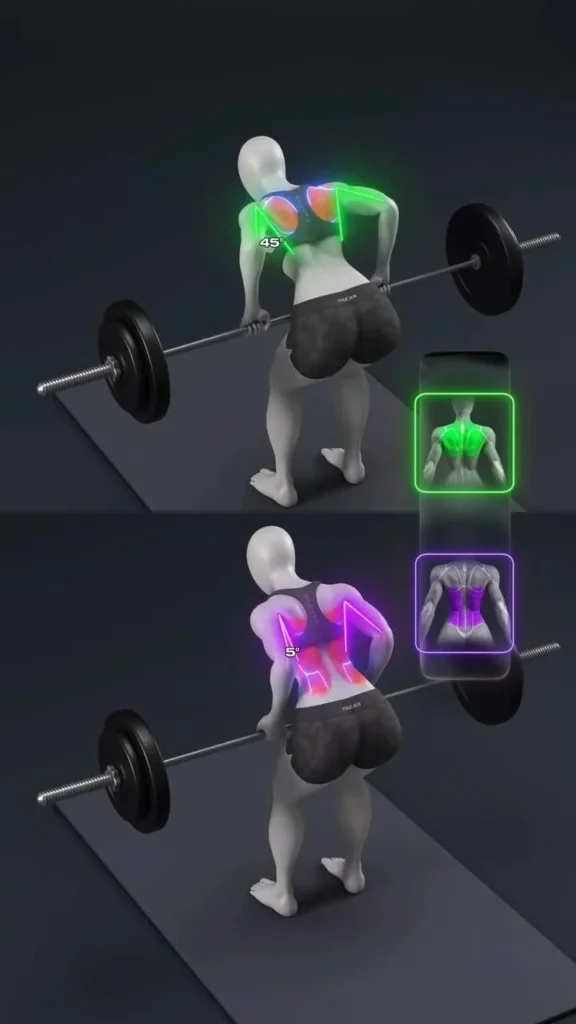
The barbell row is a cornerstone pull movement for building the latissimus dorsi, thickening the mid-back, and improving overall pulling strength. Done with attention to posture and range of motion, it develops the lats more effectively than many isolation exercises and transfers directly to deadlifts, pull-ups, and athletic performance. For balanced upper-body development, consider pairing row-focused cycles with an effective dumbbell chest workout for strength to avoid strength imbalances.
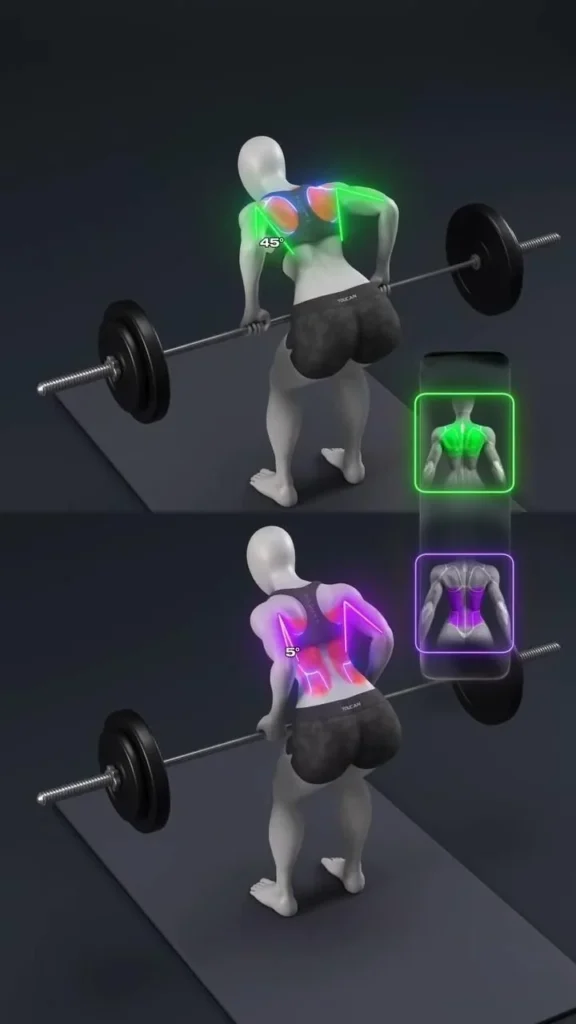
Why the Barbell Row Targets the Lats
- Horizontal pull: The barbell row drives scapular retraction and humeral extension under load — key actions of the lats.
- Heavy loading potential: Barbell loading allows progressive overload more easily than many single-arm alternatives.
- Multiple joint involvement: Rows recruit lats, rhomboids, traps, posterior deltoids, and biceps, building a thicker, more functional back.
Technique: Step-by-Step
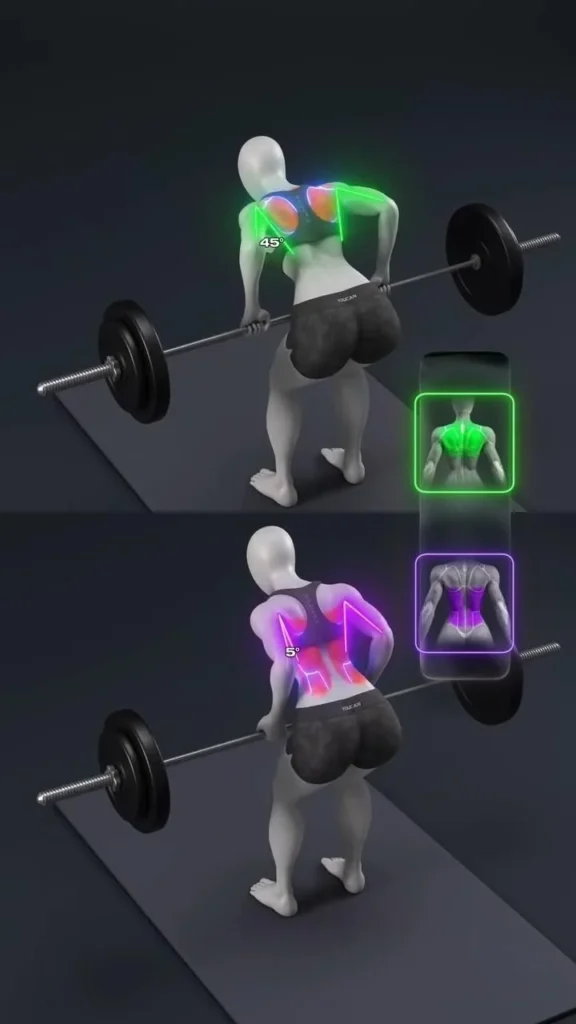
- Setup: Stand with feet hip-width, grip the bar just outside knees (overhand or mixed grip as needed). Hinge at the hips until torso is roughly 30–45 degrees from horizontal, chest up, spine neutral.
- Brace: Take a deep breath and tighten your core and lats before initiating the pull.
- Pull: Drive the elbows back with force, pulling the bar to the lower sternum/upper abdomen while squeezing shoulder blades together. Lead with the elbows, not the hands.
- Lower: Control the descent until arms are extended and tension remains in the lats — do not let the bar drop.
- Repeats: Breathe out as you pull, inhale as you lower. Maintain hinge and neutral spine across sets.
Common Variations and When to Use Them
- Pendlay Row: Dead-stop rows from the floor; use for strength and explosiveness.
- Yates Row: Slightly more upright torso and underhand grip; increases biceps and lower-lat emphasis.
- Chest-Supported Row: Limits lower-back involvement; useful for higher volume with reduced fatigue.
- Single-Arm Dumbbell Row: Good for addressing side-to-side imbalances and teaching lat engagement.
Programming Guidelines
- Strength focus: 3–6 sets of 3–6 reps with heavier loads, longer rest (2–3 minutes).
- Hypertrophy focus: 3–5 sets of 6–12 reps, moderate rest (60–90 seconds).
- Endurance/conditioning: 2–4 sets of 12–20+ reps with lighter loads.
Tip: Alternate barbell-row dominant weeks with vertical-pull (pull-up/lat pulldown) emphasis to maintain balanced development.
Common Errors and How to Fix Them
- Rounding the lower back: Reduce load, focus on hip hinge drills, and strengthen core.
- Using momentum: Slow the eccentric and pause briefly at the top to ensure muscle tension.
- Elbow flare: Cue “elbows back and down” to prioritize lats over rear delts.
- Shrugging the shoulders: Think about pulling with the elbows to engage the lats rather than lifting with the traps.
Warm-up and Mobility
- Thoracic mobility: Cat-cow, thoracic rotations, and foam rolling improve chest-up posture.
- Shoulder band work: Face pulls and band pull-aparts activate upper back and rear delts.
- Lat-specific stretches: Overhead reach and kneeling lat stretches before training improve range of motion for full-rowing mechanics.
Sample Workout (Lat-Focused Back Day)
- Warm-up: 5–8 minutes mobility + light rows (2 sets of 10 with an empty bar)
- Barbell Row (bb row): 4 sets x 6–8 reps (moderate-heavy)
- Pull-ups or Lat Pulldown: 3 sets x 8–12 reps
- Chest-Supported Dumbbell Row: 3 sets x 10–12 reps
- Face Pulls: 3 sets x 12–15 reps
- Finisher: Straight-arm pulldown or band lat pulls 2–3 sets x 15–20 reps
Progression and Recovery
- Track weight, reps, and bar speed. Add small increases in load or reps each week (microloading).
- Rotate intensity: Use a heavy week, a moderate week, and a deload every 4–6 weeks to avoid overtraining.
- Recovery: Prioritize sleep, protein intake, and mobility work to maintain healthy shoulders and spine under load.
Conclusion
For deeper understanding of how range of motion affects barbell-row adaptations and lat engagement, see the study on the Impact of different ranges of motion in the prone barbell row on …