Testosterone-Boosting Weekly Strength Split
Building strength consistently can support healthier testosterone levels, improved body composition, and better workout performance. For busy people, a focused weekly plan that balances heavy lifts, recovery, and metabolic work is key — even a quick option like a 20-minute full-body routine for busy schedules can be adapted into a testosterone-friendly week.
Why a weekly split matters for testosterone
Hormone responses respond to training intensity, volume, and recovery. A smart split helps you:
- Stimulate large muscle groups often enough to promote anabolic signaling.
- Avoid chronic overtraining that suppresses testosterone.
- Prioritize heavy compound lifts that create systemic hormonal responses.
A balanced plan mixes heavy, medium, and light days so you get the benefits of progressive overload without excessive fatigue. For sample full-body emphases, check the principles behind the 10 best full-body workouts for maximum results.
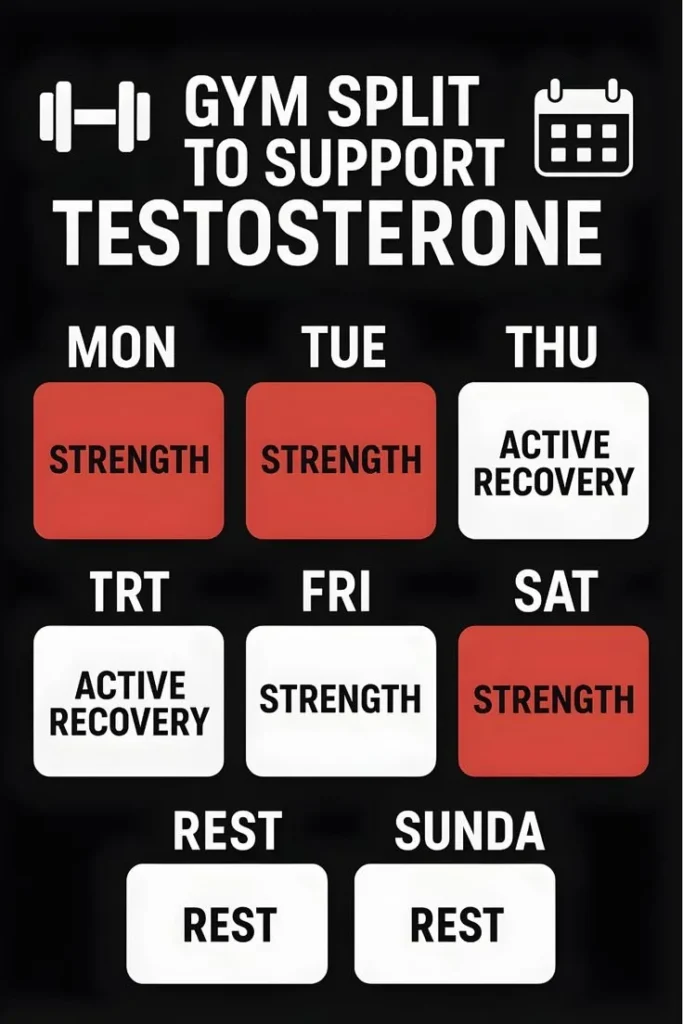
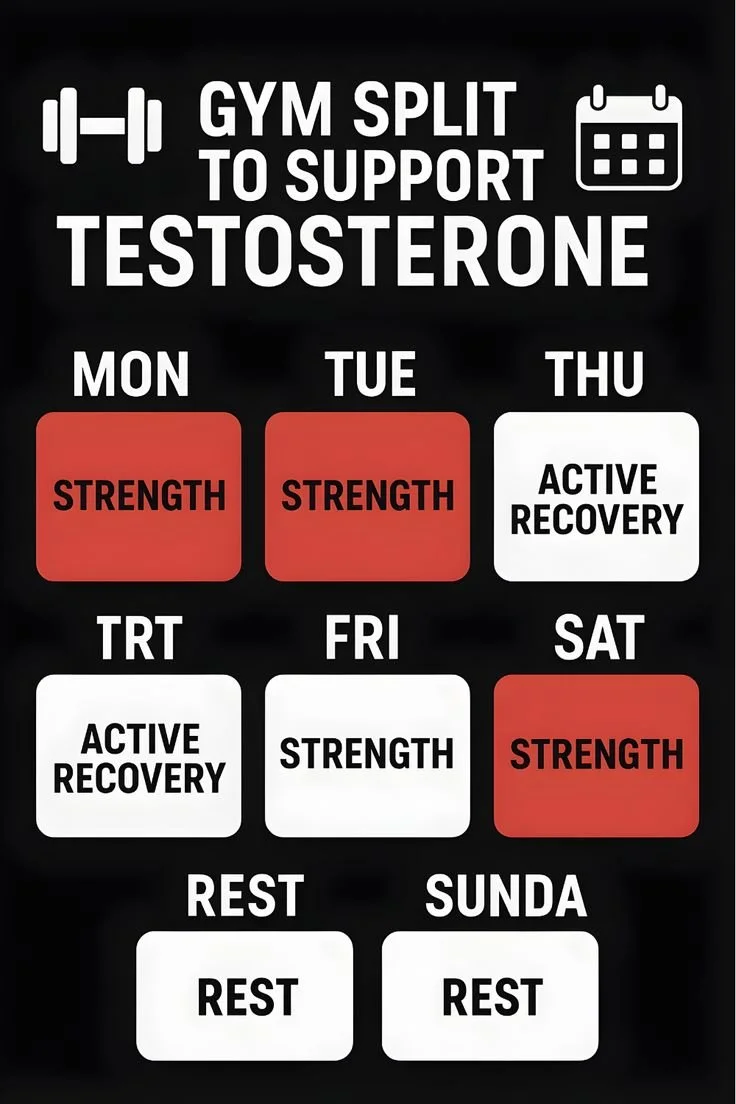
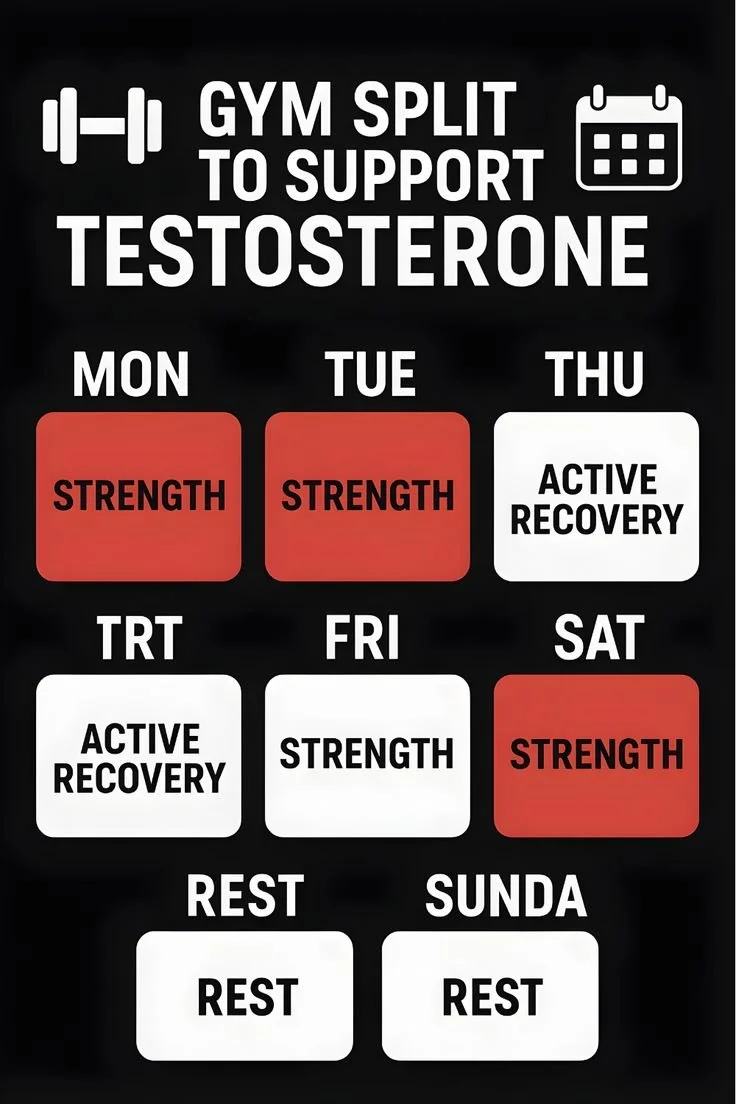
Sample weekly split (practical and scalable)
This split assumes 4 primary training days with optional active recovery sessions:
- Day 1 — Heavy Lower: Squats or deadlift variation (3–5 sets of 3–6 reps), accessory posterior chain work, core.
- Day 2 — Push Strength: Bench press or overhead press emphasis (3–5 sets of 4–6 reps), triceps, light chest accessory.
- Day 3 — Rest or active recovery (mobility, light cycling, walk).
- Day 4 — Heavy Upper/Hypertrophy Mix: Rows, pull-ups, hypertrophy sets for chest and shoulders (6–12 reps).
- Day 5 — Full-Body Metabolic/Conditioning: Compound circuits, lighter loads, higher reps (8–15 reps) to boost metabolic health without overtaxing recovery.
- Day 6 — Optional technique day (squat/press speed work) or a short full-body session.
- Day 7 — Rest.
A weekly cadence like this hits major muscle groups multiple times, blends heavy lifts with volume, and protects recovery—critical for maintaining healthy testosterone. For targeted chest strength work to slot into your push days, consider the principles in this effective dumbbell chest workout for strength.
Programming details and progression
- Focus on compound lifts (squat, deadlift, bench, overhead press, rows, pull-ups) as the backbone of hormonal stimulus.
- Use progressive overload: add weight, reps, or quality of movement each week.
- Keep heavy days short and intense; avoid excessively long sessions that elevate cortisol chronically.
- Include 1–2 higher-rep sets for hypertrophy to support muscle mass, which helps long-term testosterone regulation.
Track load and perceived exertion. If fatigue accumulates, reduce volume for a week rather than pushing intensity higher.
Nutrition, sleep, and recovery (non-negotiables)
- Prioritize adequate protein and calories to support muscle repair and hormonal health.
- Timing carbohydrate around training can support performance, but avoid large sugar spikes immediately before important heavy sessions—research on nutrition and performance suggests mindful intake is beneficial; see considerations about effects of high sugar intake before training.
- Aim for 7–9 hours of quality sleep per night and manage stress with lifestyle strategies to protect testosterone.
Practical tips to stick with the split
- Keep a simple log: exercises, sets, reps, rate of perceived exertion.
- Deload every 4–8 weeks depending on volume and recovery.
- Use tempo and pauses to increase time under tension without adding excessive load.
- Consider working with a coach for form and individualized progression if you’re newer to heavy lifting.
Conclusion
Consistent, well‑structured strength training that prioritizes compound lifts, recovery, and nutrition supports healthy testosterone responses; for an evidence-based look at how progressive resistance influences hormone release, read this study on resistance training and hormone response.