
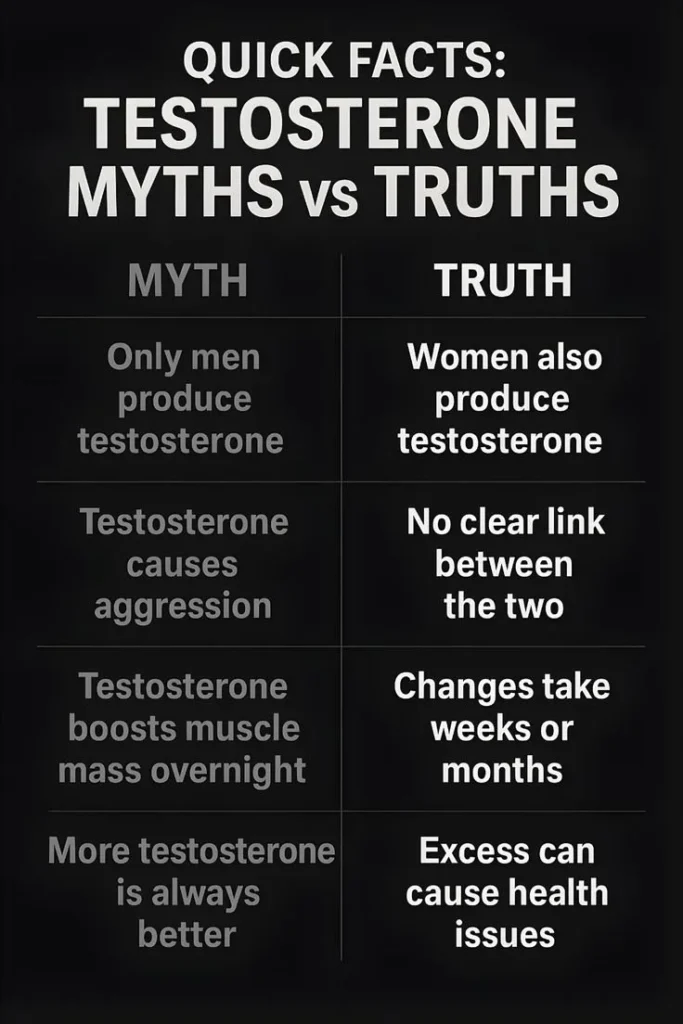
Testosterone Truths: Myths vs Facts
Testosterone gets a lot of attention — and a lot of misinformation. This short guide separates common myths from evidence-based facts so you can make better decisions about testing, treatment, and lifestyle choices. For a broader look at workout misconceptions that tie into hormone questions, see this helpful overview on muscle-building myths vs facts.
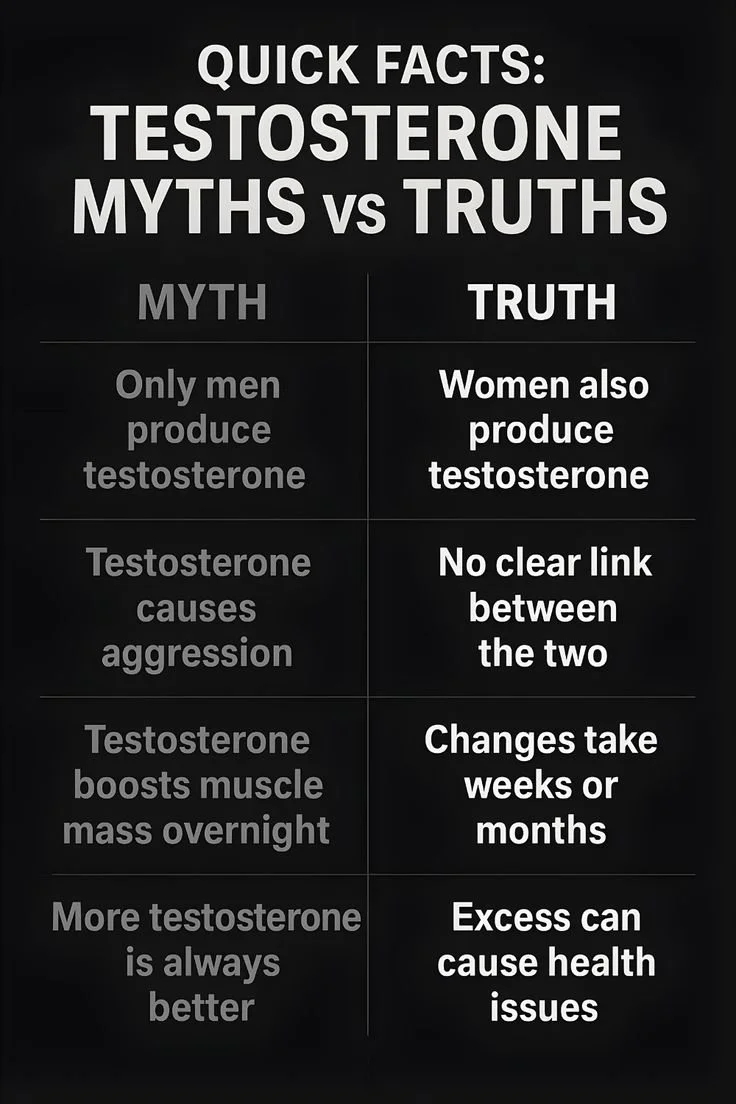
Why testosterone matters
Testosterone is a key hormone for energy, libido, muscle mass, bone density, mood, and overall metabolic health. Levels naturally decline with age, but symptoms vary widely. Low testosterone (low T) can cause fatigue and reduced libido, while unnaturally high levels — often from supplements or steroids — carry risks such as cardiovascular strain and hormonal imbalance.
Myth 1: Testosterone makes you aggressive and angry
Fact: While dramatic behavior changes can occur with very high steroid use, normal, physiological testosterone levels are not strongly linked to violent aggression. Mood shifts are more often caused by sleep loss, stress, or underlying mental health conditions.
Myth 2: Testosterone automatically builds huge muscles
Fact: Testosterone supports muscle growth, but training, nutrition, and genetics are the main drivers. The difference between lean and bulky builds depends on training style and caloric balance; for a deeper dive into body composition, read this explanation of lean muscle vs bulky muscle.
Myth 3: Boosting testosterone requires supplements or injections
Fact: Many lifestyle changes affect testosterone more safely than unregulated supplements. Weight management, resistance training, adequate sleep, and reduced alcohol intake can all help. For recovery strategies that support training and hormonal health, consider comparisons like massage vs foam rolling to pick what helps you perform and recover best.
Myth 4: A six-pack means optimal testosterone
Fact: Visible abs reflect low body fat and genetics more than hormonal status. Someone can have a six-pack yet low testosterone or, conversely, higher testosterone with less visible definition. If you’re evaluating hormonal causes of body composition, don’t overlook common misconceptions such as those covered in myths about six-pack you need to stop believing.
How testing and treatment should work
If you suspect low testosterone, testing should be performed in the morning (when levels peak) and repeated for confirmation. Treatment decisions depend on symptoms, lab results, and risks — testosterone replacement therapy can help some men but is not appropriate for everyone and requires medical supervision.
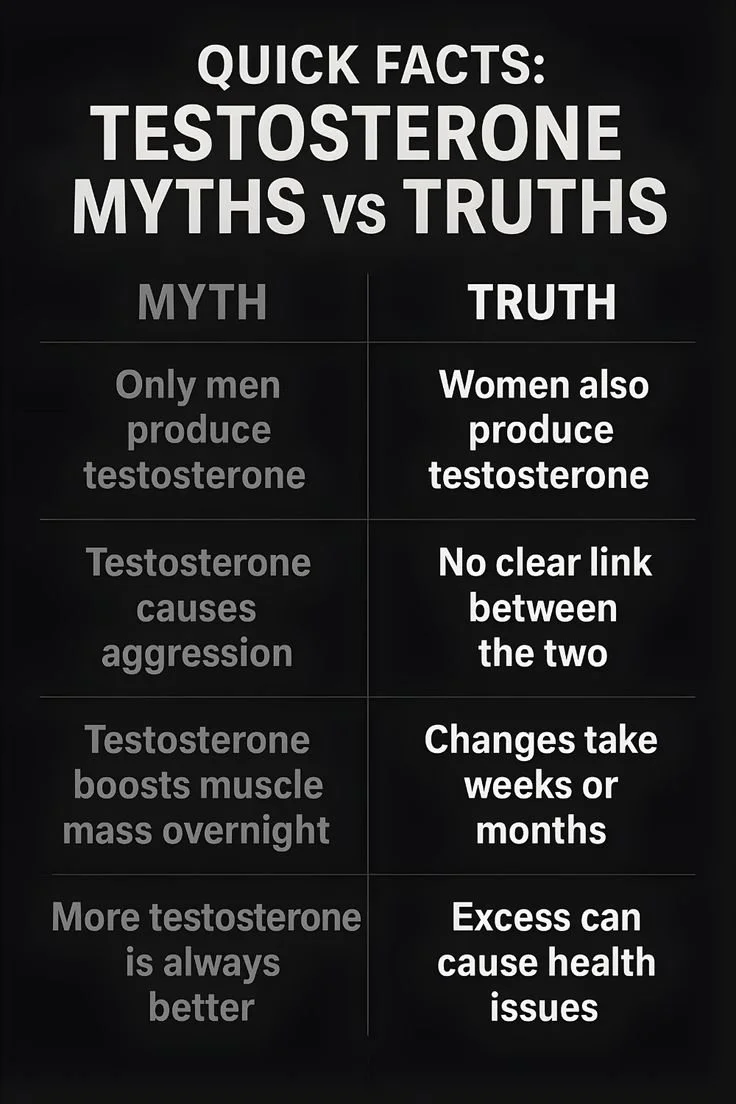
Conclusion
Understanding testosterone means separating sensational claims from clinical reality; when in doubt, consult a clinician and rely on reputable sources like books and peer-reviewed materials — for a practical overview that challenges common beliefs, see The Myths and Reality of Testosterone.