Massive Arms Blueprint
Building huge arms takes more than endless curls — it requires the right exercises, progressive overload, nutrition, and recovery. This article gives a concise, practical plan to grow both biceps and triceps efficiently while avoiding common mistakes, and it links to resources for detail on related topics like vascularity and training balance. For a quick read focused on arm development strategies, start here and apply the methods consistently. Practical tips for achieving veiny, defined arms.
Core principles for massive arm growth
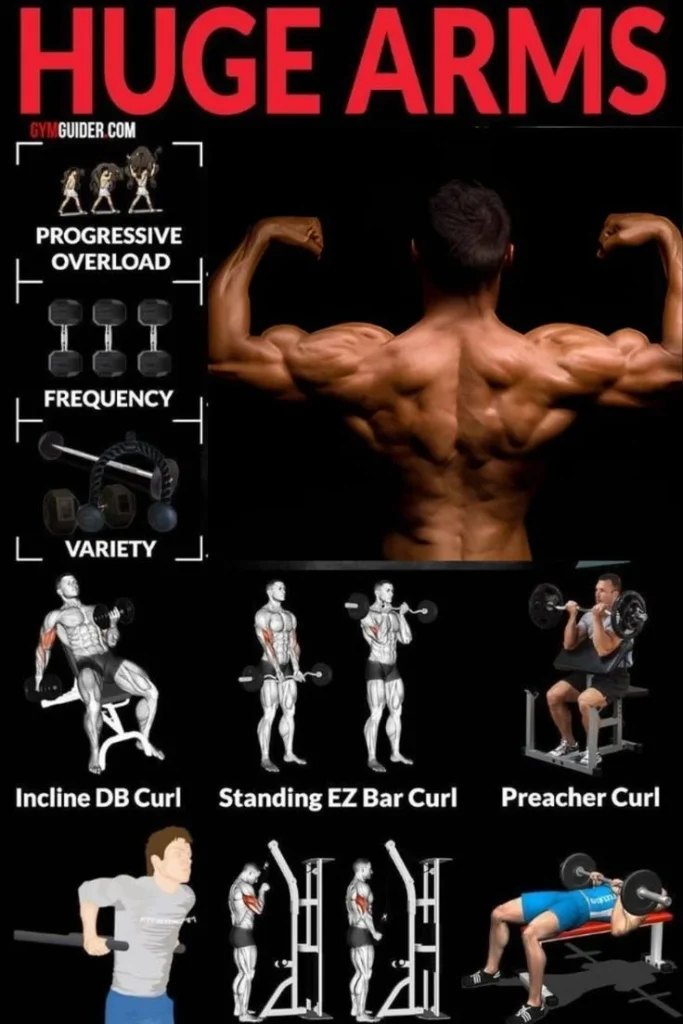
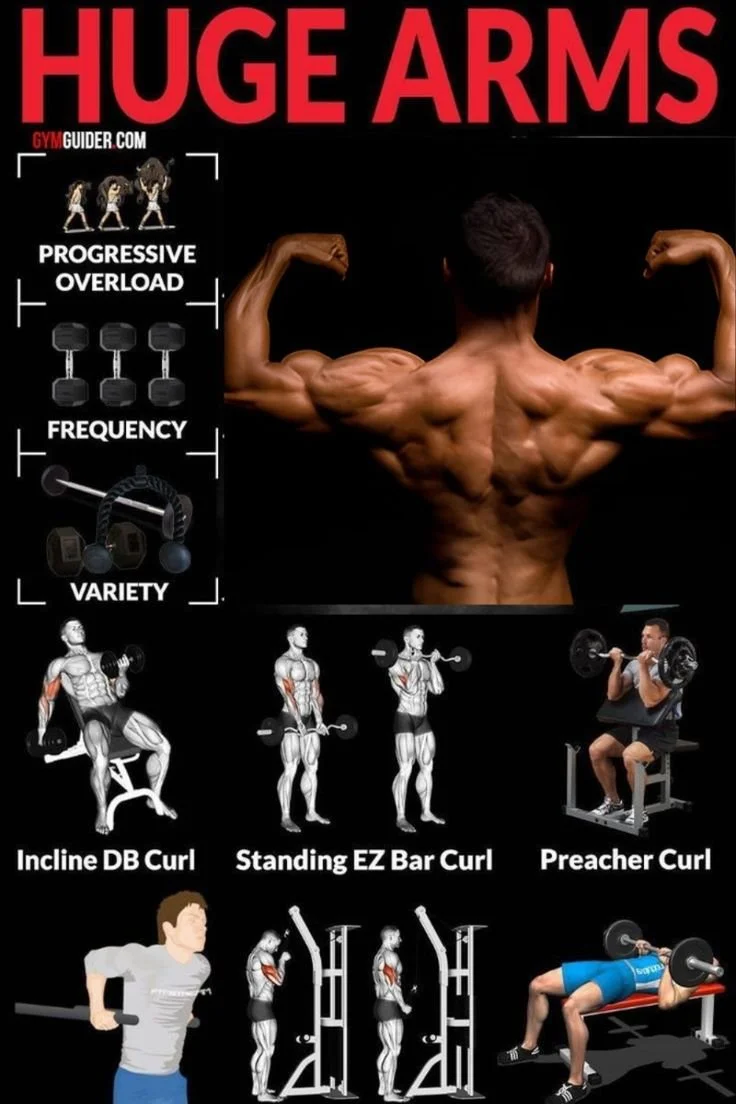
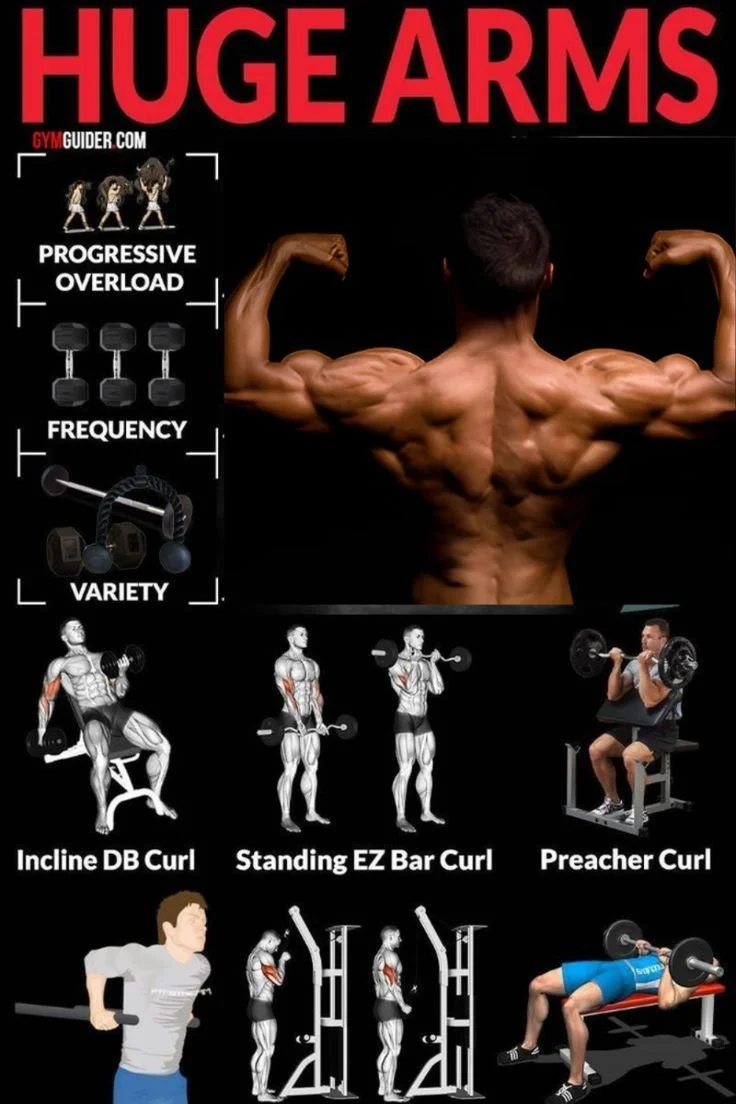
- Progressive overload: Increase weight, reps, or sets over time to force adaptation.
- Training frequency: Hit arms 2–3 times per week with varied intensity—one heavy session, one moderate, one focused on volume.
- Compound first, isolation later: Prioritize big multi-joint moves that indirectly train arms, then finish with targeted isolation work.
Essential compound and isolation exercises
Start sessions with heavy compound presses and pulls, which lay the foundation for arm size:
- Close-grip bench press and dips for triceps mass.
- Chin-ups and rows to build biceps thickness.
Then add these isolation staples: - Barbell and incline dumbbell curls for long-head biceps development.
- Overhead triceps extensions and cable pushdowns for full triceps sweep.
Programming templates (sample week)
- Day A (strength): Heavy compound bench or press variations + 3 sets of heavy close-grip work + 2 x heavy curls.
- Day B (pull/volume): Rows/chin-ups + supersets of curls + light triceps finish.
- Day C (arms focus): Higher-rep curl and extension circuits with tempo and shorter rests.
Grip, angles, and tempo matter
Vary grips and angles to hit muscle heads differently: supinated curls for peak, hammer curls for brachialis and forearm thickness, and neutral presses for medial triceps work. Slow negatives and paused reps increase time under tension and stimulate growth.
Nutrition and recovery
Muscle growth requires a calorie surplus with adequate protein; aim for roughly 0.7–1 g of protein per pound of bodyweight and include nutrient-dense whole foods for recovery and hormone support. For guidance on food sourcing and how it affects quality, consider reading more about organic versus non-organic choices for a balanced plate: how produce choice can influence nutrition and recovery.
Accessory tips: forearms, grip, and core
Strong forearms and grip let you handle heavier loads for longer—include farmer carries, heavy holds, and reverse curls a few times weekly. A stable core improves pressing and pulling performance; simple anti-rotation work helps transfer force to your arms more effectively, and you can learn useful progressions in this core-strength guide: band twist core progressions for stability.
Balancing cardio and muscle work
Do not neglect conditioning, but avoid excessive steady-state cardio that can hamper calorie surplus and recovery. Use moderate cardio and interval work strategically; if you need help integrating both without losing size, this resource explains balancing both priorities: how to balance cardio and muscle training.
Advanced tactics and common mistakes
- Use drop sets, rest-pause, and tempo variation sparingly to break plateaus.
- Avoid ego lifting on isolation moves—control matters more than heavy, sloppy reps.
- Track progress with photos and measurements, not just scale weight.
Conclusion
For a detailed list of arm-specific exercises and step-by-step techniques to make your arms bigger, see How to Get Bigger Arms: 8 Best Exercises for Biceps and Triceps.