
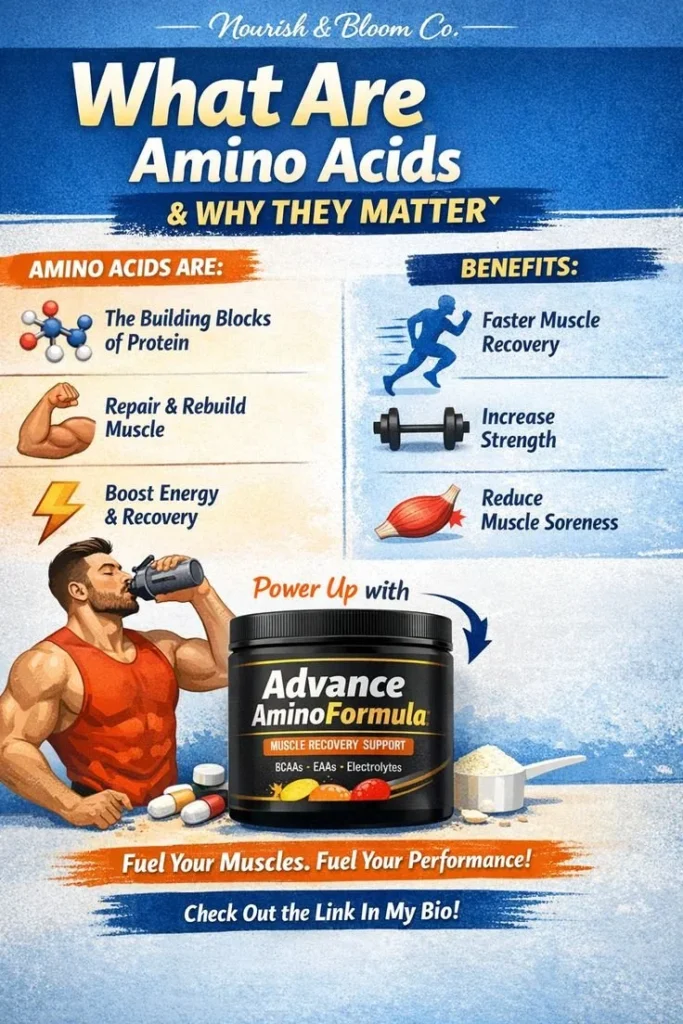
Amino acids are the tiny building blocks that make up proteins, and they play outsized roles in everything from muscle repair to brain chemistry. Understanding what they do can help you make better choices about diet, workouts, and supplements for overall health. For a practical way to pair amino acid knowledge with movement habits, consider trying a structured routine like the 30-day beginner calisthenics morning routine that emphasizes recovery and consistency.
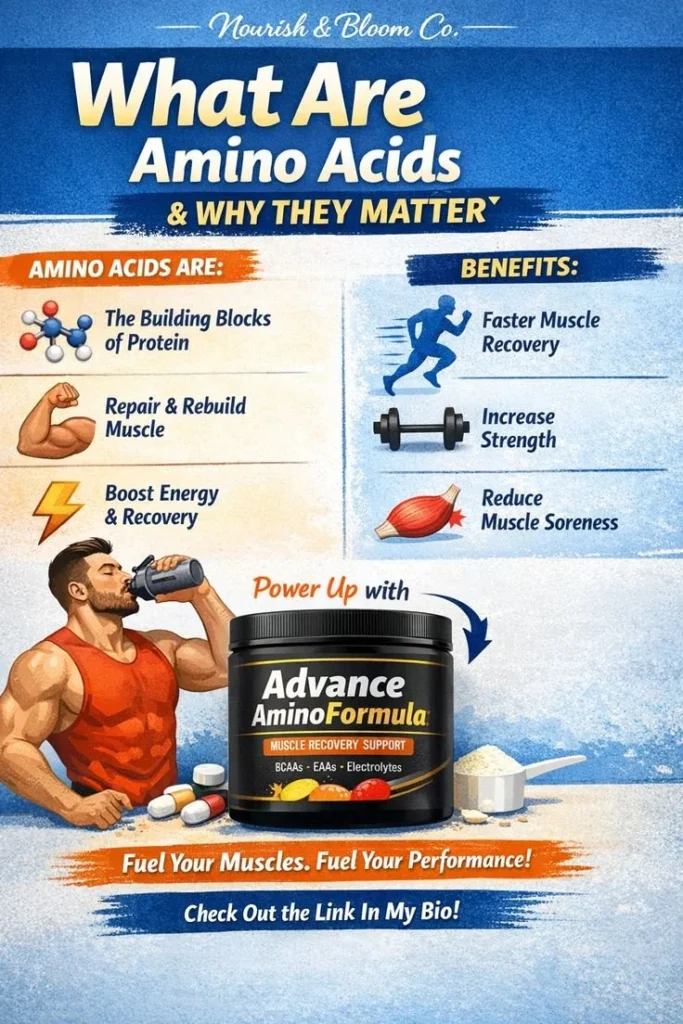
What are amino acids?
Amino acids are organic molecules that combine to form proteins. Each amino acid contains a central carbon, an amino group, a carboxyl group, and a side chain that gives it distinct chemical properties. There are 20 standard amino used in human biology; the sequence and shape of these amino acids determine how a protein functions.
Essential vs. nonessential
Some amino’s are classified as essential because the body cannot synthesize them; they must be obtained from food. Nonessential amino acids can be made by the body from other compounds. Knowing which foods provide complete protein (all essential amino acids), such as eggs, dairy, meat, and soy, helps ensure your body has the raw materials it needs.
Major roles in the body
- Building and repairing tissues: Muscles, organs, skin, and hair rely on amino acids for growth and maintenance.
- Enzymes and hormones: Many enzymes and regulatory hormones are proteins formed from aminos.
- Neurotransmitters and signaling: Certain amino acids are precursors to neurotransmitters that affect mood, sleep, and cognition.
- Metabolism and immune support: Aminos assist in metabolic pathways and immune cell production.
Amino acids and exercise
During and after exercise, amino acids; especially branched-chain amino acids (BCAAs) like leucine — help stimulate muscle protein synthesis and reduce breakdown. Pairing adequate protein intake with resistance training improves recovery and muscle growth. Beware of marketing claims: whole-food proteins often outperform isolated supplements for most people, and fundamentals like total protein intake and training consistency matter more than any single compound. For example, debunking common fitness misconceptions can help you focus on what really works rather than chasing quick fixes; read more about persistent fitness myths in this guide to myths about six-pack training.
Dietary sources and supplementation
Whole foods are the best source of amino acids because they provide additional nutrients and better absorption contexts. Plant-based eaters can combine legumes, grains, nuts, and seeds across meals to cover essential aminos. Supplements like whey, casein, and plant-based protein powders can be convenient when dietary intake is insufficient. Use supplements thoughtfully: they can help meet needs but are not a replacement for a balanced diet.
Potential concerns
Most people get enough amino acids from a varied diet, but certain groups; older adults, athletes with high training loads, and those with dietary restrictions; may need to pay more attention. Excessive use of some amino acid supplements can cause side effects or interact with medications, so consult a healthcare professional when in doubt.
Practical tips
- Aim for regular protein across meals to support synthesis throughout the day.
- Combine a variety of protein sources if you follow a plant-based diet.
- After intense workouts, prioritize a meal or snack with protein and carbs to aid recovery.
- Focus on total daily protein and consistent training rather than chasing individual supplements.
Conclusion
For a deeper, structural look at how amino acids determine protein shape and function, see The Shape and Structure of Proteins – Molecular Biology of the Cell.