
Balancing cardio and muscle (resistance) training is one of the most common challenges for people who want both fitness and function from their workouts. Whether your goal is fat loss, endurance, or building strength, a thoughtful plan that blends both modalities will get better, longer-lasting results than favoring one exclusively. For a reality check on how appearance-focused myths can steer training choices, see this take on common six-pack myths that affect training choices.
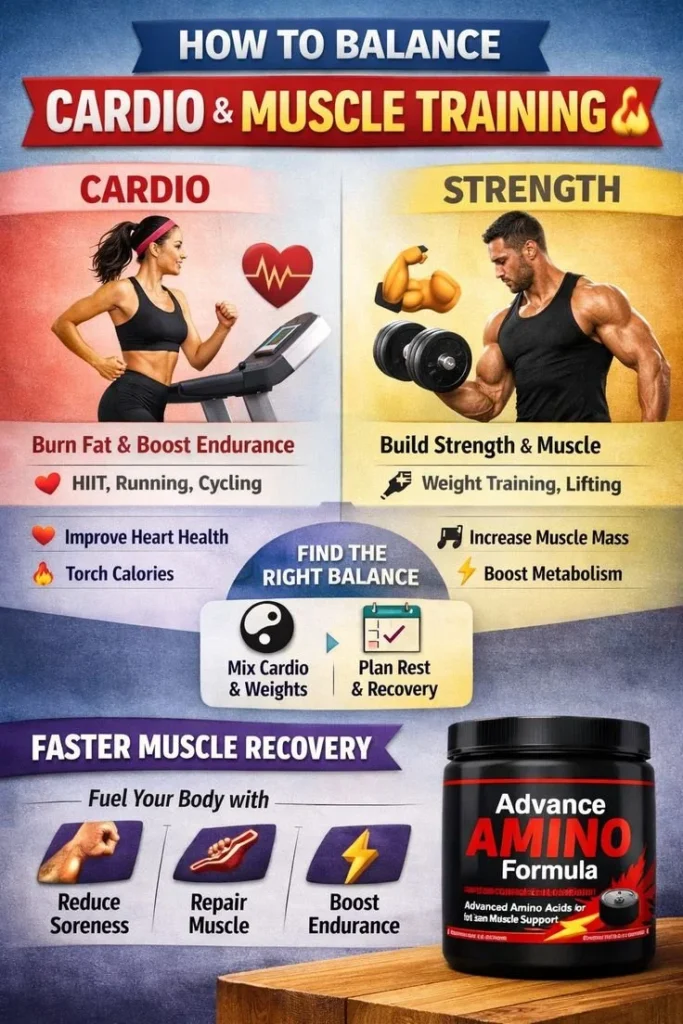
Why both cardio and strength matter
Cardio improves heart and lung health, increases calorie expenditure, and builds stamina for daily life and sport. Strength training preserves and builds lean muscle, raises resting metabolic rate, and improves posture and joint stability. Together they reduce injury risk, improve body composition, and support long-term metabolic health.
How to prioritize based on goals
- Fat loss: emphasize a mix — higher-intensity intervals and resistance work to keep muscle while burning calories.
- Strength and hypertrophy: prioritize resistance sessions (3–5 days/week) and add cardio as conditioning on alternate days or after lifting.
- Endurance: prioritize cardiovascular training, but include 2–3 strength sessions weekly to maintain muscle and prevent overuse injuries.
Practical programming tips
- Order matters: when training for strength, do resistance work first; when training for endurance, place longer cardio sessions before heavy lifting or on separate days.
- Intensity and timing: avoid doing maximal cardio immediately before heavy lifts. If you do both in one session, separate by at least a few hours when possible.
- Volume and recovery: reduce total weekly volume if you add high-frequency cardio; prioritize sleep and nutrition to support recovery.
- Use periodization: cycle focus every 4–8 weeks (e.g., a strength-focused block followed by a conditioning block) to avoid plateaus and overtraining.
Sample weekly split (beginner-intermediate)
- Monday: Full-body strength (compound lifts)
- Tuesday: Moderate-intensity steady-state (30–45 min) or active recovery
- Wednesday: Strength — upper body focus + short HIIT finisher
- Thursday: Steady-state or tempo cardio (45 min)
- Friday: Strength — lower body focus
- Saturday: Longer low-impact cardio (60 min) or group activity
- Sunday: Rest or mobility work
Want ready-made routines to blend both approaches? Check out these full-body workout routines designed to burn fat faster that pair well with structured cardio.
Small adjustments that make a big difference
- Swap one steady-state session for interval training to boost caloric burn in less time.
- Add mobility and foam rolling after cardio to maintain range of motion for lifts.
- Track progress with a mix of performance metrics (weights lifted, run pace) and body measures (how clothes fit, energy levels) rather than relying only on scale weight.
Conclusion about cardio and muscle
If you want a deeper look at why an all-cardio approach can limit long-term results and how to integrate strength work effectively, read this explanation on why focusing only on cardio for weight loss is a mistake.