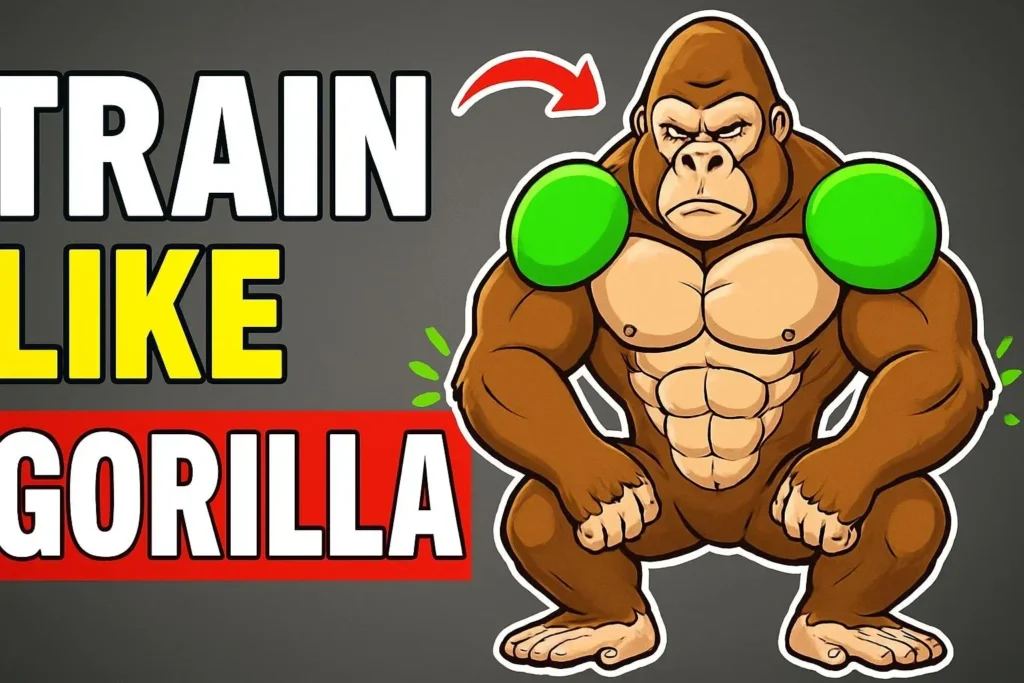
Primal Power: 5 Moves for Gorilla Strength
If you want raw, practical strength—think powerful hips, an iron back, and a vice-like grip—these five movements build that primal “gorilla” power. Start each session with a brief warm-up and mobility work; if you need shoulder prep, check these cable shoulder drills to prime your joints and avoid injury.

- Deadlift — The King of Posterior Power
- Why: Deadlifts train the entire posterior chain (hamstrings, glutes, lower back) and transfer directly to lifting strength and carrying heavy objects.
- How: Set feet hip-width, hinge at the hips, keep a neutral spine, and drive the floor away with your legs while finishing with glutes contracted.
- Programming: 3–5 sets of 3–6 reps for strength; use progressive overload and prioritize form over ego.
- Tip: If you struggle to engage glutes, pair deadlift work with targeted glute exercises like this glute-focused at-home routine on lighter days.
- Weighted Pull-Ups — Upper-Body Pulling Power
- Why: Pull-ups build a thick back and brutal pulling strength—essential for any “gorilla” upper body.
- How: Full hang to chin-over-bar, controlled descent, add weight via belt or vest once bodyweight reps exceed 8–10.
- Programming: 4–6 sets of 3–8 reps for strength; include varied grips (neutral, wide) for balanced development.
- Farmer’s Carry — Grip, Core, and Brutal Conditioning
- Why: Simple and savage — carries test grip, traps, core, and conditioning simultaneously.
- How: Pick heavy dumbbells or farmer handles, stand tall, walk set distances with short rest.
- Programming: 4–6 carries of 30–80 meters or 20–60 seconds; increase load before distance for strength focus.
- Kettlebell Swings — Hip Snap and Athletic Power
- Why: Trains explosive hip extension, conditioning, and posterior chain speed—key for generating force.
- How: Hinge hard at the hips, snap through, keep arms relaxed; the power comes from hips, not shoulders.
- Programming: 5 sets of 10–20 reps; use heavier kettlebells for strength and lighter for conditioning intervals.
- Overhead Press / Push Press — Upper-Body Drive and Stability
- Why: Overhead strength shows full-body coordination and shoulder resilience. Push presses allow heavier loads using leg drive, building that raw pressing power.
- How: Press strict for stability and mobility; use push press for heavier loads—dip, drive, and lockout overhead.
- Programming: 4–6 sets of 3–6 reps for push press (strength), or 3–5 sets of 5–8 reps strict for endurance/resilience.
Training Notes and Structure
- Frequency: Lift heavy 2–3 times/week with at least one heavy full-body session and one accessory or conditioning day.
- Progression: Add small weight increments, increase reps, or improve set quality (less rest, more tension).
- Recovery: Heavy pulling and carries demand sleep, nutrition, and active recovery. Mobility and prehab keep you training longer.
Conclusion
Incorporate these five lifts into a balanced routine to build functional, gorilla-like strength—hip drive, pulling power, grip endurance, and overhead resiliency. For band-based shoulder options and dos and don’ts to support these movements, check out 5 Best Resistance Band Shoulder Exercises: Dos and Don’ts.