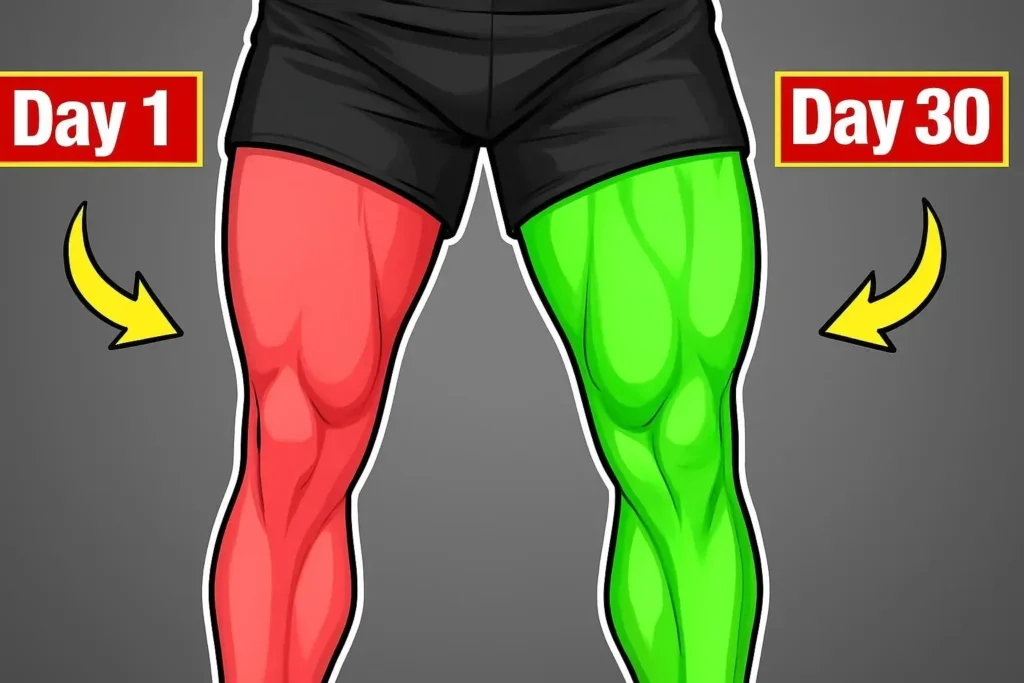
Title: Fix “Chicken Legs” with This One Move
If your legs look underdeveloped despite heavy squatting, you probably need a smarter, more targeted exercise that corrects imbalances and forces each leg to grow on its own. The Bulgarian split squat is one of the best options — it delivers unilateral overload, deep hip and quad activation, and easier progression than trying to endlessly load a back squat. For a complete physique approach, don’t forget to balance leg work with smart upper-body accessory routines like chisel your lower chest for a proportional look.
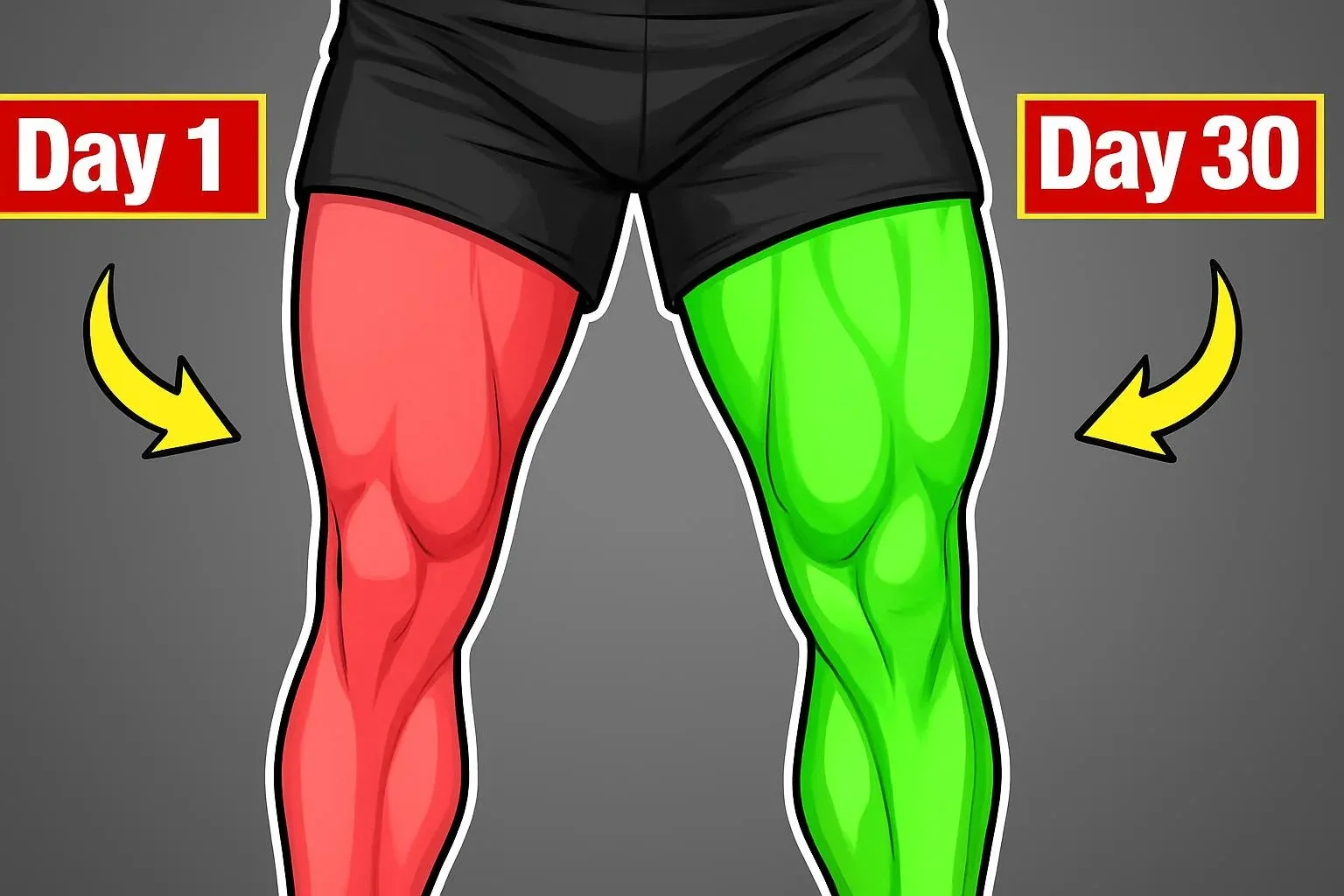
Why squats sometimes fail to build big legs
- Bilateral dominance: A stronger leg can dominate in a two-legged squat, leaving the weaker side under-stimulated.
- Compensations: Low back and hip mobility issues can limit depth, reducing quad and glute activation.
- Load ceiling: Adding more weight to a barbell squat often increases neural demand more than local muscle hypertrophy, especially if form degrades.
Why the Bulgarian split squat beats squats for “chicken legs”
- Unilateral focus: Each leg works independently, so the weaker side can’t hide.
- Greater range-of-motion: Elevating the rear foot increases hip and quad stretch, boosting muscle fiber recruitment.
- Easier to progressive-overload with dumbbells, kettlebells, or a weighted vest without sacrificing form.
- Build stability and balance alongside size — carryover to athleticism and everyday function.
How to perform the Bulgarian split squat (step-by-step)
- Setup: Stand about 2–3 feet in front of a bench. Place the top of your rear foot on the bench.
- Positioning: Keep your front foot far enough forward so that when you descend, your knee tracks over your toes and your torso remains upright.
- Descent: Lower slowly by flexing at the front hip and knee until your front thigh is near parallel to the floor. Keep weight on the midfoot.
- Ascent: Drive through the front heel to return to standing. Keep the torso tall and avoid excessive forward lean.
- Reps and tempo: Use a controlled 2–3 second descent, a brief pause at the bottom, and an explosive drive up.
Programming for hypertrophy and balance
- Beginner: 3 sets x 8–10 reps per leg, twice per week. Use bodyweight or light dumbbells to learn form.
- Intermediate: 4 sets x 6–10 reps per leg, 2–3 times per week. Add weight progressively.
- Advanced: 4–5 sets x 6–12 reps, using tempo, paused reps, or loaded carries afterward. Consider single-leg RDLs or step-ups as supplementary work.
Progressions and variations
- Weighted Bulgarian split squat: Hold dumbbells at your sides or a single kettlebell goblet-style.
- Barbell rear-foot-elevated split squat: For higher loading if you have a strong core and stable knee.
- Tempo or paused reps: Increase time under tension by 3–5 second eccentrics or a 1–2 second pause at the bottom.
- Reverse lunge and walking lunge: Use these as dynamic variations once the split squat movement pattern is solid.
Accessory work to accelerate leg growth
- Calf raises: Often neglected, calves complete the “big leg” look.
- Hip thrusts or RDLs: Improve glute size and posterior chain strength for balanced leg development.
- Single-leg leg extensions or Nordic curls: Target specific fibers and address weak points.
Common mistakes and how to fix them
- Too close to the bench: Causes the knee to track badly and reduces stability. Step forward.
- Leaning forward excessively: Engage your core, shorten your stride, or reduce weight.
- Letting the rear foot do work: Keep weight on the front leg; the rear foot should be a support, not the driver.
Balancing legs with the rest of your physique
Train legs hard, but maintain upper-body balance. If your shoulders and chest lag while you hammer legs, include accessory sessions — for example, cable work can help shape the delts and upper chest. For ideas, check out enhance your shoulders top 5 cable exercises to pair with your leg days.
Quick sample week
- Day 1: Bulgarian split squats 4×8 per leg, RDLs 3×8, calf raises 3×12
- Day 2: Upper-body push/pull (accessory cable work)
- Day 3: Light single-leg work and conditioning or active recovery
- Day 4: Heavy split squats 5×5 per leg, hip thrusts 3×8
Conclusion
If you’ve been stuck with “chicken legs,” prioritize unilateral work like the Bulgarian split squat to correct imbalances and drive hypertrophy. For more discussion on squatting and how lower-body training relates to different body types, see this article: Squatting With Chicken Legs – Competitive Bodybuilding – T NATION.