
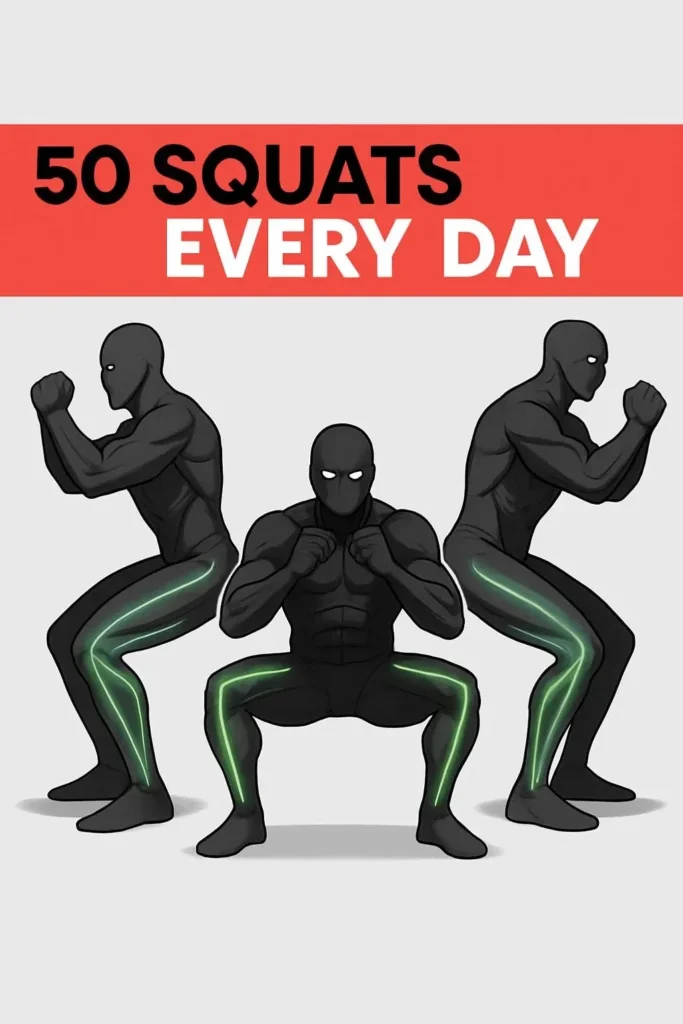
What 50 Squats a Day Does
Doing 50 squats every day is a simple, time-efficient challenge that many people try to boost their leg strength, endurance, and consistency. In just a few minutes each day you can build muscle tone, improve mobility, and form a habit that supports broader fitness goals — especially if you’re supporting recovery and nutrition properly, for example by understanding what adequate protein looks like on your plate.
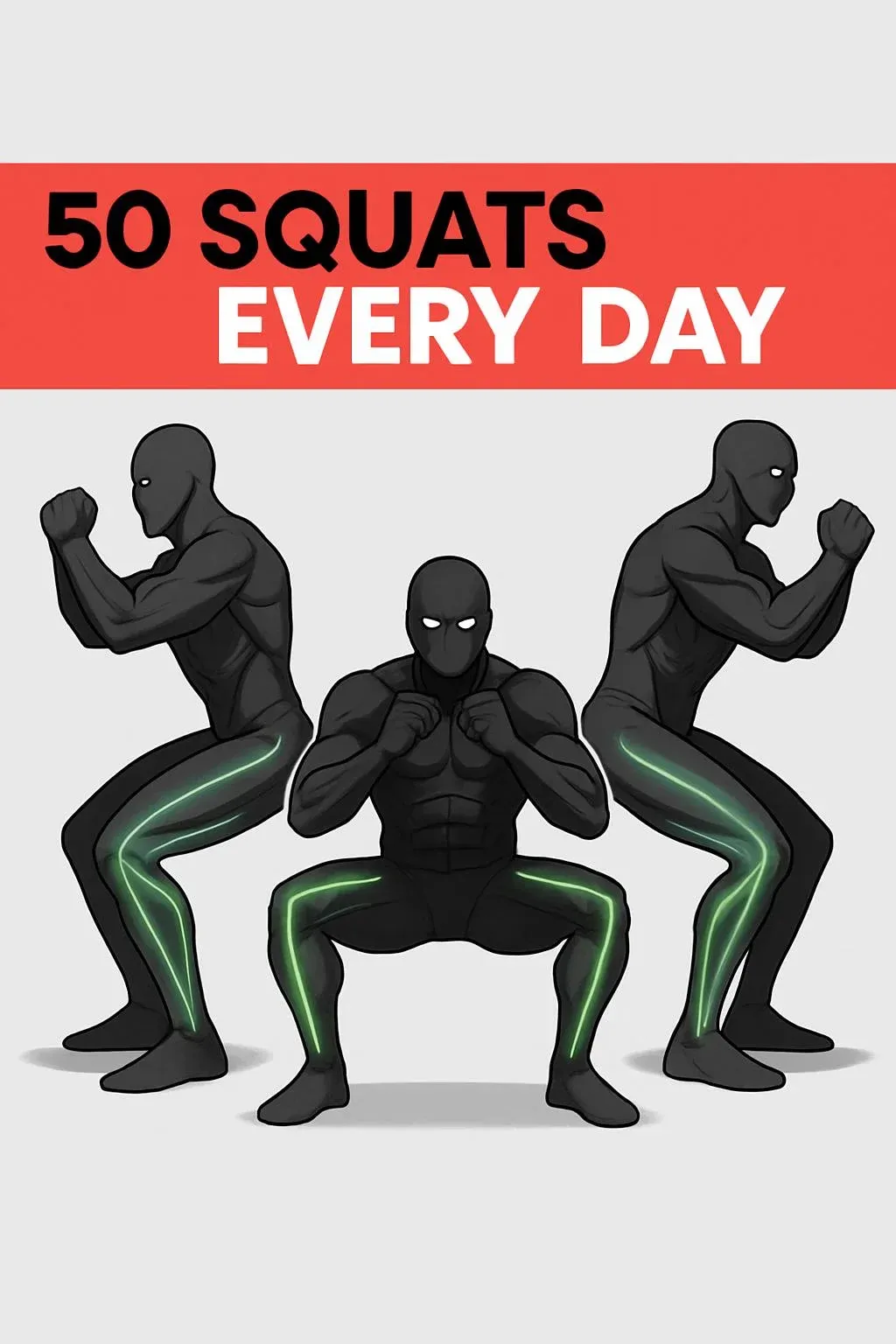
Why choose 50 squats? It’s a number large enough to be challenging but small enough to be sustainable for most people. It’s also easy to scale: bodyweight squats, slow tempo, or adding pauses and variations can make those 50 reps feel very different day-to-day.
What changes to expect
- Week 1: neuromuscular adaptation. Your body learns the movement pattern and you’ll likely feel soreness if you’re new to squats. Expect improved coordination and a modest increase in muscular endurance.
- Weeks 2–4: visible tone and stamina gains. Quadriceps, glutes, and hamstrings will look and feel firmer. You may notice daily tasks like climbing stairs become easier.
- Month 2+: increased strength and potential muscle growth if you progressively overload (add depth, tempo changes, or resistance). If you want to accelerate muscle gains, pairing the challenge with targeted nutrition strategies can help—see simple methods like easy ways to increase protein intake with every meal.
How to do 50 squats safely
- Set-up: feet hip-width or slightly wider, chest up, weight in heels. Keep a neutral spine and avoid letting knees cave inward.
- Depth: aim for thighs parallel to the floor if mobility allows; partial squats are fine as a start. Control the descent to avoid stress on the knees.
- Tempo and breathing: inhale on the way down, exhale as you push up. Try a 2-0-1 tempo (two seconds down, no pause, one second up) for better muscle engagement.
- Recovery: if you feel joint pain (sharp or persistent), reduce depth, perform fewer reps, or take rest days. For general soreness, prioritize sleep, hydration, and mobility work.
Variations to keep progress going
- Split the 50 into sets (e.g., 5 sets of 10) if fatigue compromises form.
- Add single-leg moves like split squats or pistol progressions to increase difficulty.
- Try tempo changes (slow negatives) or pause squats to increase time under tension.
- Use resistance (dumbbells, kettlebells, resistance bands) once bodyweight 50 becomes easy.
Tracking and realistic expectations
- Take photos or note how daily activities feel rather than obsessing over the scale; changes in posture and strength are more meaningful.
- Keep a simple log: date, number of reps, pain or soreness level, and any added variations. Over 30 days you should see measurable endurance gains; meaningful hypertrophy typically takes longer and benefits from progressive overload.
Common mistakes to avoid
- Sacrificing form for reps. Rapid, bouncing squats reduce benefits and increase injury risk.
- Doing the same motion forever. Your body adapts — introduce progressive overload or new variations.
- Ignoring recovery and nutrition. Building muscle and preventing chronic fatigue requires fuel and rest.
Mental and habit benefits
- Consistency builds confidence. A daily 50-squat habit teaches discipline and makes it easier to add other quick workouts.
- It’s an accessible win: you can do it anywhere, with no special equipment, making it great for travel or busy days.

Conclusion
If you want a detailed firsthand account of someone who tried a daily squat challenge, read I Did 50 Squats A Day For 30 Days—Here’s What My Squat … for a real-world perspective and practical takeaways.