
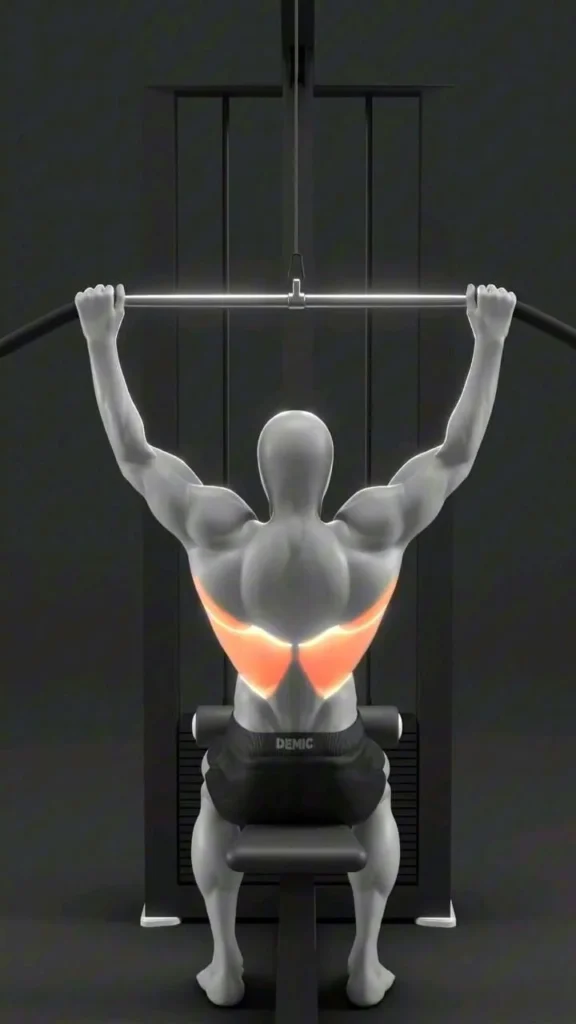
Lat Pulldown Workout: Build a Strong, Wide Back
The lat pulldown is a staple exercise for developing the latissimus dorsi (lats), improving posture, and increasing pulling strength for rows and pull-ups. Whether you’re a beginner or an experienced lifter, a well-structured lat pulldown workout can add width to your back and balance upper-body development. If you train full-body routines, lat pulldowns pair well with compound movements—see a suggested pairing in this 10 Best Full-Body Workouts guide.
Why the Lat Pulldown Matters
- Targets the lats, teres major, and middle back muscles, helping create the coveted “V” taper.
- Assists in improving posture by strengthening scapular depressors and retractors.
- Transfers to functional and sport-specific movements like climbing, rowing, and pull-ups.
- Scalable for beginners through advanced lifters using different grips and tempos.
Proper Technique: Step-by-Step
- Setup: Sit with knees secured under the pad, chest tall, and feet flat. Choose a grip width appropriate to the variation you’re performing.
- Grip and alignment: Hold the bar with a grip that’s slightly wider than shoulder-width for the classic wide pulldown. Keep shoulder blades pulled down and back before initiating the pull.
- The pull: Pull the bar down in a controlled arc to the upper chest (or slightly below chin for some variations). Lead with the elbows, not the hands, and maintain a slight backward lean from the hips—avoid excessive torso swinging.
- Lowering phase: Slowly return the bar to the starting position with control, allowing a full stretch in the lats without letting the weight stack slam.
- Breathing: Exhale while pulling down, inhale while returning to start.
Key cues: “Elbows to ribs,” “Chest up,” and “Slow on the negative.”
Variations to Target Different Angles
- Wide-Grip Lat Pulldown: Emphasizes outer lats and width.
- Close-Grip/Neutral-Grip Pulldown: Hits lower lats and biceps more.
- Reverse (Underhand) Grip: Increases biceps involvement and can help lifters with elbow mobility.
- Single-Arm Pulldown: Corrects left-right strength imbalances and improves scapular control.
- Behind-the-Neck Pulldown: Not generally recommended due to shoulder stress—use caution and only if you have excellent mobility and supervision.
Programming: Sets, Reps, and Progression
- Beginners: 3 sets of 8–12 reps with moderate weight and strict form.
- Intermediate: 3–5 sets of 6–10 reps for strength, or 8–12 for hypertrophy. Add tempo variations (e.g., 2-1-3) to increase time under tension.
- Advanced: Incorporate drop sets, supersets (e.g., with rows or face pulls), and single-arm work to break plateaus.
Lat pulldowns fit well into full-body or upper-body days. For busy schedules, you can include a focused lat pulldown superset in a time-efficient routine—see a practical template in this 20-Minute Full-Body Workout for Busy Schedules article.
Sample workouts:
- Hypertrophy session: 4 sets x 10 reps (wide grip), superset with 3 sets x 12 single-arm cable rows.
- Strength session: 5 sets x 5 reps (close grip), rest 2–3 minutes between sets.
- Volume day: 3 sets x 8 (wide), 3 sets x 10 (reverse grip), finish with 2 drop sets.
Common Mistakes and Fixes
- Using momentum: Reduce weight and focus on elbow drive to stay strict.
- Pulling behind the neck: This can compromise shoulder health—pull to the chest instead.
- Shrugging shoulders: Pre-activate scapular depression before each rep to shift tension to the lats.
- Not achieving full range of motion: Allow a controlled stretch at the top and a full contraction at the bottom.
Accessory Exercises and Progressions
- Assisted or banded pull-ups to transfer vertical pulling strength.
- Bent-over rows and single-arm dumbbell rows to build mid-back thickness.
- Face pulls and band pull-aparts to strengthen rear delts and improve shoulder stability.
- Gradually reduce machine assistance or add weight to the stack while maintaining strict form for progression.
Modifications and Who Should Be Cautious
- If you have shoulder impingement or limited overhead mobility, use neutral-grip handles or perform single-arm pulldowns to reduce strain.
- Those with lower-back issues should avoid excessive leaning—focus on an upright torso and core bracing.
- Always prioritize pain-free movement; stop if you feel sharp joint pain.
Safety Tips
- Warm up with light rows and band pull-aparts to prime the scapular muscles.
- Control the eccentric phase—don’t let the weight slam back up.
- Use a full range of motion tailored to your mobility and training goals.
- Keep a steady cadence and track progressive overload (weight, reps, or time under tension).
Conclusion
For a comprehensive how-to, variations, and safety considerations on the exercise, consult this detailed guide: Lat Pulldowns: Techniques, Benefits, Variations.