Donkey Kick Mistakes You Should Avoid for Better Glutes
Donkey kicks are a staple for targeting the gluteus maximus without heavy equipment, but small form errors can turn this simple move into a missed opportunity—or worse, a strain. This article breaks down the most common mistakes people make with donkey kicks and gives clear fixes so you get stronger, rounder glutes safely. If you’re looking for complementary moves that build on donkey kicks, check out this guide to transform your glutes with four powerful exercises.
- Arching the lower back (hyperextension)
- The mistake: Pushing the leg up by arching the lumbar spine, which transfers effort away from the glutes and onto the lower back.
- Why it’s bad: Chronic lumbar arching can cause discomfort and reduces glute activation.
- Fix: Keep a neutral spine by drawing your ribs down and bracing your core. Think about rotating the pelvis slightly posteriorly (tucking the tailbone a bit) so the motion comes from the hip, not the back. Perform movements slowly with control.
- Rotating the hip outward or upward
- The mistake: Letting the working hip open or externally rotate so the leg swings outwards instead of moving in a straight line.
- Why it’s bad: This shifts activation to the hamstrings and external rotators, reducing gluteus maximus engagement.
- Fix: Imagine pressing the sole of your foot directly toward the ceiling as the heel reaches up. Keep hips square to the floor and pause at the top to check alignment.
- Using momentum instead of muscle
- The mistake: Snapping the leg up quickly or kicking too hard for more “range,” relying on momentum rather than muscle contraction.
- Why it’s bad: Fast momentum lowers time under tension and reduces strength gains; it also increases injury risk.
- Fix: Slow the tempo—2 seconds up, 1-second hold, 2 seconds down. Focus on a deliberate squeeze of the glute at the top of each rep.
- Not bracing the core
- The mistake: Letting the torso sag or the midsection loosen during the rep.
- Why it’s bad: A floppy core reduces stability and allows compensations (spine or hip errors).
- Fix: Engage the abdominals as if preparing for a light punch to the stomach. This stabilizes the pelvis and gives the glutes a solid platform to work from.
- Over-extending the hip or lifting too high
- The mistake: Lifting the leg past the point of glute engagement (often with lumbar extension).
- Why it’s bad: Motion beyond the hip’s effective range taxes the lower back and doesn’t increase glute activation.
- Fix: Lift the leg only until you feel a strong glute contraction—typically when the thigh is roughly parallel to the floor or slightly higher depending on mobility—then pause and lower under control.
- Pointing the toes or using an unstable foot position
- The mistake: Planting the foot awkwardly or pointing the toes, which changes the line of force.
- Why it’s bad: This can shift the workload to other muscles and reduce the mechanical advantage for the glute.
- Fix: Keep the foot flexed or neutral with heel oriented toward the ceiling. Maintain a stable base on the supporting knee and hand.
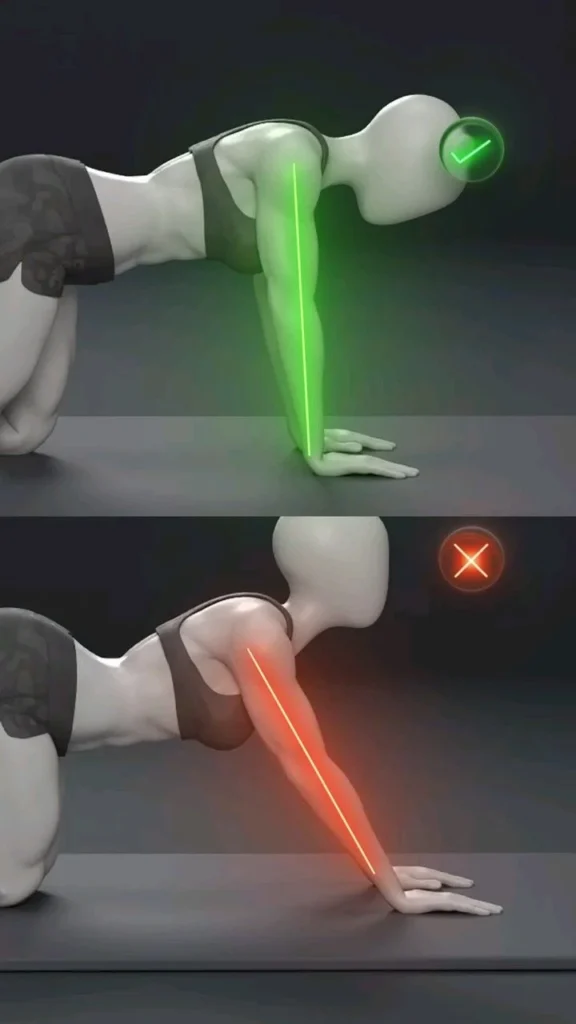
- Poor neck and head alignment
- The mistake: Looking up or craning the neck forward.
- Why it’s bad: Misalignment creates unnecessary tension through the cervical spine and interrupts overall posture.
- Fix: Keep your head in a neutral position—gaze down at the mat a few inches in front of your hands.
- Ignoring unilateral weaknesses
- The mistake: Using the same tempo and ROM on both sides without addressing asymmetry.
- Why it’s bad: One-sided dominance can hide a weaker glute and perpetuate imbalances.
- Fix: Perform single-legged sets and take extra reps or a small drop set on the weaker side. Track progress and emphasize quality over quantity.
- Doing too many reps with poor form
- The mistake: Chasing high rep numbers at the expense of technique.
- Why it’s bad: Repetition of bad form engrains poor movement patterns and limits strength and hypertrophy gains.
- Fix: Prioritize 10–20 strict reps per side with perfect form, or choose slow-tempo sets that maintain tension. Add resistance bands or ankle weights progressively when form is maintained.
- Forgetting recovery and nutrition
- The mistake: Expecting rapid changes without sufficient recovery or protein intake.
- Why it’s bad: Muscles need nutrients and rest to repair and grow; neglecting these reduces the effectiveness of any exercise.
- Fix: Pair your training with adequate protein and recovery strategies. For broader context on meeting nutrient needs to support training, see this article on are you meeting your nutrient needs for optimal wellness?
Quick cues to use during donkey kicks
- “Hinge at the hip, not the back.”
- “Squeeze the glute at the top for 1–2 seconds.”
- “Keep hips square; imagine a book balanced on your lower back.”
- “Flex the foot and press the heel toward the ceiling.”
Progression & programming tips
- Start bodyweight to master technique; when 3 sets of 15–20 strict reps feel easy, add a resistance band above the knees or light ankle weights.
- Pair donkey kicks with compound glute moves (hip thrusts or Bulgarian split squats) in the same workout for better hypertrophy.
- Use them as a finisher for glute activation or as part of a rehabilitation routine to reinforce mind-muscle connection.
When to see a professional
- If you experience persistent pain (not normal muscle fatigue) in the lower back, hip, or knee during donkey kicks, stop and consult a physical therapist or qualified trainer to screen for movement dysfunction or structural issues.
Conclusion
Avoiding common donkey kick mistakes—like arching the lower back, using momentum, and letting the hips rotate—will make every rep count toward stronger glutes. For a practical how-to and variations you can add to your routine, see this helpful guide: Add Donkey Kicks to Your Workouts for Stronger Glutes.