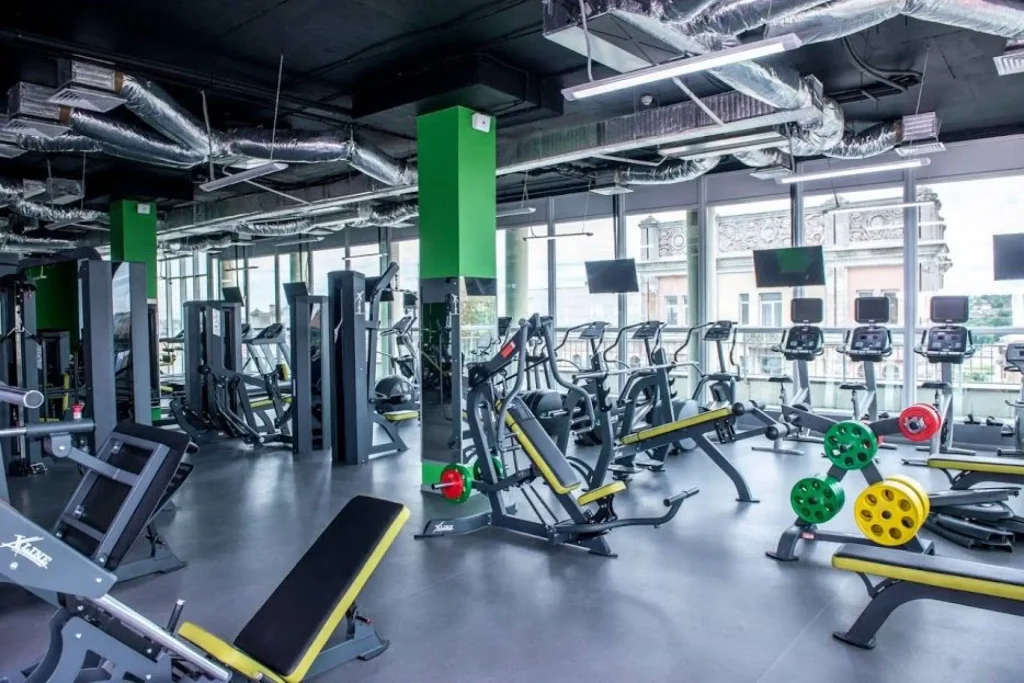
Shoulder Workout: Cables are an underappreciated tool for building well-rounded shoulders. They provide constant tension through a movement’s range of motion, allow easy angle changes, and reduce momentum cheating; all of which help isolate the deltoid heads and improve muscle activation. If you typically train with free weights, consider alternating with cables for a few cycles to address weak ranges and stability (for a dumbbell comparison, see dumbbell shoulder workout).
Below is a practical guide you can use to structure an effective cable-based shoulder session, whether you’re in a commercial gym or a home setup with a functional trainer.
Shoulder anatomy refresher
- Anterior deltoid — front lift and pressing motions.
- Lateral (middle) deltoid — arm abduction and width.
- Posterior deltoid — horizontal abduction and external rotation; key for posture and rear-chain balance.
Cables allow you to target each head with precise lines of pull, and to emphasize portions of a motion (e.g., top tension on lateral raises or end-range contraction on rear delt flyes).
Warm-up (5–10 minutes)
- General warm-up: 3–5 minutes light cardio or dynamic arm circles.
- Specific warm-up: 2–3 light sets on the cable for movement patterns you’ll use (e.g., 15–20 reps of face pulls and low-resistance lateral raises).
Core cable shoulder exercises (how to do them)
Cable Face Pull (rear delts + external rotators)
- Setup: Rope attachment at upper pulley.
- Execution: Pull the rope towards your face with elbows high, external rotate so palms face your ears at the end. Squeeze shoulder blades together.
- Sets/reps: 3 × 12–20.
Single-Arm Cable Lateral Raise (middle delts)
- Setup: Handle at the lowest setting, stand side-on to the machine.
- Execution: With a slight elbow bend, raise the arm out to the side to just above parallel. Keep torso upright and avoid shrugging.
- Sets/reps: 3–4 × 10–15 each side.
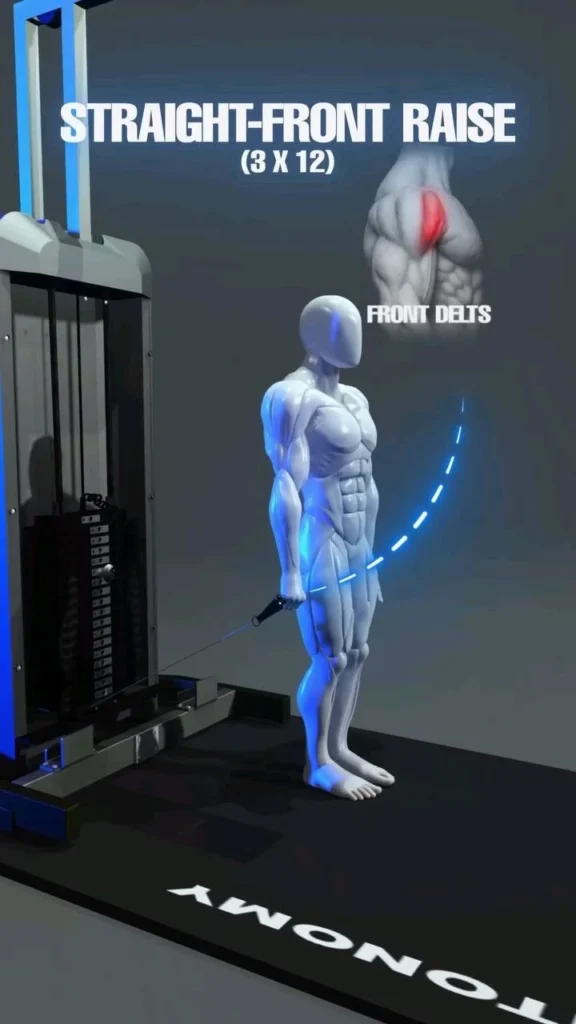
Cable Front Raise (anterior delts)
- Setup: Use a handle or rope from the lowest point; both arms or single arm.
- Execution: Raise the handle to eye level or slightly higher, leading with the elbow. Slow eccentric control.
- Sets/reps: 3 × 8–12.
Cable Overhead Press (vertical pressing)
- Setup: Handles set low, stand facing away and press overhead or use a single pulley with both hands.
- Execution: Press up and slightly back to maintain a natural shoulder plane; don’t hyperextend the low back.
- Sets/reps: 3–4 × 6–10.
Cable Rear Delt Fly / High-Pulley Reverse Fly
- Setup: Two high pulleys or a crossover; cross arms and pull across body with elbows slightly bent.
- Execution: Focus on squeezing the rear delts at the end range; avoid using momentum.
- Sets/reps: 3 × 12–15.
Cable Upright Row (light, to emphasize traps/middle deltoid)
- Setup: Straight bar on low pulley.
- Execution: Pull to collarbone height with elbows leading; keep range comfortable to avoid impingement.
- Sets/reps: 2–3 × 8–12 (use lighter loads, strict form).
Sample session templates
Hypertrophy-focused (45–60 minutes):
- Warm-up.
- Cable Overhead Press 4 × 8–10.
- Single-Arm Cable Lateral Raise 4 × 12 each.
- Cable Rear Delt Fly 3 × 15.
- Cable Front Raise 3 × 12.
- Face Pulls 3 × 15.
Strength / power (30–45 minutes):
- Warm-up.
- Cable Overhead Press 5 × 4–6 (heavier).
- Superset: Single-Arm Lateral Raise 3 × 8 + Face Pull 3 × 12.
- Light technical work on rear delts 3 × 15.
Progression and variation ideas
- Tempo: Slow eccentrics (3–4 seconds) increase time under tension.
- Partial reps: Top-half holds for lateral raises to overload the contraction.
- Drop sets: End with a drop set on lateral raises or front raises for hypertrophy.
- Unilateral focus: Work single-arm to remove bilateral compensation and build stability.
Pairing and programming tips
- Frequency: Train shoulders 1–2 times per week directly; cables are easy to use for supplementary mid-week sessions.
- Pairing: Cable shoulder work pairs well with chest or back sessions; you can finish a back day with face pulls and rear delt work.
- Balance push/pull: For structural balance, include posterior chain and rotator cuff work. If you like finishing arms, consider a targeted arms routine afterwards — for a barbell-only arms finish, try this barbell biceps routine as a pairing option: 4 biceps exercises — barbell-only.
Common mistakes to avoid
- Using too much weight: Cables can encourage momentum; prioritize form and full ROM.
- Shrugging on lateral raises: Trap dominance reduces lateral delt stimulus.
- Neglecting rear delts: Posterior delts are essential for shoulder health and posture.
- Poor pulley alignment: Adjust cable height to match the plane of motion you want to target.
Safety cues
- Maintain scapular stability; don’t let shoulders roll forward.
- Keep core braced during standing cable presses.
- Warm rotator cuff before heavy work with light external rotations on the cable or band.
Conclusion
Cables are a versatile, joint-friendly tool for building shoulder size, strength, and resilience. For a ready set of cable-focused movements and sample variations to plug into your routine, check out 6 Shoulder Cable Workouts For Stronger Shoulders | SQUATWOLF.