3D Shoulders Workout: Build Width, Roundness, and Definition
Developing truly three-dimensional shoulders means training every plane of movement so your deltoids look full from every angle — not just big when viewed from the front. This article breaks down the principles behind a 3D shoulders workout, offers a practical routine you can use, and gives programming and recovery tips so your shoulders get stronger, rounder, and more resilient.
If you prefer equipment-specific routines, try this dumbbell 3D shoulder workout for a focused, at-home approach that emphasizes symmetry and control.
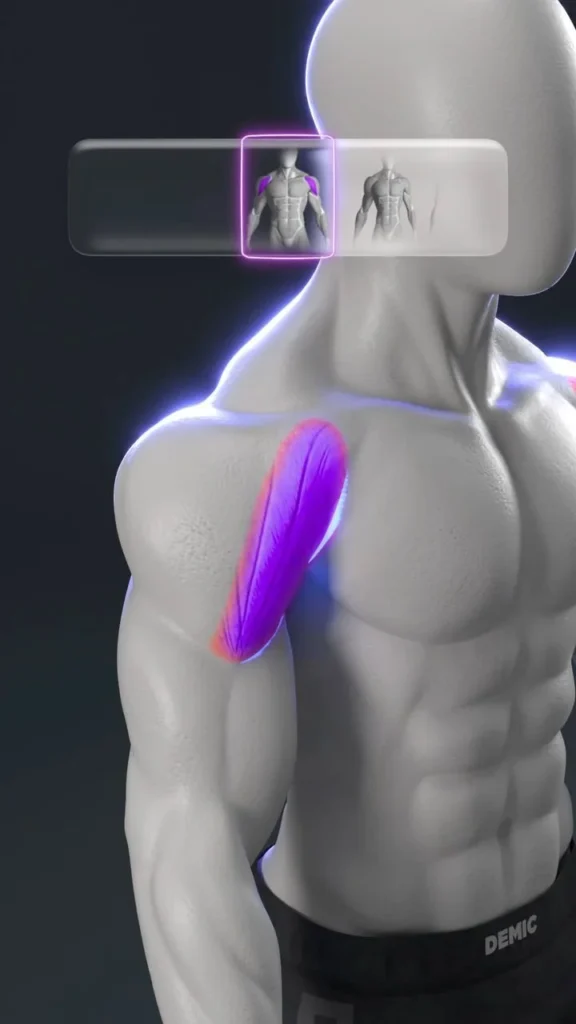
What “3D Shoulders” Means
3D shoulders target three key attributes:
- Width (lateral deltoid development) to create a broad silhouette.
- Roundness (balanced anterior, medial, and posterior delts) so the shoulder caps look full from all directions.
- Depth (rear delts and scapular muscles) for a finished, athletic look and better shoulder health.
Training must include vertical pushes, horizontal variations, and transverse/rotational movements. A mix of compound lifts and precise isolation exercises plus smart tempo and progressive overload creates that 3D effect.
Core Principles
- Balance anterior, medial, and posterior deltoid work. Overemphasizing pressing can produce forward-heavy shoulders and poor posture.
- Use multiple planes: press (vertical), raise (lateral/abduction), and pull/fly (horizontal/transverse).
- Vary load, tempo, and angles. Heavy sets build strength, moderate sets build size, and slower eccentrics carve detail.
- Prioritize rotator cuff and scapular stability to keep shoulders healthy under load.
Warm-up and Mobility (5–10 minutes)
- Scapular retractions x 10–15
- Band pull-aparts x 2 sets of 20
- Arm circles and internal/external rotation with light band x 10–12 each side
- A light set of overhead presses or lateral raises to prime the delts
Sample 3D Shoulders Workout (Intermediate)
Perform this routine once or twice weekly, leaving 48–72 hours between heavy shoulder sessions.
- Barbell or Dumbbell Overhead Press — 4 sets x 4–6 reps (strength focus)
- Seated Arnold Press — 3 sets x 8–10 reps (anterior + medial emphasis with rotation)
- Strict Lateral Raises (Dumbbells) — 4 sets x 10–15 reps (use a controlled 2-0-2 tempo)
- Bent-Over Reverse Fly or Rear Delt Machine — 3 sets x 12–15 reps (posterior development)
- Face Pulls — 3 sets x 15–20 reps (rear delts + external rotators)
- Cable or Dumbbell Upright Row (high-pull variation) — 2 sets x 10–12 reps (upper traps + medial delts)
- Farmer Carry or Overhead Hold (optional finisher) — 2 rounds x 30–60 seconds
If you’re training full-body or alternating push/pull splits, this shoulder-focused day pairs well with compound lower-body work earlier in the week. For ideas on integrating shoulder days into a broader plan, see this full-body workouts resource that helps distribute volume across the week.
Exercise Notes and Variations
- Overhead Press: Keep ribs down and drive through the legs slightly when using heavier loads to stabilize the spine.
- Arnold Press: Adds rotation to engage all heads — control the negative to prevent shoulder impingement.
- Lateral Raises: Lead with the elbow and pause at the top for peak contraction. Slight forward lean shifts tension to the medial head.
- Rear Delt Work: Use light to moderate weight and slow eccentrics; many people undertrain the rear delts so volume matters.
- Face Pulls: Use a rope and pull to the forehead, externally rotating at the end to train rotator cuff function.
Programming Tips
- Frequency: 1–2 shoulder-focused sessions per week with 12–20 weekly sets per muscle group for hypertrophy, adjusted by experience level.
- Progression: Increase load first, then reps, then time under tension. When all three are maxed, increase sets.
- Rotation: Change angles and exercise selection every 4–8 weeks to avoid plateaus.
- Recovery: Delts are involved in many upper-body moves; manage cumulative fatigue by monitoring shoulder soreness and reducing accessory volume when necessary.
Nutrition and Recovery
- Protein intake: Aim for ~1.6–2.2 g/kg body weight for muscle repair.
- Sleep and stress: Prioritize 7–9 hours of sleep and mobility work to aid recovery.
- Deloads: Implement a lighter week every 4–8 weeks if progress stalls or soreness accumulates.
When to See a Coach or Physical Therapist
If you experience sharp pain, persistent instability, or unusual weakness, consult a professional. Deltoid imbalances and rotator cuff issues respond well to early intervention and corrective programming.
Conclusion
A well-rounded 3D shoulders workout blends strength, hypertrophy, and mobility work to produce shoulders that look strong from every angle. For an in-depth guide that complements the principles above, check out this detailed resource on 3D Shoulders: Develop Your Deltoids’ Strength & Shape | Flex AI.